

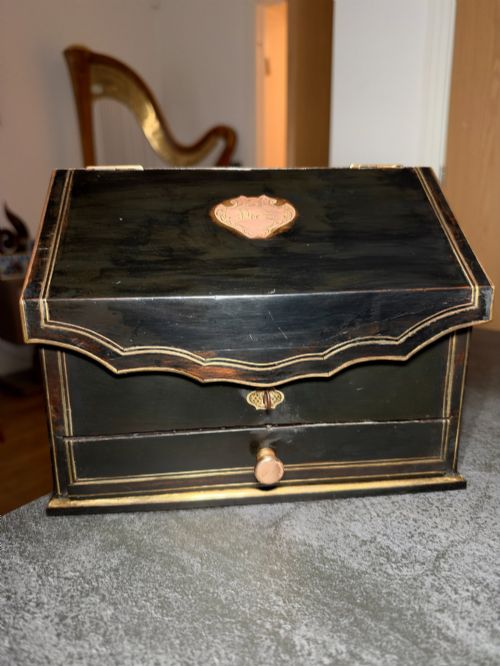
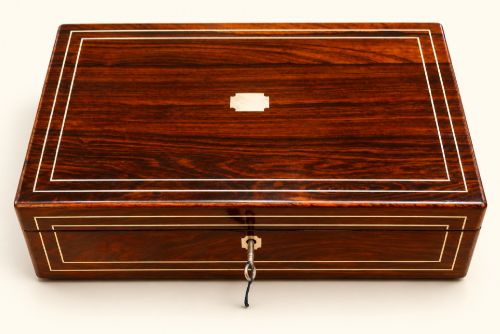
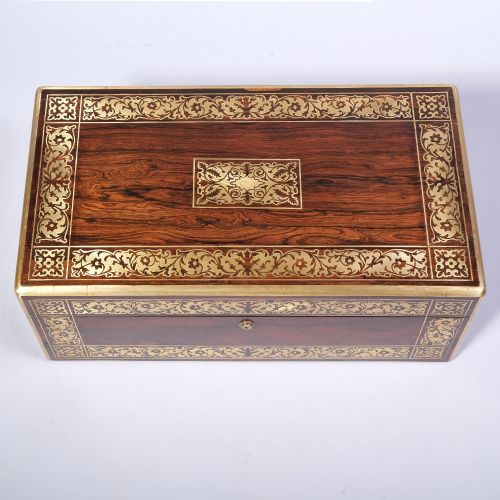
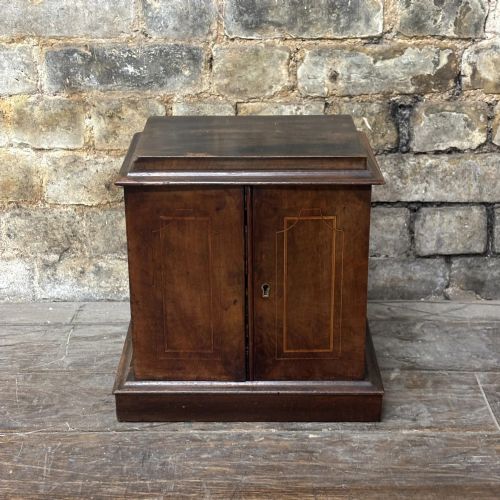


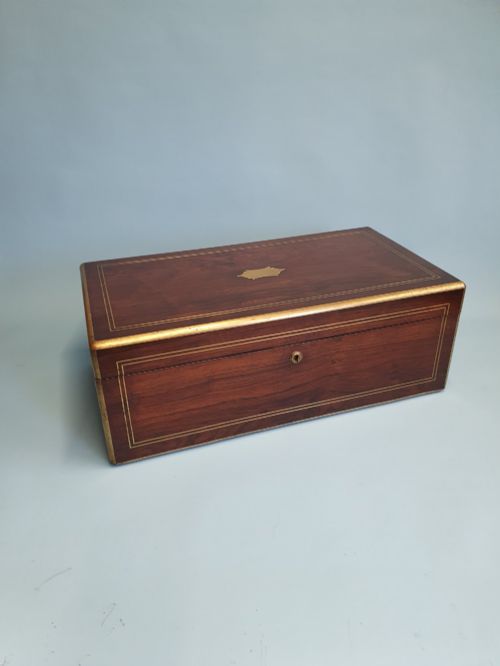
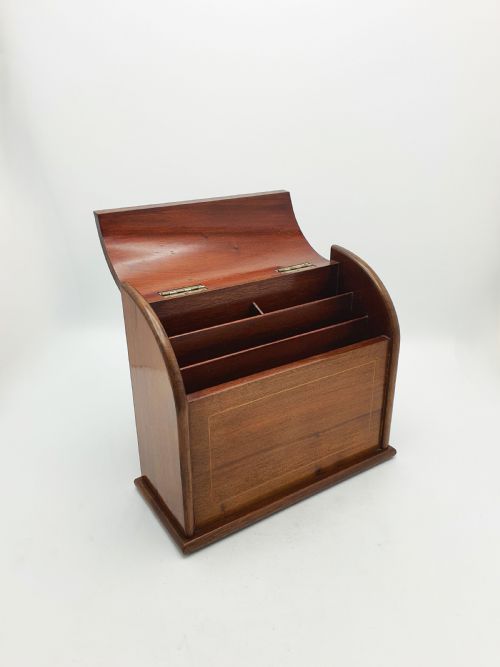
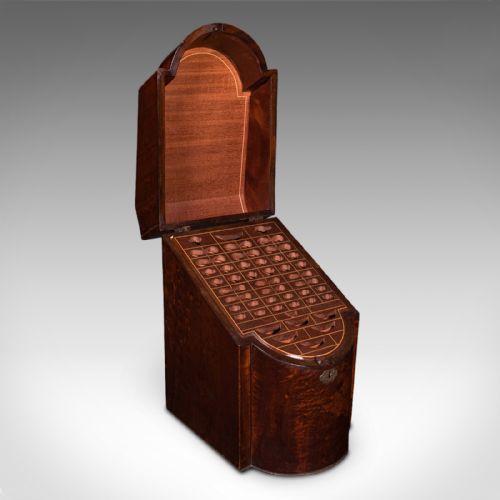


Inlaid Wood Stationery Box
An inlaid wood stationery box organises papers on a desk with fitted compartments and decorative banding.
Inlaid Wood Stationery Box
When you search for an inlaid wood stationery box, you encounter pieces designed to hold correspondence, letters and writing materials upon a desk. The pieces meeting this description span the Georgian, Victorian and Edwardian periods, alongside nineteenth century examples.
Makers constructed these items in various timber forms, including mahogany, rosewood, coromandel and walnut. Many take the form of stationery cabinets, correspondence boxes, writing slopes and desk tidies.
The stylistic influences range from Anglo-Indian and Qing Dynasty to Tunbridge ware and Killarney work. These variations provide distinct visual characters while serving the single purpose of desk organisation.
Distinctions in Quality
The precision of the wood inlay separates standard desk accessories from superior examples, with tight joints and crisp botanical or geometric banding indicating skilled labour. The choice of timber grain also dictates value, where highly figured rosewood, burr walnut or coromandel elevates the piece.
Internal complexity marks the upper tier, noting secret drawers, fitted letter compartments and original brass carrying handles or escutcheons. Maker attributions, such as works associated with Edmund Nye or C.G. Hope Hastings, further distinguish high-grade items.
Inlaid Wood Stationery Box Retail Price Guide 2026
Typical asking prices for inlaid wood stationery box among the pieces listed under this phrase on Sellingantiques today, from the lower quarter to the upper quarter. They describe what is for sale here now, not the wider market.
Some nineteenth-century writers kept secret compartments so hidden that modern owners still discover misplaced letters inside.
Edmund Nye·C.G. Hope Hastings
The Inlaid Wood Stationery Box Glossary
- Tunbridge Ware
- Small wooden objects decorated with mosaic patterns formed from tiny wood squares. This technique creates detailed pictorial or geometric designs.
- Killarney Work
- Irish decorative woodenware featuring inlaid motifs of arbutus wood and local timbers. These pieces often display traditional harp or shamrock emblems.
- Escutcheon
- A protective metal plate surrounding a keyhole on a box lid or fall front. Brass serves as the typical material for this component.
- Campaign Box
- Portable furniture built for travel with recessed brass handles and robust corners. These items permitted officers to transport writing materials securely.
- Pietra Dura
- The art of inlaying cut and fitted polished coloured stones to form images. This decorative technique appears on select Victorian coromandel boxes.
Inlaid Wood Stationery Box: Frequently Asked Questions
What fits inside an antique stationery box?
These boxes accommodate standard writing paper, envelopes, correspondence cards and postage stamps within dedicated wooden slots and upright dividers.
Larger cabinets also provide space for inkwells, blotting pads and sealing wax sets.
How do I care for a rosewood stationery box?
Keep the wood away from direct sunlight and radiators to prevent timber shrinkage and cracking along the inlaid banding.
Apply a microcrystalline wax occasionally to nourish the polished surface without building up residue.
Are these boxes suitable for daily modern use?
The internal compartments suit modern correspondence, notebooks and pens just as effectively as nineteenth-century stationery.
Careful handling of antique hinges and delicate wood inlay preserves the mechanism during everyday desk use.
How do I identify a Victorian stationery box?
Victorian examples frequently utilise coromandel, burr walnut or rosewood with brass banding and mother-of-pearl detailing.
Construction styles from this era often incorporate spring-loaded mechanisms or tiered letter slots.