
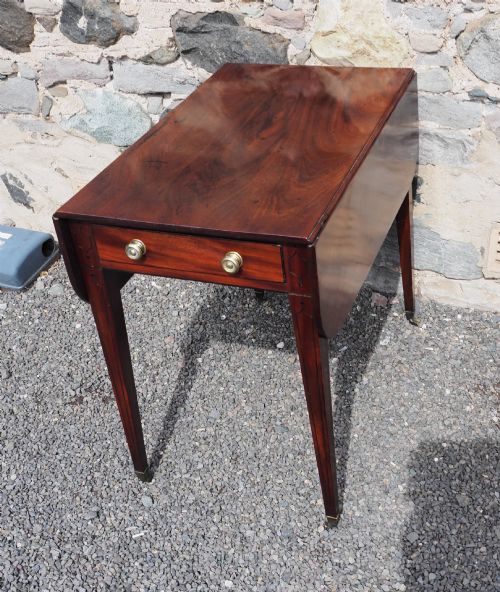
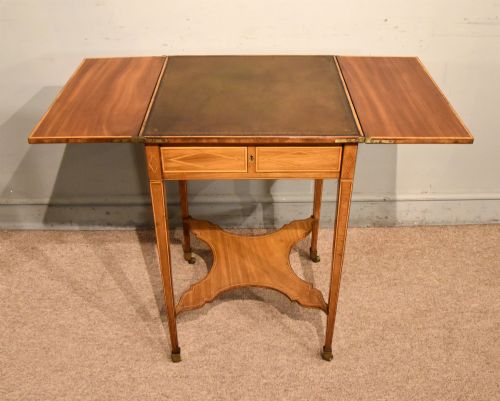
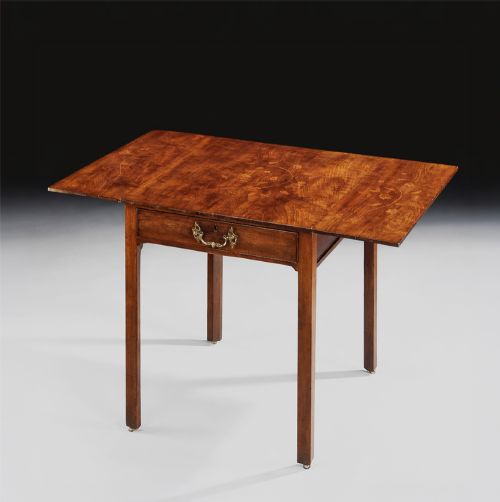
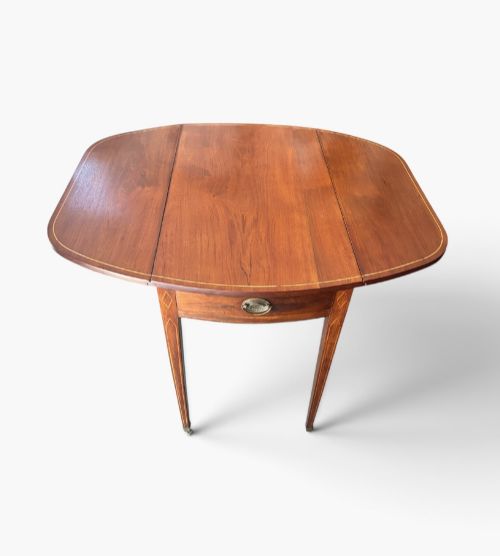


Inlaid Wood Pembroke Table
An inlaid wood pembroke table brings drop leaves and detailed marquetry together, offering a compact surface that expands for writing or dining.
Inlaid Wood Pembroke Table
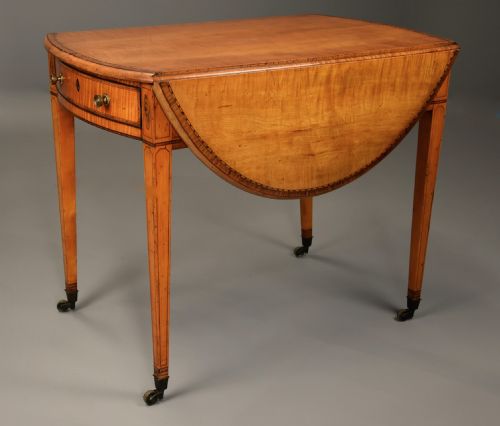
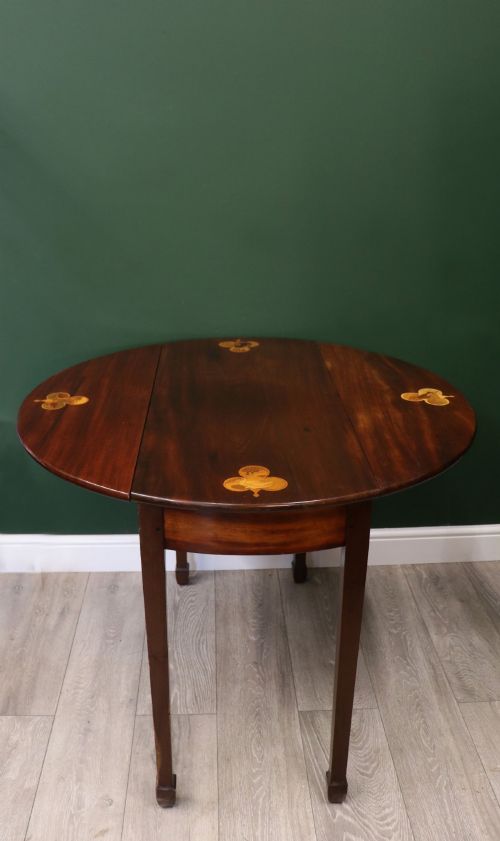
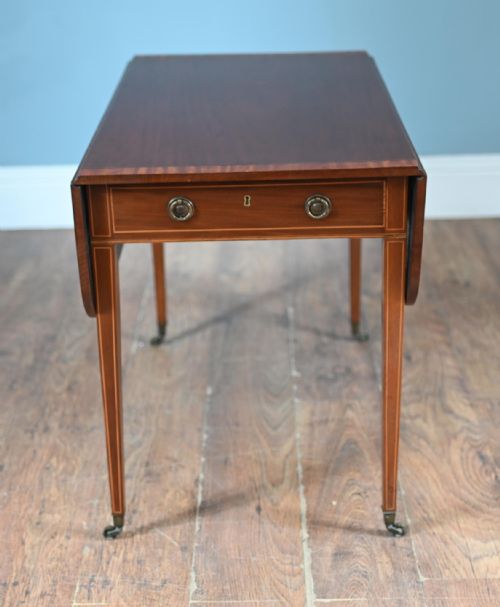
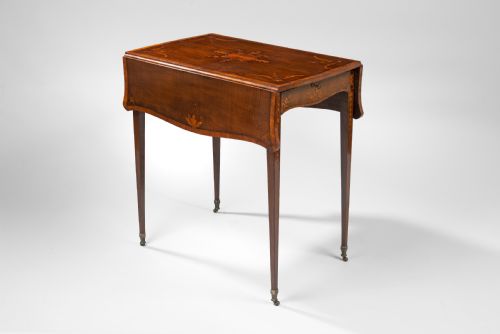
An inlaid wood pembroke table is a drop-leaf occasional piece defined by hinged flaps on either side and a rectangular or oval top. These tables appear most frequently in mahogany, satinwood, and rosewood, spanning periods from the eighteenth century through the Edwardian era.
Makers designed these versatile surfaces for multiple domestic uses, including writing, games, and tea. The evidence shows rectangular and oval forms, sometimes equipped with drawers, standing on slender legs influenced by Georgian and Regency styles.
How they were made
Cabinetmakers utilised solid timbers and veneers, employing boxwood, satinwood, and brass inlay to create contrasting borders and central motifs. Craftspeople combined woods such as harewood, yew, and kingwood with intricate marquetry and banding.
Hinges support the drop leaves, allowing the leaves to drop down when not in use. Joiners constructed the framework with attention to stability, balancing the weight of the hinged flaps against the supporting legs.
Listings feature mahogany, satinwood, rosewood, and yew-wood, incorporating boxwood and brass inlay across eighteenth and nineteenth-century periods.
What varies in quality
The sophistication of the timber selection and inlay work separates standard examples from exceptional ones. Fiddleback sycamore, amboyna, and detailed marquetry indicate higher ambition in the workshop.
Proportion and the crispness of the brass or wood inlay define the upper tier of these pieces. Grain definition and patination on surfaces like mahogany and satinwood reflect the care taken by the original maker.
The Inlaid Wood Pembroke Table Glossary
- Pembroke table
- A small table with hinged drop leaves on two opposing sides. This form became popular during the eighteenth century for breakfast or occasional use.
- Marquetry
- Decorative patterns formed by inserting pieces of wood, veneer, or shell into a solid wood surface. Craftsmen used this technique to create pictorial or geometric designs on tabletops.
- Banding
- A narrow strip of contrasting wood veneer applied around the border of a tabletop. This frames the central field and highlights the geometric shape.
- Drop leaf
- A hinged flap attached to the fixed main surface of a table. Raising the flaps extends the top for dining or writing.
Inlaid Wood Pembroke Table: Frequently Asked Questions
How were pembroke tables used historically?
These tables served multiple functions in domestic rooms, acting as tea tables, writing desks, or small dining surfaces. Their folding leaves allowed them to sit compactly against a wall when floor space was required.
Owners moved them easily from room to room depending on the daily activities. Drawers often provided storage for writing materials or small household items.
How do I identify a Georgian pembroke table?
Georgian examples typically feature mahogany or satinwood construction with subtle stringing, boxwood inlay, or tapered legs. The proportions remain slender, and the joinery demonstrates eighteenth-century cabinetmaking methods.
Details such as brass hardware and specific edge mouldings help distinguish pieces from later Edwardian reproductions. Look for patination on the wood surfaces that indicates genuine age.
Can I use an antique pembroke table daily?
These tables suit everyday use as side tables or occasional desks, provided the drop-leaf hinges receive gentle handling. Placing them away from direct heat sources protects the timber and veneer.
The folding flaps support moderate weight, but owners should avoid placing heavy objects on the unsupported edges of the leaves.
What is the difference between a pembroke and a sofa table?
Pembroke tables feature two drop leaves and often a square or oval top designed for general occasional use. Sofa tables are typically longer and narrower, originally intended to stand in front of a sofa.
Sofa tables frequently include two small drawers and trestle or pedestal bases rather than four individual legs.