
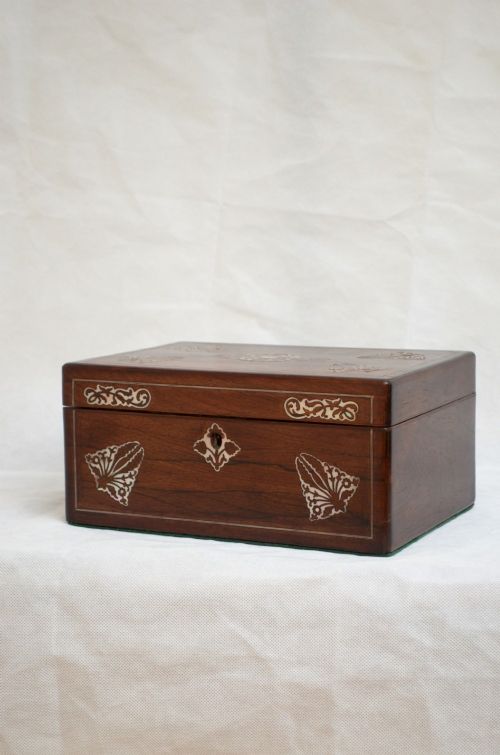
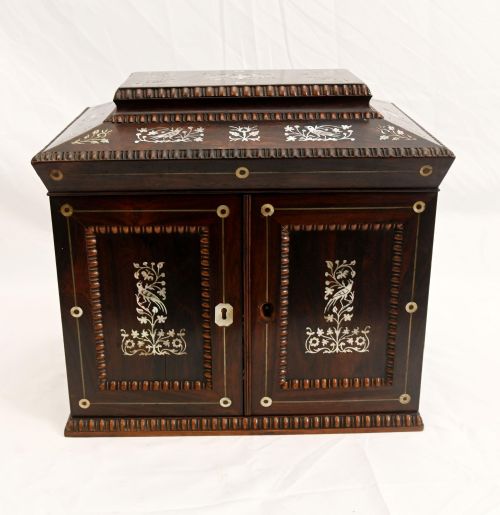


Inlaid Wood Jewellery Chest
An inlaid wood jewellery chest is a compact vessel for precious items, combining intricate surface patterns with practical storage.
Inlaid Wood Jewellery Chest
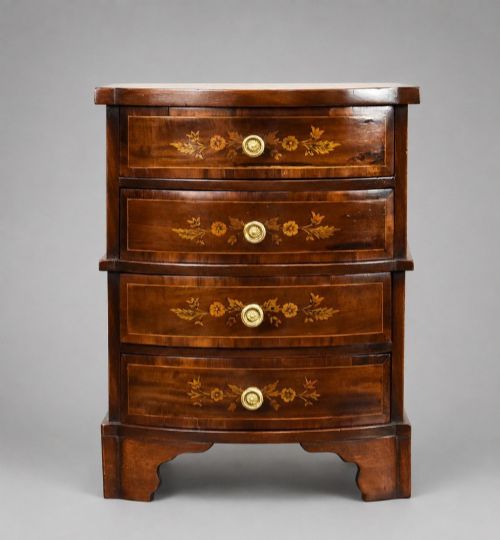
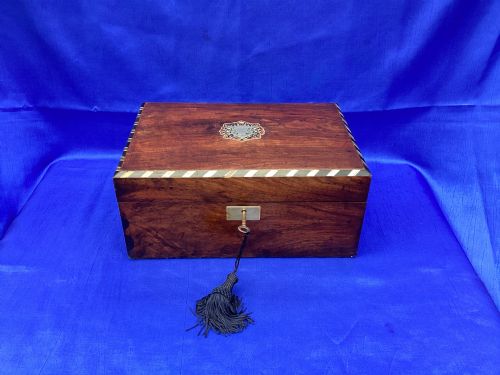
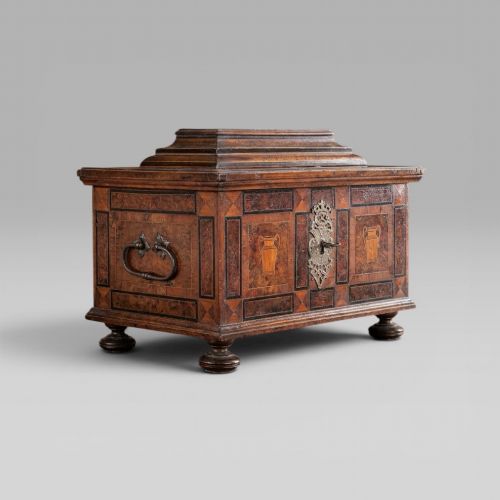
An inlaid wood jewellery chest brings together fine cabinetmaking and decorative surface work, appearing in forms from miniature chests of drawers to table cabinets and caskets. The selection here spans periods from the seventeenth century through to the Edwardian era, with Victorian pieces forming a significant part of what is visible.
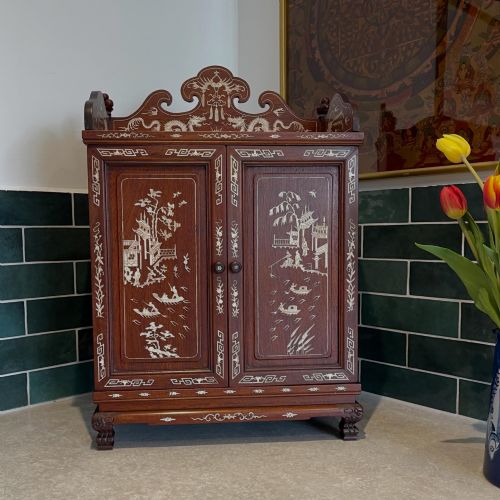
Buyers encounter a variety of regional styles, including English Tunbridge Ware, Italian Sorrento work, French decorative boxes, and Chinese hardwood pieces. These objects served to store trinkets, watches, and keepsakes on dressing tables and desks.
Materials and construction
Maker's workshops utilised dense timbers such as rosewood, mahogany, walnut, coromandel, and amboyna as foundational woods for these chests. These dark or figured woods provided a robust carcase capable of holding fitted trays and secret compartments.
Surface decoration relied on marquetry, parquetry, and mosaic work, incorporating contrasting materials like boxwood, satinwood, thuya wood, and mother-of-pearl. Brass fittings, locks, and handles were frequently integrated to secure and lift the boxes.
The listings feature rosewood, mahogany, walnut, and coromandel as primary woods, often enhanced with mother-of-pearl and boxwood.
Assessing craftsmanship
Quality rests in the precision of the marquetry and the tightness of the wood joints across the box or miniature chest. Superior examples display seamless flush inlay where different timber species meet without gaps or excessive filler.
The sophistication of the internal fittings, such as velvet linings, lift-out trays, and working locks with original keys, separates standard boxes from finer cabinets. The choice of base timber, from plain mahogany to highly figured burr wood or amboyna, dictates the piece's tier.
Edwards & Roberts
The Inlaid Wood Jewellery Chest Glossary
- Marquetry
- A decorative technique applying pieces of veneer to a structural carcase to form pictorial or geometric patterns. Craftsmen cut these thin wood sections precisely to fit together.
- Tunbridge Ware
- A form of British woodworking originating in Kent, characterised by tiny mosaic tiles assembled from different coloured woods to create pictorial designs. These mosaics often cover the entire lid of a trinket box.
- Casket
- A box, typically decorative and often hinged, designed for holding jewellery, documents, or valuables. Seventeenth-century examples often feature floral marquetry.
- Sorrento Ware
- Italian wood inlay work produced in the nineteenth century, typically featuring olive wood decorated with musical motifs or local scenes. It is commonly found on small caskets and table boxes.
- Parquetry
- A geometric mosaic of wood pieces used for surface decoration on floors and box lids. It relies on regular shapes like squares, triangles, and lozenges.
Inlaid Wood Jewellery Chest: Frequently Asked Questions
What is an inlaid wood jewellery chest?
An inlaid wood jewellery chest is a decorative box or miniature chest featuring surface patterns created by inserting contrasting pieces of wood or shell into a timber carcase.
These pieces were built to house precious trinkets, rings, and watches on dressing tables during the eighteenth, nineteenth, and early twentieth centuries.
How do I date an antique jewellery box?
Dating relies on examining the timber used, the style of the marquetry, the internal lining, and construction methods like dovetailing.
Earlier pieces from the seventeenth and eighteenth centuries utilise different foundational woods and joinery compared to Victorian or Edwardian productions.
Were these chests used for travel?
Some robust models, such as campaign boxes and travelling vanity chests, were built for journeys with secured compartments and locks.
Many others were strictly stationary pieces designed to remain on a desk, table, or dressing chest in a home.