



Inlaid Wood Display Shelves
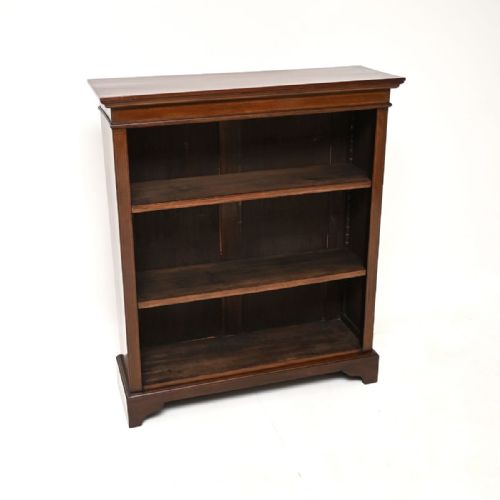
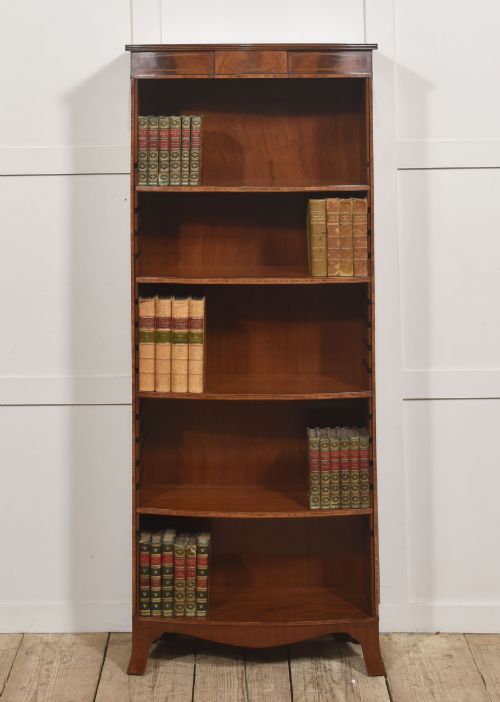
Inlaid wood display shelves bring surface pattern and open tiers together, offering a traditional place to display ornaments and books.
Inlaid Wood Display Shelves
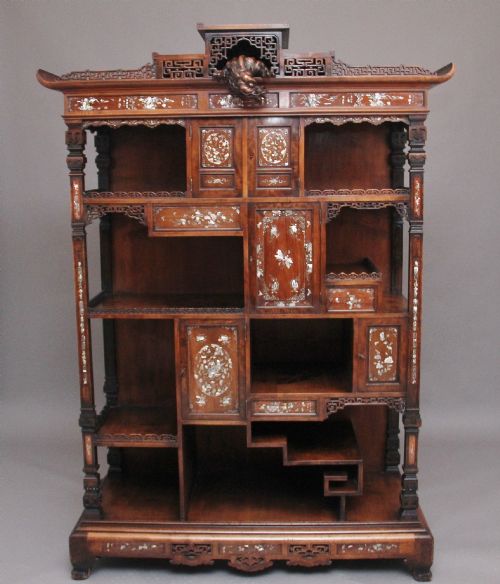
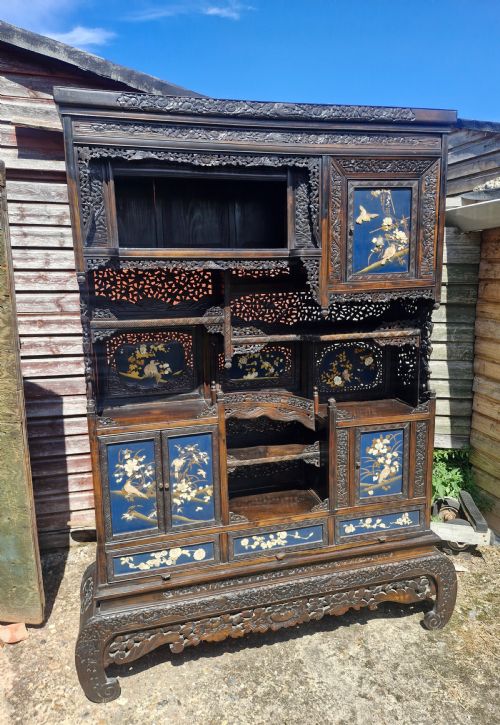
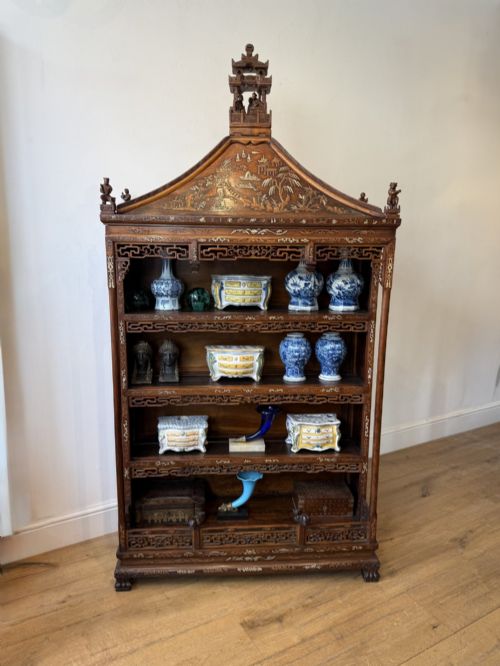
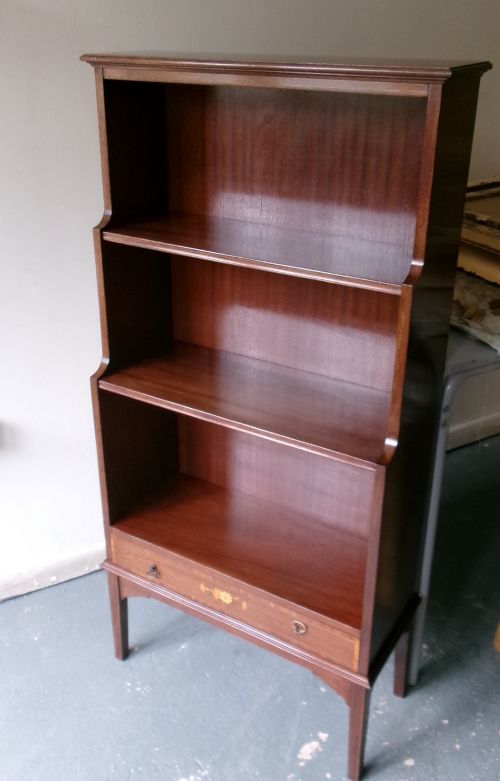
When you search for inlaid wood display shelves, you encounter pieces designed to hold books and decorative objects while exhibiting contrasting timber decoration. The selection spans Victorian and Edwardian periods, alongside a smaller number of earlier 19th Century examples.
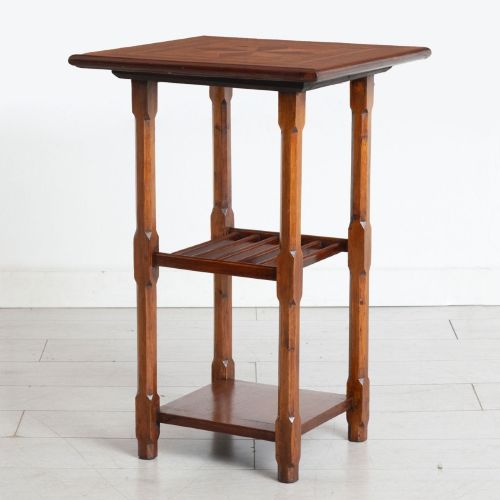
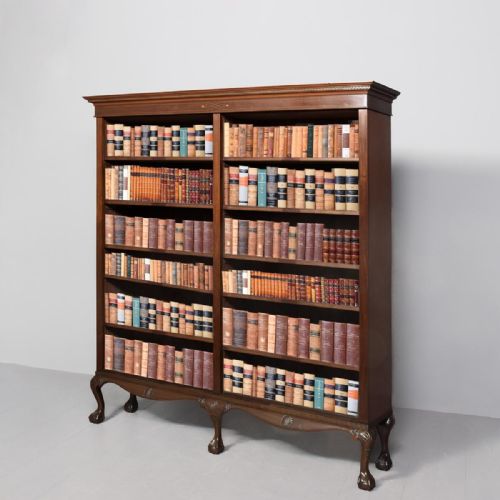
Forms range from multi-tiered etageres and corner whatnot stands to open bookcases and wall-hanging cabinets. Mahogany and walnut bodies dominate, frequently incorporating lighter wood stringing or marquetry panels.
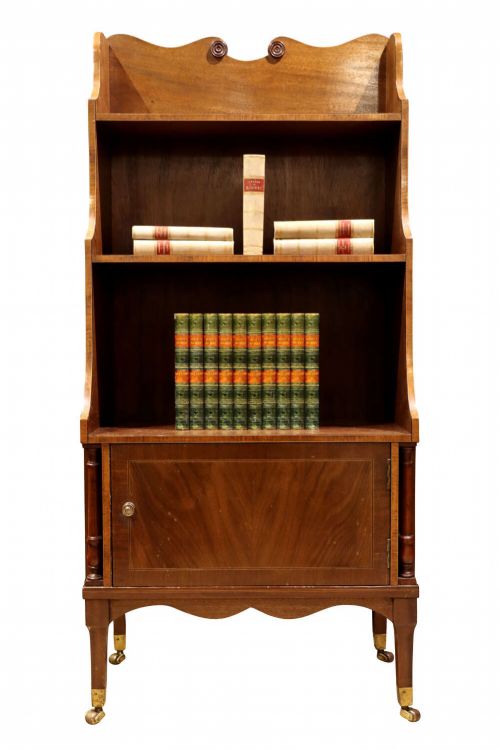
Edwardian and late Victorian iterations appear most frequently on this page, often combining open shelving with enclosed lower cupboards or glazed doors.
Materials and Construction
Cabinet makers utilised dark foundational timbers such as mahogany, walnut, and rosewood, contrasting them with bright stringing or inlay in satinwood, boxwood, and mother of pearl. Brass mounts and castors appear on select pieces, adding structural support and metallic contrast.
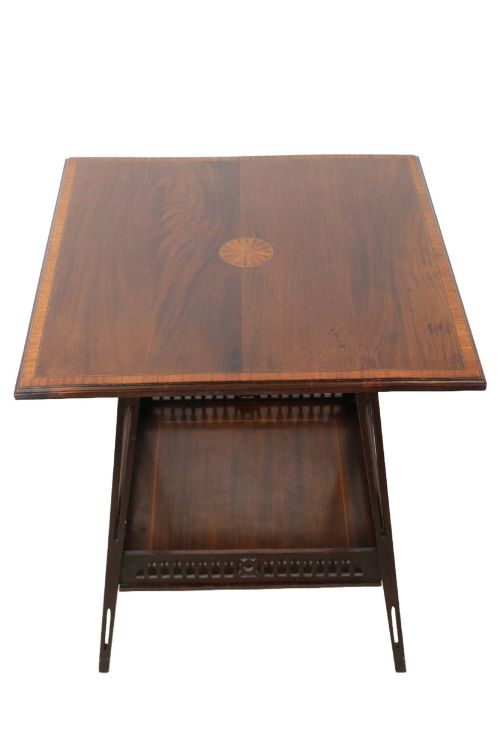
Marquetry techniques allowed artisans to form pictorial or geometric motifs across cabinet doors, tabletops, and friezes. Individual tiers are joined to upright supports using traditional housing joints and secure dowels, ensuring stability across multiple shelf levels.
The inventory spans multiple 19th-century decades and the Edwardian era, featuring etageres, bookcases, and corner stands.
Assessing Craftsmanship
The distinction between standard utility items and exceptional examples lies in the precision of the marquetry and the choice of secondary timbers. Finely cut inlay sits flush with the surrounding veneer, showing minimal filler at the joints.
Cabinet work involving burr veneers or carefully chosen grain patterns demonstrates superior workshop origin. The integration of structural brass details and solid brass castors further separates standard production from finer output.
Trevor Page & Co·Shapland & Petter
The Inlaid Wood Display Shelves Glossary
- Etagere
- An open tiered piece of furniture designed for displaying small ornaments and decorative items. These multi-level stands circulate light through a room.
- Whatnot
- A freestanding cabinet with multiple open shelves, popular throughout the Victorian period for corner or wall placement. It holds books and ornamental collections.
- Marquetry
- The art of applying pieces of veneer to a structure to form decorative patterns or pictures. Craftsmen cut contrasting woods to fit precisely into prepared recesses.
- Stringing
- Thin lines of contrasting timber inlaid into grooves on a furniture surface. This technique outlines drawers, shelves, and tabletops.
- Waterfall bookcase
- A shelving unit where each lower shelf is slightly deeper than the one above it. This profile creates a stepped arrangement descending toward the floor.
Inlaid Wood Display Shelves: Frequently Asked Questions
How do I clean inlaid wood shelves?
Dust surfaces regularly with a soft, dry cloth to prevent accumulation in the crevices of the inlay. Avoid using harsh chemical sprays or excess water, which can loosen delicate veneers and lift older finishes.
Apply a traditional microcrystalline wax periodically to nourish the timber and protect the surface from moisture. Buff the wax gently after application to maintain a subtle, natural sheen across the mahogany or walnut.
Can corner whatnot stands hold heavy books?
Corner whatnot stands are constructed primarily for display items, ceramics, and small collections rather than heavy library volumes. Their multi-tiered vertical frames distribute weight outward rather than supporting dense point loads.
Place lighter decorative objects on upper tiers and reserve the lowest shelf for heavier items if necessary. Inspect the joints connecting the shelves to the upright supports before loading any weight.
How do I date an Edwardian display cabinet?
Edwardian display cabinets and bookcases generally date from between 1901 and 1910, showing lighter timber selections like mahogany and satinwood. Their inlay patterns tend to be more restrained and geometric compared to earlier Victorian work.
Examine the backboards and interior construction details for tool marks and timber consistency. Machine-sawn elements and standardised screw types often confirm an early 20th century manufacturing date.
Where should I place a wall-hanging cabinet?
Wall-hanging cabinets and shelves suit hallways, living rooms, and dining areas where floor space is limited. Mount them securely to structural wall studs to support the weight of the timber and enclosed contents safely.
Position the cabinet at eye level to showcase its inlaid door panels or open display tiers effectively. Keep the piece away from direct sunlight and heat sources to prevent timber shrinkage and veneer lifting.