

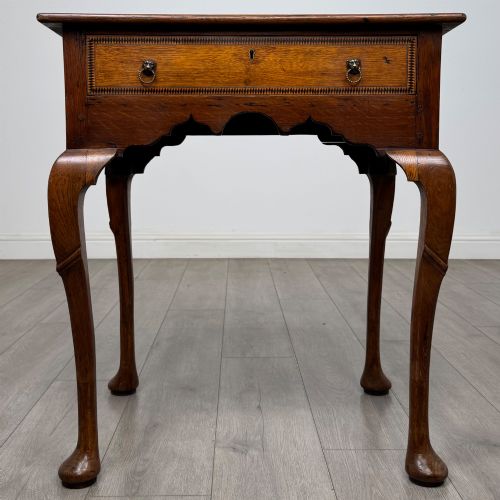

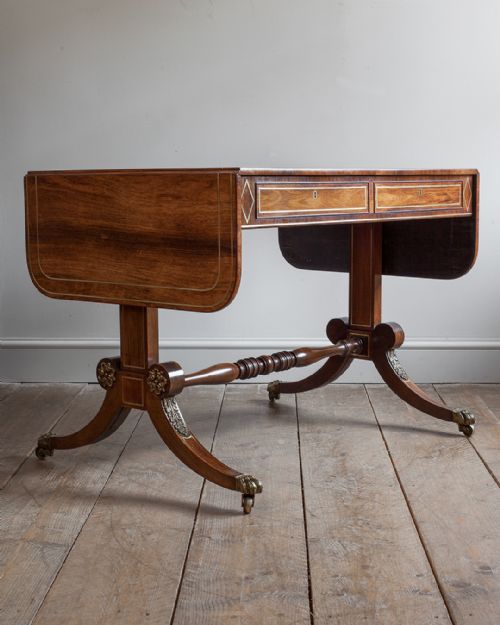
Inlaid Wood Console Table
An inlaid wood console table brings refined surface detail and architectural presence to a hall or reception room.
Inlaid Wood Console Table
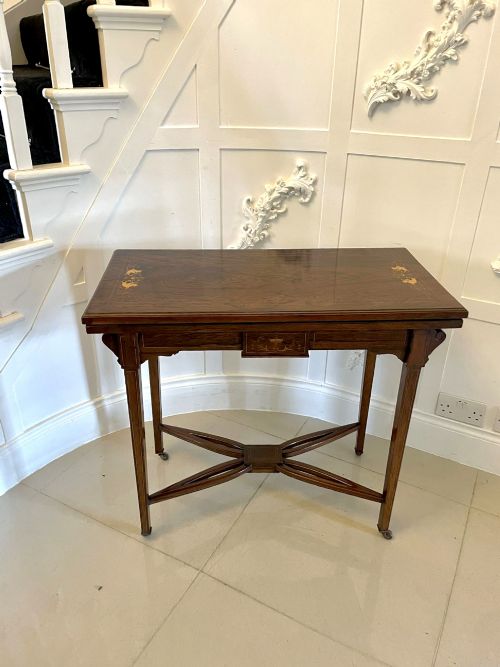
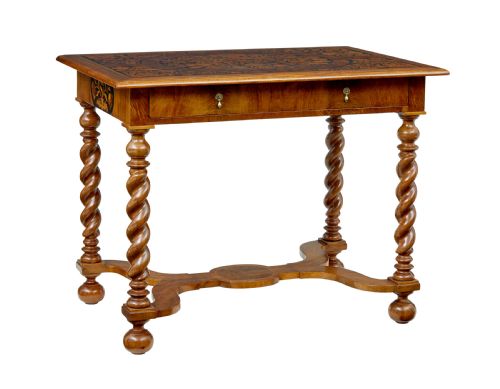
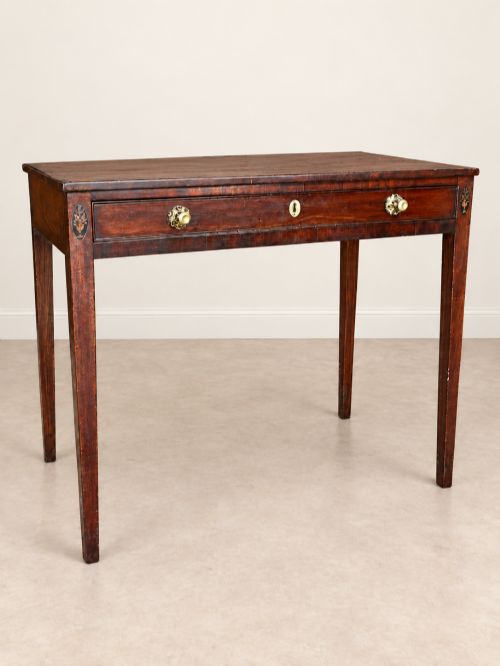
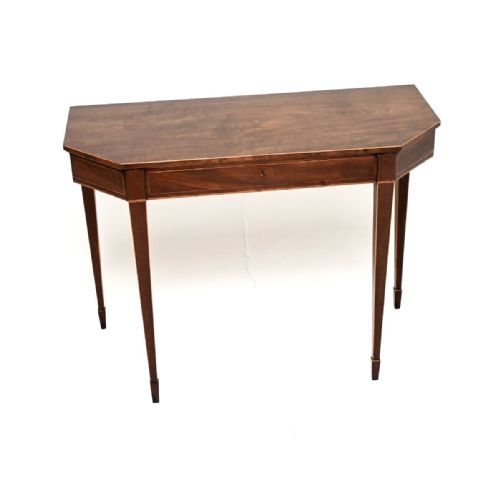
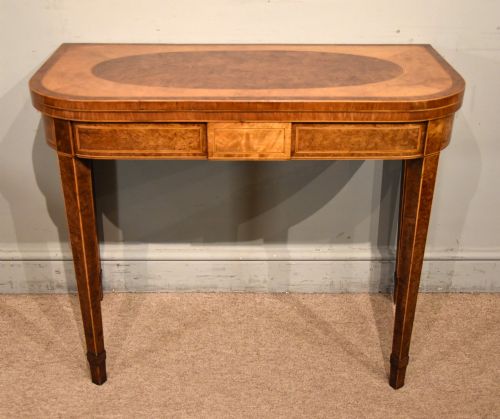
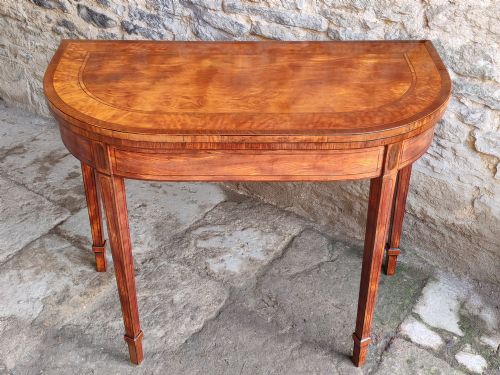
An inlaid wood console table groups together wall-standing furniture designed for display and occasional service, drawing on Georgian, Regency and Edwardian traditions. The inventory spans half-moon demi-lune shapes, fold-over card tables and rectangular side forms.
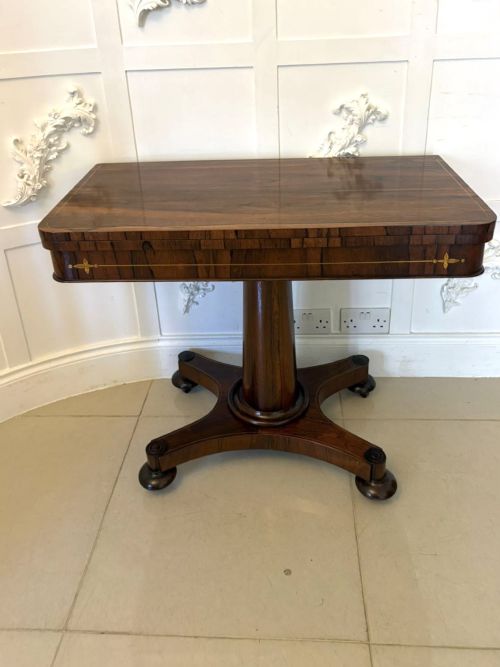
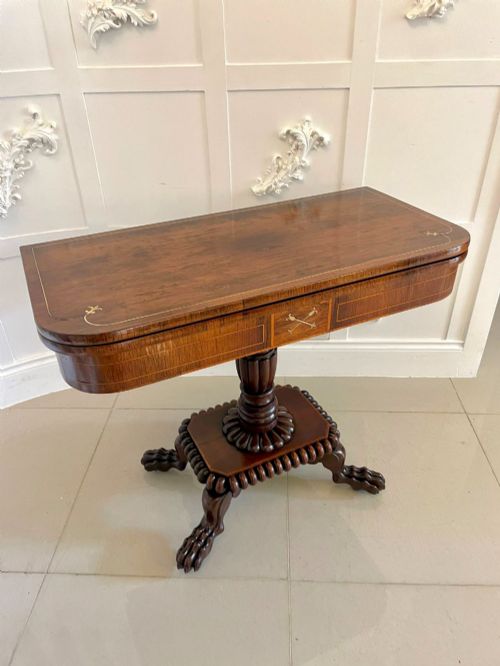
Makers of the Georgian and Regency eras often combined the console function with a pivoting top to serve as a games or tea table. Edwardian interpretations frequently utilise satinwood and mahogany to recreate lighter neoclassical proportions.
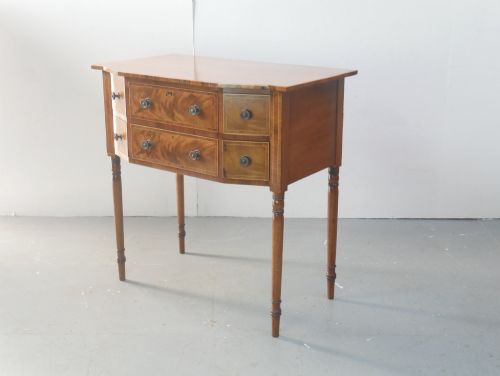
The profile leans toward shallow depths suitable for perching against a wall, sometimes paired with folding leaves or drawers. Surviving examples demonstrate how these surfaces adapted from utilitarian wall tables into decorative focal points.
Materials and Technique
Cabinetmakers constructed the carcases from dense primary timbers such as mahogany, rosewood and satinwood, applying veneers to stable secondary woods. Surface enrichment relied on precision cutting of contrasting elements.
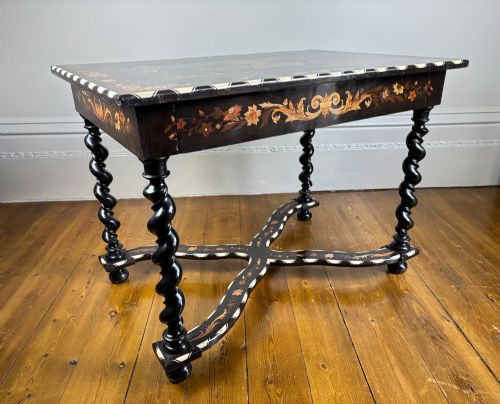
Inlay work incorporates boxwood, ebony, brass and fruitwood to form geometric stringing, foliage or figurative marquetry panels. Brass stringing and mounts appear frequently on Regency pieces, contrasting sharply against dark rosewood grounds.
Listings feature mahogany, rosewood and satinwood most frequently among primary timbers, complemented by brass and boxwood inlay.
Judging Quality
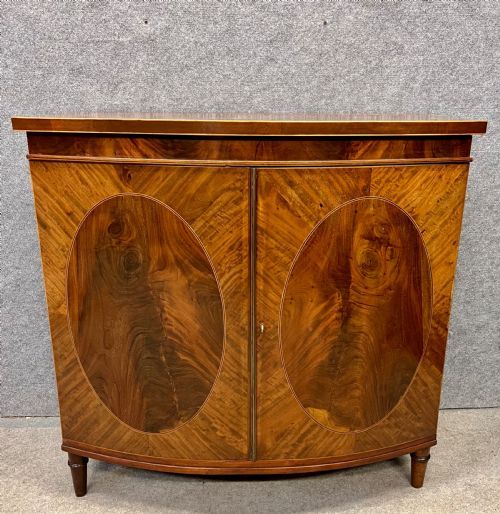
Evaluation rests on the crispness of the timber selection and the precision of the contrasting inlay work. Finer examples display tightly grained veneers and seamless integration of brass or light wood stringing into the primary surface.
Structural integrity of the folding mechanisms and the retention of original patination elevate an individual piece. Lesser items show clumsy repairs, mismatched veneer grains, or later replacements of the decorative brass borders.
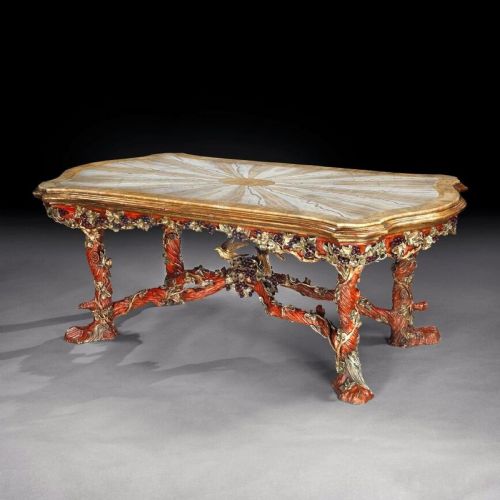
George Bullock·Amleto Bertoni
The Inlaid Wood Console Table Glossary
- Demi-lune
- A half-moon shape popular for console and card tables designed to sit flush against a wall. This profile allowed tables to occupy minimal floor space while providing a wide top surface.
- Marquetry
- The art of forming decorative patterns by fitting together veneers of different woods, metals or shells. Artisans cut these intricate pictorial designs to adorn tabletops and friezes.
- Crossbanding
- A border of veneer laid with the grain running perpendicular to the main surface. This technique frames the primary timber panel and adds visual definition to the edge.
- Stringing
- Thin lines of contrasting wood or brass inlaid into channels cut into the furniture surface. It defines geometric boundaries and outlines drawer fronts or tabletops.
- Satinwood
- A tropical timber prized for its lustrous, yellow-gold appearance and fine grain. It became the signature material for late eighteenth-century and Edwardian neoclassical revival pieces.
Inlaid Wood Console Table: Frequently Asked Questions
Where should I place a console table?
These tables sit comfortably in hallways, living rooms or dining spaces where floor space is limited. Their shallow profiles allow them to stand against walls without obstructing pathways.
Pairs of demi-lune tables can also be separated or brought together to form a freestanding circular table when required for entertaining.
How do I identify a fold-over table?
Fold-over tops feature a hinged leaf that opens to double the surface area for card games or writing. The pivoting top is typically supported by a swing leg or a concertina frame hidden beneath the frieze.
Examining the underside reveals the pivot hinges and the secondary framing used to support the weight of the open leaf.
What is the difference between inlay and marquetry?
Inlay involves inserting pieces of contrasting material into hollowed-out recesses of a solid wood base or veneer. It often takes the form of geometric lines, stringing or simple borders.
Marquetry assembles an entire picture or decorative motif from a puzzle of various veneers before gluing the completed sheet onto the carcase.
How do I care for antique wood surfaces?
Maintain the timber by keeping pieces away from direct heat sources and strong sunlight, which can dry out old veneers. Dust gently with a dry, soft cloth and avoid modern silicone polishes.
Application of traditional beeswax helps nourish the polish and preserves the rich patination built up over centuries of use.