

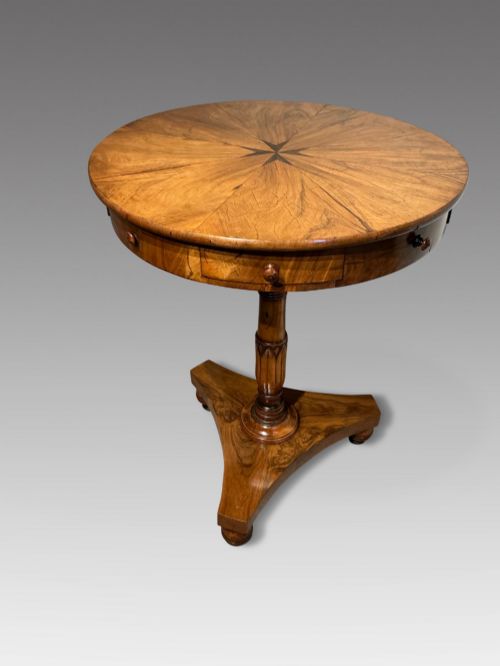
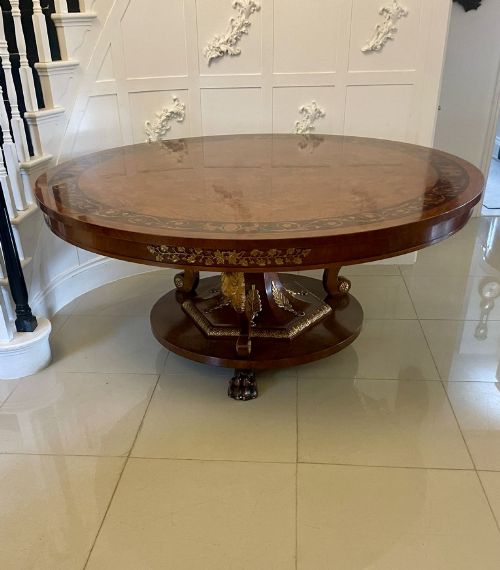
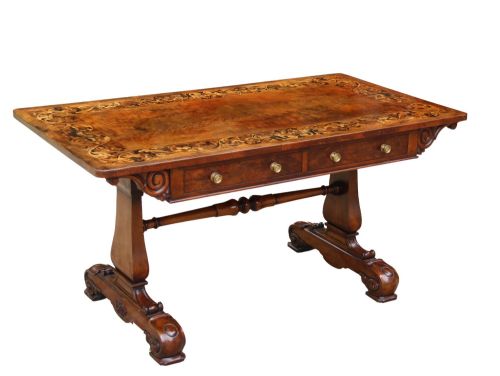
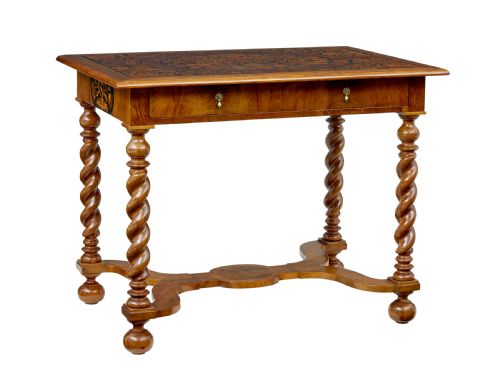
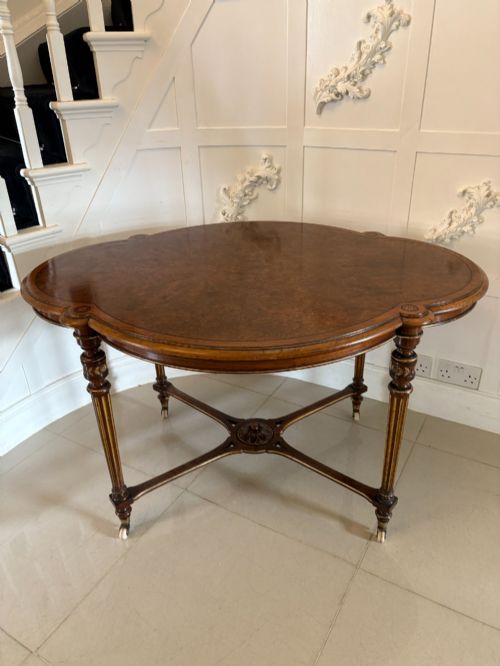
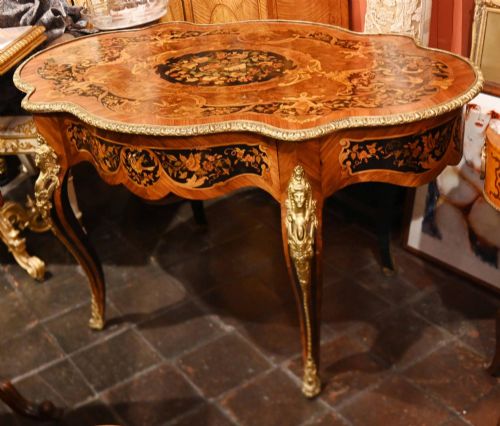
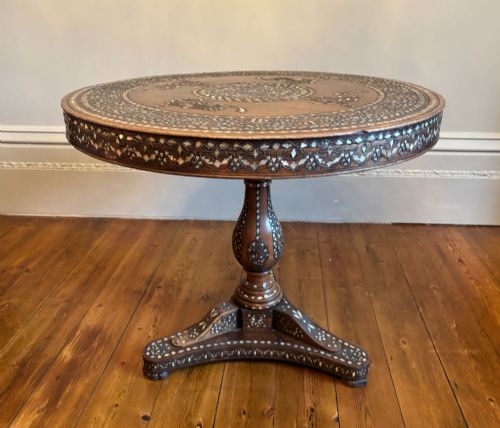
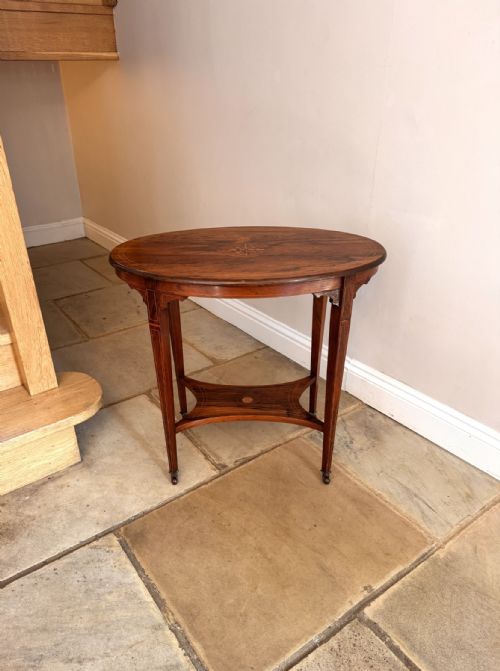
Inlaid Wood Center Table
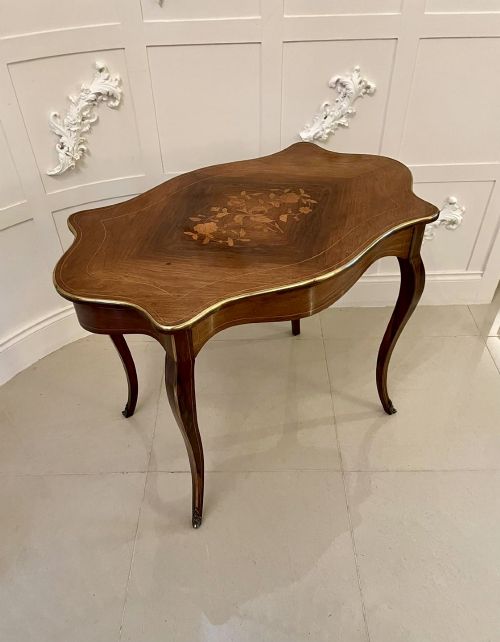
An inlaid wood centre table anchors a room with botanical marquetry and contrasting timber borders worked across Victorian, Regency, and Edwardian periods.
Inlaid Wood Center Table
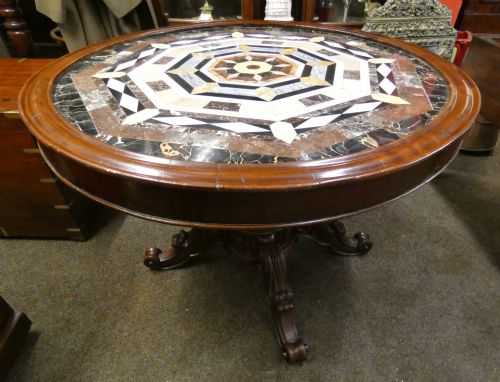
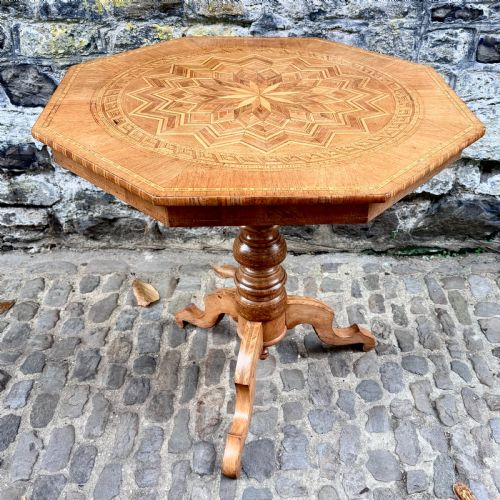
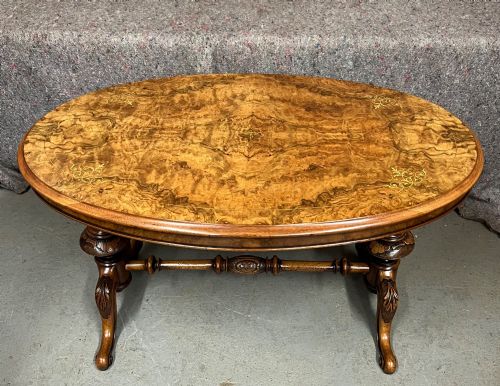
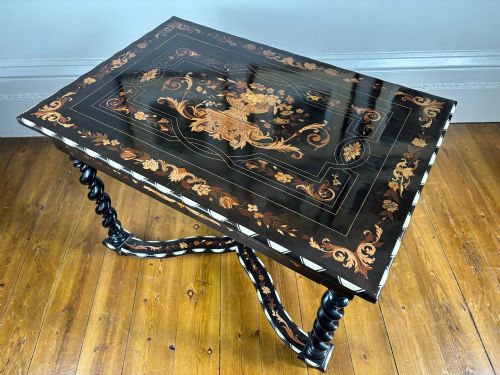
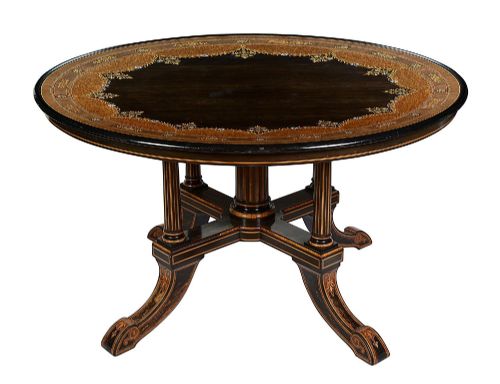
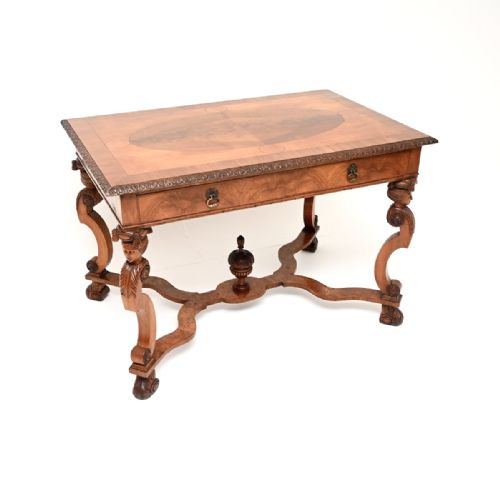
An inlaid wood centre table is a freestanding piece designed to sit in the middle of a room rather than against a wall. The selections here span the nineteenth century and the early twentieth century, showing diverse regional traditions from British Victorian burr walnut examples to French Louis XV revival marquetry desks and Ceylonese ebony pieces.
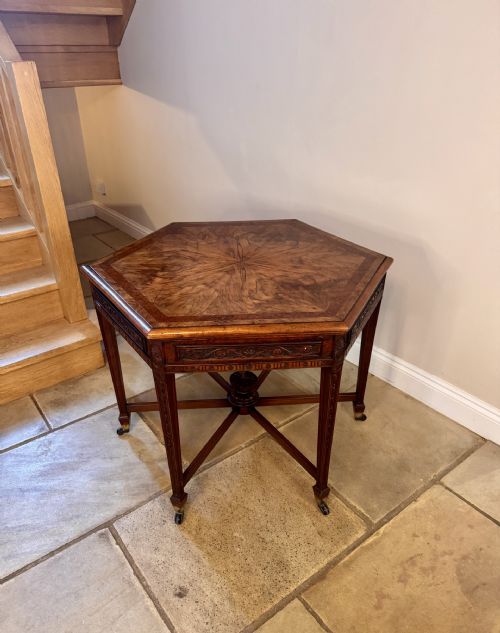
Most examples function as occasional tables, coffee tables, or games tables with octagonal, oval, round, or shaped tops. Buyers encounter various utilitarian forms such as side tables, pedestal tables, and writing tables alongside decorative display pieces.
Origins stretch across Europe and beyond, including Anglo-Indian, Italian Sorrento, Irish Killarney, Dutch, and Scandinavian workshops. Woods like mahogany, rosewood, satinwood, and walnut form the primary vehicle for elaborate decorative veneers.
How they were made
Cabinet makers constructed these tables using solid timber frames overlaid with fine veneers of walnut, rosewood, mahogany, or satinwood. Marquetry and parquetry techniques required precise cutting of contrasting timbers, bone, mother-of-pearl, and brass to form intricate floral or geometric patterns set directly into the surface.
Surface ornamentation often incorporated boxwood and ebony stringing lines to frame central medallions and border panels. Structural additions included cast brass ormolu mounts, turned pedestals, carved legs, and occasional marble or onyx tops fitted to rigid wooden carcases.
Inlaid Wood Center Table Retail Price Guide 2026
Typical asking prices for inlaid wood center table among the pieces listed under this phrase on Sellingantiques today, from the lower quarter to the upper quarter. They describe what is for sale here now, not the wider market.
Some tables double as playing fields with built-in chess boards ready for an impromptu match.
What varies in quality
Quality rests upon the precision of the veneer work and the complexity of the timber selection, such as highly figured burr walnut or multi-toned specimen woods. Pieces exhibiting fine botanical marquetry, bone inlay, or extensive brass stringing demand higher regard than simpler geometric parquetry.
The sophistication of the structural carving and the choice of secondary woods also distinguish standard production from exhibition pieces. Integration of specialised components like chess boards, drop leaves, or gilt ormolu mounts elevates the character of the construction.
Ralph Turnbull·Anton Seuffert·Amleto Bertoni·Egan Workshop
The Inlaid Wood Center Table Glossary
- Marquetry inlay
- The art of applying decorative pieces of veneer to a structural structure to form pictorial or floral designs. This technique utilises contrasting timbers, shells, or metals.
- Parquetry
- A geometric mosaic of wood pieces used for decorative floors and table tops. It relies on repeating angular shapes like squares, triangles, and parallelograms.
- Specimen wood
- Furniture constructed from a multitude of different native and exotic timbers selected for their natural colours and grain patterns. Makers often identified the specific trees used within the design.
- Orlomu
- Gilded bronze mounts applied to furniture edges and legs for decorative accent. Originating in French cabinet making, it frames the wood panels.
- Stringing
- Thin inlaid lines of contrasting wood or light-coloured boxwood inserted into grooves on a table top. It creates delicate borders around panels and table edges.
Inlaid Wood Center Table: Frequently Asked Questions
Where should I place an inlaid wood centre table?
These tables suit prominent positions in a room where all sides remain visible, such as the middle of a hallway, a library, or a sitting room. Their finished backs and rounded perimeters allow them to stand away from walls without awkward angles.
Pair them with surrounding seating or use them to display lamps and decorative objects on an open floor plan.
How do I care for antique wood veneers?
Protect delicate marquetry and specimen wood surfaces from direct sunlight and extreme humidity fluctuations to prevent veneer lifting or timber cracking. Dust gently with a dry cloth and avoid modern silicone polishes.
Apply traditional beeswax sparingly to nourish the timber and maintain a soft protective sheen over the surface.
How can I tell a Victorian table from a Regency one?
Regency tables generally display clean architectural lines influenced by classical antiquity, utilising rosewood or mahogany with restrained brass inlay and simpler pedestal supports. Victorian examples tend toward heavier proportions, ornate carving, and elaborate burr walnut or multi-timber marquetry.
Look at the turning styles and structural joints to confirm whether a piece belongs to the early nineteenth century or the mid-Victorian era.
What is the difference between a centre table and a coffee table?
Centre tables were originally designed during the eighteenth and nineteenth centuries as tall, freestanding display pieces for the middle of grand rooms. Coffee tables are lower forms adapted later for modern seating arrangements.
Many low tables found today represent historic centre tables altered in height or purpose to suit contemporary living rooms.