




Inlaid Walnut Desk Cabinet
An inlaid walnut desk cabinet brings together fitted writing compartments and elaborate floral marquetry across periods from the seventeenth century to the Victorian era.
Inlaid Walnut Desk Cabinet
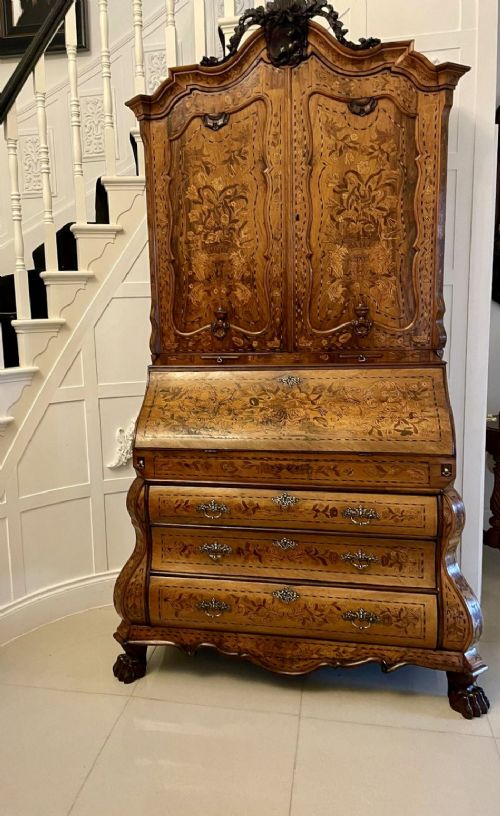
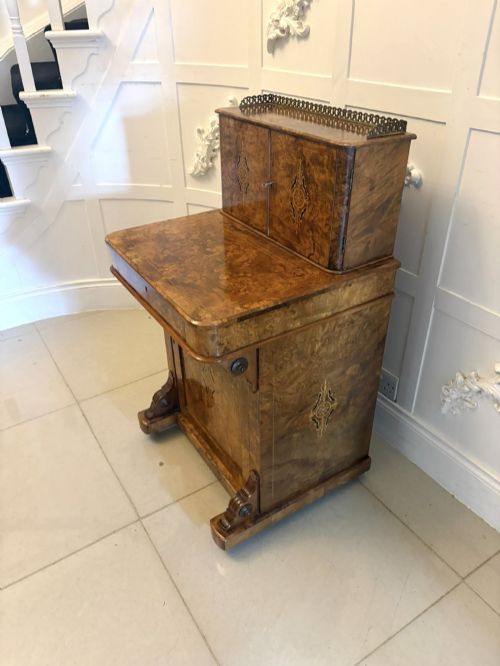
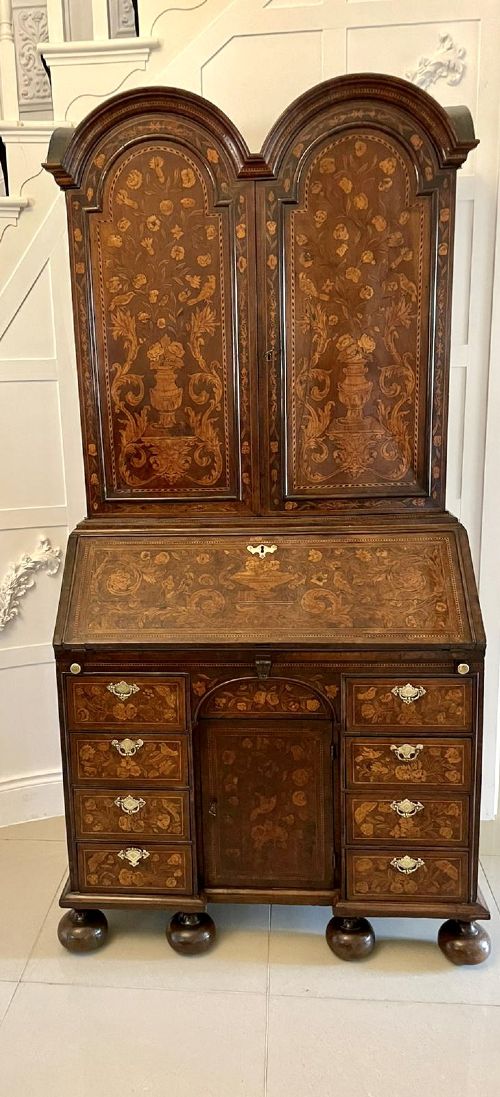
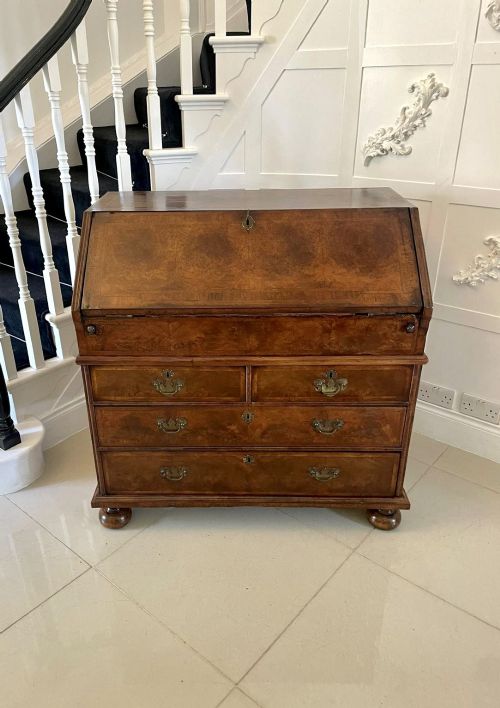
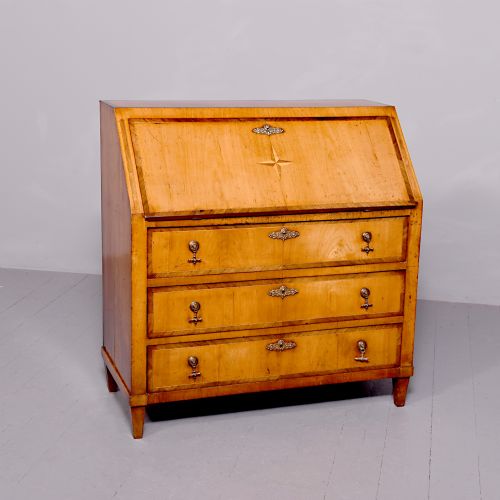
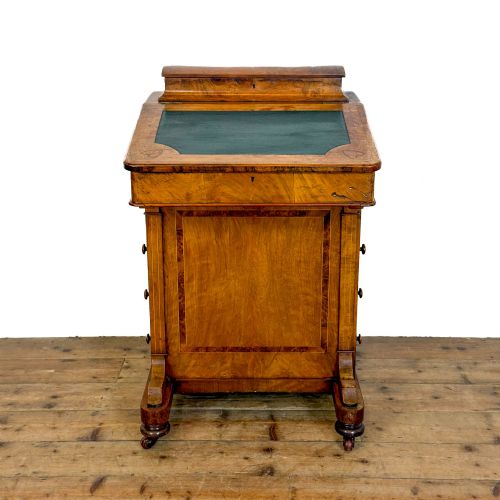
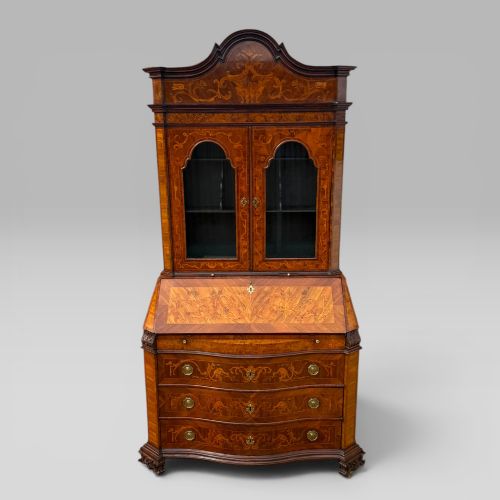
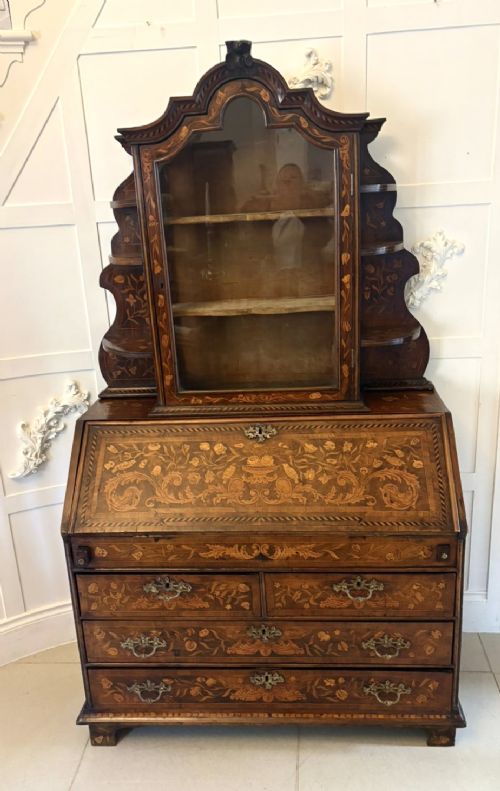
An inlaid walnut desk cabinet spans several distinct writing forms, including bureau bookcases, compact davenports, bureau de dame pieces, and table top escritoires. Buyers seeking an inlaid walnut desk cabinet most frequently encounter nineteenth-century Victorian examples, alongside eighteenth-century Dutch and continental pieces.
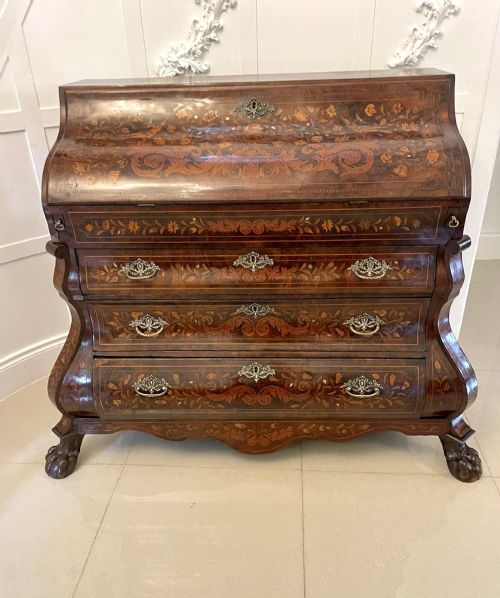
The objects combine storage cabinetry with writing surfaces, ranging from large two-part bureau bookcases down to smaller freestanding stationery cabinets and writing desks. Formats follow regional traditions, from English davenports to Dutch bombe fronted cylinders and French secretaire cabinets.
Dated examples stretch from seventeenth-century William and Mary creations through Georgian iterations and into Edwardian stationery cabinets. The selection reflects diverse European workshops producing specialised furniture for correspondence and document storage.
Craftsmanship and Detail
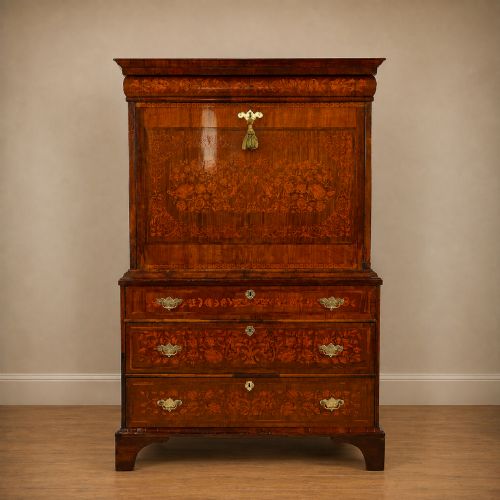
Quality separates through the precision of the marquetry inlay and the selection of figured burr walnut veneers. Superior examples display crisp floral motifs running continuously across drawers and falls without misalignment.
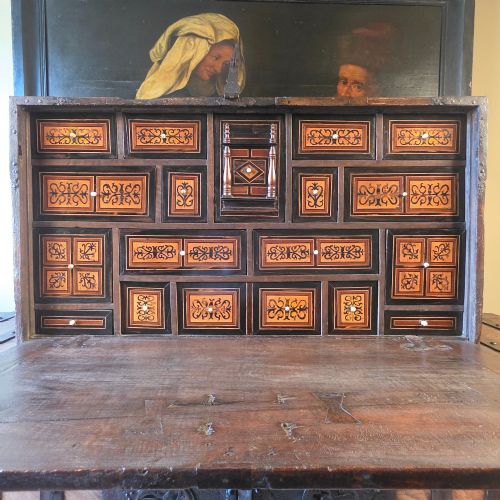
Internal engineering marks the distinction between standard and exceptional pieces, particularly in mechanical pop-up mechanisms, revolving tabernacles, and smoothly sliding desk components. The integration of secondary timbers and the crispness of brass hardware further indicate workshop standards.
Some nineteenth-century models conceal piano-top cylinder music compartments right beneath the writing slope.
The Inlaid Walnut Desk Cabinet Glossary
- Marquetry
- Decorative patterns formed by fitting together small pieces of wood veneer into wood panels. This technique creates complex floral or geometric pictures across drawer fronts and fall-fronts.
- Burr walnut
- Wood taken from a walnut tree growth where the grain has grown in a deformed, swirling pattern. It produces highly figured surfaces prized for cabinet furniture.
- Bombe
- A swelling, outward-curved contour found on the lower sections of case furniture. This curved profile is typical of continental pieces.
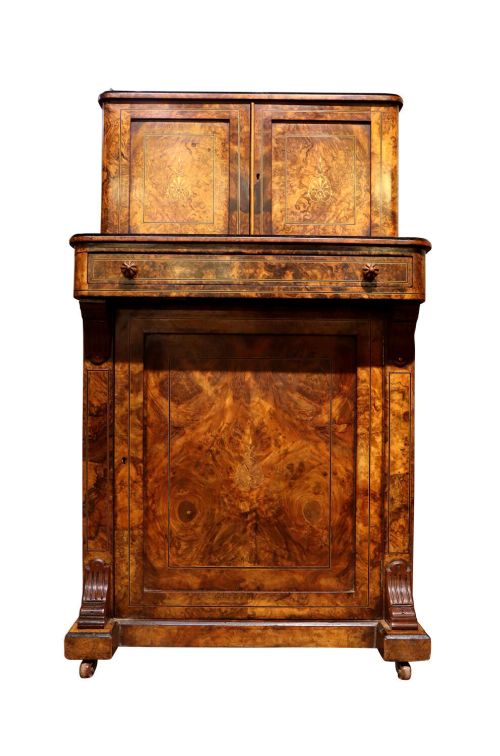
- Davenport
- A small, compact writing desk featuring a sloped writing surface above a pedestal of drawers. The form gained popularity during the Victorian period.
- Secretaire
- A piece of furniture containing a drawer or compartment that folds down to form a writing desk. It often conceals smaller drawers and pigeonholes inside.
Inlaid Walnut Desk Cabinet: Frequently Asked Questions
What is an inlaid walnut desk cabinet?
An inlaid walnut desk cabinet is a piece of antique furniture designed for writing and correspondence, featuring wood veneer marquetry patterns.
These pieces combine storage drawers or bookcase sections with a dedicated writing surface, such as a drop-front fall or a lifting slope.
How do I identify the period of a walnut bureau?
Period identification relies on examining construction methods, hardware styles, and regional cabinetry traits such as Dutch bombe shaping or English straight-front carcass forms.
Timber choice also aids dating, as seventeenth and eighteenth-century pieces often display distinct walnut graining compared to Victorian burr walnut applications.
Where were these cabinets made?
Production spanned England, the Netherlands, France, Italy, and Germany, with distinct regional workshops developing characteristic forms.
Dutch makers favoured floral marquetry and bombe silhouettes, while English cabinetmakers produced upright bureau bookcases and compact davenports.
How should I care for antique walnut furniture?
Maintaining these pieces requires keeping them away from direct heat sources and strong sunlight to prevent the walnut veneer from drying and cracking.
Regular dusting with a dry cloth preserves the polished surface without the need for heavy chemical polishes.