




Inlaid Vitrine on Legs
When you search for an inlaid vitrine on legs, you are looking for a glass-fronted cabinet designed to display precious items, raised on legs.
Inlaid Vitrine on Legs
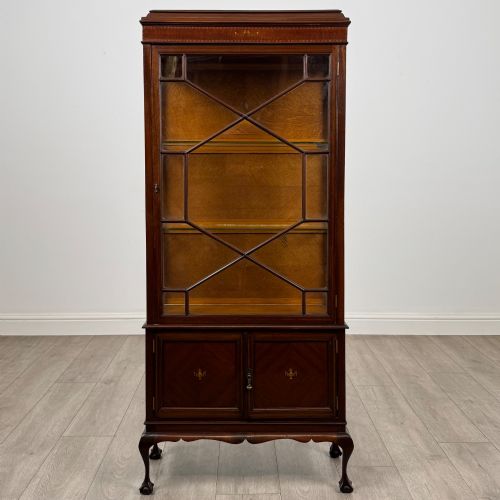
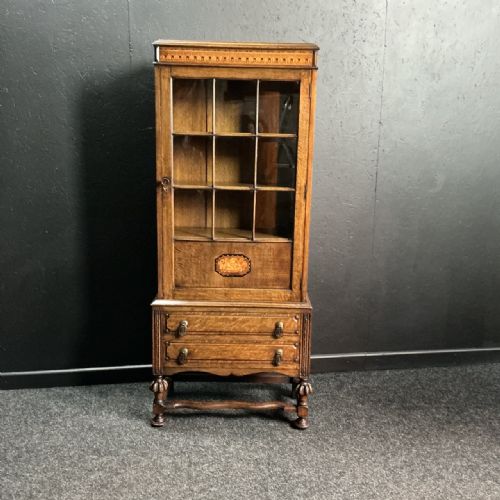
An inlaid vitrine on legs combines glass display panels with decorative woodwork, elevated off the floor on legs. These pieces serve primarily to exhibit small objects, books, and curiosities.
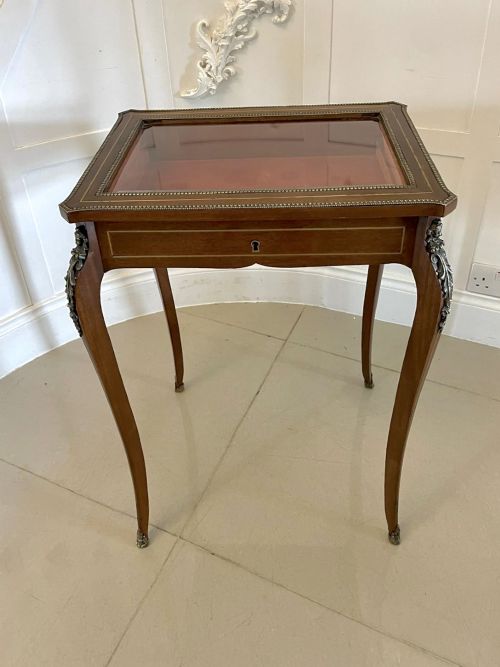
You are most likely to encounter Edwardian examples on this page, alongside pieces from the nineteenth and early twentieth centuries. The forms range from upright display cabinets to low bijouterie tables and whatnots.
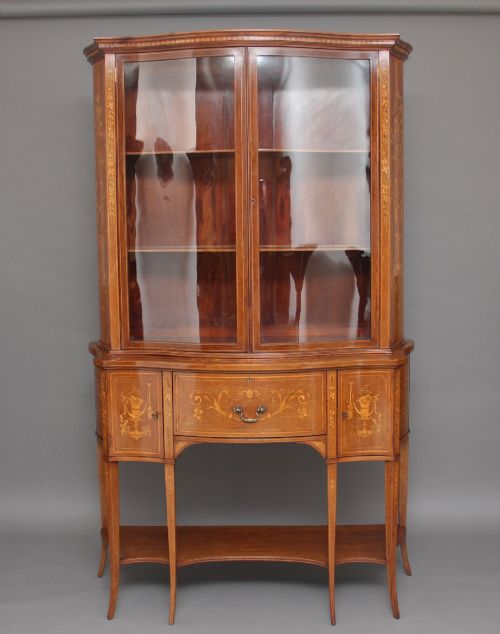
Stylistically, these pieces draw heavily on Sheraton Revival, Neoclassical, and Art Nouveau designs. Mahogany forms the primary carcase, accented with varied inlay work.
Materials and construction
Makers built these cabinets using mahogany as the main timber, often combining it with satinwood and boxwood for contrasting inlay details. Glass panels form the viewing areas for the display compartments.
Brass hardware and fabric linings such as velvet appear internally and externally to complement the woodwork. The cabinet structure rests securely upon fitted legs, uniting display utility with cabinetmaking techniques of the period.
Listings feature mahogany construction combined with satinwood and boxwood inlay across Edwardian and Art Nouveau periods.
Assessing quality
Quality in these pieces rests upon the precision of the woodwork and the crispness of the inlay. Finer examples show meticulous attention to the grain and seamless integration of contrasting woods.
The sophistication of the stylistic revival influences the overall standard of the piece. Well-executed proportions and balanced decorative motifs distinguish superior cabinets from simpler workshop output.
Waring & Gillow
The Inlaid Vitrine on Legs Glossary
- Vitrine
- A glass-fronted cabinet or case used for displaying fine objects or curiosities. These pieces often feature glazed sides to maximise light penetration.
- Bijouterie table
- A glass-topped display table specifically designed for small valuable items, jewellery, and trinkets. They frequently stand on slender legs.
- Satinwood inlay
- Decorative woodwork utilising a pale, lustrous timber inserted into a darker carcase. This technique creates contrasting patterns and borders.
- Whatnot
- An open set of shelving or a multi-tiered display stand used for ornaments. Nineteenth-century examples often combine display surfaces with enclosed storage.
- Sheraton Revival
- A late nineteenth and early twentieth-century design style emulating the classical furniture of George Sheraton. It relies on symmetrical forms and delicate inlay.
Inlaid Vitrine on Legs: Frequently Asked Questions
What is a vitrine?
A vitrine is a glazed cabinet designed to display porcelain, silver, and other small decorative items. The glass panels on the front and sides allow light to enter from multiple angles.
These cabinets were placed in drawing rooms and reception spaces to showcase the refined tastes of the household.
How do I date an Edwardian cabinet?
Edwardian cabinets generally date from the reign of King Edward VII between nineteen hundred and nineteen ten. They frequently exhibit revival styles referencing earlier eighteenth-century designs.
Examination of the interior construction, drawer linings, and secondary timbers helps confirm the period of manufacture alongside the external style.
What is a bijouterie table?
A bijouterie table is a low display table featuring a glazed top or upper compartment. It was used in formal rooms to exhibit collections of small personal ornaments.
These tables stand on legs and provide waist-height viewing for items that would otherwise sit within a larger wall cabinet.
Where should I place a display cabinet?
Display cabinets require stable placement away from direct sunlight to protect interior fabrics and wooden surfaces. Positioning them in reception rooms or hallways allows the glass panels to reflect ambient light.
Ensure the floor surface is level so the legs bear the weight evenly without straining the joints.