
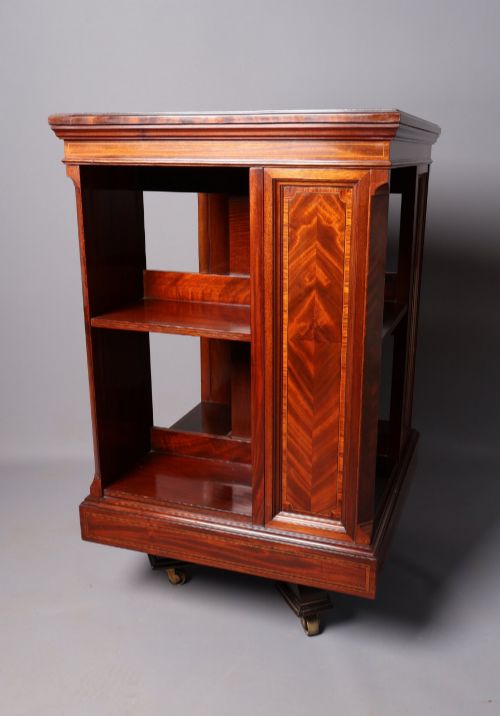
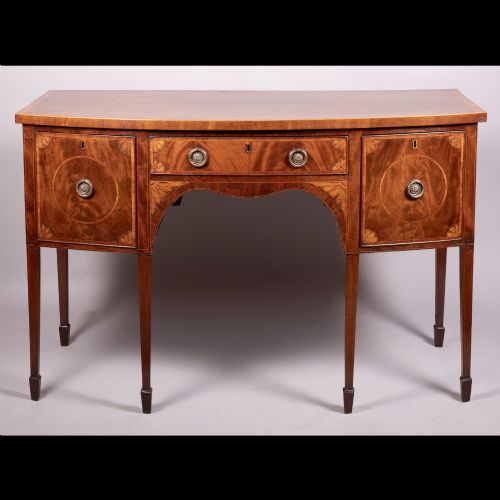
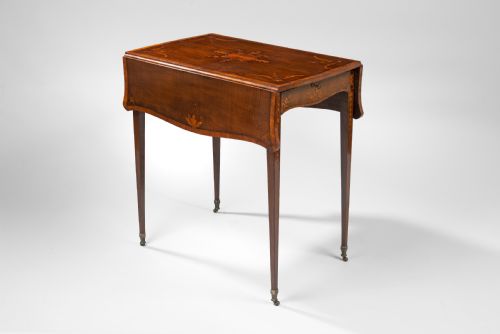


Inlaid Square Table
An inlaid square table brings crisp geometric form and contrasting woods into a room, serving as a versatile side, lamp or occasional piece.
Inlaid Square Table
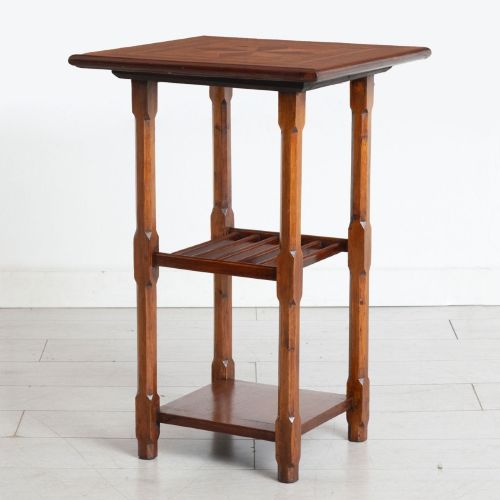
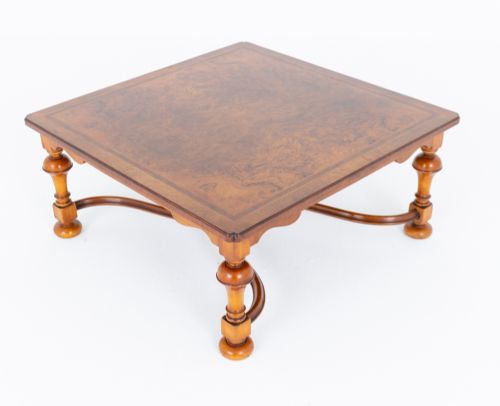
An inlaid square table is a compact surface defined by straight sides and decorative wood or metal ornamentation set flush into the timber. The pieces seen here span centuries of design, moving from 18th Century Georgian craftsmanship through Victorian and Edwardian revivals up to the early 20th century.
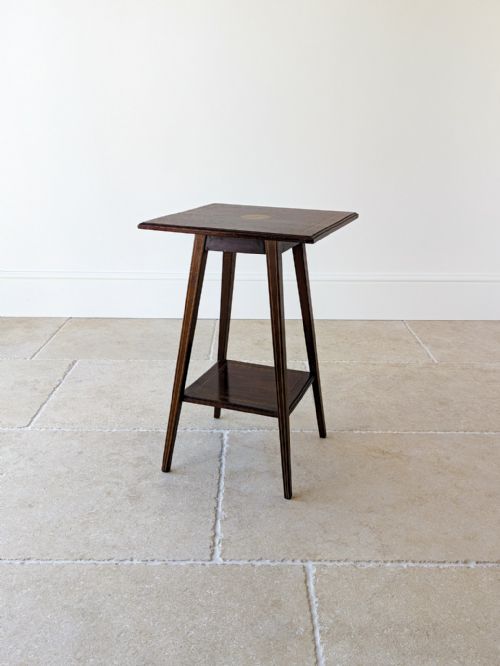
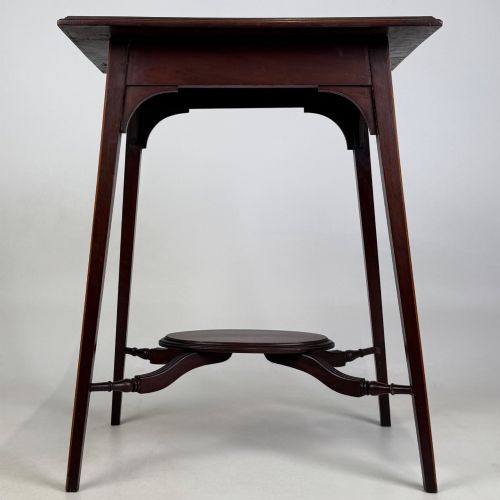
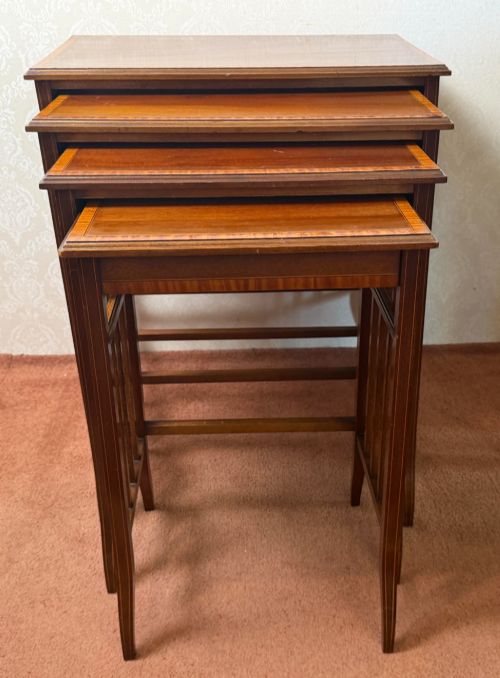
The version most commonly encountered on this page is the Edwardian or turn-of-the-century occasional or lamp table in mahogany or satinwood. These domestic items were produced in large numbers to hold lamps, books or tea, often featuring delicate contrasting stringing and tapered legs.
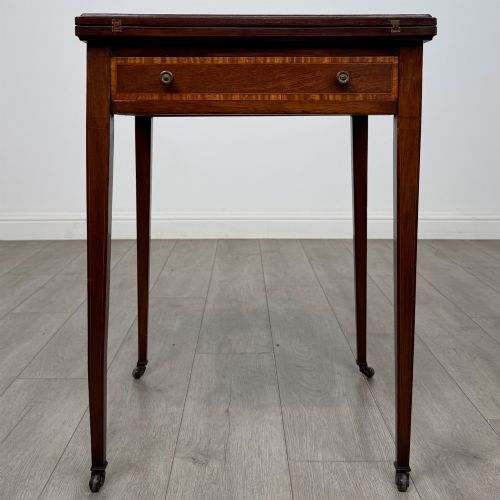
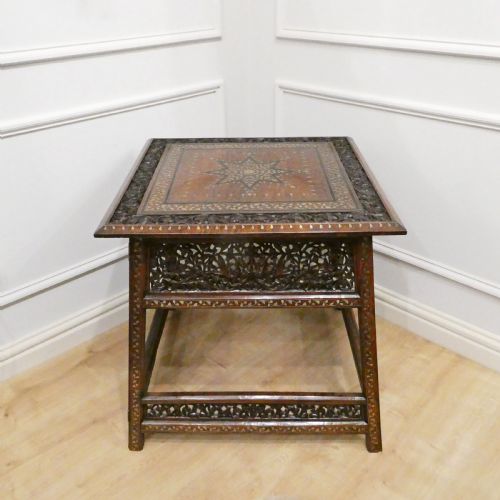
Other forms appearing in the record include games and card tables with folding tops, revolving bookcases, and more exotic regional examples incorporating brass or mother of pearl. Whatever the specific function, the defining geometry remains a balanced four-sided top accented by contrasting botanical borders.
How they were made
Makers built the structural carcases of these tables using solid hardwoods such as mahogany, walnut and oak, often applying fine veneers to stable secondary timbers for large flat surfaces. Satinwood and harewood provided pale, glowing surfaces that contrasted sharply with darker foundational woods.
Decoration relied on precision cutting of contrasting elements, utilising boxwood and ebony for stringing lines, or executing complex marquetry and pictorial panels. Metal elements such as brass inlay or applied wire added further reflective detail to select Anglo-Indian and Syrian pieces.
Listings for this phrase feature pieces spanning from the 18th Century up through the 1920s, with a strong concentration of Edwardian examples.
What varies in quality
Quality rests primarily in the crispness of the joinery and the precision with which the inlay sits flush within the surrounding timber. Finer examples display meticulous hand-cut marquetry and tight mitres where borders meet, whereas simpler utility pieces rely on printed or coarsely stamped faux stringing.
The selection of secondary timbers and the thickness of the top veneer also distinguish workshop grades. Superior pieces employ heavily figured crotch mahogany or carefully chosen satinwood that catches the light, supported by robust structural framing beneath.
Robson and Sons
The Inlaid Square Table Glossary
- Inlay
- The technique of embedding contrasting pieces of wood, metal or shell into a hollowed-out surface to form a flat decorative pattern. This method creates smooth, multi-coloured designs across the table top.
- Marquetry
- Elaborate veneer work assembled to form pictorial or geometric designs using various coloured woods. Artisans cut intricate patterns of leaves, urns or scrolls to adorn tabletops.
- Stringing
- Thin, narrow strips of contrasting light or dark wood inlaid into grooves around the edges of tabletops or legs. This linear detail frames the central panel and accentuates the furniture silhouette.
- Satinwood
- A hard, durable tropical timber known for its lustrous golden-yellow sheen and natural chatoyancy. It served as a primary face veneer for high-end occasional and card tables.
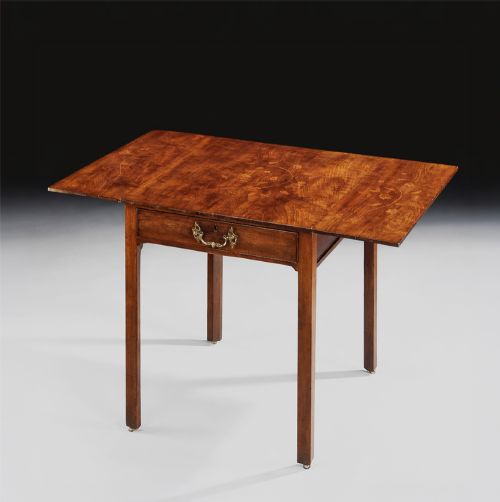
- Pembroke table
- A small occasional table featuring two hinged drop leaves supported by pivoting brackets. Many examples include a single drawer and delicate tapered legs.
Inlaid Square Table: Frequently Asked Questions
What is an inlaid square table used for?
These compact surfaces primarily functioned as lamp stands, tea tables or decorative occasional pieces in period drawing rooms. Their stable four-sided top made them ideal for holding heavy lighting or display items.
Today they serve the exact same purpose in modern interiors, fitting easily beside sofas or chairs while adding warmth through contrasting wood tones.
How do I date an inlaid square table?
Dating relies on examining the secondary timbers, the style of the legs, and the nature of the inlay work. Georgian and 18th Century pieces typically feature heavier proportions and hand-cut cockbeading, while Edwardian versions lean towards lighter satinwood veneers and delicate boxwood stringing.
Construction marks underneath, such as hand-cut screws or chalk inscriptions, also help narrow down the decade of manufacture.
Are these tables sturdy enough for daily use?
Most solid mahogany and walnut examples were built to withstand heavy daily domestic tasks like holding books and porcelain. Period joinery utilising proper mortise and tenon construction ensures lasting structural integrity.
Care should be taken with delicate satinwood or marquetry tops to avoid excessive moisture or heat damage from uninsulated cups.
How do I care for antique wood inlay?
Protect the surface by keeping tables away from direct sunlight and sudden temperature changes, which can cause veneers to lift or dry out. Regular dusting with a soft, dry cloth maintains the natural lustre of the timber.
Apply a traditional beeswax polish sparingly once or twice a year to nourish the wood without building up heavy chemical residues.