

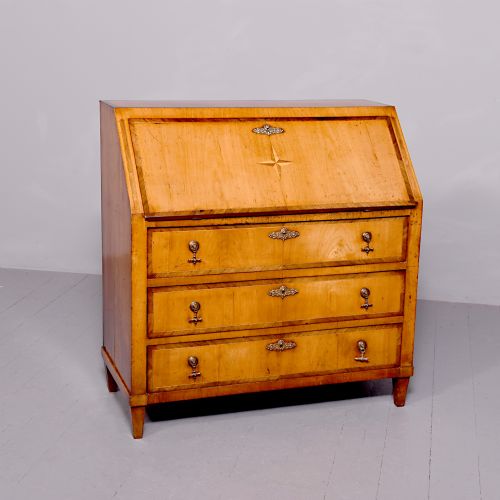
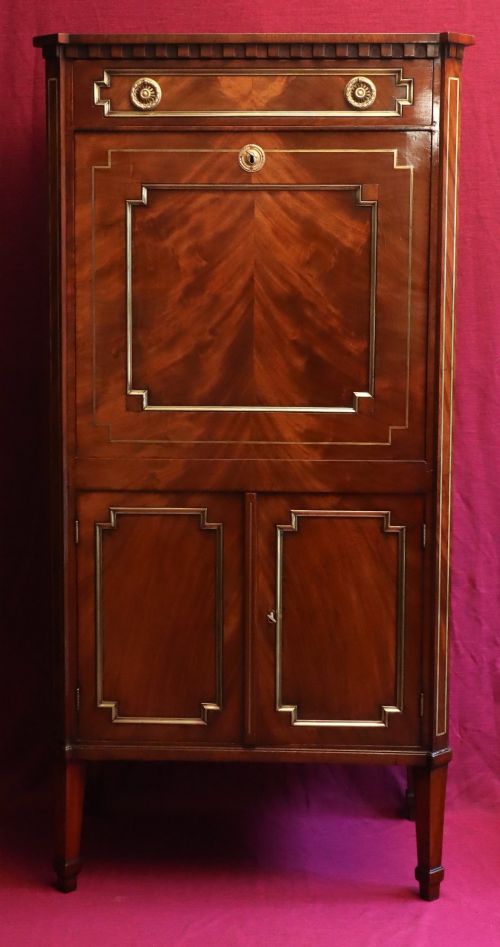
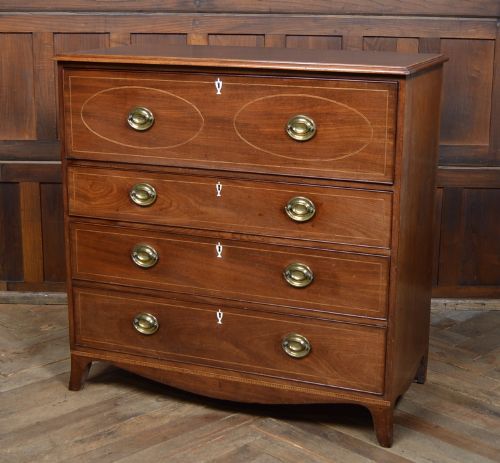

Inlaid Secretaire Cabinet
An inlaid secretaire cabinet combines practical writing space with concealed drawers, offering a clever blend of display and private storage.
Inlaid Secretaire Cabinet
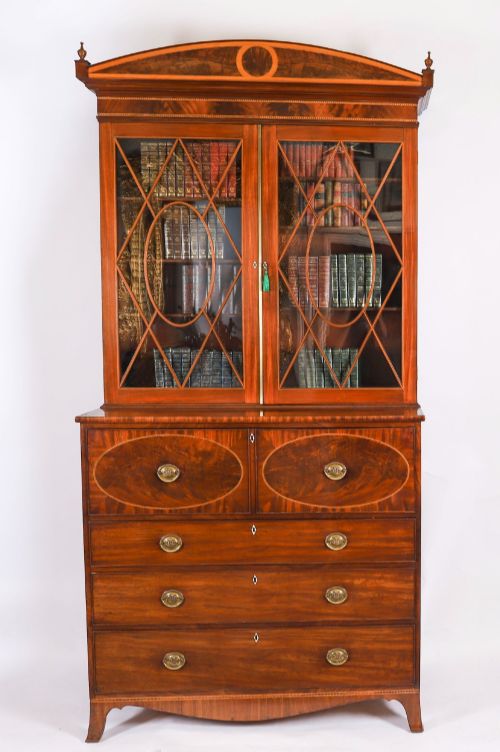
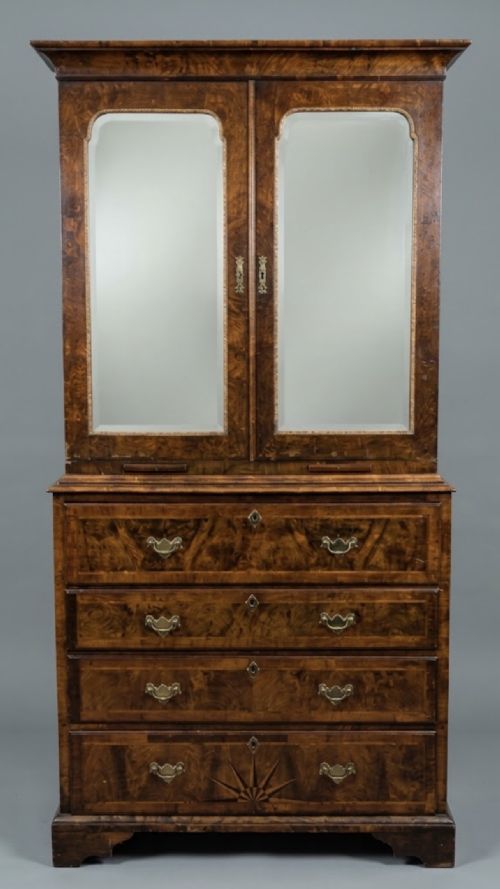
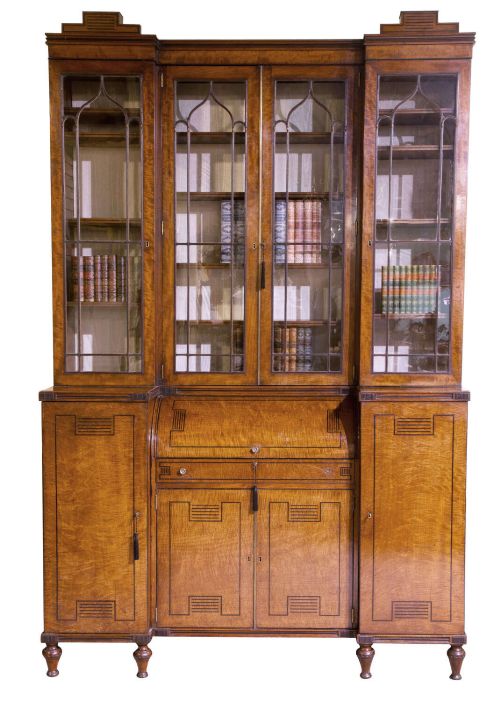
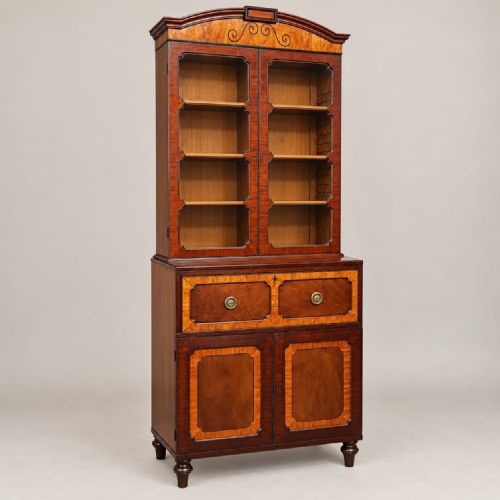
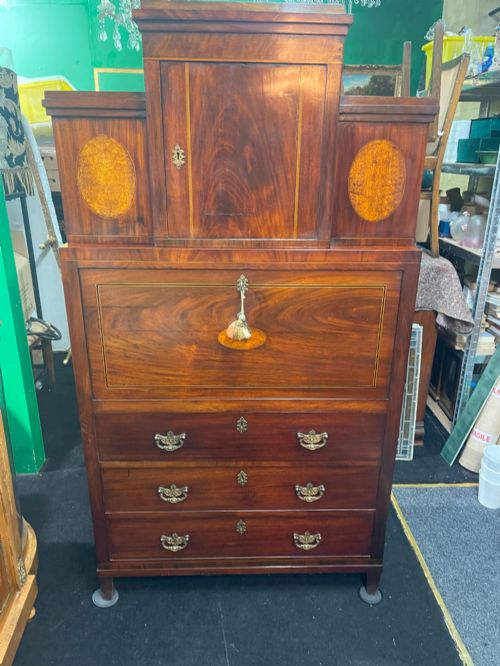
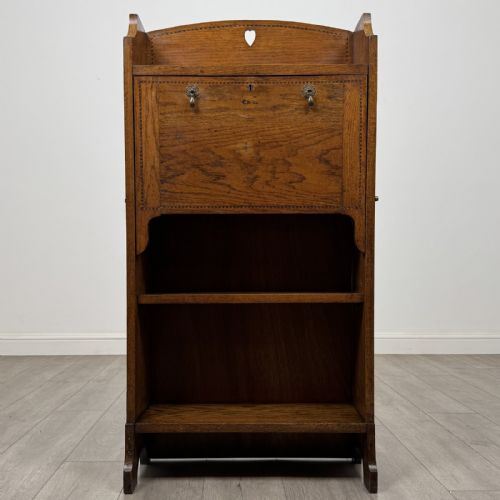
An inlaid secretaire cabinet is a dual-purpose item designed for both writing and concealed storage, frequently appearing as a tall bookcase, a chest of drawers, or a drop-front abattant. These pieces date across the eighteenth and nineteenth centuries, spanning Georgian, Regency, and continental European styles.
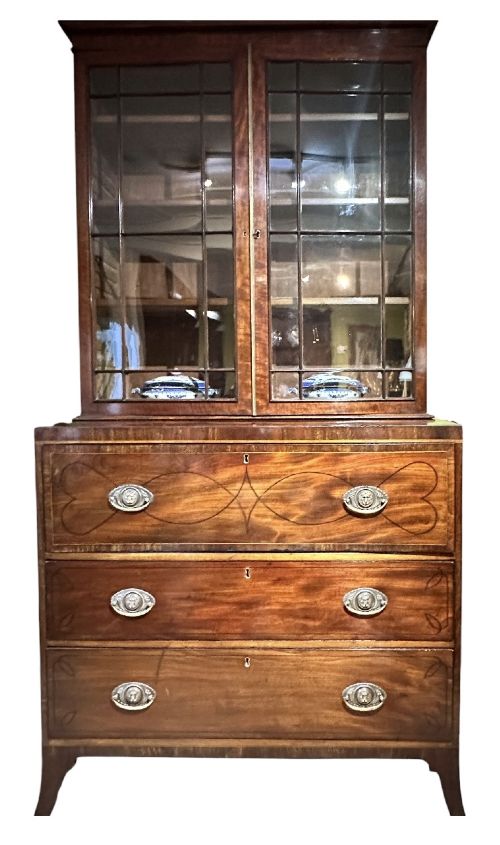
The version most commonly met on this page is the George III or Regency mahogany secretaire bookcase, often enriched with contrasting satinwood or ebony stringing. These examples feature a fitted drop-front writing drawer that conceals smaller pigeonholes and drawers behind a neat exterior.
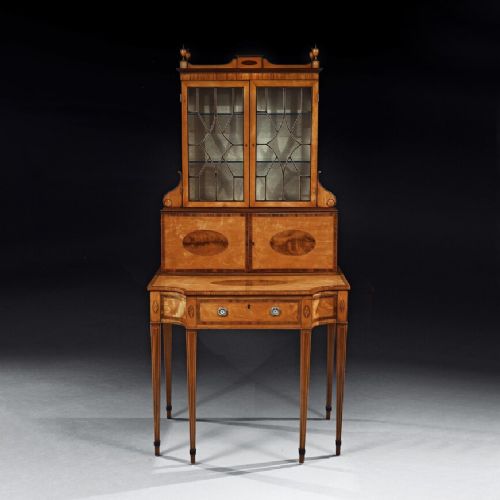
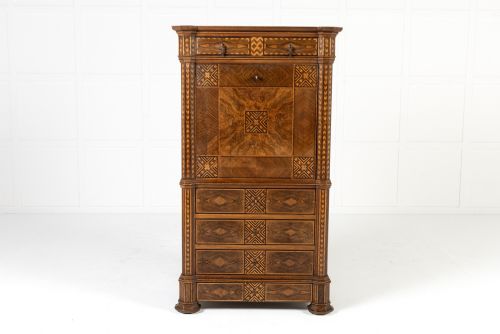
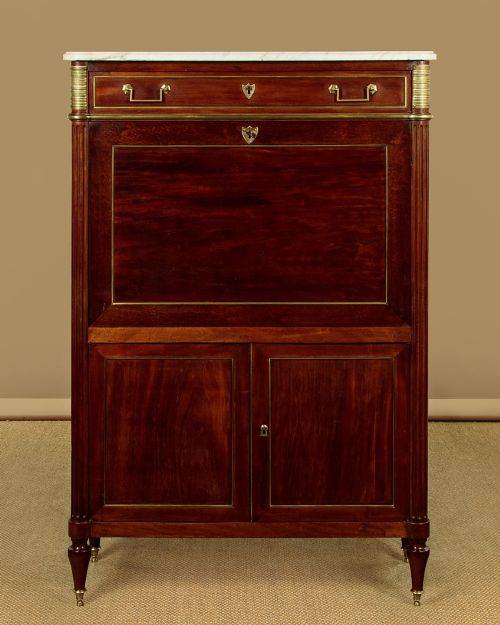
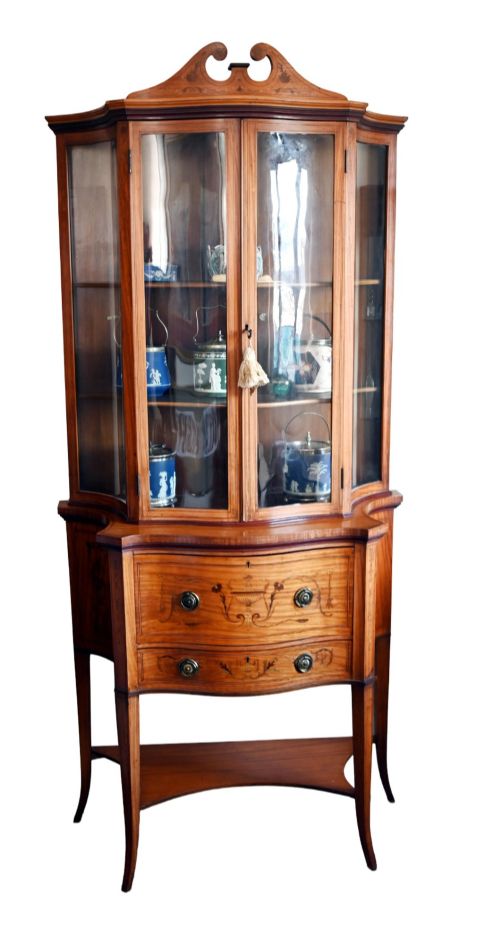
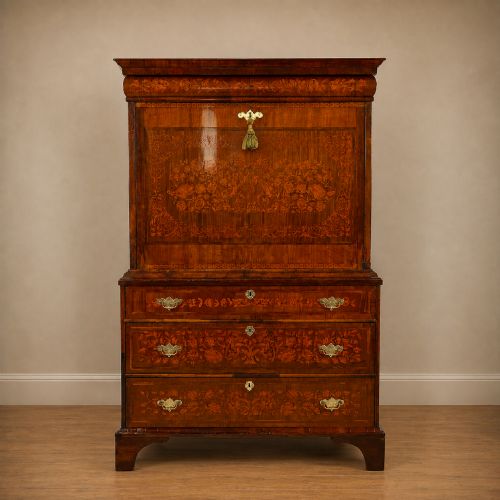
Alongside British workshop production, continental examples surface regularly, including French marquetry pieces adorned with ormolu mounts and Dutch floral marquetry escritoires. Buyers also encounter Arts and Crafts oak variations and Sheraton Revival satinwood interpretations from the turn of the twentieth century.
How They Were Made
Cabinetmakers constructed the carcase using dense primary timbers like mahogany, walnut, and kingwood, often applied over solid oak or pine secondary frames. Flame mahogany veneers and figured burr walnut provided the primary visual surfaces, carefully matched across drawer fronts and fall-front writing desks.
Inlay and marquetry demanded immense skill, utilising contrasting woods such as satinwood, ebony, and sabicu to form floral motifs, geometric banding, and classical swags. Brass stringing and cast ormolu mounts further enhanced the decorative scheme on refined continental and Regency pieces.
Inlaid Secretaire Cabinet Retail Price Guide 2026
Typical asking prices for inlaid secretaire cabinet among the pieces listed under this phrase on Sellingantiques today, from the lower quarter to the upper quarter. They describe what is for sale here now, not the wider market.
The furniture includes freestanding writing cabinets, upright abattants, and tall bookcase combinations spanning three centuries of design.
What Varies in Quality
The distinction between standard production and the finest workshop output rests in the choice of timber and the precision of the marquetry. Superior examples employ deeply figured flame mahogany or choice satinwood with continuous grain alignment across the entire front.
Internal complexity dictates value as much as external appearance, seen in secret compartments, finely turned pigeonholes, and hand-cut dovetailed drawer linings. The crispness of brass ormolu mounts and the integration of original locks and hinges reveal the original tier of manufacture.
Adriano Brambilla
The Inlaid Secretaire Cabinet Glossary
- Secretaire
- A desk or cabinet featuring a concealed writing drawer or a drop-front fall that pulls down to reveal a writing surface and pigeonholes. This mechanism allows a tall chest or bookcase to function as a compact writing desk.
- Marquetry
- The art of applying decorative veneers in patterned wood mosaics to furniture surfaces. Craftsmen cut contrasting timbers like satinwood and walnut to form elaborate floral or geometric designs.
- Abattant
- A vertical cabinet featuring a drop-front writing flap that opens forward on hinges. This French form conceals internal shelves and small drawers behind a flush vertical door.
- Stringing
- Thin inlaid lines of contrasting wood or light-coloured timber set flush into the surface of furniture. It creates fine borders around drawer fronts, panels, and table edges.
- Sabicu
- A dense, durable tropical hardwood resembling mahogany, utilised in high-end eighteenth-century cabinet making for structural strength and rich grain depth.
Inlaid Secretaire Cabinet: Frequently Asked Questions
What is a secretaire cabinet?
A secretaire cabinet is a piece of furniture designed with a hidden writing compartment, usually operated through a pull-out drawer or a drop-down front.
They emerged to provide a dedicated writing space without sacrificing floor area, combining storage for books or linens with a functional desk.
How do I use one today?
These cabinets work exceptionally well in modern studies, living rooms, or bedrooms as compact writing desks and display units.
The drop-front serves as a convenient laptop surface, while the internal drawers and pigeonholes keep stationery and small items organised.
How do I tell periods apart?
Georgian and George III pieces generally feature rectilinear proportions with flame mahogany veneers and subtle satinwood stringing.
Regency examples often incorporate rosewood, brass inlay, and bolder architectural lines, whereas later Victorian and Edwardian revivals display softer woods and lighter construction.