
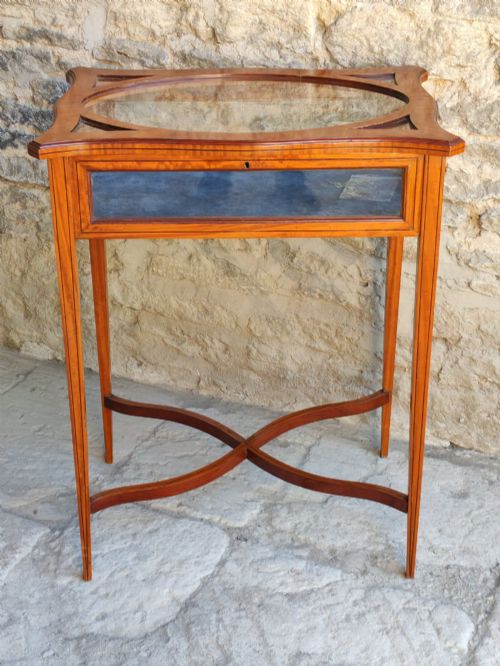
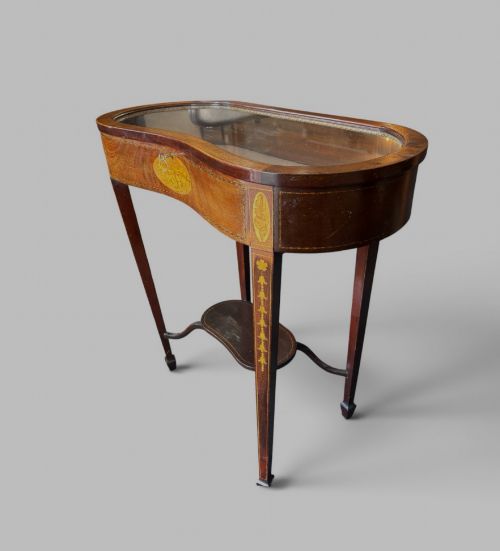


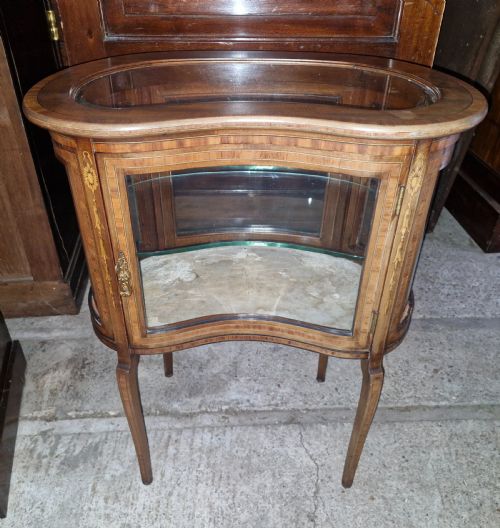


Inlaid Satinwood Vitrine Table
An inlaid satinwood vitrine table offers a glass-topped stage for your finest small treasures, combining delicate timber marquetry with practical display.
Inlaid Satinwood Vitrine Table
An inlaid satinwood vitrine table is a specialised display piece designed to showcase jewellery, curiosities and small collectables beneath a glazed top. These items appear across Victorian, Edwardian and late nineteenth-century periods, capturing the refined tastes of their original owners.
The most common formats on this page are bijouterie tables and display cabinets taking rectangular, octagonal or kidney shapes. They combine functional storage for precious objects with decorative timber work suitable for a formal drawing room.
Originating predominantly from the Victorian and Edwardian eras, these pieces frequently utilise Sheraton Revival influences to celebrate lighter timbers and classical decorative motifs. Their slender legs and glazed compartments elevate practical storage into a display art.
How they were made
Cabinetmakers built these vitrines using structural carcasses of mahogany or walnut faced with bright satinwood veneer. Satinwood inlay and marquetry added contrasting colour and intricate geometric or floral patterns across the tops and sides.
Glazing framed in timber created the viewing windows, often supported by brass hinges, locks and mounts. Interior surfaces were frequently lined with fabric or velvet to cushion delicate items placed inside.
Common forms include kidney-shaped tables, octagonal bijouterie cabinets and Sheraton Revival display stands.
What varies in quality
Quality rests in the crispness of the satinwood inlay and the precision of the cabinetwork shaping the kidney or octagonal forms. Finer examples display meticulous marquetry and well-balanced proportions that maintain elegance without feeling heavy.
Hardware and interior detailing further distinguish the pieces, with substantial brass mounts and quality fabric linings marking superior production. The integrity of the glass framing and the smoothness of opening mechanisms indicate the original standard of manufacture.
Edwards and Roberts
The Inlaid Satinwood Vitrine Table Glossary
- Satinwood
- A durable, light-yellow timber with a natural sheen, prized for decorative veneering and inlay work. It forms the bright visual centre of these display tables.
- Bijouterie table
- A small display table with a glazed compartment specifically designed for holding jewellery and small trinkets. These pieces allow secure viewing from above.
- Vitrine
- A glass-fronted or glass-topped cabinet used for exhibiting objects of vertu. The term encompasses both standing cabinets and table-height display pieces.
- Marquetry
- Decorative veneer work forming pictures or patterns using various coloured woods. It requires immense skill to cut and fit each timber piece precisely.
- Sheraton Revival
- A late nineteenth-century design movement inspired by the neoclassical furniture of George Sheraton. It favours satinwood, delicate tapering legs and restrained classical ornamentation.
Inlaid Satinwood Vitrine Table: Frequently Asked Questions
What is an inlaid satinwood vitrine table?
An inlaid satinwood vitrine table is a glazed display piece created to exhibit small collectables and jewellery beneath a glass top.
They combine structural timbers like mahogany with bright satinwood veneers and decorative inlay.
How were these display tables used?
Victorian and Edwardian owners used them in drawing rooms to display personal treasures, curiosities and fine jewellery safely.
The glass top kept items dust-free while allowing guests to admire the collection easily.
How do I date an Edwardian vitrine?
Dating relies on stylistic clues, construction methods and timber choices recorded across the Edwardian and late Victorian periods.
Sheraton Revival influences and lighter satinwood usage typically point towards the late nineteenth or early twentieth century.
How do I care for velvet and fabric linings?
Original velvet or fabric linings require gentle dusting with a soft brush to preserve the textile without damaging fragile fibres.
Keeping the table away from direct sunlight prevents the fabric colours from fading inside the glazed compartment.