





Inlaid Round Tea Table
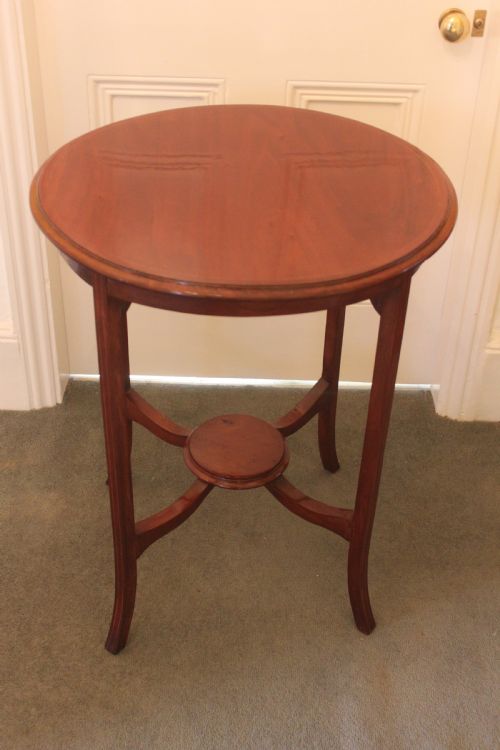
These inlaid round tea table pieces bring warmth and decorative detail to a room, offering a versatile surface for daily use.
Inlaid Round Tea Table
An inlaid round tea table serves as a functional centrepiece or occasional surface, appearing frequently in Victorian, Edwardian, and Art Deco designs. Buyers searching for an inlaid round tea table often encounter versatile forms such as occasional tables, coffee tables, and pedestal tables.
The selection ranges from nineteenth-century mahogany and walnut pieces to early twentieth-century burr walnut and satinwood examples. These items reflect diverse origins, including Italian, Anglo-Indian, and French traditions alongside standard British cabinet-making.
How they were made
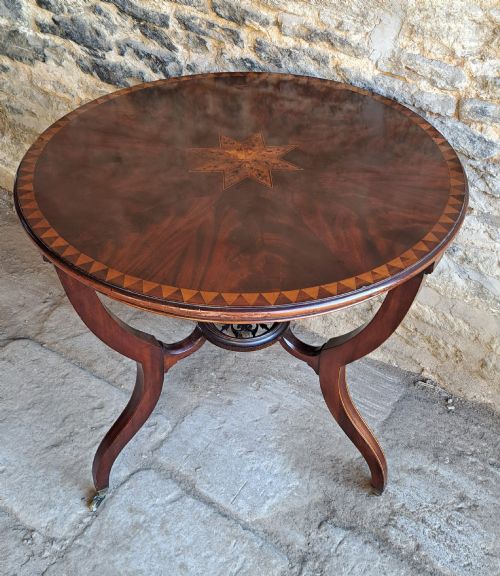
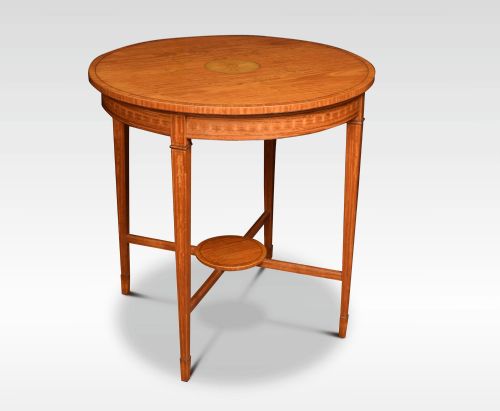
Cabinet-makers constructed these tables using solid and veneered timbers such as mahogany, walnut, oak, and rosewood. Tops frequently feature marquetry inlay and contrasting woods like boxwood and satinwood to create geometric or floral motifs.
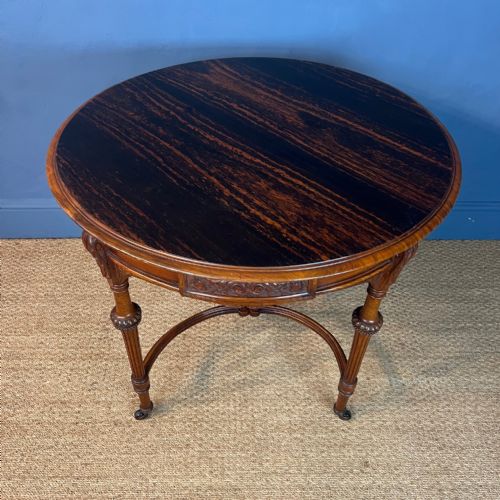
Specialist techniques involved precise wood-cutting and surface polishing to highlight the natural grain of burr walnut or coromandel. Structural elements like tripod bases and pedestal supports provided stability beneath the decorated tops.
Listings feature walnut, mahogany, and burr walnut across nineteenth-century and early twentieth-century periods.
What varies in quality
The refinement of the marquetry and the choice of timbers dictate the overall calibre of a piece. Finer examples display intricate, tightly fitted wood-inlay and carefully selected veneers like burr walnut or satinwood.
Structural integrity and the crispness of carved details, where present, distinguish standard production from superior craftsmanship. The proportion of the pedestal and the balance of the tripod base also influence the character of the table.
The Inlaid Round Tea Table Glossary
- Marquetry inlay
- A decorative technique where small pieces of wood, shell, or brass are fitted into a veneer to form a pattern or picture. This method defines the surface decoration on many period tea tables.
- Satinwood
- A durable, yellowish timber often used for contrasting stringing or detailed inlays. It brings a bright tone to nineteenth-century and Edwardian furniture.
- Tripod base
- A three-legged support structure commonly found beneath round table tops. This design allows the table to stand evenly on uneven floors.
- Coromandel
- A dense, dark timber with striking grain patterns, utilised in high-status nineteenth-century pieces. It offers a rich contrast against lighter inlay materials.
Inlaid Round Tea Table: Frequently Asked Questions
How do I use an inlaid round tea table today?
These tables function well as lamp tables, central display surfaces, or low coffee tables depending on their height. Their compact round footprint makes them adaptable for corners or beside seating.
Keep them away from direct heat sources and strong sunlight to protect the polished wood surfaces and delicate inlay work from fading or drying out.
How do I tell Victorian tables from Edwardian ones?
Victorian examples often employ darker timbers like mahogany and walnut with heavier proportions and dense carving or marquetry. Edwardian pieces tend to feature lighter woods, satinwood banding, and a more refined, delicate appearance.
Examining the construction methods underneath and the style of the inlay helps confirm the likely period of manufacture.
What maintenance do these tables need?
Routine care involves dusting with a soft, dry cloth and occasionally applying a suitable beeswax to nourish the timber. Avoid using wet cloths or harsh chemical cleaners that can damage the polish.
Using coasters and mats protects the veneered surface from moisture marks and heat damage during everyday use.
Are these tables suitable for small rooms?
The circular shape and compact dimensions make them practical for smaller spaces where rectangular furniture might obstruct movement. Pedestal and tripod designs further maximise legroom beneath the top.
Their decorative tops also draw the eye, adding character to a room without dominating the floor space.