






Inlaid Rosewood Hall Table
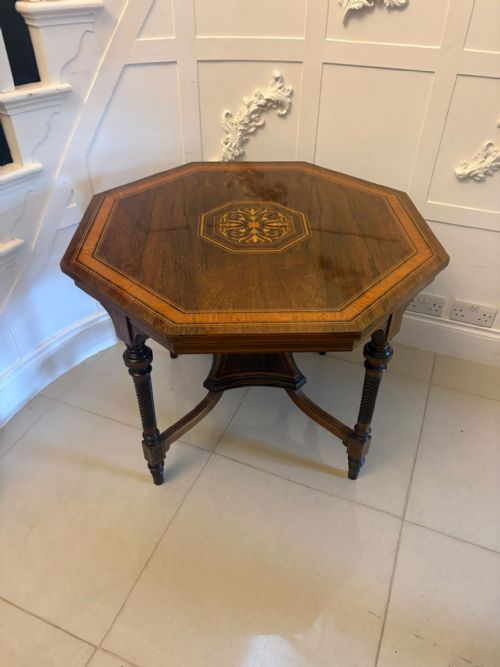
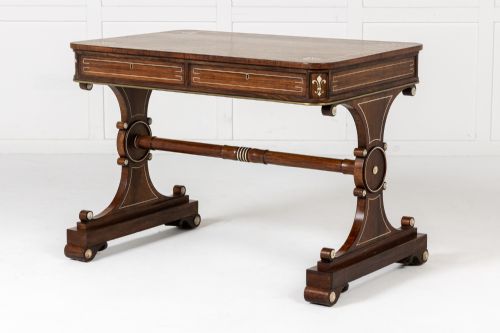
An inlaid rosewood hall table brings rich timber figure and precise metal or wood marquetry into an entranceway, offering a striking focal point.

Inlaid Rosewood Hall Table
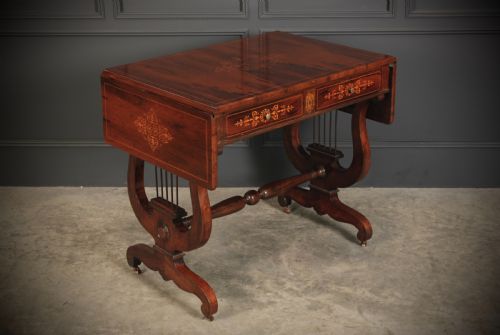
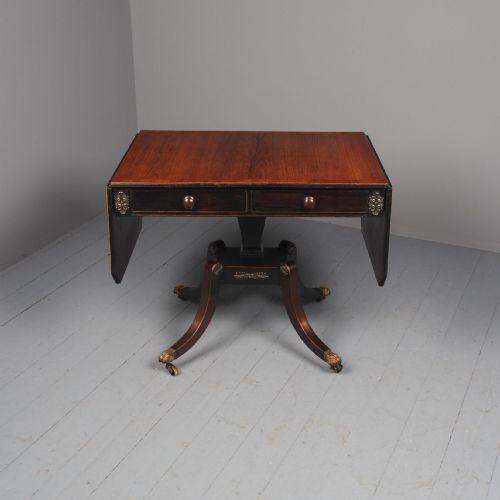
An inlaid rosewood hall table brings together dense tropical timber and contrasting marquetry or brass stringing. The evidence shows these pieces appearing under various forms including sofa tables, console tables, centre tables, and side tables.
Most examples originate from the Regency and Victorian periods, with additional pieces dated to the Edwardian era and the eighteenth century. Buyers seeking this specific combination will find tables shaped for narrow corridors as well as larger reception spaces.
Makers often utilised rosewood for its dark grain and varied figuring, enhanced by geometric brass work or floral marquetry. These surfaces create an immediate impression of formality in a hallway or landing.
How they were made
Cabinet makers constructed these tables using solid rosewood or rosewood veneers applied to secondary timbers. Surfaces received meticulous inlay work utilising brass, boxwood, and mother of pearl to form crisp borders and complex floral motifs.
Many items incorporate ormolu mounts or brass stringing set flush into the dark timber grain. Joinery techniques from the period ensured stability across large top surfaces, particularly on fold-over games tables and pedestal centre pieces.
Some tables hid your cards in folding tops while others simply waited quietly in the hall with a brass-footed stance.
What varies in quality
The precision of the inlay work separates standard production from superior examples. Sharp corners in brass stringing and detailed shading within marquetry flowers indicate superior hand craftsmanship.
The selection of the rosewood veneer also dictates overall character, with rich contrast and balanced figuring marking out the finer pieces. Structural integrity in the legs, pedestals, and folding mechanisms remains essential for daily use.
Walker and Hall·Shoolbred and Co·George Bullock·Ince and Mayhew
The Inlaid Rosewood Hall Table Glossary
- Marquetry
- Decorative patterns formed by fitting together small pieces of veneer into timber panels. This technique allowed cabinet makers to create elaborate floral or geometric designs across table tops.
- Ormolu
- Gilt bronze mounts applied to furniture for decorative effect. These metal accents appeared frequently on French and English tables from the nineteenth century.
- Sofa Table
- A rectangular table traditionally placed in front of a sofa, featuring drop leaves on either side. These forms often double as functional hall furniture due to their slender proportions.
- Console Table
- A table designed to stand against a wall, sometimes supported by brackets or front legs. In hallways, these pieces provided a stable surface for lamps and decorative items.
- Boxwood
- A pale, dense wood used extensively for contrasting stringing and inlay details. Its light colour stands out sharply against dark rosewood surfaces.
Inlaid Rosewood Hall Table: Frequently Asked Questions
How do I identify a Regency rosewood table?
Regency tables typically display classical proportions, brass inlay, and formal geometric lines. Makers from this era drew inspiration from Greek and Roman design.
Look for heavy brass mounts, sabre legs, and characteristic rosewood grain patterns that define the period's output.
Where should I place a hall table?
A hall table fits naturally against an entranceway wall to hold keys, lamps, or decorative objects. Narrow console and sofa variants suit restricted spaces.
Ensure the depth of the table leaves adequate clearance for doors and foot traffic in your hallway.
What is the difference between marquetry and parquetry?
Marquetry employs varied veneers to create pictorial or floral scenes across the wood surface. Parquetry arranges geometric shapes like cubes or chequers into repeating patterns.
Both techniques appear frequently on nineteenth-century table tops.
How do I care for rosewood furniture?
Rosewood benefits from stable indoor humidity and protection from direct sunlight to prevent timber fading. Regular dusting with a soft, dry cloth preserves the polished finish.
Avoid placing damp items directly onto the antique timber surface.