


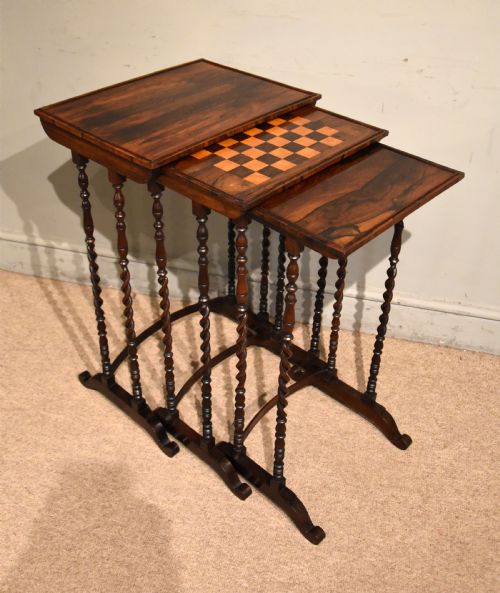


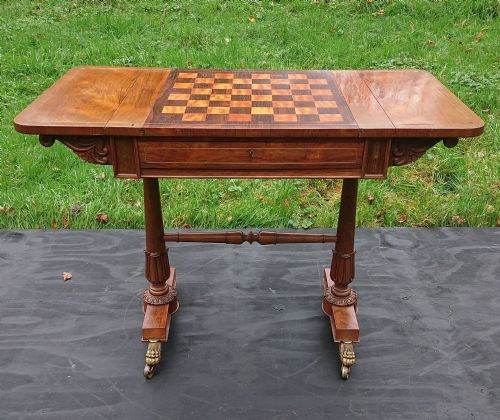

Inlaid Rosewood Chess Table
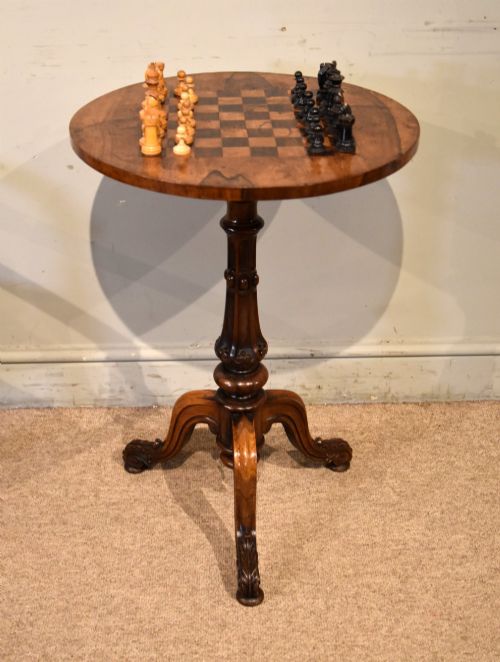
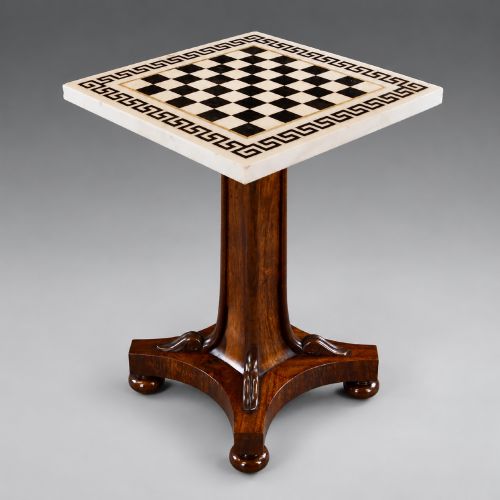
These inlaid rosewood chess table examples combine rich cabinet timber with intricate surface work, offering a dual-purpose surface for social play and display.
Inlaid Rosewood Chess Table
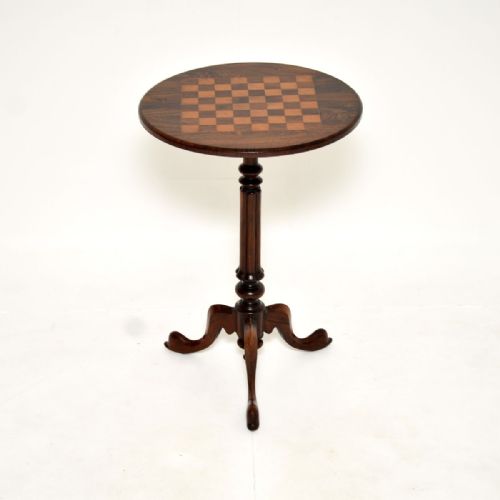
An inlaid rosewood chess table serves as a functional playing board and a refined piece of domestic furniture. Pieces matching this description appear across the Regency, Victorian, and Georgian periods, alongside later nineteenth-century examples.
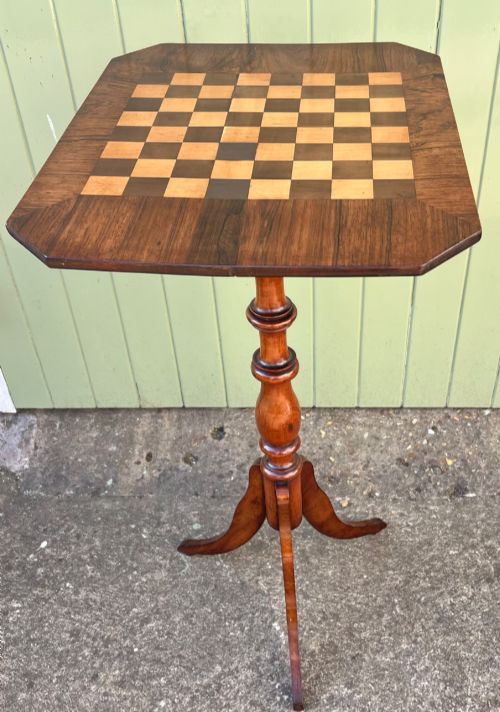
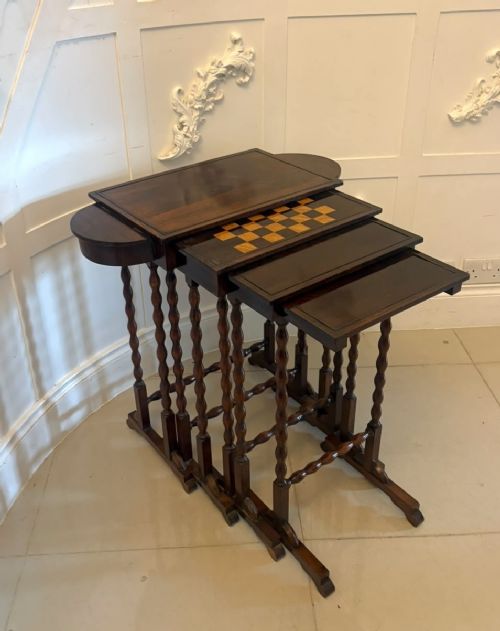
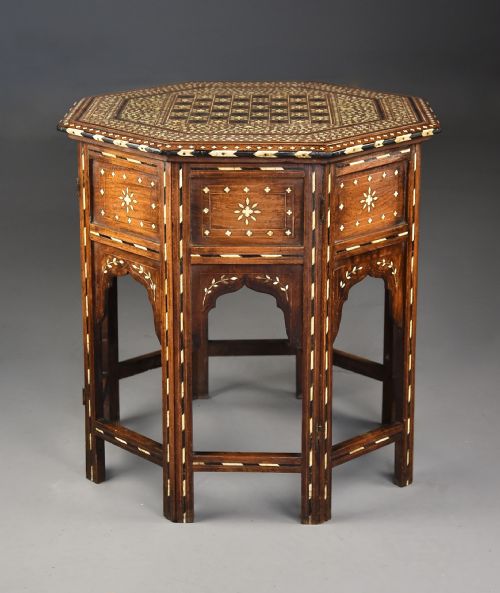
Forms vary from tripod occasional tables with chequer-board tops to nests of quartetto tables, octagonal occasional tables, and work tables fitted with removable boards.
Origins span standard English cabinet-making workshops and Anglo-Indian production, particularly from Hoshiarpur, demonstrating diverse regional interpretations of the form.
How they were made
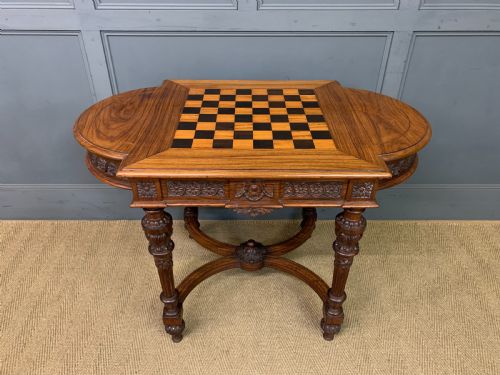
Timbers such as rosewood, mahogany, walnut, and satinwood form the primary structure and decorative veneers. Workshops utilised contrasting woods like boxwood and ebony to inlay the precise squares of the chequer-board top.
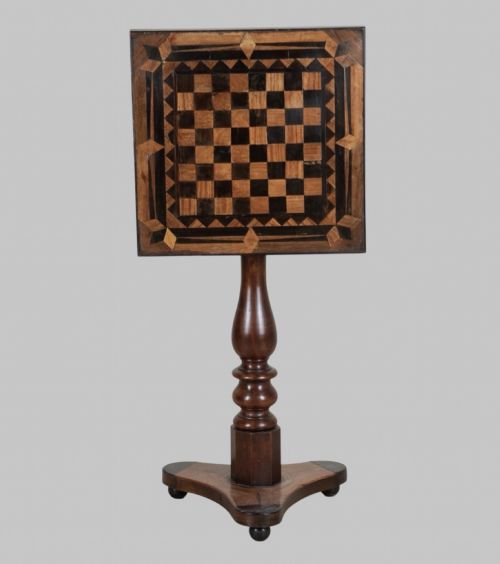
Advanced parquetry and marquetry techniques integrate geometric patterns and floral motifs directly into the tabletop surface. Structural elements incorporate brass mounts and turnery, particularly on tripod and pedestal bases.
Inlaid Rosewood Chess Table Retail Price Guide 2026
Typical asking prices for inlaid rosewood chess table among the pieces listed under this phrase on Sellingantiques today, from the lower quarter to the upper quarter. They describe what is for sale here now, not the wider market.
Several tables arrive ready for action, hiding removable boards and chess pieces inside just in case a sudden tournament breaks out in the parlour.
What varies in quality
The precision of the inlay work and the contrast between the lighter and darker woods dictate the visual sharpness of the board. Tighter joints in the parquetry and superior timber selection separate standard production from finer examples.
The integration of secondary functions, such as integrated drawers, removable boards, or nest configurations, demonstrates higher complexity in the original cabinet-making.
Gillows
The Inlaid Rosewood Chess Table Glossary
- Inlay
- The technique of embedding pieces of contrasting material into a recessed surface to form a decorative design. This method defines the chequer-boards on these tables.
- Parquetry
- Geometric mosaic woodwork arranged in regular patterns like squares or triangles. It forms the precise grid of the playing surface.
- Quartetto tables
- A nested set of four graduated tables designed to slide beneath one another. Some include integrated chess surfaces within the design.
- Tripod table
- A small freestanding table supported by a central pillar on three feet. This form is common among nineteenth-century examples.
- Marquetry
- Elaborate veneer work forming pictorial or decorative patterns using various woods. It appears on the surfaces of several tables in the archive.
Inlaid Rosewood Chess Table: Frequently Asked Questions
Are these tables sturdy enough for regular play?
These tables were built to accommodate board games alongside their decorative purpose. The solid rosewood and stable pedestal or leg constructions provide adequate support for normal use.
Care should be taken with older joints and delicate parquetry surfaces when moving the furniture or setting up heavier game pieces.
How do I identify a Regency period table?
Regency examples typically exhibit classical proportions, dark rosewood grains, and restrained brass mounts or turned pedestal bases. They often date from the early nineteenth century and feature precise satinwood and rosewood chequering.
Later Victorian and Anglo-Indian pieces diverge through denser marquetry, alternative wood combinations like birdseye maple, or octagonal top formats.
What is the difference between a games table and an occasional table?
A games table incorporates a dedicated chequer-board or backgammon layout into the primary surface, sometimes with removable panels or internal storage for pieces. An occasional table functions primarily for general display or lighting, though some examples here combine both roles.
Many surviving pieces successfully merge these definitions by offering a flat wooden surface that conceals or reveals a playing board.
How should I care for a rosewood chess table?
Keep the timber away from direct sunlight and excessive heat sources to prevent the rosewood veneers and inlaid boxwood squares from drying or splitting. Regular dusting with a dry cloth maintains the finish without needing heavy polishes.
Avoid placing damp items directly onto the antique surface to protect the historic polish and delicate marquetry work.