


Inlaid Portico Clock
These inlaid portico clocks are architectural French timepiece columns housing delicate enamel dials, built to anchor a mantelpiece with classical balance.
Inlaid Portico Clock
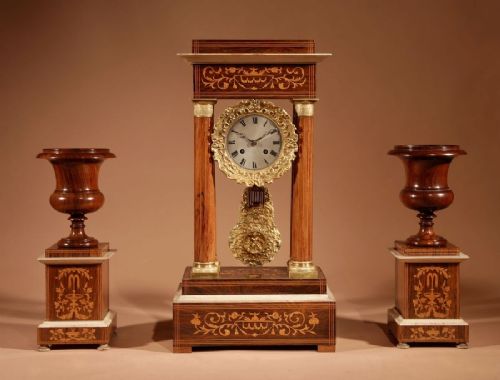
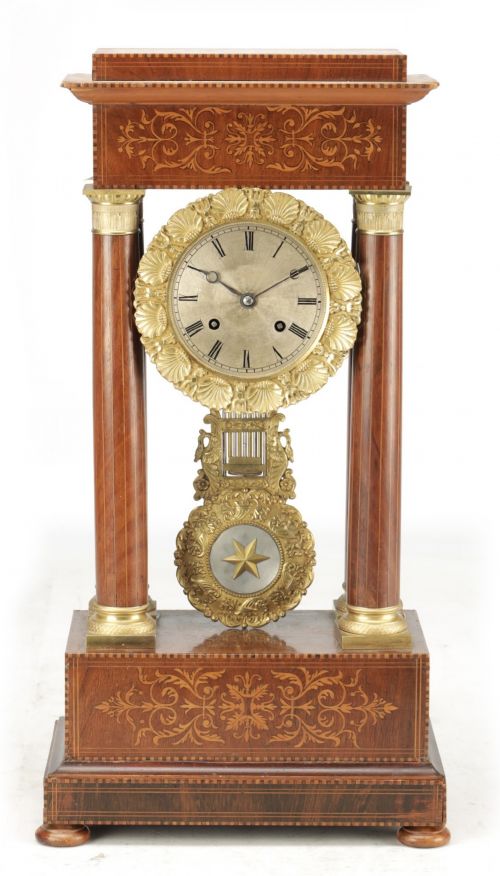
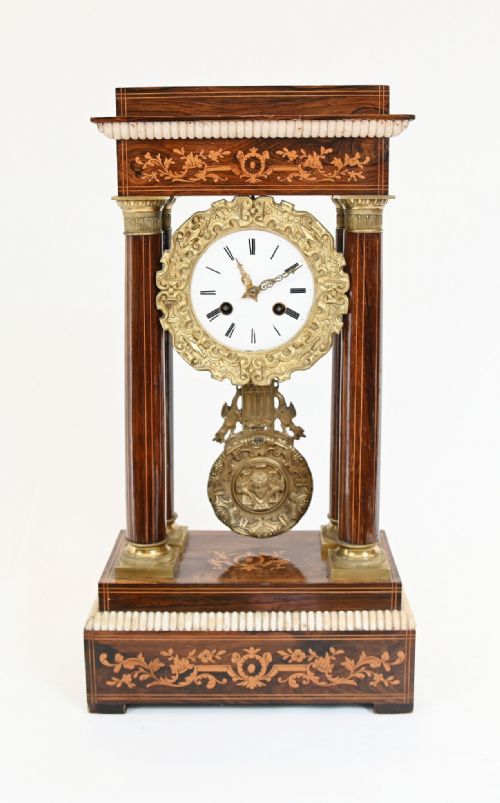
An inlaid portico clock takes the architectural form of a classical temple facade, supported by twin upright pillars flanking the central pendulum. The layout relies on balanced geometry, often housing the circular dial within a pediment suspended above a flat base.
You will regularly encounter rosewood bodies decorated with contrasting stringing or marquetry, frequently paired with gilt bronze or ormolu mounts. French examples dominate the selection, spanning periods from the Charles X and Louis Philippe eras through to Victorian times.
Most function as mantel clocks, though certain iterations arrive complete with matching garnitures or protective glass domes. The structural timbers provide a dark, rich ground that highlights the lighter inlaid woods.
Materials and construction
Cabinetmakers utilised dense tropical hardwoods like rosewood as the primary carcase material, applying fine veneers across the flat architectural surfaces. Boxwood, lemon wood and satinwood provide the pale linear contrast for floral or geometric inlay.
Cast metal elements, including ormolu and gilt bronze, accent the capitals and bases of the columns alongside the bezels surrounding the white enamel dials. Glass serves a dual purpose as glazing for the movement surrounds and occasionally as enclosing display domes.
Rosewood, boxwood and ormolu form the predominant material palette across nineteenth-century French and Victorian portico clock listings.
Distinguishing quality
The precision of the cabinetwork dictates the initial tier of distinction, marked by tightly fitted marquetry and crisp sightlines in the contrasting wood veneers. Finer pieces integrate rich gilt bronze mounts that are deeply chased rather than simply cast and left smooth.
The sophistication of the internal movement and the legibility of the enamel dial further separate standard examples from exceptional ones. Comprehensive survival of original glass domes and matching side ornaments elevates a piece considerably.
Leroy
The Inlaid Portico Clock Glossary
- Portico clock
- A mantel timepiece designed with an architectural case featuring supporting columns reminiscent of a classical temple porch. This layout places the pendulum visibly in the central void between the pillars.
- Ormolu
- Gilded bronze produced by applying a mercury and gold amalgam to a cast bronze base, then firing to drive off the mercury. This technique creates a durable, rich golden surface sheen found on high-end mounts.
- Marquetry
- The art of forming decorative patterns on a wooden carcase using thin veneer slices of various timbers. Makers cut contrasting woods like lemon wood and satinwood into the rosewood ground.
- Garniture
- A set of matching decorative objects designed to flank a central clock on a mantelpiece. These often comprise matching vases or urns executed in compatible materials.
- Enamel dial
- A clock face formed by fusing powdered glass onto a metal disc at high temperatures. The resulting glossy white surface receives fired black numerals for clarity.
Inlaid Portico Clock: Frequently Asked Questions
How do I wind the clock?
Most models use a key inserted into specific winding holes on the enamel dial to tension the internal springs. Turn the key gently until you feel resistance, taking care not to over-wind the mechanism.
Ensuring the clock sits level on the mantelpiece helps the pendulum beat evenly after winding. Minor adjustments to the pendulum bob regulate the timekeeping speed.
Where should I place a portico clock?
These tall architectural pieces require a stable, flat surface such as a mantelpiece, sideboard or heavy console table. Keep them away from direct sunlight and draughts to protect the rosewood veneer and sensitive interior metals.
Because many examples stand relatively tall, measure the vertical clearance of your space beforehand. If a glass dome is included, allow extra room above and around the piece for safe removal.
How do I care for the wood and gilt?
Dust the rosewood and marquetry regularly with a dry, soft cloth to prevent particulate buildup in the grain. Avoid chemical polishes, using only a slightly damp cloth followed immediately by dry buffing if marks occur.
Gilt bronze mounts require gentle treatment with a soft brush to clear dust from the chased recesses. Aggressive metal cleaners will strip the original ormolu surface.
What periods do these clocks cover?
The selection spans from the early nineteenth century through the Victorian era. Styles reflect French aesthetic shifts including Charles X, Louis Philippe, and Empire revivals.
Earlier nineteenth-century examples often favour stark architectural lines with rich rosewood and lemon wood. Later Victorian pieces lean toward varied marquetry patterns and occasional garniture groupings.