


Inlaid Parlour Chair
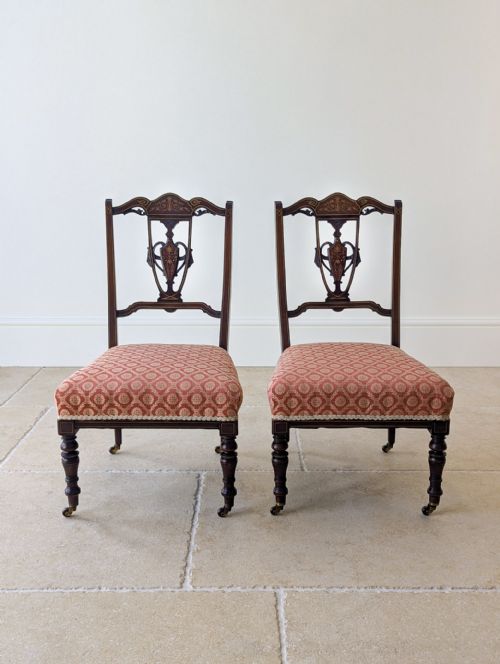
An inlaid parlour chair brings refined detail into a reception room, combining timber frames with precise decorative contrasting woodwork.
Inlaid Parlour Chair
The inlaid parlour chair sits firmly within late nineteenth and early twentieth century formal seating, emerging predominantly from Edwardian and Victorian workshops. When you examine an inlaid parlour chair on this page, you encounter pieces designed for drawing rooms and reception spaces rather than heavy daily dining.
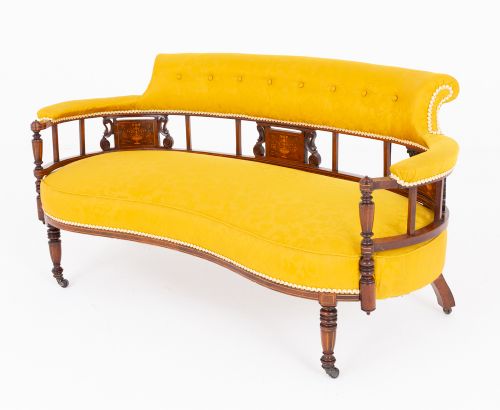
The selection ranges from single salon armchairs and corner chairs to matched sets and full parlour suites alongside larger settees. Edwardian mahogany examples dominate the offerings, frequently accompanied by rosewood framed pieces and occasional beech chairs.
These items were originally intended to project taste and status to visiting guests, offering lighter proportions than earlier heavy dining furniture. Their survival in pairs and larger sets allows modern buyers to furnish a sitting room with matching period seating.
Materials and construction
Makers constructed these frames predominantly using mahogany, rosewood, and walnut, often selecting dense hardwoods capable of supporting crisp joinery. Satinwood inlay provided sharp visual contrast against the darker body timbers, creating delicate floral, ribbon, or urn motifs.
Craftsmen recessed thin veneers of contrasting wood into channels cut directly into the primary timber surface. Upholstery followed using fabric, velvet, and brass tacks over sprung or stuffed bases, completing a structure built for display and polite conversation.
Edwardian Sheraton Revival designs represent the most common stylistic grouping among the currently listed chairs.
Distinguishing quality
Quality rests upon the precision of the marquetry and the crispness of the timber carving. Finer pieces display meticulously fitted contrasting veneers without noticeable gaps or heavy filler around the floral and geometric motifs.
The selection of primary timber dictates the perceived grade of the item, with dense rosewood and well-figured mahogany commanding greater presence than standard beech alternatives. Structural integrity in the joints and original upholstery framing further separate standard production from high workshop output.
Jenks & Wood·James Shoolbred·Gillows
The Inlaid Parlour Chair Glossary
- Marquetry
- Decorative patterns formed by fitting together small pieces of wood veneer into a design. It differs from simple inlay by covering the entire surface of the panel.
- Satinwood
- A pale, durable tropical timber prized for its bright yellow colour and sheen. Makers utilised it extensively for contrasting stringing and decorative inlays on darker woods.
- Parlour suite
- A coordinated set of seating furniture comprising a settee and matching armchairs or side chairs. These suites unified the formal reception room interior.
- Corner chair
- A seating form designed to fit into the corner of a room, featuring a diagonal seat plan and a curved back rail supported by turned columns.
Inlaid Parlour Chair: Frequently Asked Questions
Where did people place parlour chairs?
These chairs belonged in the formal drawing room or parlour where guests were received. They stood around the perimeter of the room or near a fireplace rather than gathered tightly around a dining table.
Their lightweight construction allowed servants or hosts to reposition them easily for musical performances, tea service, or conversation groups.
How do I distinguish Edwardian from Victorian pieces?
Victorian examples generally exhibit heavier mahogany or walnut frames with deeper carving and robust proportions. Edwardian pieces tend to display lighter framing, often in mahogany or rosewood, with more delicate satinwood inlay.
The Edwardian era also favoured Sheraton Revival aesthetics, producing slender tapered legs and neoclassical motifs that feel distinctly airier than mid-nineteenth century seating.
Are these chairs suitable for daily seating?
Most parlour chairs were built for occasional use during social calls rather than heavy lounging. Their slender frames and delicate inlay require a measure of care in daily domestic environments.
Many surviving pieces benefit from professional reupholstery to ensure the internal webbing and padding support modern seating comfort safely.