



Edwardian Rosewood Chair
Edwardian rosewood chairs bring refined floral marquetry and slender proportions to the drawing room, offering a lighter touch than earlier Victorian timber.
Edwardian Rosewood Chair
An edwardian rosewood chair combines rich dark timber with delicate light-coloured contrasting decoration for formal reception rooms. These seats appear singly, in pairs, or in matched sets intended for salons, bedrooms, and dining spaces.
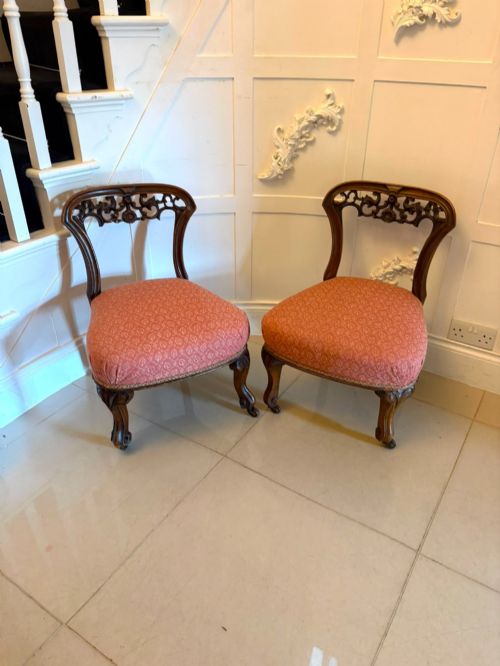
The evidence shows forms ranging from open armchairs and tub chairs to bedroom chairs and nursing seats. Makers often applied neoclassical motifs like urns and swags via marquetry rather than heavy carving.
While many pieces date to the Edwardian period itself, related examples emerge from the late nineteenth century and the Victorian era, showing how cabinetmakers continuously refined parlour seating.
Materials and Construction Methods
Makers utilised dense rosewood for the structural frames, sometimes combining it with mahogany or incorporating boxwood and brass inlay. Upholstery materials such as velvet, fabric, and leather provided a soft contrast to the polished timber.
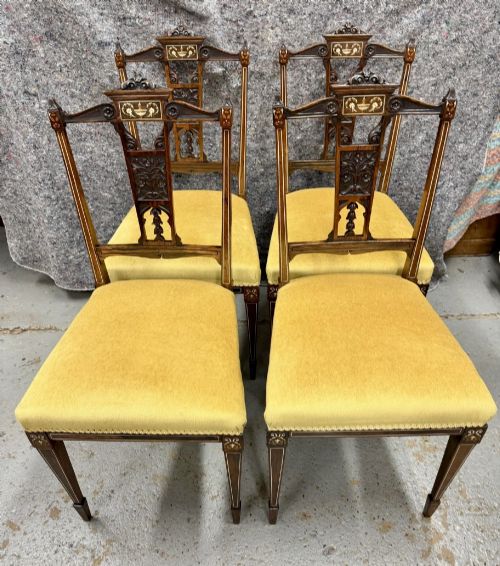
Intricate boxwood stringing and floral marquetry panels required precise hand-cutting to fit flush into the dark rosewood ground. Frames often utilised sturdy joints designed to support upright salon seating without bulky underpinnings.
Listings feature rosewood, mahogany, boxwood, and brass materials paired with velvet, leather, and fabric upholstery across Victorian and Edwardian periods.
Distinctions in Quality and Execution
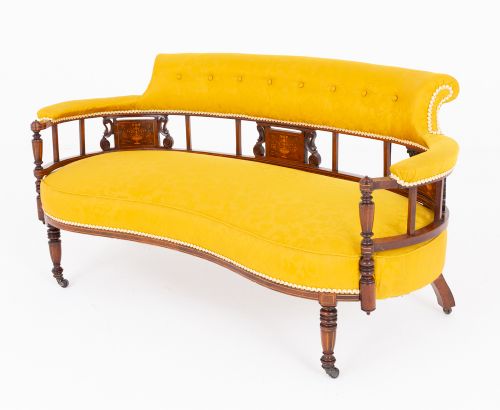
Quality rests in the crispness of the boxwood inlay and the natural figuring of the rosewood veneer. Superior examples display tight, seamless marquetry work where floral details remain sharp and precisely fitted.
Proportion and structural rigidity separate standard utility seating from finer salon chairs. Well-executed pieces maintain slender cabriole or tapered legs that support the frame cleanly without excess reinforcement.
James Shoolbred
The Edwardian Rosewood Chair Glossary
- Marquetry
- Decorative patterns created by fitting different wood veneers into a prepared ground. This technique allows intricate pictorial designs of flowers and urns to cover chair backs.
- Boxwood Inlay
- Light-coloured wood strips inserted into channels cut in darker timber. It provides crisp linear contrast around the edges of splats and seat rails.
- Salon Chair
- A light, decorative seat designed for formal entertaining rooms rather than heavy daily dining use. These pieces prioritise graceful silhouettes and ornate back designs.
- Tub Chair
- An armchair with a continuous curved back and arms forming a rounded enclosure. Upholstered versions offer enclosed comfort in bedrooms and drawing rooms.
- Settee
- A medium-sized upholstered seat designed for two or more people, sharing the stylistic vocabulary of matching salon chairs. They anchor formal seating arrangements.
Edwardian Rosewood Chair: Frequently Asked Questions
Where should I place an edwardian rosewood chair?
These pieces suit low-traffic areas like bedrooms, hallways, or formal drawing rooms where their delicate inlay remains protected from heavy wear.
Pair a single salon chair with a small table to create a quiet reading corner or use a matched set around a parlour table.
How do I care for rosewood furniture?
Keep timber surfaces away from direct sunlight and heat sources to prevent the rosewood veneer from drying and cracking over time.
Apply a light application of traditional beeswax occasionally and buff gently with a soft cloth to maintain the natural lustre of the polish.
Are these chairs comfortable for daily sitting?
Salon and bedroom variants feature upright proportions intended for formal posture rather than long lounging sessions. Upholstered armchairs provide a more relaxed seat for occasional reading.
Consider the seat height and depth relative to your living space if you plan to use them frequently.
How do I distinguish Edwardian pieces from Victorian ones?
Edwardian examples generally exhibit lighter proportions, restrained inlay, and neoclassical Sheraton Revival motifs. Victorian predecessors tend to feature heavier carving, darker walnut or rosewood frames, and more robust silhouettes.
Inspect the overall weight and leg shape to gauge whether a piece leans toward mid-century Victorian mass or Edwardian elegance.