

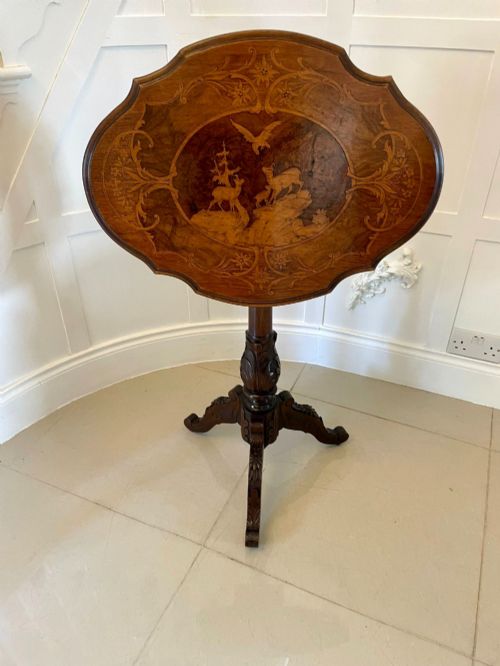
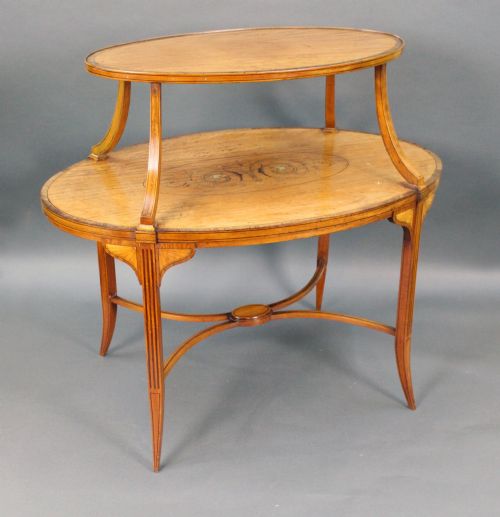
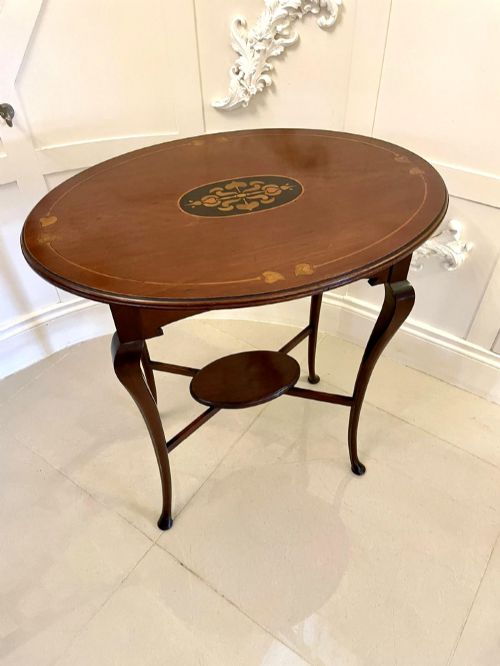
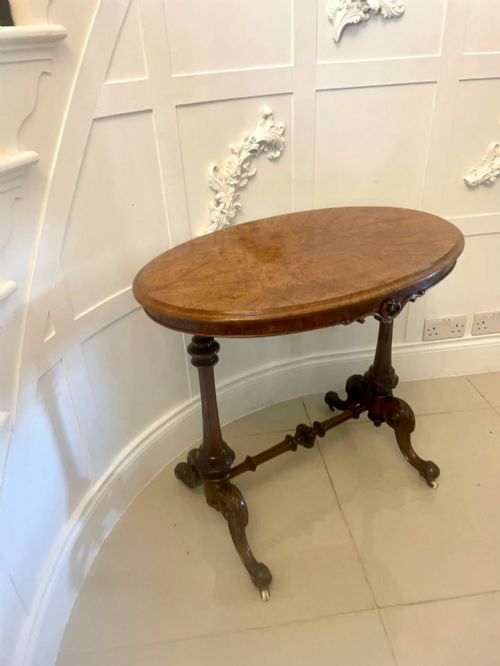
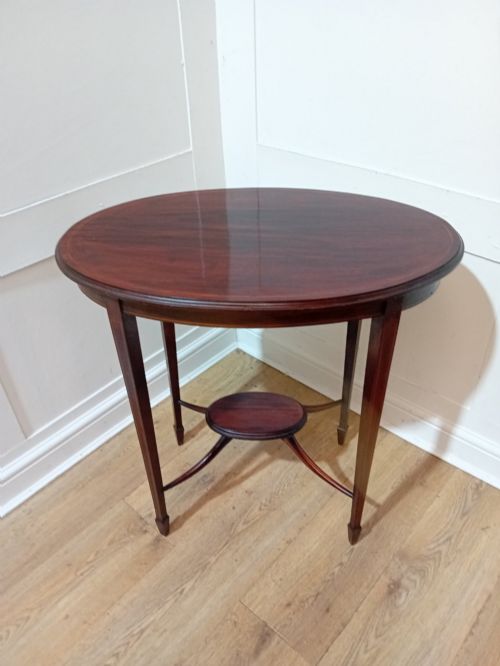


Inlaid Oval Occasional Table
An inlaid oval occasional table brings together polished timbers and delicate marquetry to serve as a versatile surface in a reception room.
Inlaid Oval Occasional Table
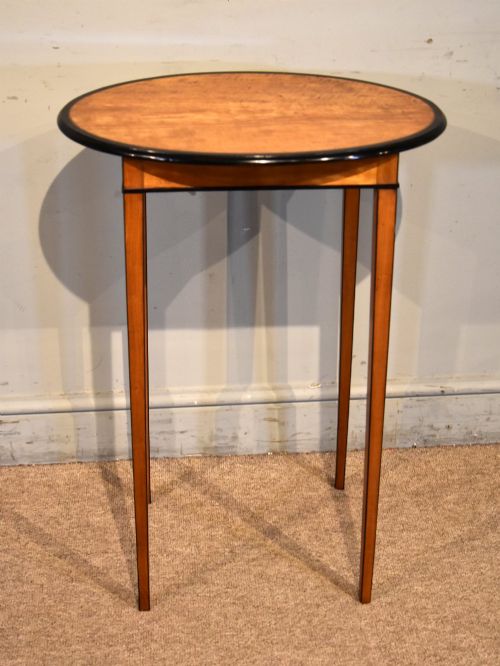
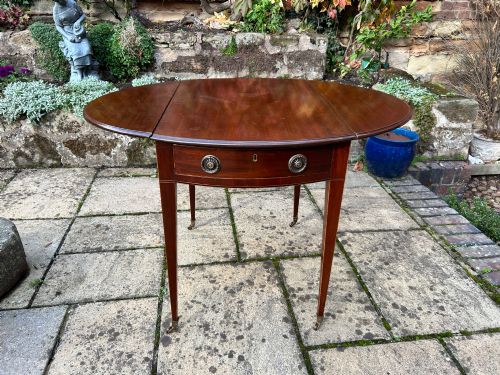
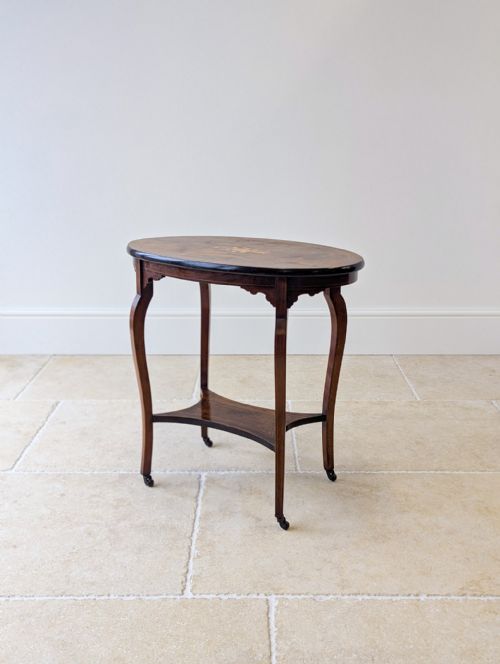
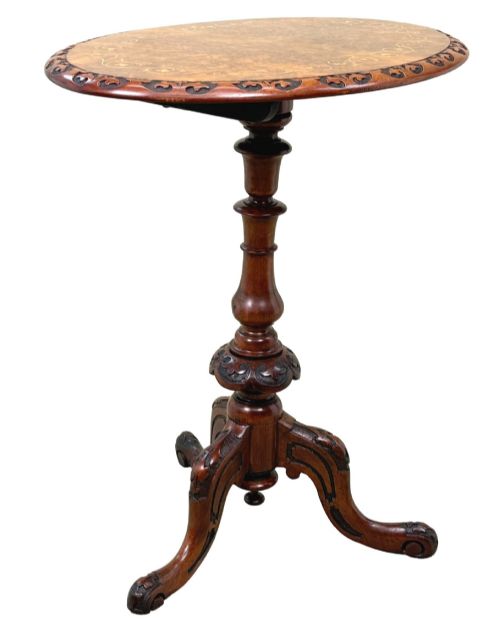
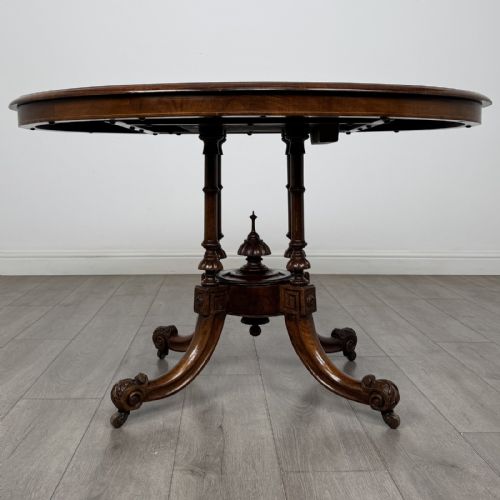
An inlaid oval occasional table is most commonly encountered from the Victorian and Edwardian eras, executed in mahogany, walnut, or satinwood. These domestic surfaces take the form of lamp tables, centre tables, and Pembroke tables with drop leaves, designed to sit beside seating or in the middle of a room.
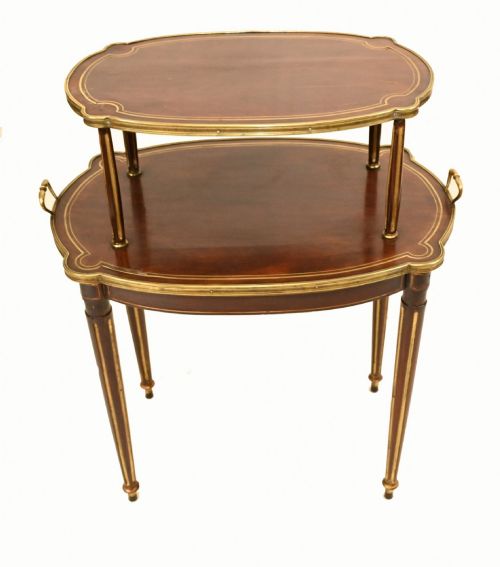
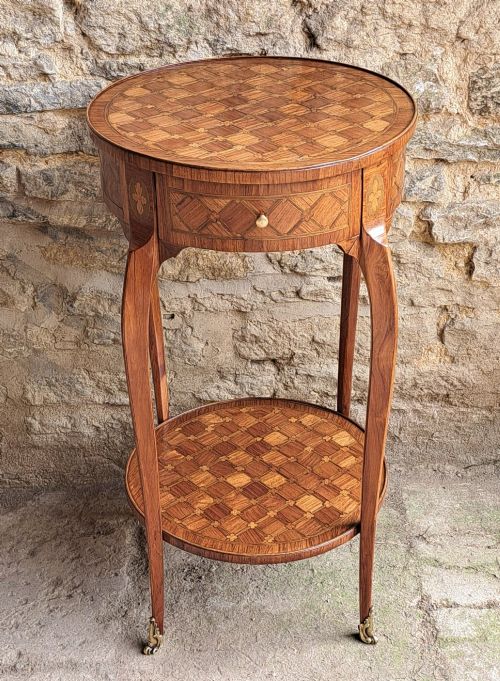
Earlier Georgian examples appear with sophisticated satinwood and boxwood inlay, whilst late nineteenth-century revival pieces often adopt Sheraton or French Louis XV styles. The oval shape softens the geometry of a room, providing a compact surface that balances decorative marquetry with practical utility.
Makers utilised various timbers including burr walnut, kingwood, and rosewood, sometimes incorporating tiers or tilting tops. The inventory spans from eighteenth-century drop leaf sewing tables to twentieth-century occasional pieces, reflecting changing domestic habits across different periods.
Standards of craftsmanship
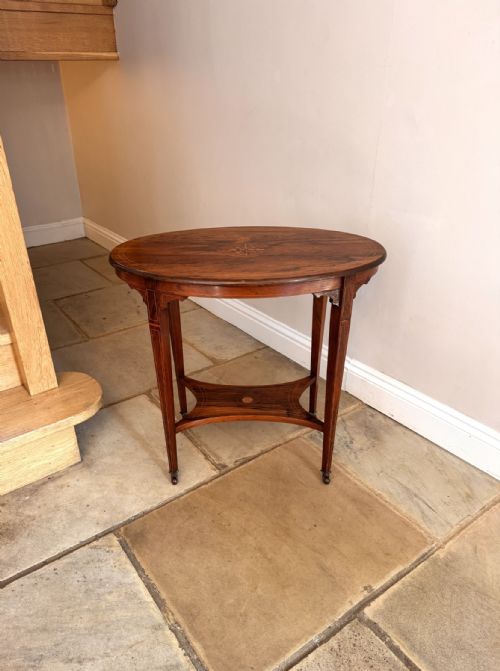
Quality depends upon the crispness of the boxwood inlay and the selection of figured veneers, where balanced grain patterns on the oval top indicate superior material choice. Finer pieces demonstrate meticulous hand-cut marquetry and tight joinery that remains stable over centuries.
The sophistication of the timber preparation and the subtlety of the French polished finish distinguish standard production from exceptional cabinetwork. Structural integrity in the legs and under-tiers ensures the table supports daily objects without lateral movement.
Inlaid Oval Occasional Table Retail Price Guide 2026
Typical asking prices for inlaid oval occasional table among the pieces listed under this phrase on Sellingantiques today, from the lower quarter to the upper quarter. They describe what is for sale here now, not the wider market.
Listings feature mahogany, burr walnut, and satinwood, spanning Georgian, Victorian, and Edwardian periods.
The Inlaid Oval Occasional Table Glossary
- Marquetry
- Decorative patterns formed by inserting pieces of wood, shell, or ivory into a veneer-prepared surface. This technique allows for complex pictorial or botanical designs across the table top.
- Parquetry
- Geometric mosaic woodwork arranged in regular patterns such as cubes or chevrons. It provides a structured decorative border or surface field on French and English tables.
- Satinwood
- A durable hardwood yielding a yellowish timber with a lustrous, satin-like sheen. It was favoured by cabinetmakers during the Georgian and Sheraton revival periods for contrasting stringing.
- Pembroke table
- A small rectangular or oval table with hinged flap sides supported by pivoting brackets. It was introduced in the eighteenth century for breakfasting or writing.
- Étagere
- A set of open tiered shelves used for displaying ornaments or holding small items. These structures provide vertical storage within a compact footprint.
Inlaid Oval Occasional Table: Frequently Asked Questions
How do I style an oval table?
An oval table fits easily beside a sofa or in the centre of a room where rectangular corners might obstruct movement. Its curved edge softens the layout of surrounding seating.
Place a single lamp, a small stack of books, or a ceramic bowl on the surface to maintain balance. The compact proportions allow the wood grain and inlay to remain visible without clutter.
Were these tables used for dining?
Occasional tables were designed for lighter domestic tasks such as writing, sewing, or holding lamps and tea equipment. They are generally too small and light for formal dining.
Drop leaf and Pembroke variants offered expandable surfaces when guests visited, but their primary role remained auxiliary to larger furniture.
How can I tell Victorian from Edwardian?
Victorian examples often employ darker timbers like burr walnut and mahogany, frequently featuring rich marquetry or heavy turned supports. The aesthetic tends toward robust proportions and deep polish.
Edwardian pieces frequently utilise lighter satinwood or mahogany with delicate Sheraton revival stringing and slender tapered legs. The overall impression is lighter and more restrained in ornament.
How do I care for inlaid wood?
Keep wooden tables away from direct sunlight and heat sources to prevent the veneers and boxwood inlay from drying out or lifting. Use coasters and mats to protect the polished surface from moisture.
Dust regularly with a soft, dry cloth and apply a quality beeswax sparingly when the timber appears dry. Avoid silicone-based polishes that can degrade historic finishes.