

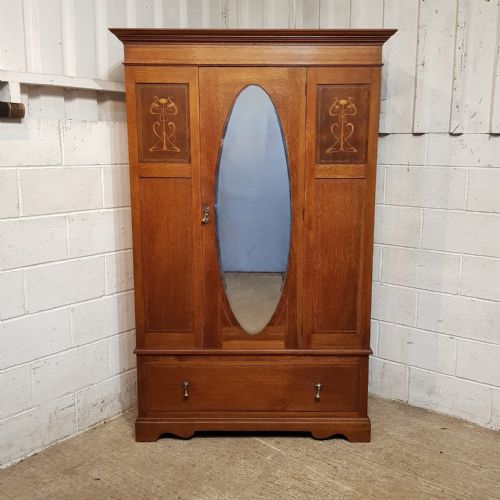
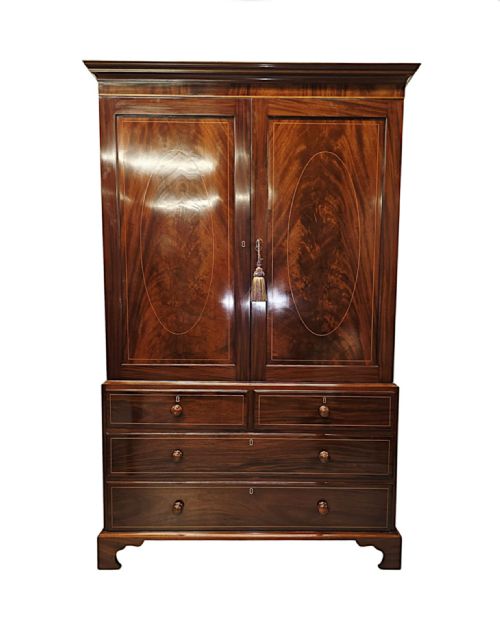
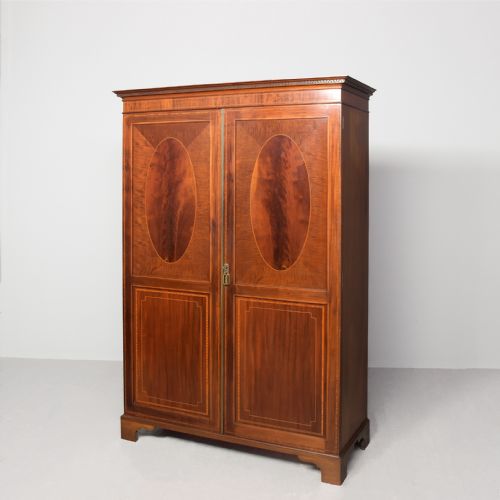


Inlaid Oval Linen Press
These inlaid oval linen press pieces combine generous storage with refined period craftsmanship.
Inlaid Oval Linen Press
An inlaid oval linen press is a substantial storage furniture piece designed for domestic organisation, frequently encountered in Georgian and Edwardian iterations. These large cabinets divide into upper sections for folded linens and lower chest drawers for apparel.
The selections span several centuries, reaching from eighteenth-century George III examples through to nineteenth-century and Edwardian revivals. Mahogany and flame mahogany veneer form the primary body of these tall cupboards.
Makers integrated satinwood, boxwood, and distinct oval banding to enrich the timber surfaces. Buyers encounter both traditional gentleman's press designs and broader wardrobe variants fitted with brass hardware.
Materials and construction methods
Carpenters built these heavy presses using solid timber frames faced with figured mahogany and flame mahogany veneer. The structural carcase typically employs secondary woods suited to large domestic cabinetry.
Decorative detailing relies on precision boxwood and satinwood inlay, creating contrasting geometric or oval borders across the doors and drawers. Brass handles and escutcheons secure the opening sections alongside glass panels in specific bookcase combinations.
Inlaid Oval Linen Press Retail Price Guide 2026
Typical asking prices for inlaid oval linen press among the pieces listed under this phrase on Sellingantiques today, from the lower quarter to the upper quarter. They describe what is for sale here now, not the wider market.
Several Georgian cabinetmakers clearly hid secret notes behind the heavy sliding trays, though the brass locks keep those stories safely shut.
Distinctions in quality
The sophistication of the timber figure and the precision of the boxwood or satinwood inlay dictate the standard of the piece. Superior examples display carefully matched flame mahogany grain aligned symmetrically across the door panels.
Original brass hardware and intact internal sliding trays elevate the desirability of a press. Finer pieces maintain crisp carving on pediments and well-fitted drawer construction without excessive structural timber replacement.
The Inlaid Oval Linen Press Glossary
- Flame Mahogany
- A highly figured timber veneer prized for its dramatic, flame-like grain patterns. Cabinetmakers selected these cuts for principal display surfaces.
- Satinwood
- A lustrous, yellow-toned timber utilised for contrasting inlay work and banding. It provides a bright visual accent against darker mahogany bodies.
- Gentleman's Press
- A specialised wardrobe variant incorporating sliding trays behind upper doors for folded shirts and cravats. The lower chest section provides deep drawer storage for trousers and coats.
- Pediment
- The decorative architectural crowning structure surmounting the top of the cabinet. Georgian versions occasionally incorporate swan-neck designs.
Inlaid Oval Linen Press: Frequently Asked Questions
What is a linen press used for?
These large cabinets served historically to store freshly laundered household linens on internal sliding wooden trays out of the dust. Lower chest drawers provided supplemental space for everyday garments.
Today, owners utilise the upper shelving compartments for modern storage while retaining the imposing architectural presence in bedrooms or hallways.
How do I date an antique press?
Examine the timber species, construction joints, and decorative inlay styles to determine the likely era of manufacture. Eighteenth-century Georgian pieces display hand-cut joinery and subtle satinwood banding.
Later Edwardian revivals often incorporate lighter mahogany tones and machine-produced elements while referencing earlier cabinet designs.
Are linen presses and wardrobes different?
Traditional linen presses contain internal sliding shelves or trays behind the upper doors rather than a full-length vertical hanging rail. Many examples combine both functions by adapting the interior space.
Wardrobes focus primarily on hanging garments, whereas presses prioritise stacked storage solutions within a shallower upper cabinet depth.
How do I care for mahogany furniture?
Keep these timber cabinets away from direct sunlight and severe temperature fluctuations to prevent the mahogany veneer from drying or splitting. Regular dusting with a soft, dry cloth preserves the polished surface.
Apply occasional professional wax conditioning sparingly to maintain the natural lustre of the wood without building up heavy residues.