

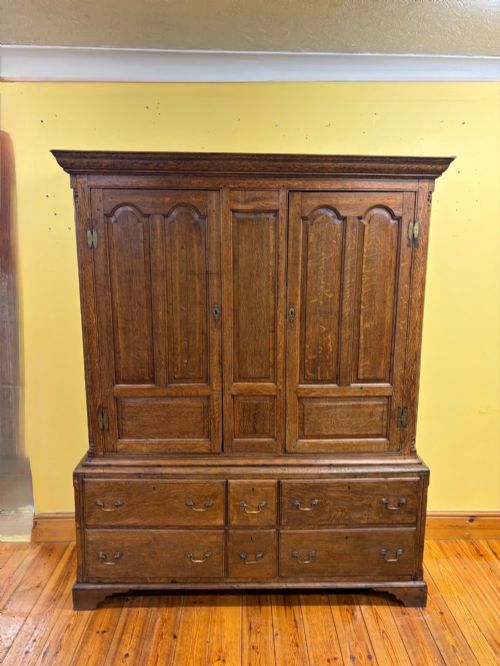
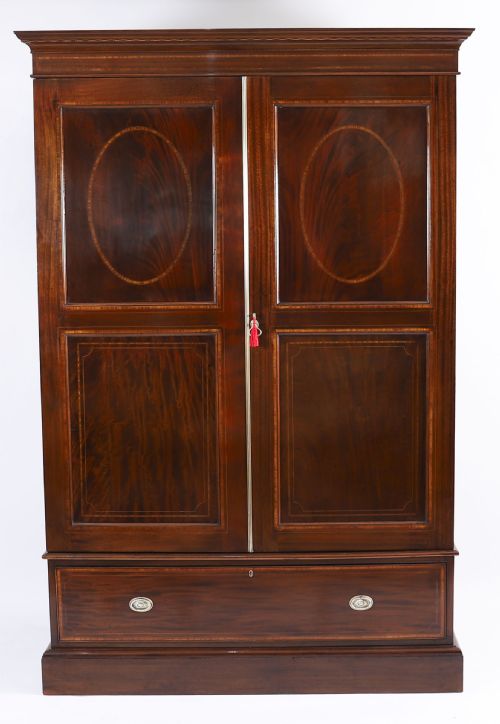
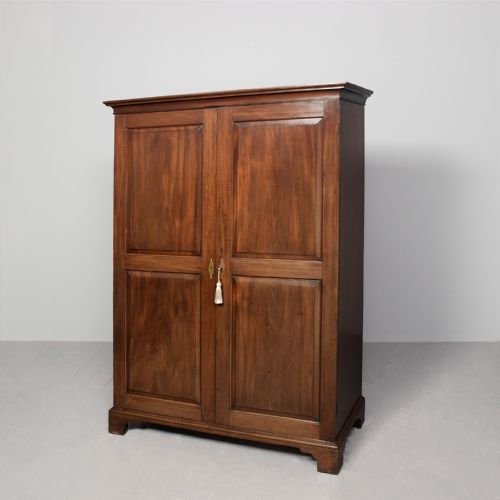
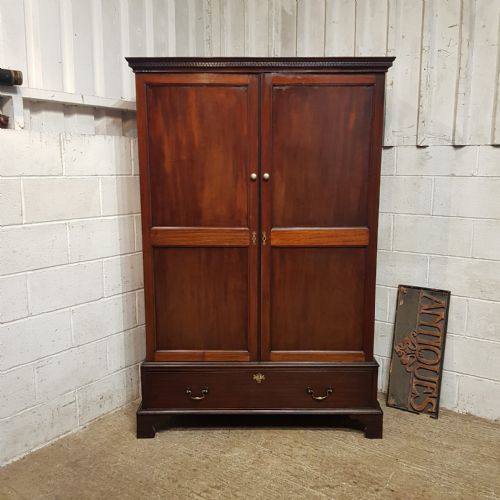





George III Clothes Cupboard
A genuine george iii clothes cupboard brings architectural dignity to a bedroom, offering deep storage through classically proportioned timber construction.
George III Clothes Cupboard
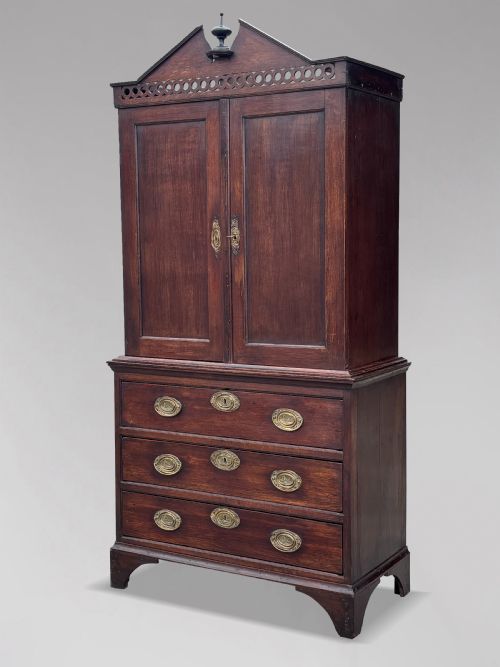
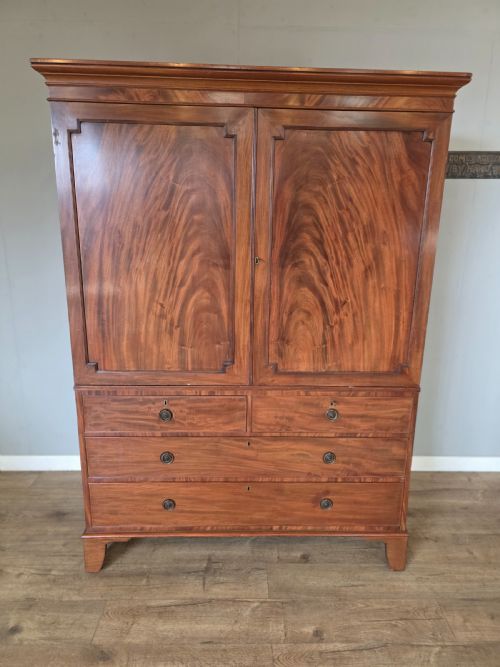
When you search for a george iii clothes cupboard, you encounter substantial storage pieces created during the Georgian era, most frequently taking the form of linen presses, gentleman's cabinets, and breakfront wardrobes. These functional pieces combine upper storage sections enclosed by panelled doors with lower chest configurations, designed to house folded textiles and garments.
The versions most commonly met on this page span the late eighteenth century into the early nineteenth century, alongside later revival pieces produced in the Victorian and Edwardian periods. Solid oak and figured mahogany dominate the surviving examples, often displaying the characteristic architectural cornices and bracket feet of the period.
Materials and construction
Cabinet makers utilised dense hardwoods such as oak and mahogany, frequently selecting flame mahogany and curl mahogany veneers to create striking figured surfaces on primary doors and drawer fronts. Satinwood banding and boxwood inlay provided delicate geometric contrast, while brass hardware functioned as both structural pulls and decorative accents.
Internal construction relied upon sliding trays within the upper press sections, combined with hand-dovetailed drawer boxes in the lower chests. Timber framing was joined with traditional cabinet-making methods, allowing the large carcasses to withstand the structural stresses of seasonal humidity changes.
George III Clothes Cupboard Retail Price Guide 2026
Typical asking prices for george iii clothes cupboard among the pieces listed under this phrase on Sellingantiques today, from the lower quarter to the upper quarter. They describe what is for sale here now, not the wider market.
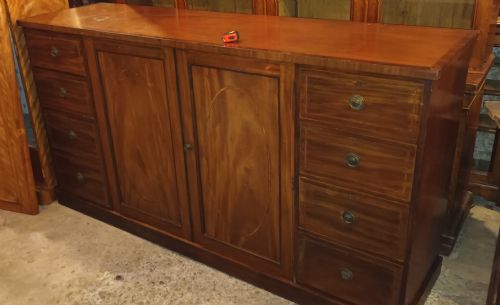
Listings feature structural variations spanning solid oak country pieces to highly decorative breakfront mahogany cabinets inlaid with satinwood and boxwood.
Distinctions in quality
The standard of a george iii clothes cupboard depends heavily on the selection of timber veneers and the crispness of secondary inlays like boxwood and satinwood. Finer examples display continuous grain matching across multiple panels and drawers, whereas simpler pieces utilise plain timber boards without decorative banding.
Proportion and architectural detailing also separate standard utilitarian presses from high-status estate cabinets. Pieces featuring swan-neck pediments, breakfront configurations, and well-executed cockbeading around drawer edges represent the upper tier of period cabinet making.
The George III Clothes Cupboard Glossary
- Linen Press
- A tall storage piece featuring an upper section with sliding trays enclosed by doors, sitting above a chest of drawers. This form was originally designed for storing household linens flat before the widespread use of clothes hangers.
- Breakfront
- A cabinet design where the central section projects forward from the flanking outer sections. This configuration adds architectural depth and presence to larger wardrobes.
- Flame Mahogany
- A highly figured timber veneer cut from the branch forks of the mahogany tree, producing a distinctive flickering flame pattern. Cabinet makers used this decorative grain on prominent exterior surfaces.
- Sliding Tray
- An internal wooden shelf housed within grooves or runners inside the upper cupboard section. These shallow trays allowed garments and linens to be stored neatly without deep stacking.
- Satinwood Banding
- A narrow decorative border of pale yellowish satinwood inlaid into darker surrounding mahogany surfaces. This technique frames drawer fronts and panel edges with subtle contrast.
George III Clothes Cupboard: Frequently Asked Questions
How were george iii clothes cupboards originally used?
These large storage pieces served primarily to store folded bed linen, table cloth collections, and gentleman's garments before hanging wardrobes became standard bedroom furniture.
The internal sliding trays kept textiles organised and flat, while the lower drawer chest accommodated smaller apparel and accessories within the bedchamber.
How do you distinguish original period pieces from revivals?
Original pieces from the eighteenth century display hand-cut dovetails, older secondary woods like oak or pine inside drawer boxes, and hand-finished timber patination.
Revival pieces from the nineteenth and twentieth centuries often feature machine-cut construction details, different secondary timbers, and standardised internal hardware fittings.
How do you integrate a large press into a modern bedroom?
A substantial mahogany or oak cupboard functions well as a primary wardrobe by adapting the internal sliding trays to hold folded clothing or modern shelving.
The architectural presence of the cornice and panelled doors also allows the piece to anchor a room as a standalone statement storage cabinet.
What is the difference between a linen press and a wardrobe?
A traditional linen press contains shallow internal sliding trays behind its upper doors, sitting directly above a base section of functioning chest drawers.
Standard wardrobes generally omit these sliding trays in favour of a deep vertical hanging space designed specifically for garments on coat hangers.