





Inlaid Octagonal Centre Table
An inlaid octagonal centre table brings geometric presence to a room, offering multiple viewing angles and intricate surface detail.
Inlaid Octagonal Centre Table
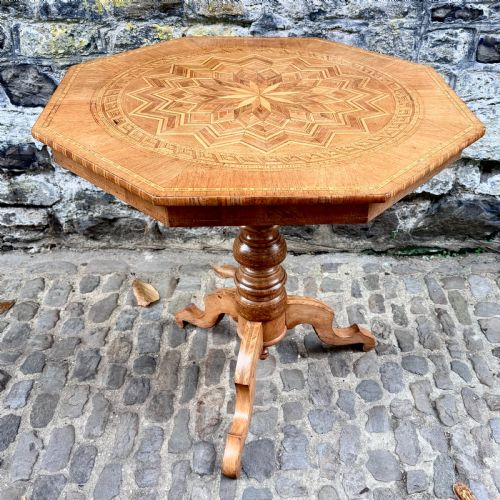
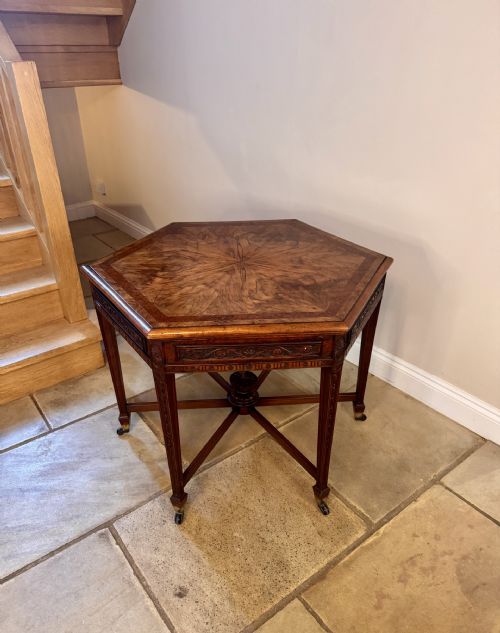
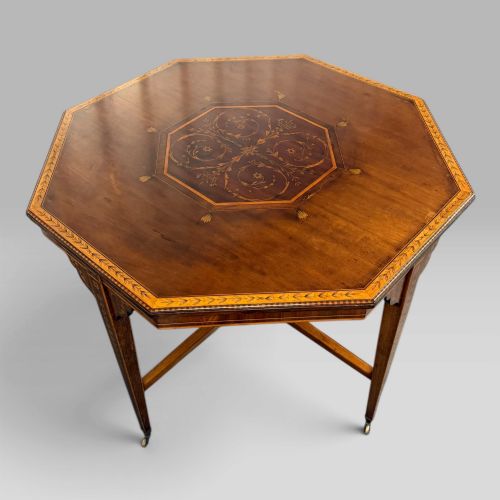
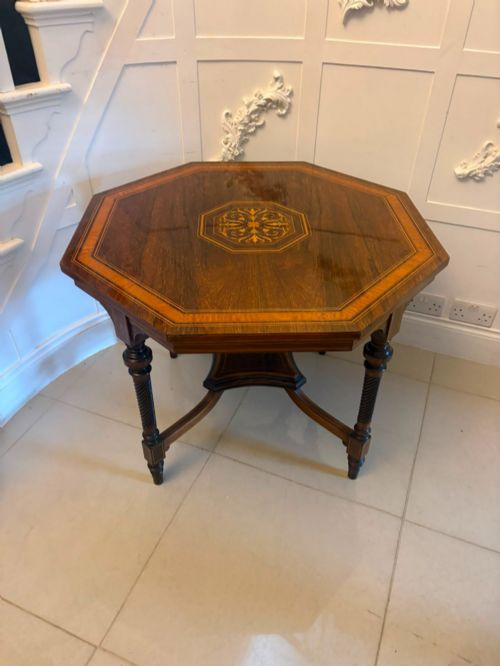
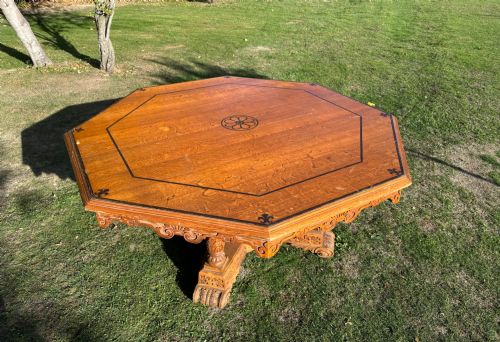
An inlaid octagonal centre table stands independently within a space, designed to be viewed from all sides rather than pushed against a wall. The pieces found here date predominantly from the Victorian and Edwardian eras, stretching from the mid nineteenth century into the early twentieth century, alongside specific regional interpretations.
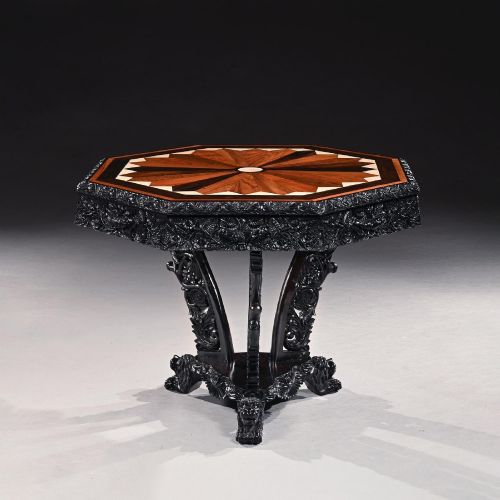
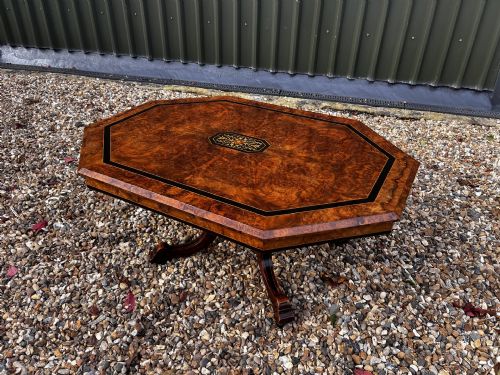
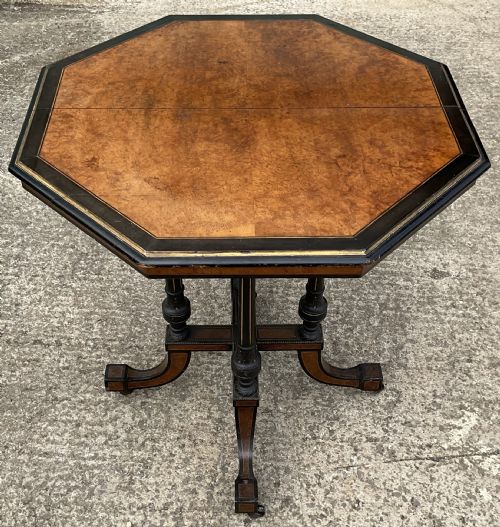
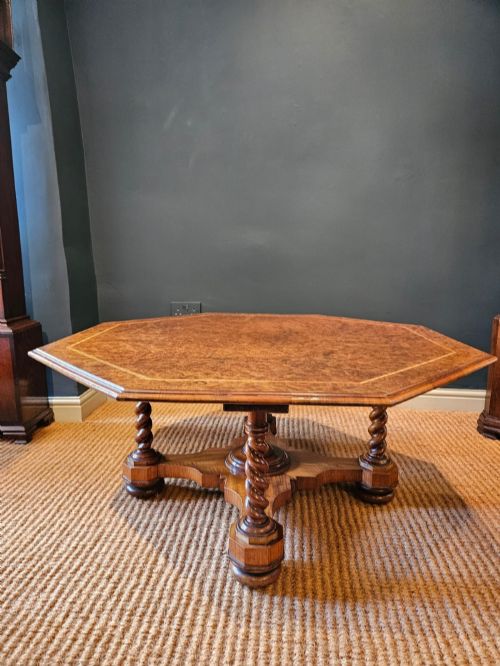
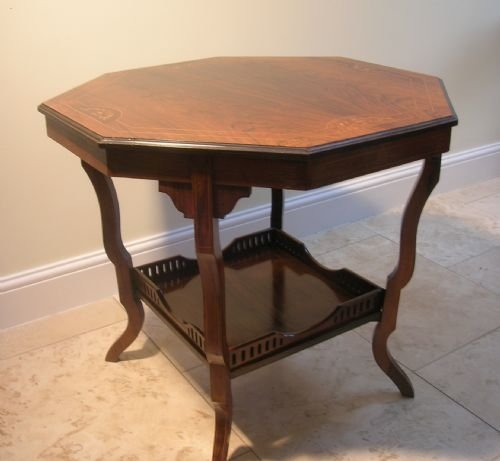
The most common form is the rosewood or burr walnut occasional or centre table, featuring complex geometric parquetry or floral marquetry across its eight-sided top. Makers from Sorrento, Britain and colonial workshops utilised this eight-sided format to display elaborate timber contrasts.
Assessing Quality
Quality rests in the precision of the veneer work and the choice of primary timbers, where burr walnut, amboyna and heavily figured rosewood command greater visual depth. The complexity of the marquetry, whether depicting intricate Italian views or strict geometric parquetry, dictates the tier of craftsmanship.
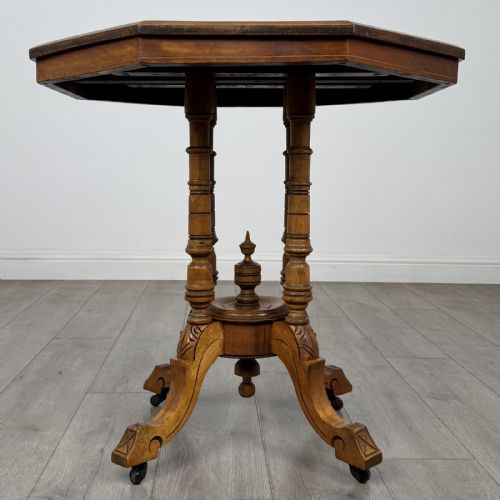
Structural integrity of the multi-sided pedestal or leg configuration matters greatly, as does the crispness of the inlaid boxwood stringing and the retention of the original polished surface finish.
Inlaid Octagonal Centre Table Retail Price Guide 2026
Typical asking prices for inlaid octagonal centre table among the pieces listed under this phrase on Sellingantiques today, from the lower quarter to the upper quarter. They describe what is for sale here now, not the wider market.
Listings feature woods including rosewood, burr walnut, satinwood, amboyna, mahogany and ebony across Victorian and Edwardian periods.
James Winter·Almerico Gargiulo
The Inlaid Octagonal Centre Table Glossary
- Marquetry
- The art of forming decorative patterns by fitting together veneer slices of various woods, shells and ivory. This technique creates pictorial scenes on table tops.
- Parquetry
- Geometric mosaic woodwork used for repeating patterns on floors and table tops. It relies on precise angular alignment of small timber blocks.
- Specimen wood
- Furniture constructed using a variety of different ornamental timbers, often collected from various global regions. Each piece displays distinct natural grain and colour.
- Ebonised
- Timber treated with a dark stain or finish to imitate ebony. This process became popular during the Victorian period for dramatic contrast.
Inlaid Octagonal Centre Table: Frequently Asked Questions
What is an inlaid octagonal centre table?
An inlaid octagonal centre table is a freestanding eight-sided table decorated with veneer work, designed to sit in the middle of a room rather than against a wall.
These pieces function as centre, coffee, or lamp tables, combining decorative surfaces with practical table space.
How do I identify a Victorian table?
Victorian tables typically utilise dense timbers such as rosewood and burr walnut, often featuring heavy pedestal bases or carved legs.
Look for deep polished finishes and rich marquetry patterns that characterise mid to late nineteenth-century British cabinetmaking.
How do I care for antique veneer?
Antique veneer requires stable indoor humidity away from direct sunlight and heat sources to prevent lifting or cracking.
Dust gently with a dry soft cloth and avoid modern aerosol polishes that can degrade the historic polish.