
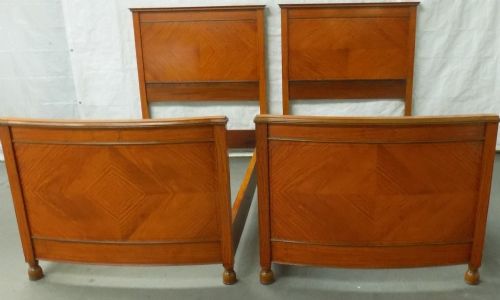


Inlaid Marquetry Bed
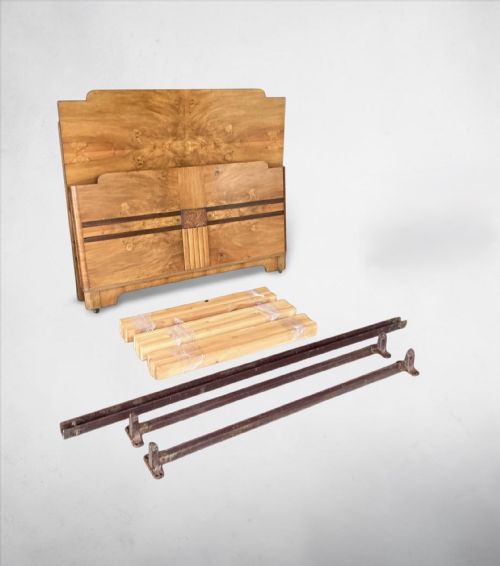
These pieces for an inlaid marquetry bed bring together decorative wood veneers and period sleeping furniture for a substantial bedroom centrepiece.
Inlaid Marquetry Bed
When you search for an inlaid marquetry bed, you are looking at substantial sleeping frames decorated with contrasting wood veneers and fitted panels. The evidence shows these pieces spanning periods from the seventeenth century through to the art deco era, encompassing French regional designs and British Edwardian pieces.
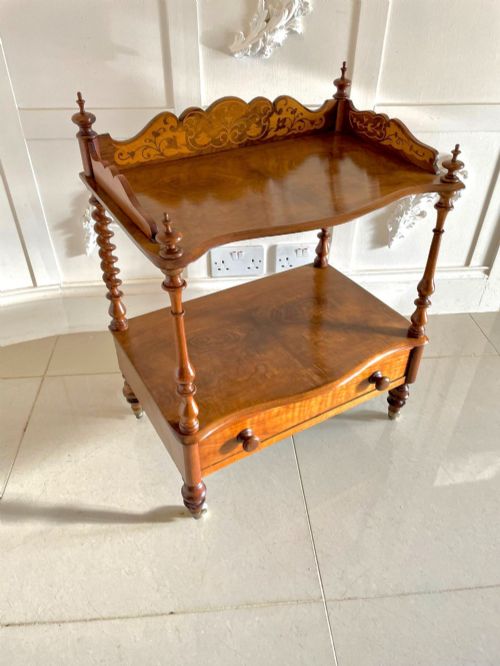
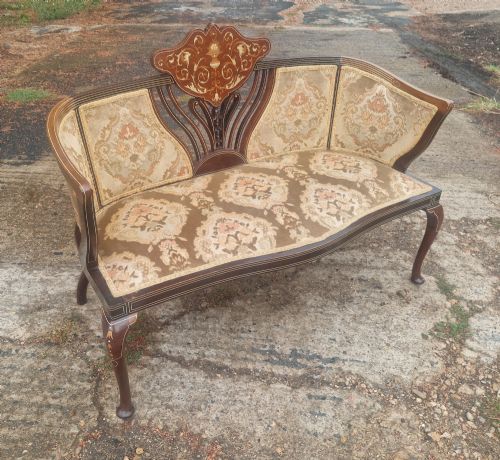
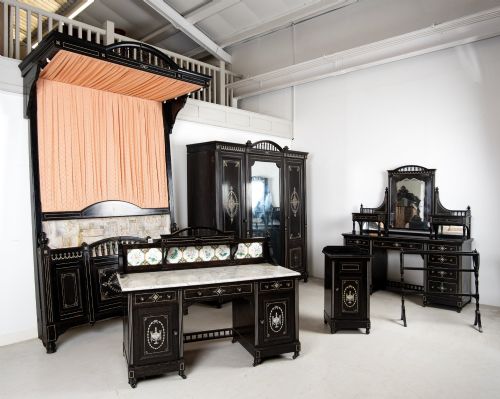
The version you are most likely to meet on this page is the continental double or king size bed frame, often accompanied by matching bedside cabinets or forming part of a larger bedroom suite. Alongside full bed frames, the listings include associated bedroom seating such as end-of-bed sofas and occasional pieces that share the same decorative vocabulary.
Materials and Construction
Cabinet makers utilised a foundation of solid timbers such as mahogany, walnut, oak or pitch pine, applying fine veneers of satinwood, kingwood, burr walnut and fruitwood to the visible surfaces. Marquetry technique involved cutting pictorial or geometric patterns from thin sheets of contrasting wood and fitting them together into a flush decorative panel.
Additional detail is provided through the integration of cast brass, ormolu mounts, gilt metal, marble tops and occasional bone inlay. These elements work in combination with the wood veneers to define the visual weight of each bed frame and its accompanying furniture.
Several beds arrive accompanied by their original marble-topped bedside companions and matching seating.
Distinctions in Standard
The division between standard output and the top of the range rests on the complexity of the veneer work and the precision of the timber matching. Finer examples display intricate multi-wood floral or pictorial marquetry that flows continuously across structural boundaries, whilst simpler pieces rely on basic geometric banding.
The choice of primary wood and secondary mounts also dictates the standard of the piece, with figured burr walnut, kingwood and heavy ormolu detailing marking out higher workshop output. The integration of matching side furniture and complete bedroom suites further elevates the standing of an individual bed frame.
Louis Majorelle·edwards roberts
The Inlaid Marquetry Bed Glossary
- Marquetry
- A decorative technique applying fitted pieces of wood veneer to a structural carcase to form pictorial or geometric designs. This differs from simple inlay by covering the entire surface with a mosaic of wood.
- Ormolu
- Gilded bronze mounts applied to furniture for decorative effect, frequently seen on French revival pieces. The material adds metallic contrast to the surrounding timber veneers.
- Satinwood
- A durable hardwood with a characteristic golden-yellow sheen, frequently utilised for light-coloured veneers and stringing lines on Edwardian furniture. It provides high visual contrast against darker mahogany or walnut grounds.
- Burr Walnut
- Timber taken from a tree growth or burl, yielding swirling, highly figured grain patterns highly prized for veneer work. It forms dramatic panel centres on nineteenth-century bedroom suites.
- Bespoke
- Made to individual order rather than produced in series for general stock. This term describes custom workshop commissions.
Inlaid Marquetry Bed: Frequently Asked Questions
What is an inlaid marquetry bed?
An inlaid marquetry bed is a wooden sleeping frame decorated with fitted patterns of contrasting wood veneers. These pieces range from seventeenth-century coffer forms to nineteenth-century French and Edwardian designs.
The surface decoration distinguishes these frames from plain timber furniture, incorporating motifs and geometric borders that reflect the prevailing style of their period of manufacture.
How do these beds differ from standard wood beds?
Standard wood beds rely on the natural grain and colour of a single primary timber, whereas marquetry versions incorporate multiple contrasting veneers. Cabinet makers cut these thin wood sections to create pictorial or geometric surface patterns.
This decorative technique requires specialist workshop skills and allows for elaborate visual effects across the headboards and footboards.
How do you date an antique bed frame?
Dating relies on identifying the prevailing style, construction methods, and secondary woods used in the frame. The evidence includes pieces spanning the seventeenth century, Victorian era, Edwardian period, and art deco designs.
Specific stylistic indicators, such as Louis XVI revival mounts or art nouveau curves, provide clear chronological markers for individual pieces.
What accompanies these beds in a suite?
Larger listings frequently include matching furniture such as bedside cabinets with marble tops, occasional tables, and end-of-bed sofas. These associated pieces share the same timber veneers and marquetry motifs.
Complete bedroom suites coordinate the bed frame with matching storage and seating to create a uniform interior scheme.