
Inlaid Marble Top Chests
Inlaid marble top chests combine precise cabinet work with heavy stone slabs, bringing continental proportion and polished utility to domestic spaces.
Inlaid Marble Top Chests
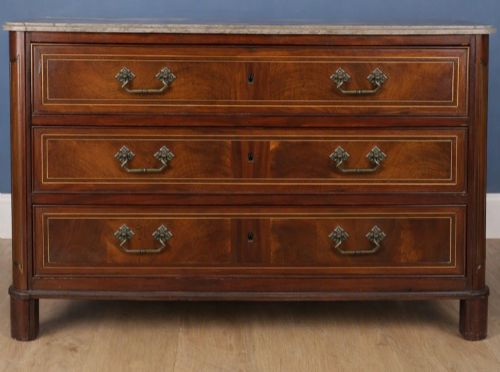
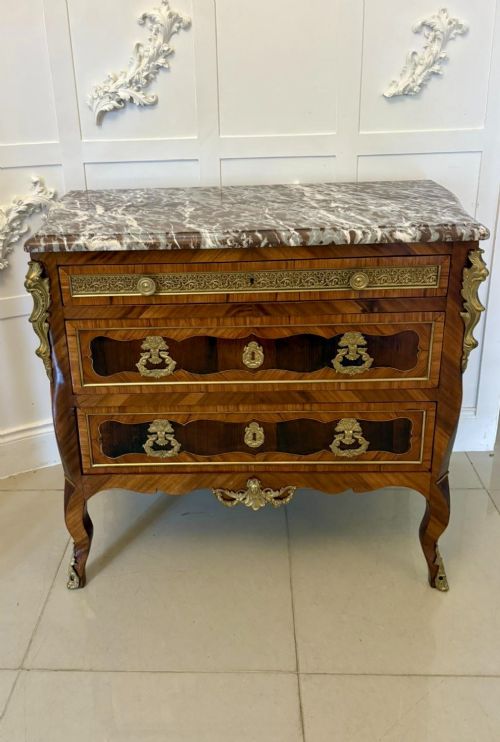
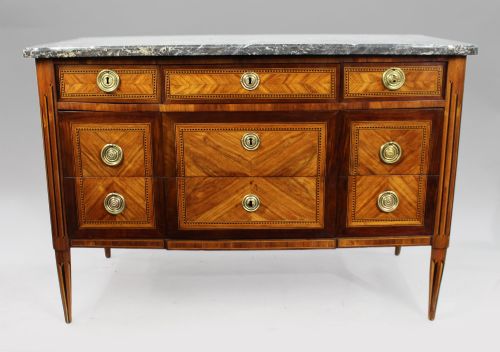
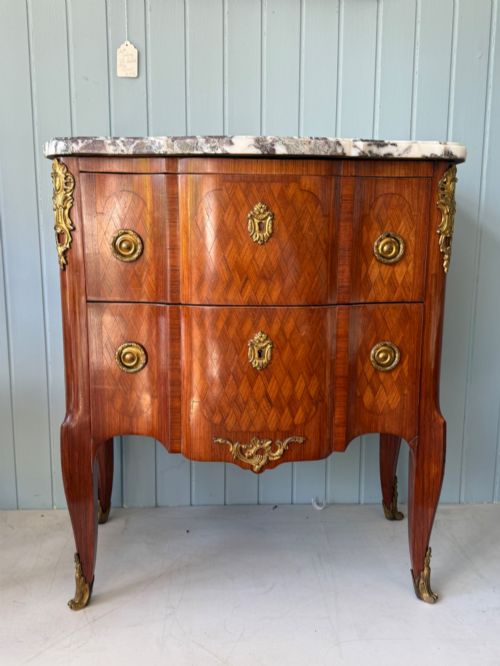
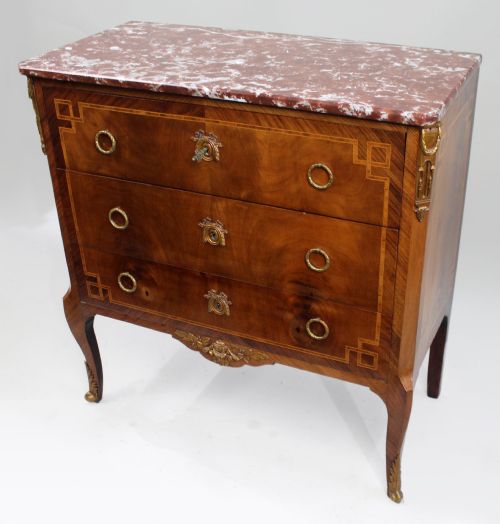
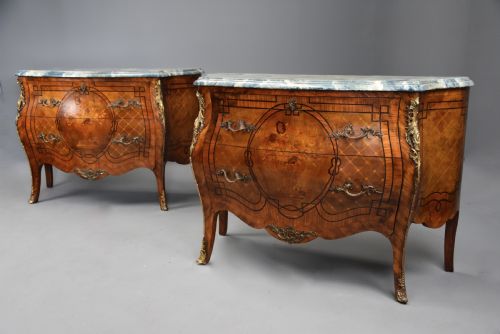
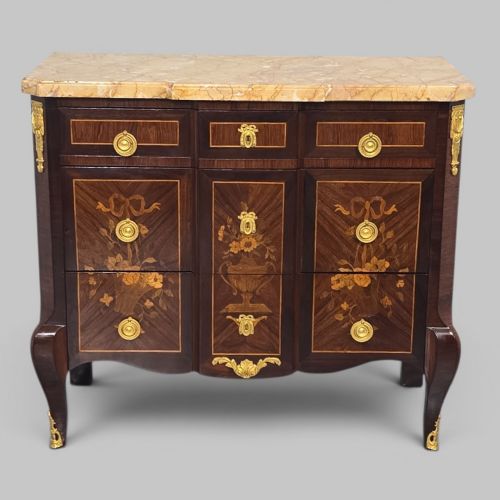
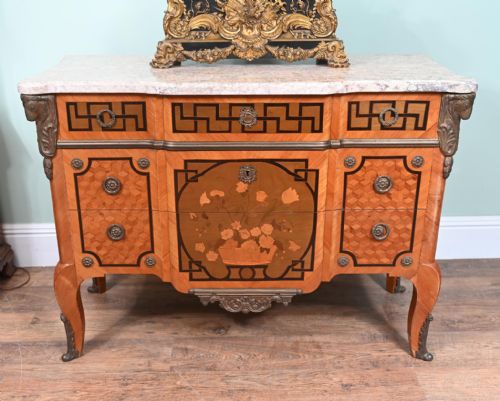
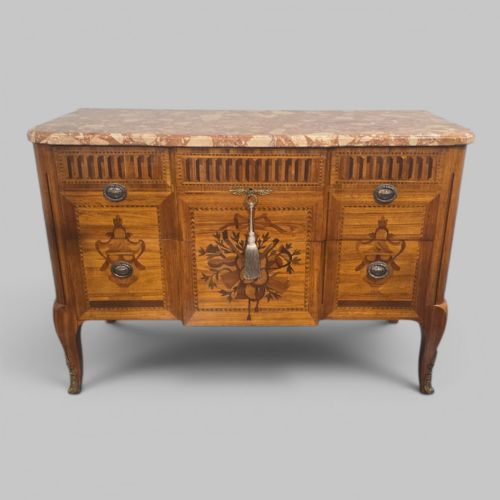
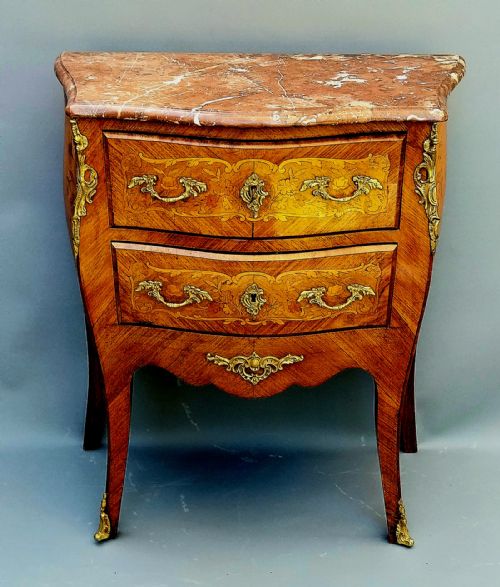
Inlaid marble top chests span several distinct forms, including commodes, bedside tables, sideboards, and narrow seven-drawer chests. A buyer searching for inlaid marble top chests most frequently encounters French and Italian pieces reflecting Louis XV and Louis XVI revivals, alongside earlier eighteenth-century examples.
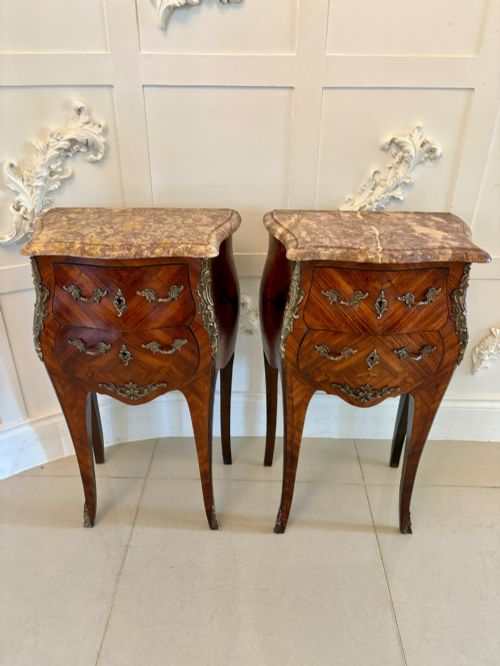
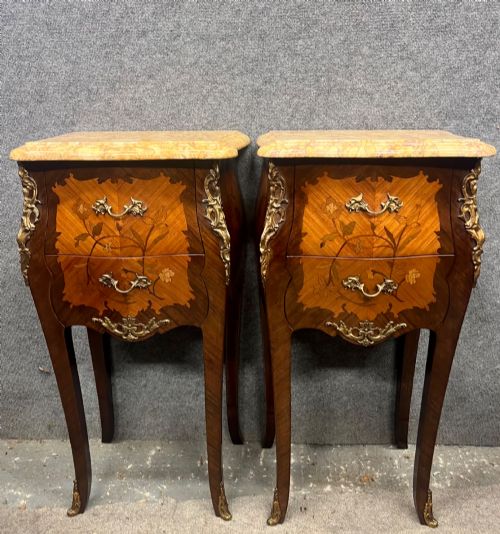
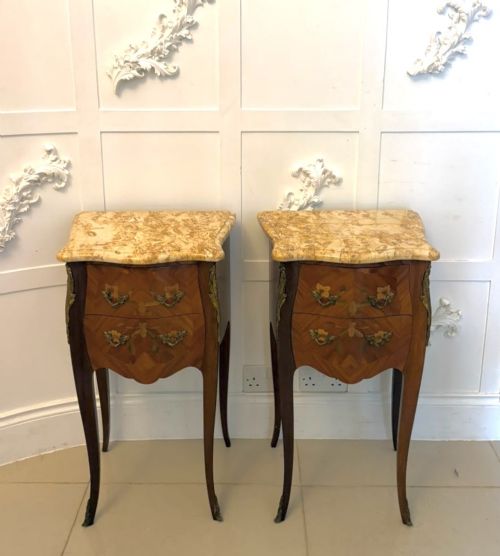
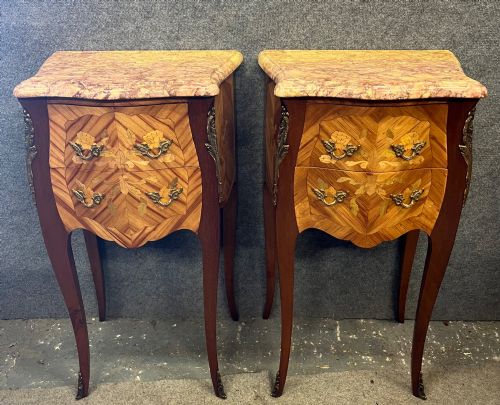
The selection ranges from large serpentine and breakfront commodes designed for formal rooms to compact pairs of bedside cabinets and lamp tables. Walnut, rosewood, kingwood, and tulipwood carcasses provide the structural foundation for intricate surface work across these various types.
Materials and Technique
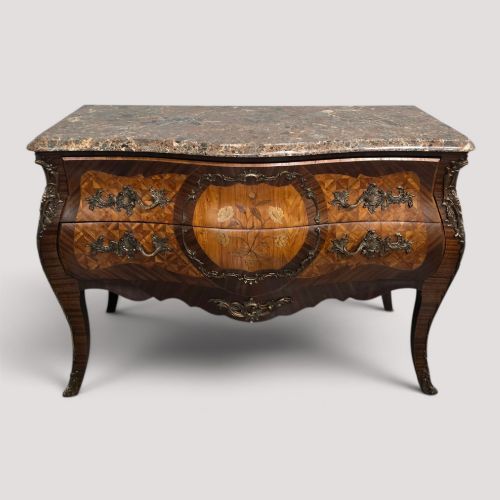
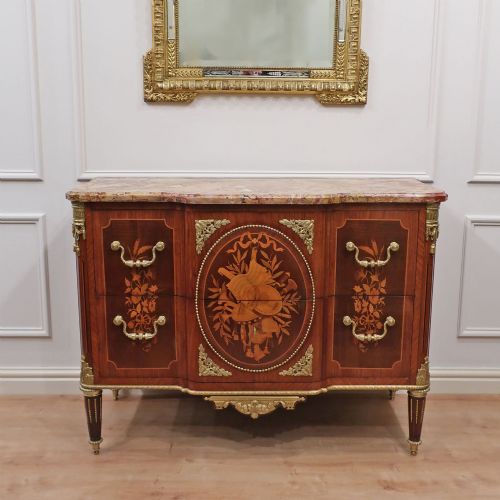
Craftsmen built these pieces using native and exotic hardwoods such as walnut, rosewood, kingwood, and tulipwood, arranged in geometric parquetry or pictorial marquetry patterns. Brass, ormolu, and gilt bronze mounts were cast and applied to corners, handles, and aprons to accent the structural lines of the carcase.
Heavy marble slabs, including rouge and scagliola varieties, were shaped to follow serpentine, breakfront, or straight contours of the furniture top. These stone surfaces were fitted precisely to rest directly upon the timber framework.
Several bedside cabinets arrive in matching pairs, proving that early morning coffee habits required symmetrical storage.
Craftsmanship and Proportion
Quality rests in the precision of the timber matching and the complexity of the marquetry cutting, where individual grain patterns dictate the visual depth of the design. Superior examples display seamless integration between the timber carcase and the fitted stone top, maintaining smooth movement across drawers and doors.
The weight, chiselling, and fire-gilding of the bronze or ormolu mounts differentiate standard production from finer workshop output. Carcase architecture, whether straight, bombe, or serpentine, requires balanced proportions that support the heavy stone without visual heaviness.
The Inlaid Marble Top Chests Glossary
- Commode
- A low chest of drawers or cabinet, typically originating from France and often fitted with a stone top. These pieces served practical storage functions in domestic interiors.
- Marquetry
- The art of applying small pieces of veneered wood to a carcase to create pictorial or geometric designs. This technique defines the patterned surfaces seen on many period cabinets.
- Ormolu
- Gilded bronze mounts applied to furniture for decorative and protective purposes. This material catches light and frames the timber panels.
- Bombe
- A swollen or bulging contour found on the sides and fronts of furniture carcasses. This curved shape requires specialised joinery.
- Scagliola
- A composite material made from selenite, glue, and pigments, mimicking natural marble. Artisans used this technique to produce colourful decorative table tops.
Inlaid Marble Top Chests: Frequently Asked Questions
How do I clean the marble top?
Wipe the surface with a soft, damp cloth using mild, neutral soap. Avoid acidic cleaners or vinegar, which etch stone.
Dry thoroughly with a lint-free towel to maintain the polished finish without harming the underlying minerals.
Are the marble tops fixed in place?
Most marble slabs rest under their own considerable weight directly on the timber frame. This loose fit allows for natural wood expansion.
Exercise caution when moving the furniture by lifting the carcase rather than the stone.
What is the difference between marquetry and parquetry?
Marquetry involves arranging varied veneers to form pictorial scenes, floral motifs, or complex scrolls. It showcases artistic skill through varied wood grains.
Parquetry uses geometric shapes like cubes or chevrons to create repeating patterns across flat surfaces.
How do I date a commode?
Examine the secondary woods inside the drawers, construction joints, and overall style cues such as revival details. Eighteenth-century models feature hand-cut joinery and specific carcass proportions.
Nineteenth- and early twentieth-century interpretations often incorporate machine-cut elements and distinct hardware styles associated with revival periods.