


Inlaid Mahogany Gaming Table
An inlaid mahogany gaming table brings tactile elegance to a room, offering a clever folding or rotating top that transforms from a side console into a surface for cards or chess.

Inlaid Mahogany Gaming Table
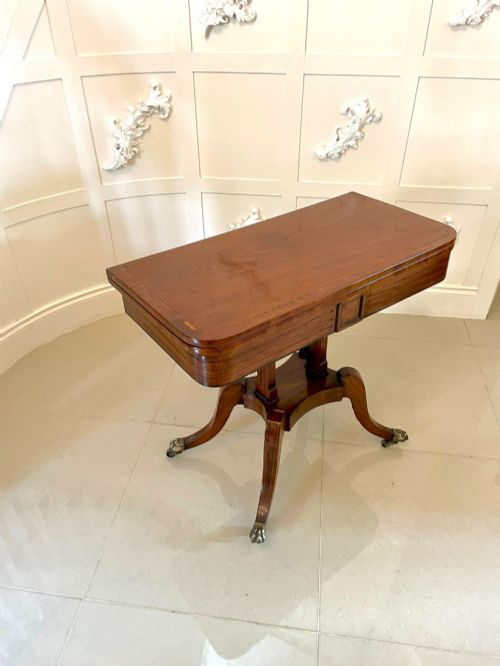
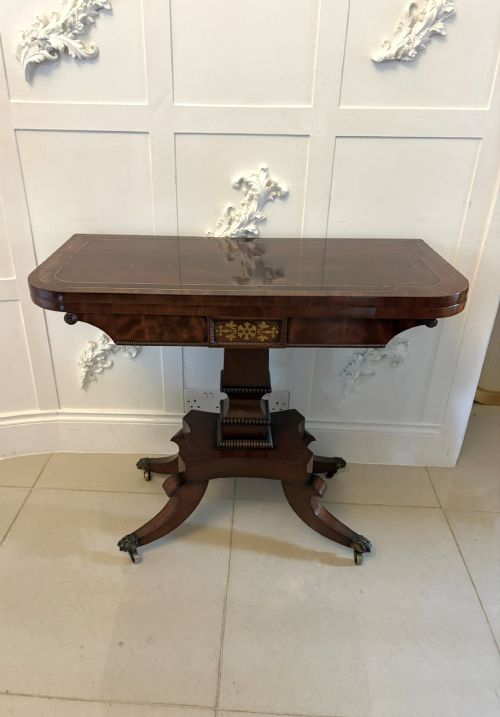
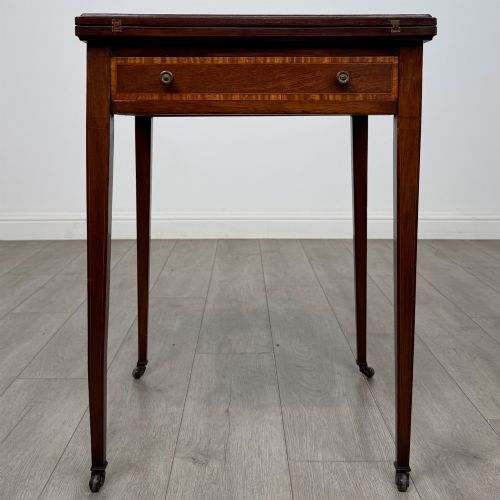
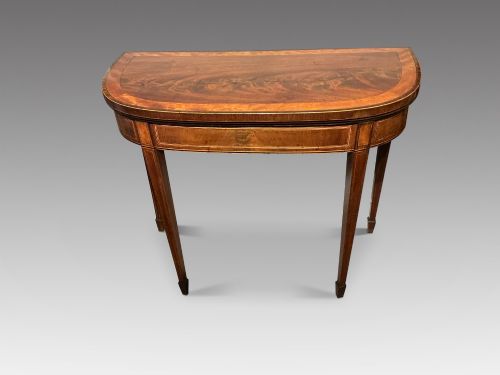
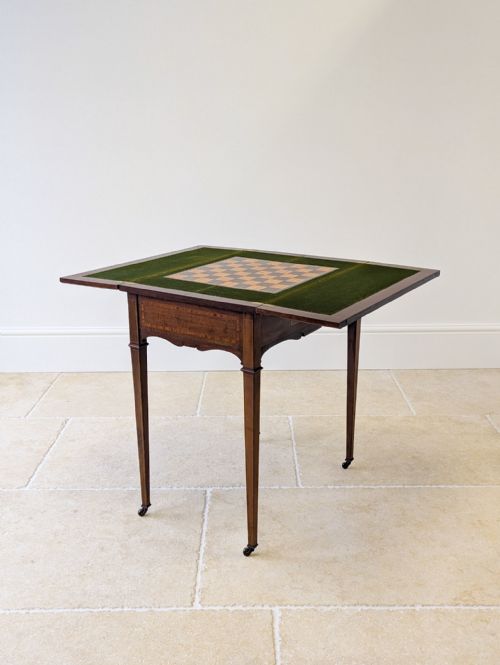
When searching for an inlaid mahogany gaming table, you examine pieces designed primarily during the Georgian, Regency, and Edwardian periods, stretching from the late eighteenth century into the early twentieth century. These objects function as versatile dual-purpose furniture, moving effortlessly between a slim console or tea table against a wall and a fully opened playing surface lined with baize or wood inlay.
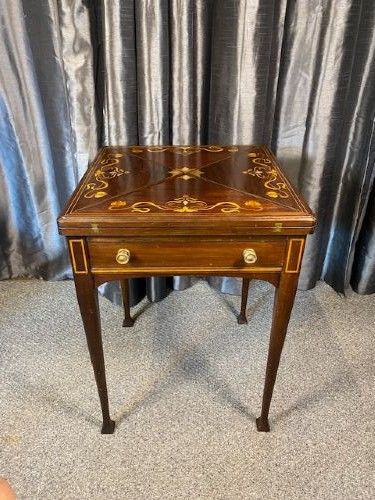
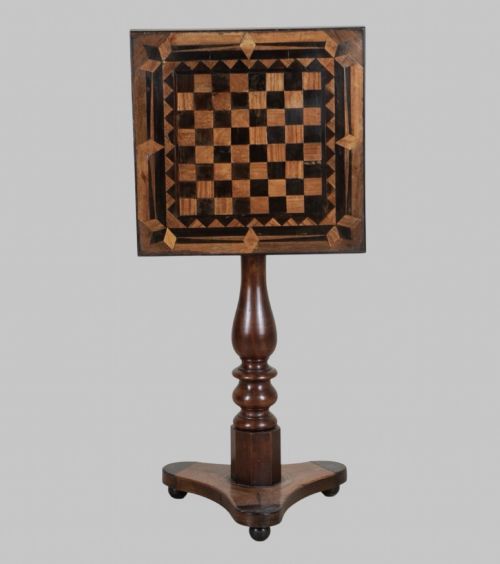
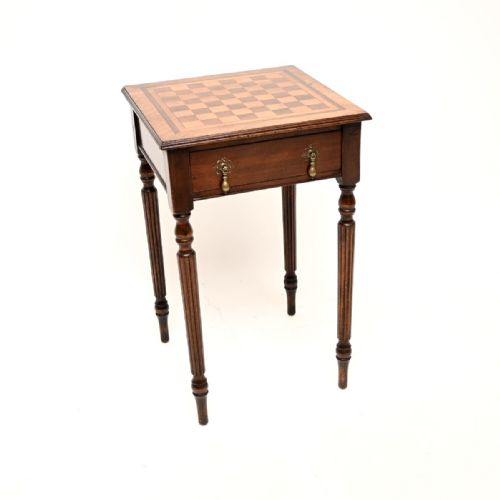
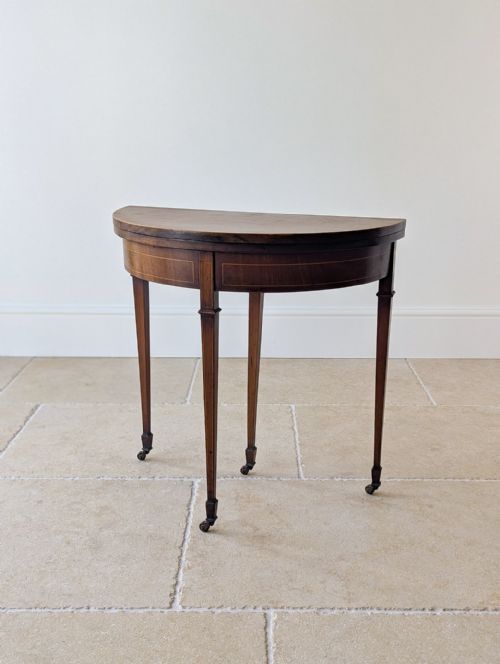
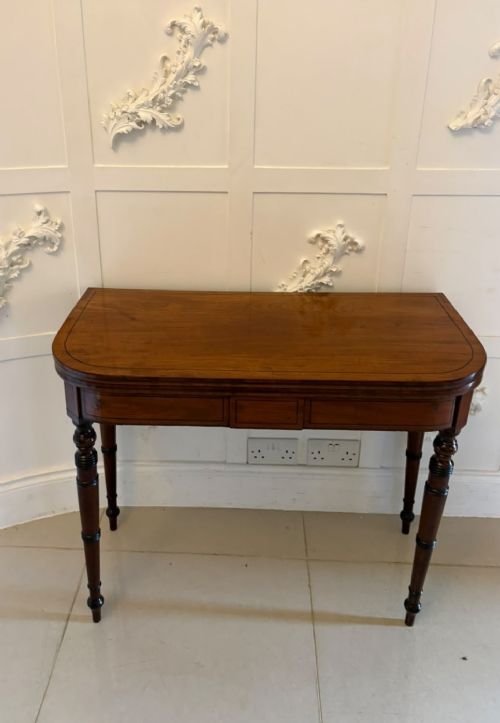
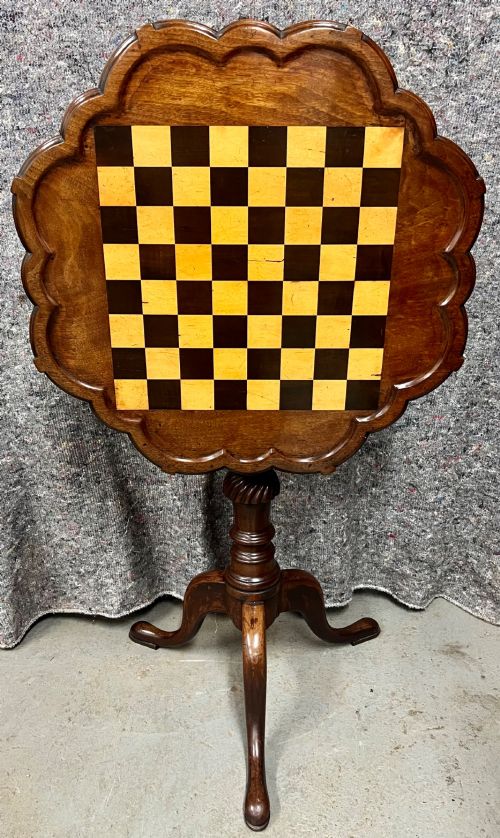
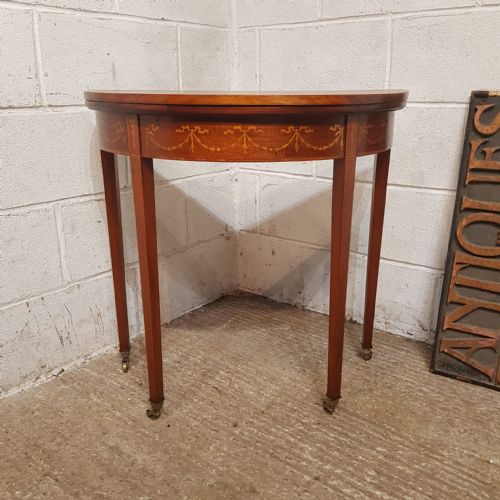
The most common formats on this page include the demi-lune fold-over card table, the rectangular swivel-top games table, and the ingenious envelope card table from the Edwardian era. Alongside dedicated card and games tables, you encounter tea tables and side tables that incorporate chess boards or subtle marquetry into their design.
Originating largely from British workshops across the Georgian and Regency eras, these tables reflect changing social habits where parlour games demanded specialised furniture. Later Edwardian examples and 19th-century interpretations continue this tradition, favouring rich timber grains and contrasting wood borders.
Materials and Construction Techniques
Cabinetmakers relied heavily upon solid and veneered mahogany as the primary structural body, often selecting Honduras mahogany or figured stock for the primary display surfaces. This timber provided stability and a deep reddish-brown foundation that accepted polish and handled the structural demands of folding leaves and pivoted tops.
Contrasting veneers and linear borders of satinwood, boxwood, and ebony were painstakingly inlaid into the mahogany ground to define geometric stringing or intricate chess and draughts boards. Selected pieces also integrate brass inlay, marquetry, and walnut elements to enrich the borders and friezes.
Internal framing utilised secondary hardwoods to support the pivoting mechanisms, folding leaves, and hidden compartments found beneath the top. Joinery techniques ensured that the heavy stress of opening and closing the fold-over leaves did not warp the main assembly over decades of use.
Some Edwardian tables hide secret wells beneath their rotating leaves, built so silently that guests might lose a hand before finding the spare dice.
Evaluating Craftsmanship and Finish
The calibre of an inlaid mahogany gaming table rests on the crispness of the stringing, the symmetry of the wood figures on the top, and the integration of the folding mechanism. Superior examples display tightly fitted hinges, precise alignment when closed, and timber selection that exhibits natural chatoyancy without excessive artificial staining.
The complexity and execution of the inlay dictate much of the piece's distinction, ranging from simple boxwood lines to elaborate satinwood fan motifs and detailed chess boards. Furthermore, the retention of original brass mounts, well-turned pedestals or leg structures, and stable structural integrity without excessive timber shrinkage elevate the standing of the piece.
Bruce & Burns of Edinburgh
The Inlaid Mahogany Gaming Table Glossary
- Demi-lune
- A half-moon shape characteristic of console and card tables designed to sit flush against a wall when closed. This semicircular format allows the top to unfold into a full circle or square for play.
- Fold-over
- A table top construction featuring a hinged leaf that doubles the surface area when opened and reveals a playing interior. This design typically conceals a small storage well beneath the surface.
- Stringing
- Thin inlaid lines of contrasting wood, such as boxwood or ebony, used to outline panels, legs, and edges. It creates a refined linear boundary on mahogany surfaces.
- Marquetry
- The art of applying pieces of veneer to a structure to form decorative patterns and pictorial designs. Cabinetmakers utilised various toned woods to compose floral or geometric motifs.
- Envelope table
- A square Edwardian table featuring four triangular flaps that swivel and fold open like an envelope to reveal the baize-lined interior. This clever mechanism became popular around the turn of the twentieth century.
Inlaid Mahogany Gaming Table: Frequently Asked Questions
How do you date a gaming table?
Dating relies on observing the leg styles, secondary timbers, and the nature of the inlay work. Georgian and Regency pieces typically show hand-cut dovetails, distinct mahogany grain patterns, and classical proportions.
Later Victorian and Edwardian examples introduce lighter satinwood borders, alternative interior well configurations, and machine-assisted construction markers. Comparing the hinge types and interior lining materials also clarifies the era of manufacture.
Were these tables used only for cards?
While primarily built for card games like whist or ombre, many surfaces double as writing desks or general console tables when closed. Some incorporate permanent inlaid chess or backgammon boards on the playing surface.
The inclusion of hidden compartments beneath the folding leaves allowed owners to store counters, dice, and playing cards securely within the furniture frame.
What is satinwood inlay?
Satinwood inlay involves setting pale, golden-yellow satinwood veneers into channels cut into the darker mahogany background. This technique creates high-contrast borders and decorative medallions.
Craftsmen utilised this method to brighten the aesthetic of dark timbers, highlighting corners, table edges, and frieze panels with luminous geometric patterns.
How do you care for an inlaid top?
Maintaining an inlaid surface requires protecting the polished mahogany and delicate wood stringing from direct sunlight and extreme humidity fluctuations. Regular dusting with a soft, dry cloth preserves the finish.
Applying occasional appropriate wax feeds the timber and prevents the dry veneers from lifting along the inlaid borders. Avoid placing damp items directly onto the antique polished surface.