


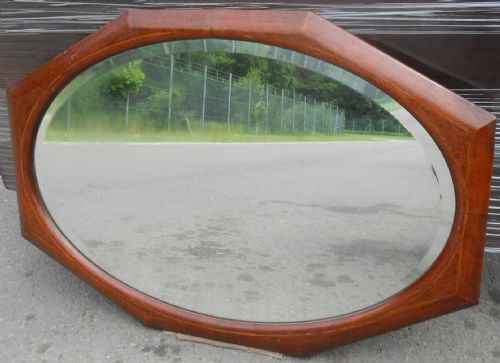
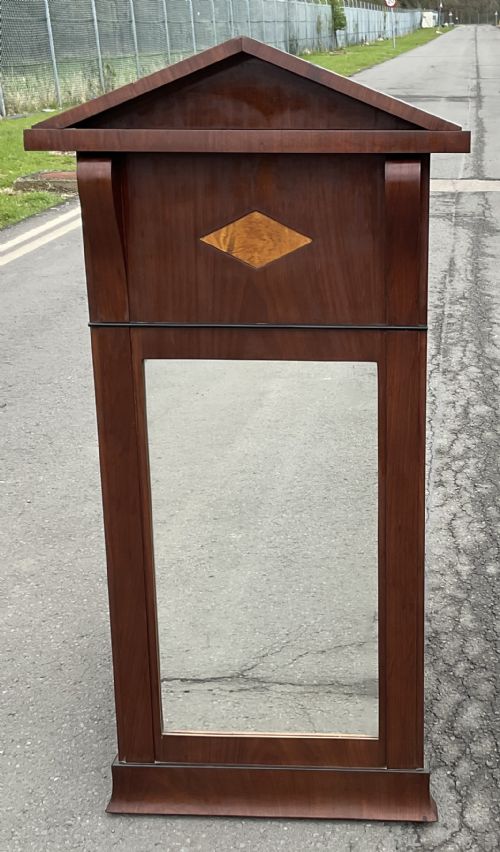
Inlaid Mahogany Frame Mirror
These inlaid mahogany frame mirror pieces offer rich timber tones and delicate marquetry, catching the light in any hallway or parlour.
Inlaid Mahogany Frame Mirror
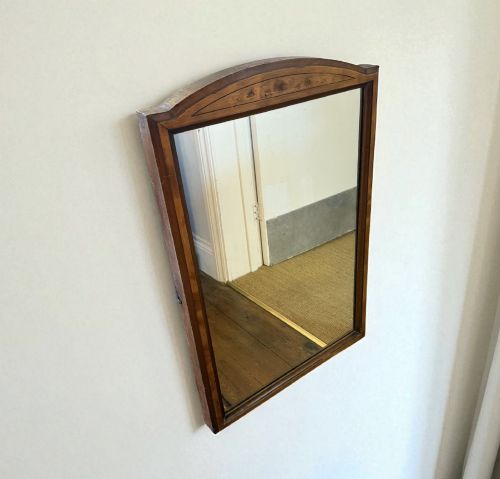
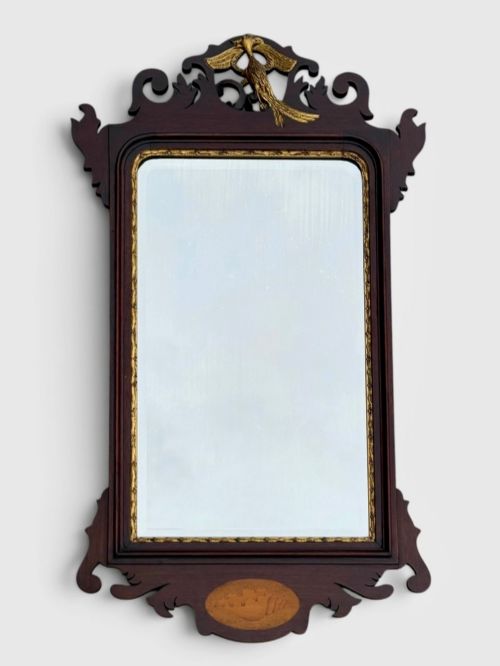
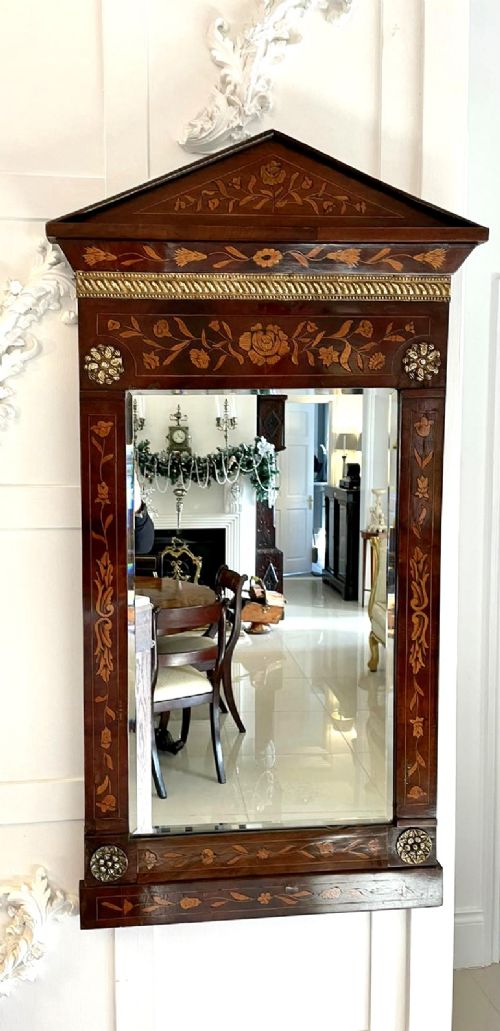
When you search for an inlaid mahogany frame mirror, you are looking at wall mirrors, dressing mirrors, and cheval mirrors built from rich timbers. These pieces span from the Georgian period through the 19th century and into Edwardian times, showing styles from Chippendale Revival to Dutch Marquetry.
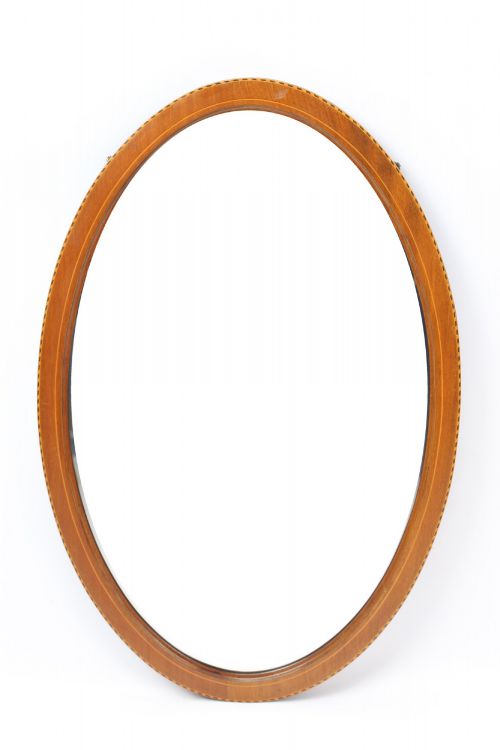
You are most likely to meet Edwardian oval hanging wall mirrors and fretwork wall mirrors on this page. They combine mahogany frames with satinwood inlay, glass, and occasional giltwood details.
The selection ranges from tall hall mirrors and overmantel mirrors down to smaller dressing table glasses. Each object demonstrates the enduring popularity of inlaid mahogany framing across multiple decades.
How they were made
Craftsmen built these frames using solid mahogany and applied delicate wood inlay, including satinwood and fruitwood, to create contrasting decorative borders and floral motifs. Fretwork styles required precise hand-cutting to achieve traditional scroll and pierced silhouettes.
Makers integrated glass plates, occasionally bevelled, within the timber surrounds, sometimes supporting heavier overmantel and cheval structures with brass fitments and gilded accents.
The listings on this page span the Georgian, Victorian, and Edwardian periods, utilising mahogany, satinwood, and giltwood.
What varies in quality
The fineness of the wood inlay separates standard production from exceptional examples, with crisp satinwood contrasting sharply against deep mahogany grain. Superior fretwork displays balanced symmetry and clean scrollwork rather than heavy, blunt edges.
Overall structural integrity and the clarity of the original glass plate dictate the standing of a piece within the range. Pieces retaining their original proportions and undamaged marquetry command greater appreciation.
The Inlaid Mahogany Frame Mirror Glossary
- Mahogany
- A durable tropical hardwood prized for its deep reddish-brown colour and fine grain. It serves as the primary structural timber for these frames.
- Inlay
- A technique where pieces of contrasting wood, such as satinwood or fruitwood, are fitted flush into the mahogany surface to form patterns.
- Fretwork
- Openwork ornamentation carved or pierced through the timber in geometric or scroll designs, frequently seen on wall mirror frames.
- Overmantel
- A large mirror designed specifically to be hung on the wall directly above a fireplace mantel.
- Cheval mirror
- A freestanding full-length mirror suspended in a frame that allows it to tilt back and forth.
Inlaid Mahogany Frame Mirror: Frequently Asked Questions
Where should I hang an inlaid mahogany frame mirror?
These mirrors suit hallways, living rooms, and bedrooms where their timber frames can complement other wooden furniture.
Ensure the wall fixings match the weight of the mirror, particularly for larger fretwork or overmantel examples.
How do I date an inlaid mahogany frame mirror?
Look to the style and framing construction to indicate the period, ranging from Georgian fretwork to Edwardian oval shapes.
Materials like satinwood inlay and the style of the glass bevel also help narrow down the decade of manufacture.
What is the difference between a wall mirror and an overmantel mirror?
Wall mirrors are generally lighter and sized to fit standard wall spaces, while overmantel mirrors are broader and wider.
Overmantels were historically designed to sit specifically above fireplace surrounds, influencing their horizontal proportions.
Are dressing mirrors different from regular wall mirrors?
Dressing mirrors are built to stand on tables or chests, often featuring pivoting frames for adjustable angles.
Wall mirrors are designed purely for fixed vertical hanging rather than tabletop use.