


Inlaid Mahogany Display Cupboard
An inlaid mahogany display cupboard brings together fine cabinet-making and glass-fronted storage to showcase prized possessions.
Inlaid Mahogany Display Cupboard
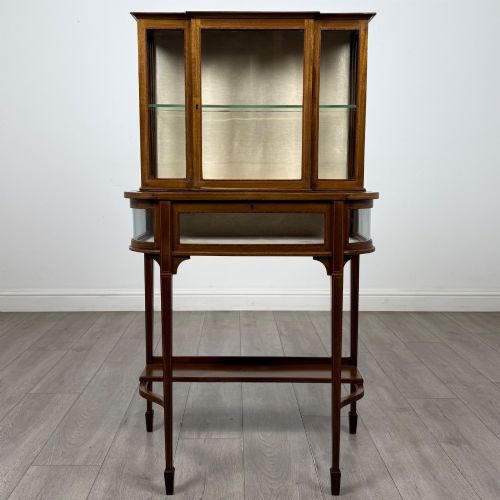
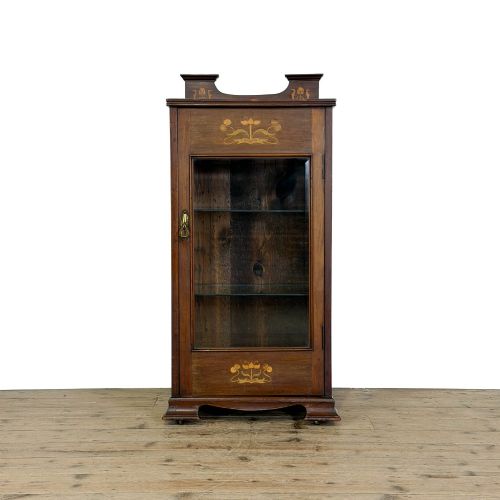
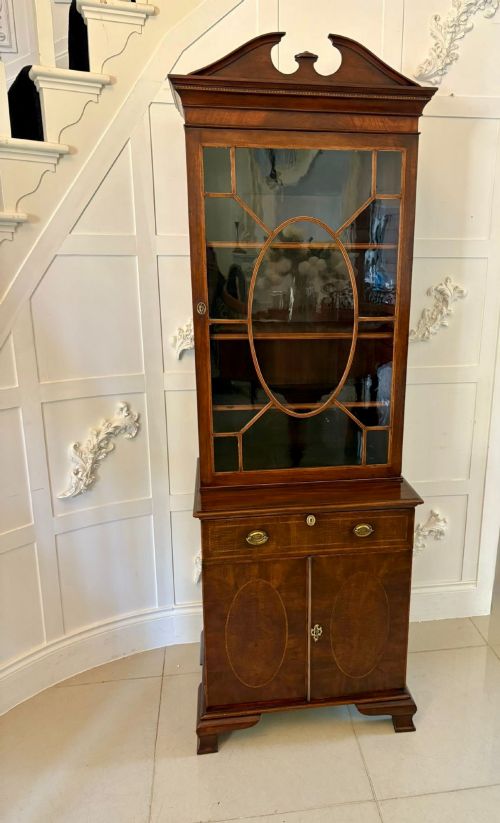
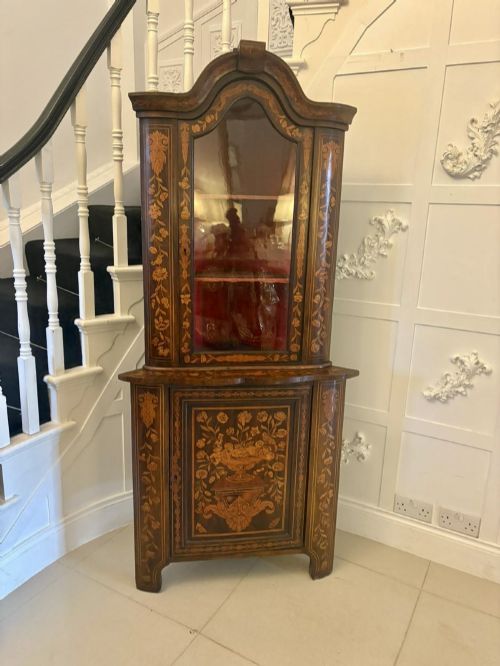
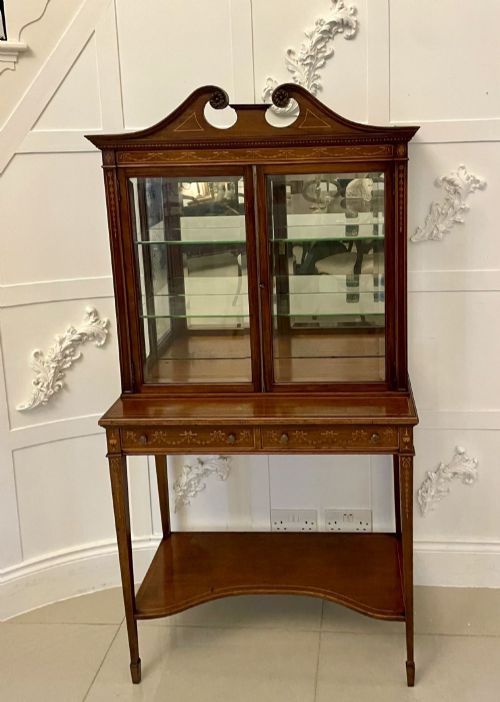
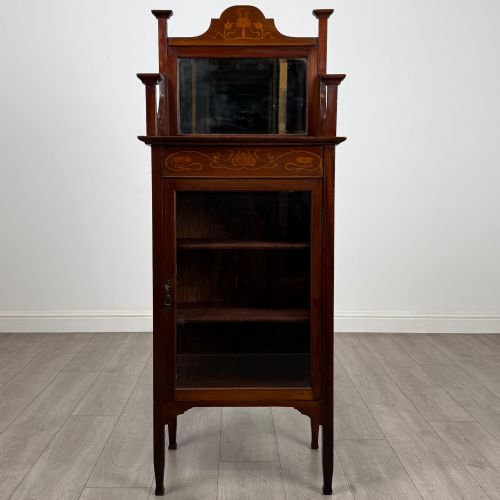
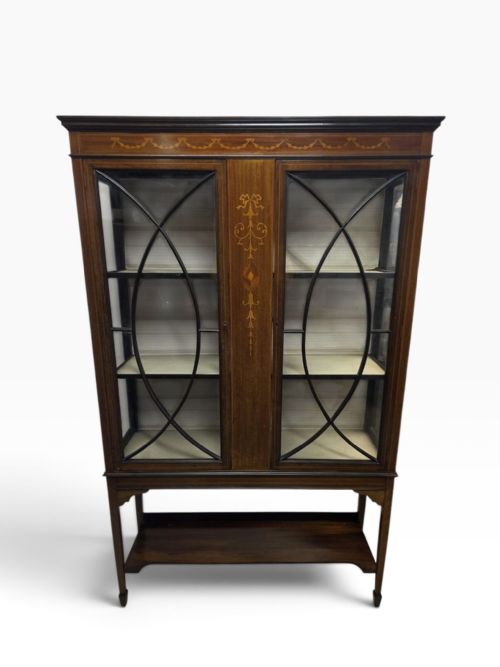
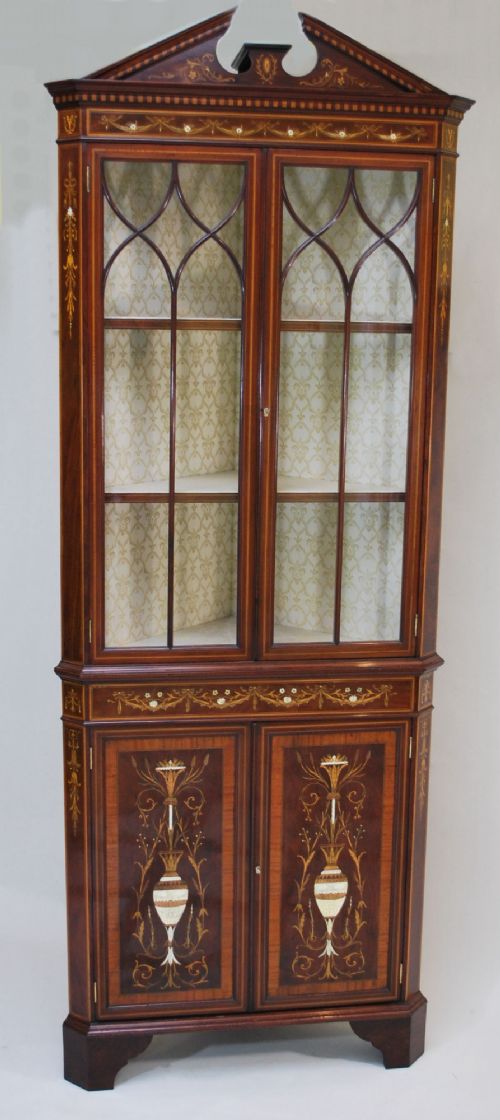
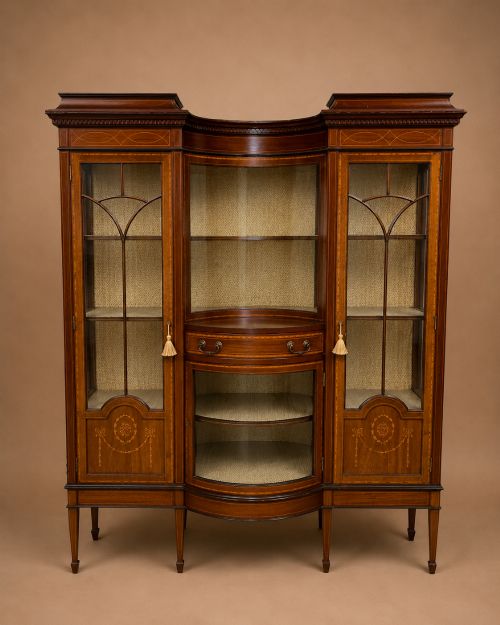
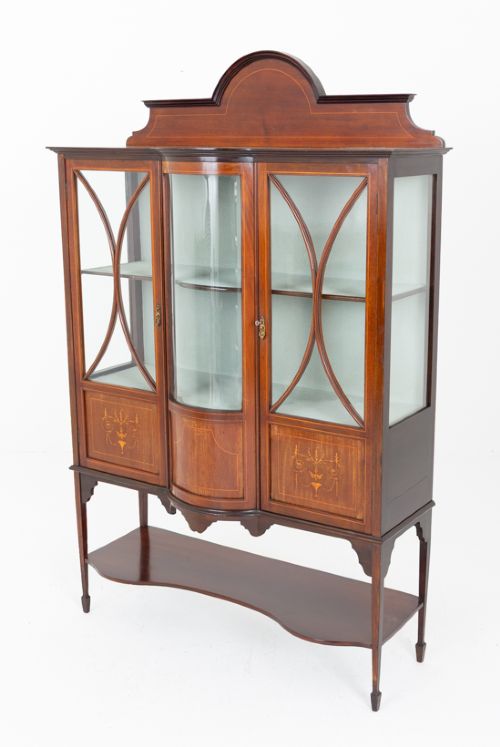
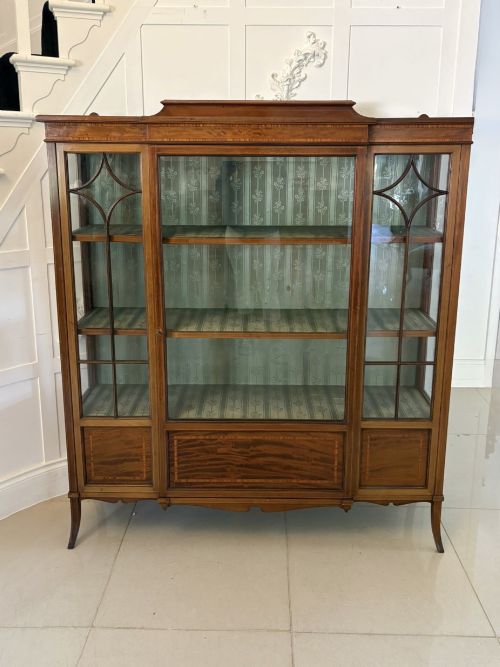
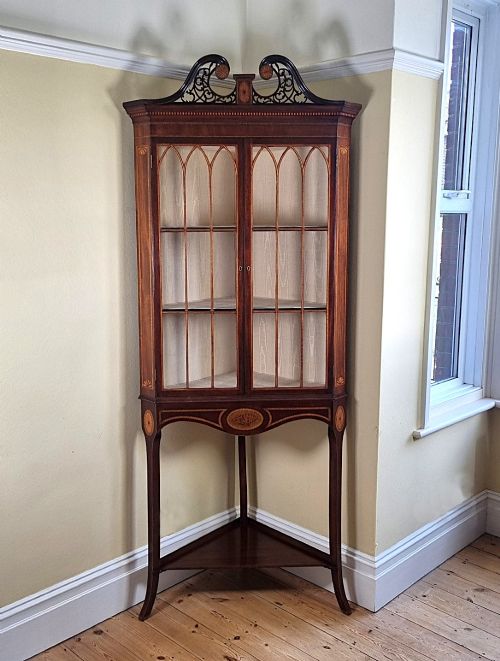
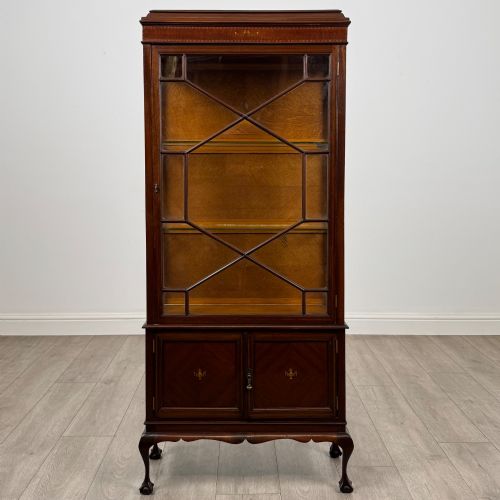
When you search for an inlaid mahogany display cupboard, you find case furniture designed to exhibit ceramics, glassware and books while protecting them behind glass doors. These items appear primarily in Edwardian, Victorian and Georgian periods, spanning floor-standing cabinets, wall-mounted units and corner cupboards.
The Edwardian era and the late nineteenth century contribute the highest volume of examples to this page, particularly in Sheraton Revival styles. Alongside these, earlier Georgian models and Dutch marquetry pieces offer distinct proportions and deeper historical character for specific interior settings.
How they were made
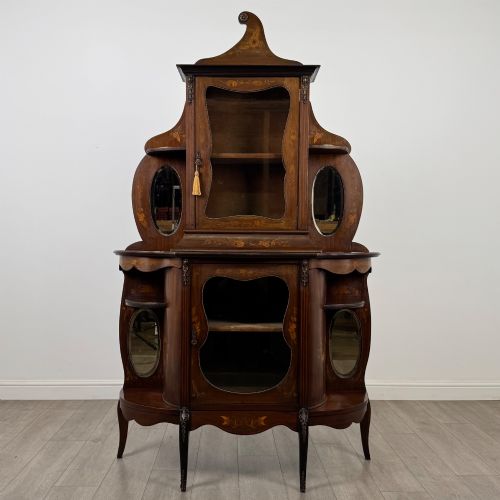
Makers built these pieces using solid mahogany and mahogany veneers over secondary woods, incorporating glass panels for the doors and sides. Satinwood, amboyna and various tinted woods formed the delicate line inlays and floral marquetry motifs characteristic of the style.
Brass hardware, mirrored backs and fabric-lined interiors frequently complete the construction of the display sections. Joinery methods relied on traditional cabinet techniques, uniting glazed upper display areas with lower cupboards or drawers.
Several cabinets come equipped with a mirror back, ensuring your prized porcelain can inspect its own reflection all day long.
What varies in quality
The standard of an inlaid mahogany display cupboard rests upon the crispness of its marquetry and the precision of the wood inlay. Finely executed satinwood banding and intricate floral motifs demand exceptional skill from the cabinet-maker, separating standard production from superior pieces.
Proportion and the handling of the timber also define the upper tier of pieces. Grain selection in the mahogany veneer, the delicacy of the glazing bars and the integrity of the original glass contribute significantly to the overall presence of the cabinet.
Edwards and Roberts
The Inlaid Mahogany Display Cupboard Glossary
- Marquetry
- Decorative patterns formed by fitting together small pieces of veneer into wooden panels. This technique creates pictorial or floral designs across the surface of the cabinet.
- Sheraton Revival
- A late nineteenth and early twentieth century design movement inspired by late eighteenth century neoclassical furniture. It relies on light proportions, straight tapered legs and subtle satinwood inlay.
- Astragal glazing
- Wooden bars that divide a glass window into smaller panes within a door or cabinet front. These slim mouldings frame the display area with geometric regularity.
- Corner cabinet
- A piece of furniture constructed to fit snugly into the internal angle of a room. These can be wall-mounted or floor-standing variants.
Inlaid Mahogany Display Cupboard: Frequently Asked Questions
Where should I place a corner cabinet?
A corner cabinet suits unused room angles, transforming dead space into a focal point for display without crowding the floor area.
Measuring the wall depth and the door swing ensures the piece fits comfortably alongside surrounding furniture.
How do I clean the interior?
Dust interior wooden surfaces with a dry, soft cloth and clean glass panels using a minimal amount of proprietary glass cleaner applied to a cloth rather than sprayed directly.
Avoid harsh chemical polishes that can damage older mahogany finishes and delicate satinwood inlays over time.
Can these cabinets hold heavy books?
Most pieces designed primarily for display feature lighter shelving intended for ceramics, glass or decorative items rather than heavy volumes.
Checking the support structure of the internal shelves helps determine whether a cabinet can accommodate heavier loads.
How do I distinguish Edwardian from Georgian pieces?
Edwardian examples often display lighter wood tones, Sheraton Revival influences and machine-assisted precision in their marquetry, frequently dating around nineteen hundred.
Georgian pieces exhibit older structural joinery, heavier timber weight and simpler, hand-cut proportions true to the eighteenth century.