

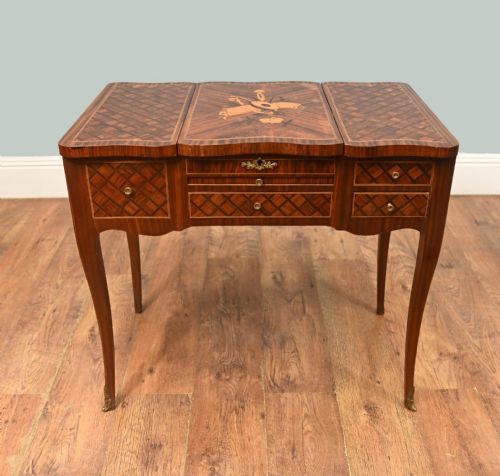


Inlaid Kingwood Desk
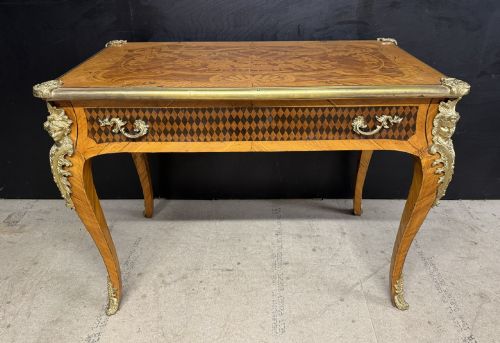
An inlaid kingwood desk brings French revival elegance and intricate marquetry directly into a study, most commonly seen in nineteenth-century bureau plat and writing table forms.
Inlaid Kingwood Desk
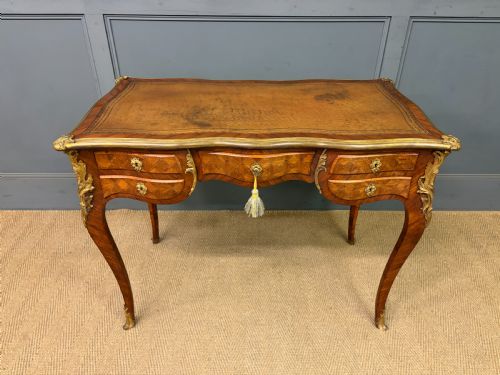
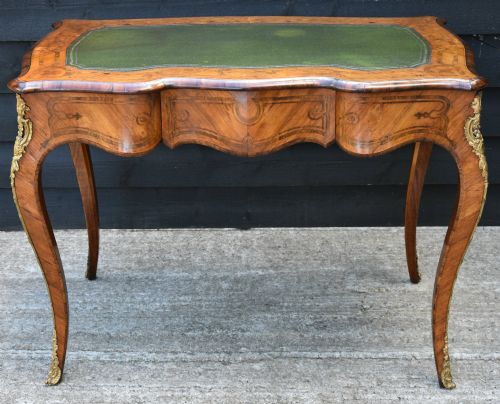
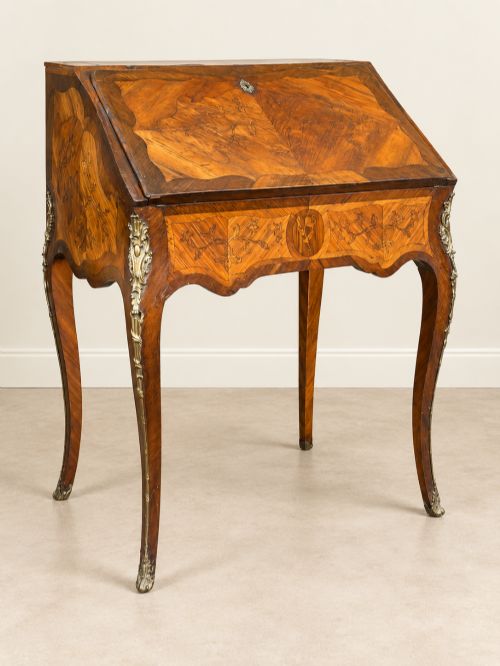
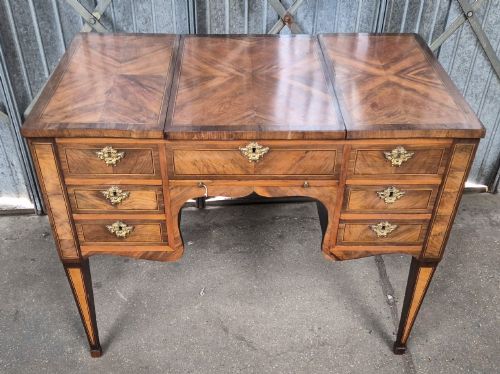
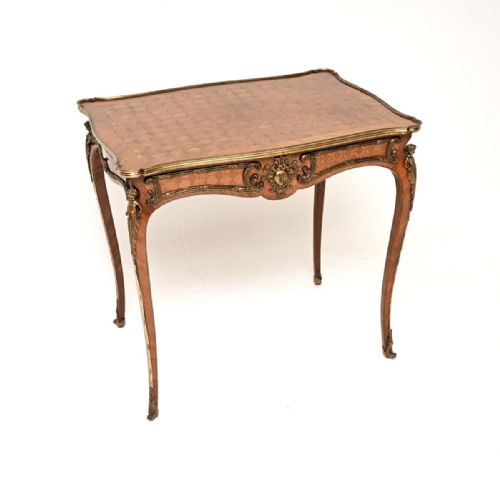
An inlaid kingwood desk embodies the revival of Louis XV and Louis XVI styles, bringing ornate French cabinet-making traditions into domestic interiors. These pieces primarily manifest as bureau plat desks, writing tables, and dainty bonheur du jour dressing tables.
The pieces appearing on this page date predominantly from the nineteenth century, alongside Edwardian adaptations and early twentieth-century examples. Alongside traditional desks, related forms such as centre tables, side tables, and secretaries frequently share the same vocabulary of design.
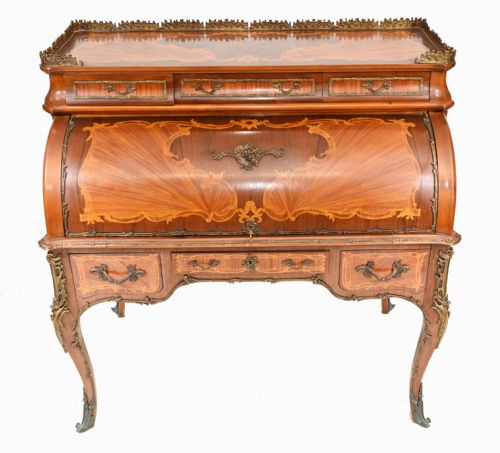
Makers and workshops across France and Britain adopted these classical continental idioms, utilising rich veneers and decorative mounts. Buyers encounter serpentine shapes, kidney-shaped writing surfaces, and cylinder bureaus designed for domestic correspondence.
Materials and construction techniques
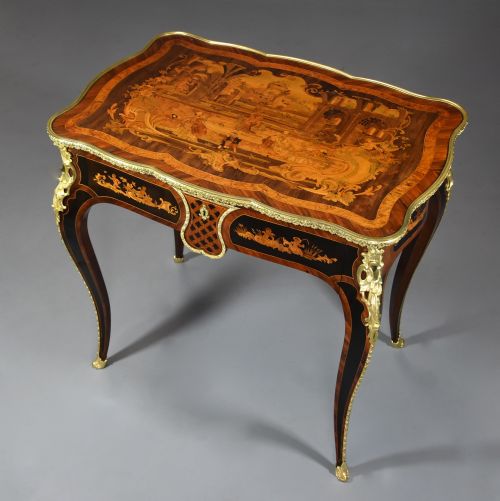
Cabinet-makers relied on kingwood veneer applied over solid secondary timbers, often enhanced by parquetry and pictorial marquetry patterns. Crossbanding in contrasting woods like satinwood frames the primary surfaces, while oak frequently lines the interior drawer boxes.
Cast ormolu and gilt bronze mounts decorate corners, handles, and aprons, secured with brass fixings to protect vulnerable edges. Leather writing inserts frequently provide a functional surface atop the structural wood framework.
The combination of intricate wood veneers and metal mounts required precise joinery to accommodate seasonal wood movement. Workshops integrated marble tops on certain secretaire and commode-form pieces, adding structural weight and a cool tactile contrast.
Secret compartments occasionally hide behind miniature drawers, rewarding inquisitive owners with tiny architectural surprises.
Distinctions in craftsmanship and design
The finesse of the marquetry and parquetry determines the visual distinction of the piece, separating standard production from exhibition-quality works. Intricate floral motifs and geometric arrangements demonstrate superior control by the marqueterie cutter.
The quality and weight of the ormolu mounts indicate the standard of the workshop, with chased and gilded bronze signifying higher-tier production compared to simpler brass stampings. Structural integrity in the carcase and original hardware complete the evaluation of a desk's merit.
Maison Millet·Francoise Linke
The Inlaid Kingwood Desk Glossary
- Kingwood
- A dense, richly figured Brazilian timber utilised extensively for high-end decorative veneering throughout the eighteenth and nineteenth centuries. Its deep brown colour and dark grain markings make it distinct from standard walnut or mahogany.
- Bureau Plat
- A flat-topped writing table featuring drawers within the frieze, typically finished on all sides for placement in the centre of a room. This form gained immense popularity during the Louis XV and Louis XVI periods.
- Marquetry
- The art of creating decorative patterns and pictorial scenes by fitting together small pieces of tinted wood veneer. Craftsmen assemble these complex designs before gluing them onto the carcase.
- Ormolu
- Gilt bronze mounts applied to furniture edges, feet, and keyholes for decorative emphasis. The technique involves applying a gold amalgam to cast bronze.
- Bonheur du Jour
- A small lady's writing desk featuring a superstructure of small drawers and shelves above the main writing surface. Originating in France, it serves both decorative and functional writing roles.
Inlaid Kingwood Desk: Frequently Asked Questions
What is a bureau plat?
A bureau plat is a freestanding writing table with a finished back and frieze drawers beneath the surface. It was designed to sit prominently in the centre of a room rather than against a wall.
These tables provide a generous writing space while displaying complex marquetry patterns and decorative ormolu mounts across all visible elevations.
How do I identify Louis XV style?
Louis XV style furniture is characterised by asymmetrical curves, serpentine outlines, and cabriole legs. These pieces avoid straight lines in favour of flowing, organic contours derived from nature.
Craftsmen often accentuated these shapes with floral marquetry panels and delicate gilt bronze corner mounts.
What is a bonheur du jour?
A bonheur du jour is a light writing desk featuring a small cabinet or tier of drawers built onto the rear of the writing surface. These pieces were fashionable for correspondence and light cosmetic tasks in private boudoirs.
They combine intricate kingwood veneers with practical compartments for stationery and small personal items.
Where were these desks made?
The majority of these desks originate from French workshops following traditional Parisian cabinet-making styles. British makers also produced similar pieces, particularly during the Edwardian period, often incorporating satinwood and crossbanding.
Continental ateliers exported these revival pieces widely to satisfy international demand for antique French aesthetics.