

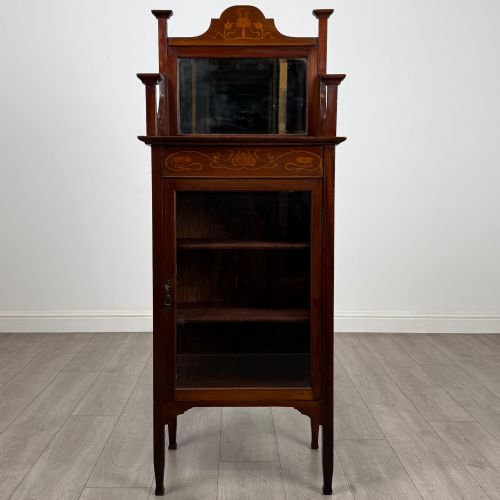
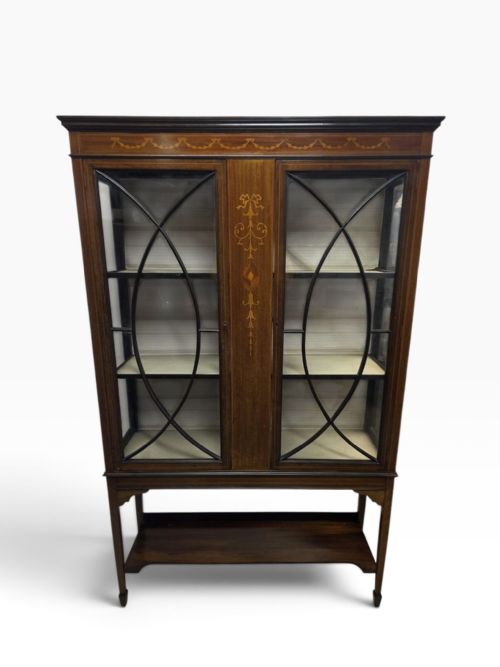
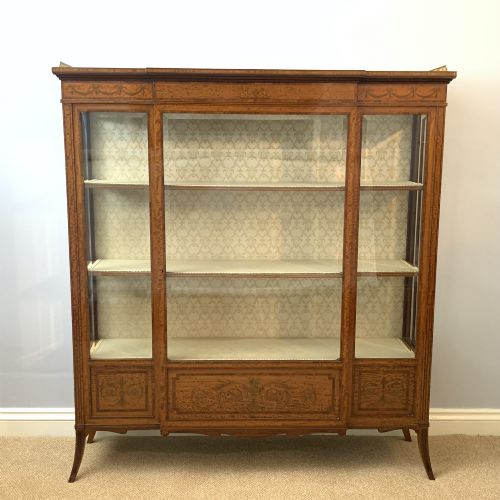
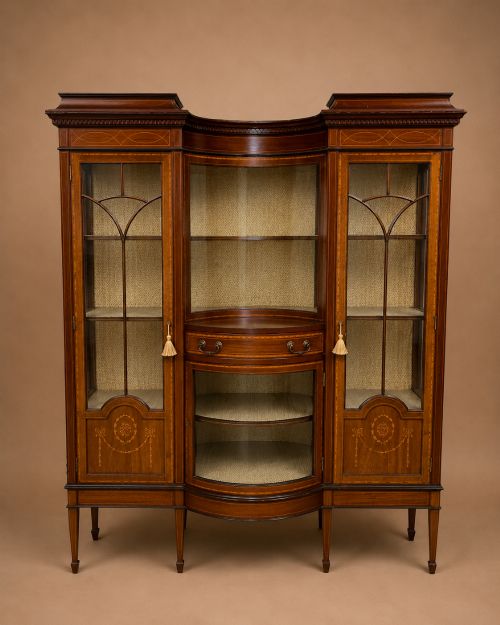
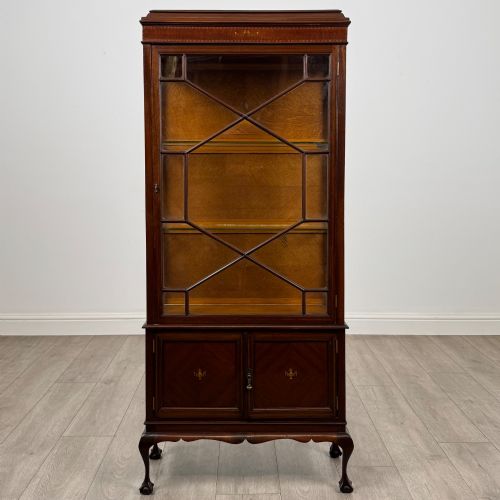
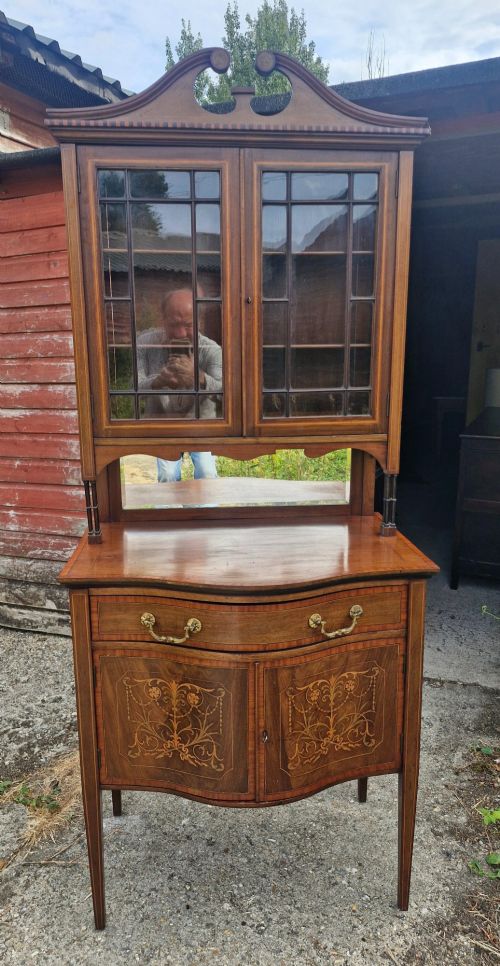
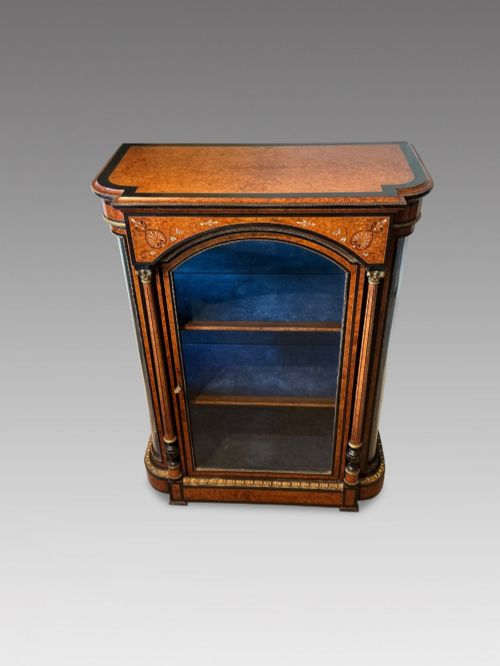
Inlaid Glass Vitrine
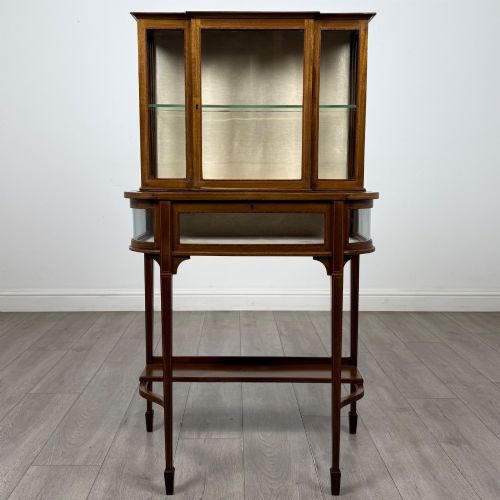
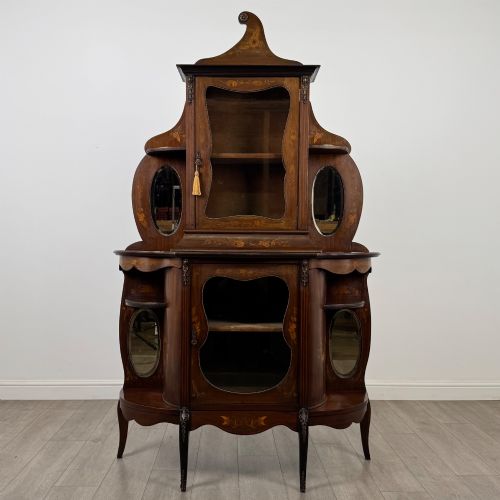
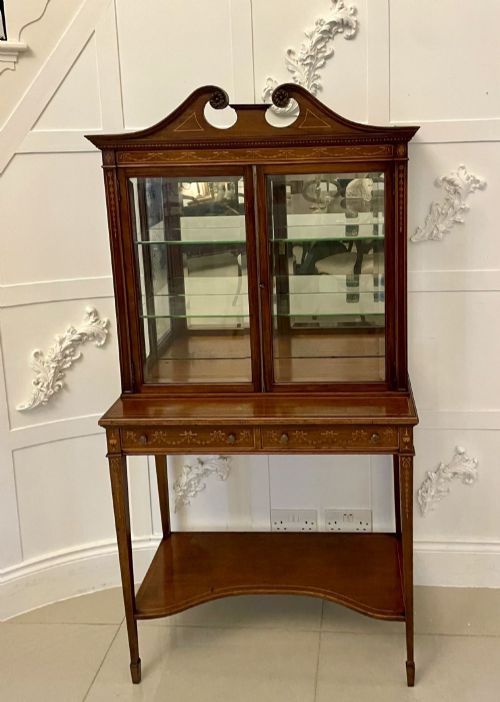
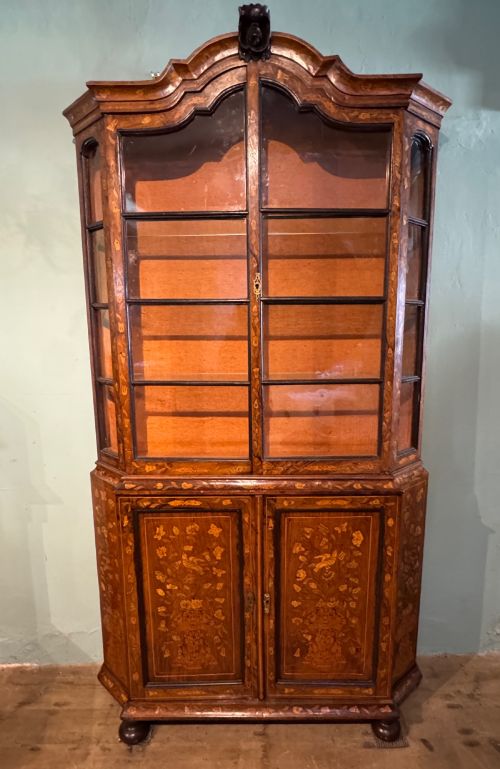
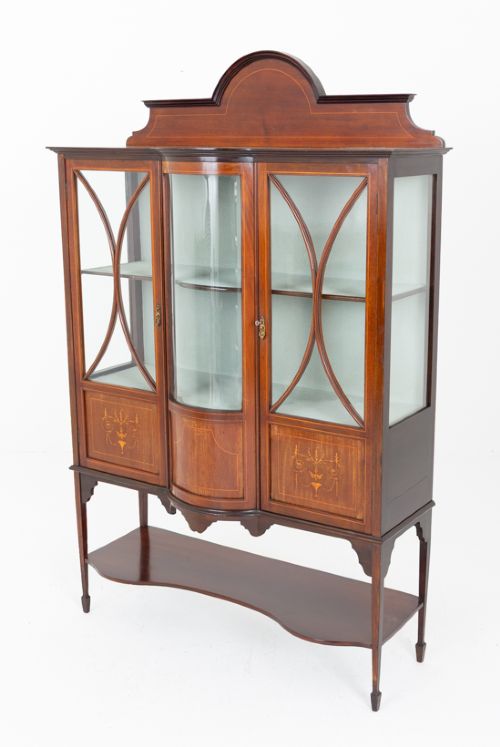
These inlaid glass vitrine pieces bring refined display and intricate marquetry into rooms through Edwardian and Victorian forms.
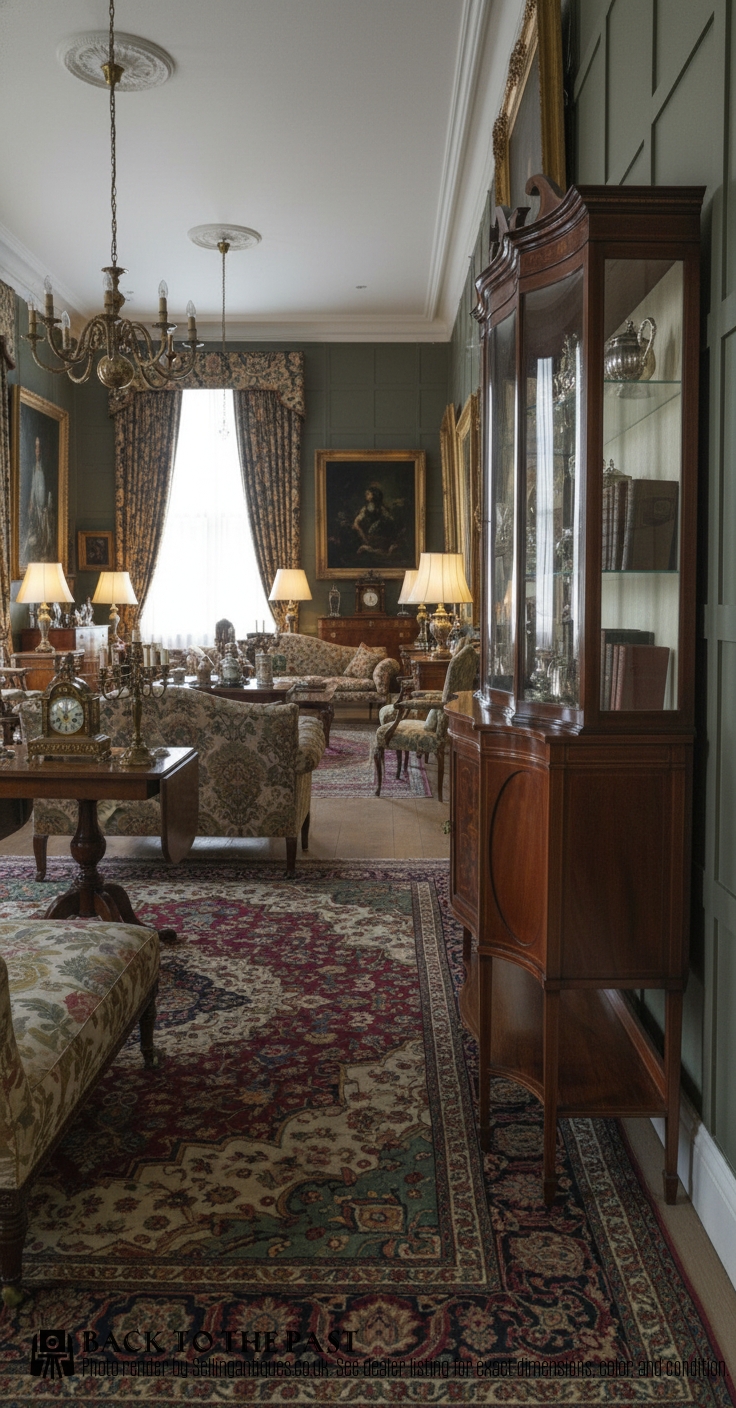
Inlaid Glass Vitrine
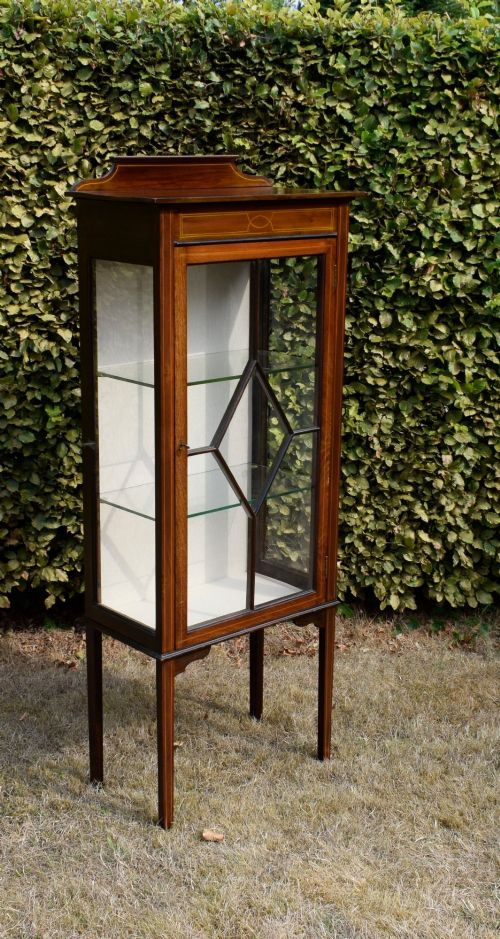
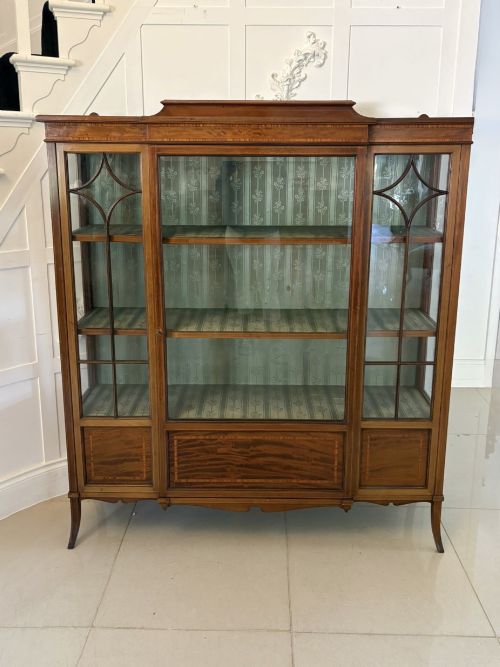
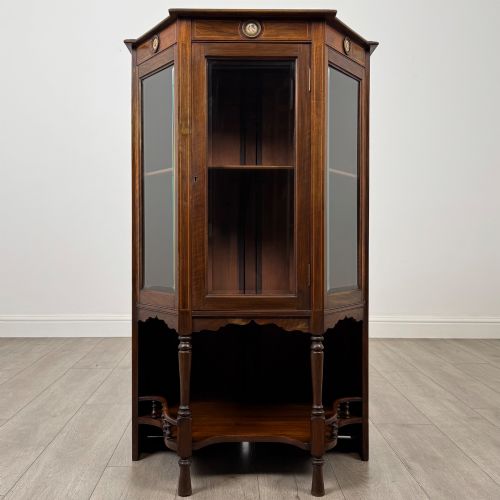
When you search for an inlaid glass vitrine, you are looking at display cabinets, corner cabinets, and bijouterie tables designed to showcase treasured objects. The pieces appearing here span from the mid-nineteenth century through the Edwardian era, with Sheraton Revival and Victorian styles dominating the selection.
Mahogany and satinwood serve as the primary timbers for these display cabinets, often embellished with delicate floral marquetry or contrasting stringing. Forms range from tall freestanding cabinets and bow-ended versions to kidney-shaped and oval glass tables meant for tabletop viewing.
Makers such as Edwards & Roberts, Maple & Co., and Shapland and Petter appear among these records, alongside unmarked pieces reflecting the high standards of nineteenth-century cabinet makers. Buyers encounter two-part cabinets, pier cabinets, and pedestal designs tailored for formal interior display.
Materials and construction
Cabinet makers constructed these pieces using solid mahogany and walnut frameworks, often veneered with finely figured satinwood to create contrasting borders and central panels. Glass doors and side panels allowed light to reach the interior shelves, while fabric linings provided a soft background for displayed items.
Marquetry and inlay techniques involved meticulously cutting delicate pieces of lighter and darker woods, such as satinwood inlay, and setting them flush into the primary timber. Brass hardware, mirror backs, and structural glazing bars completed the assembly of these glazed display cabinets.
The listings show a concentration of Edwardian Sheraton Revival pieces alongside late Victorian mahogany and satinwood cabinets.
Factors that separate tiers of quality
The sophistication of the marquetry and the choice of timbers define the upper tier of these pieces. Cabinets featuring complex floral marquetry in satinwood and walnut, alongside documented workshop attribution, represent finer craftsmanship than plain mahogany carcases.
Proportion and glazing detail also distinguish better examples, such as bow-ended doors, delicate stringing, and well-figured grain matching. The integration of mirror backs and shaped pedestal bases indicates higher ambition in the original design.
Edwards & Roberts·Shapland and Petter·Maple & Co.
The Inlaid Glass Vitrine Glossary
- Vitrine
- A glass-fronted display cabinet used for exhibiting porcelain, curiosities, and small decorative objects.
- Marquetry
- Decorative woodwork where pieces of veneer are fitted into a ground material to form intricate pictorial or floral patterns.
- Bijouterie table
- A glass-topped display table specifically designed for holding small precious items, jewellery, or medals.
- Sheraton Revival
- A late nineteenth-century design movement inspired by the lightness and neoclassical motifs of eighteenth-century furniture maker Thomas Sheraton.
- Stringing
- A narrow strip of contrasting wood inlaid into the surface of a piece to create a fine border or outline.
Inlaid Glass Vitrine: Frequently Asked Questions
What is an inlaid glass vitrine?
An inlaid glass vitrine is a glazed display cabinet or table decorated with contrasting wood veneers and marquetry. These pieces were designed to showcase precious ornaments and ceramics.
They appear predominantly in Edwardian and Victorian styles using timbers such as mahogany and satinwood.
How were vitrines used?
Vitrines served as drawing room or parlour furniture for displaying family collections, imported porcelain, and curiosities. The glass panels protected delicate items from dust while keeping them visible.
Table versions, known as bijouterie tables, held smaller items like medals, miniatures, and jewellery at viewing height.
How do I distinguish Edwardian from Victorian cabinets?
Victorian cabinets often feature heavier proportions, darker mahogany timbers, and robust carved or inlaid decoration. Edwardian pieces, particularly those in the Sheraton Revival style, tend to be lighter in scale with delicate satinwood inlay and refined proportions.
The search results show both periods sharing similar marquetry motifs.
What woods are typical for these cabinets?
Mahogany forms the primary structure for the majority of these display pieces, complemented by satinwood veneers. Walnut also appears across nineteenth-century examples.
Inlays incorporate various contrasting timbers to create floral designs and geometric borders.