


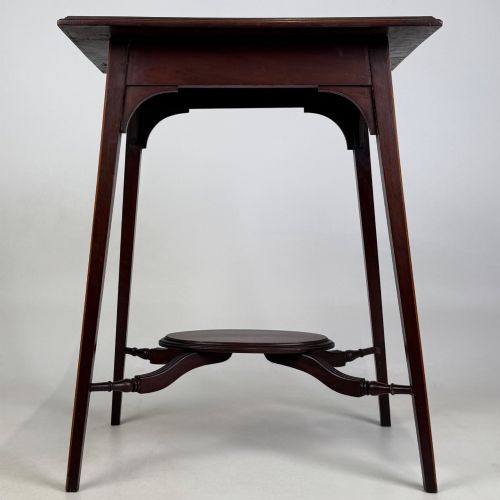
Edwardian Inlaid Display
Edwardian inlaid display pieces combine delicate cabinetwork with figured timbers to show off ceramics and small treasures.
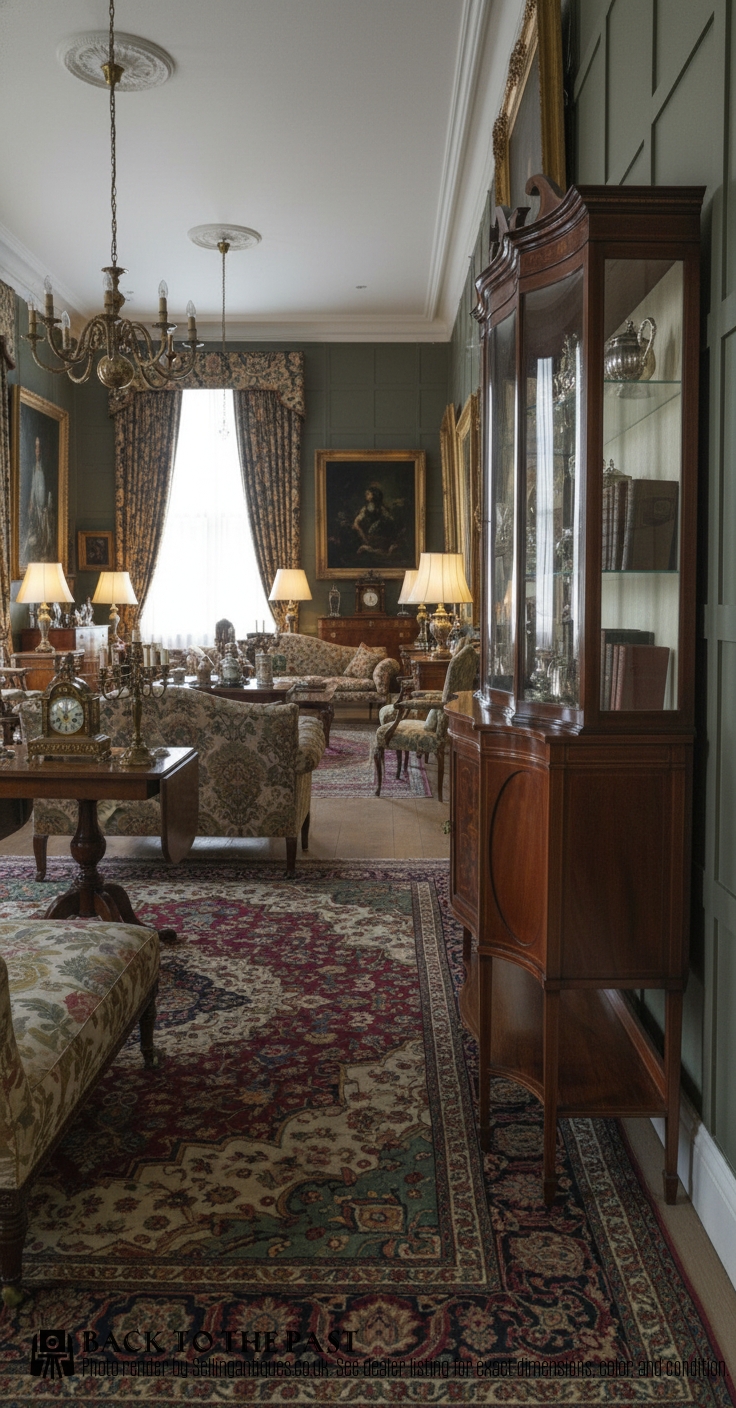
Edwardian Inlaid Display
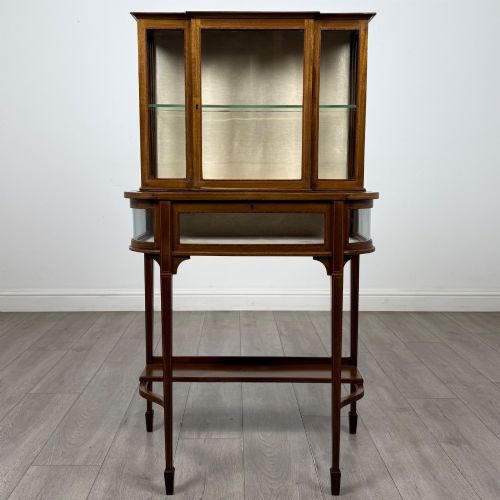
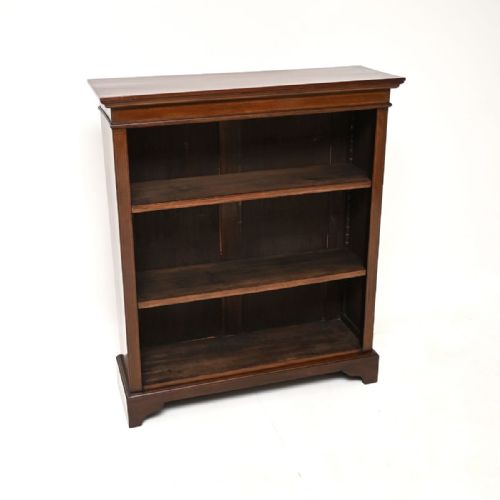
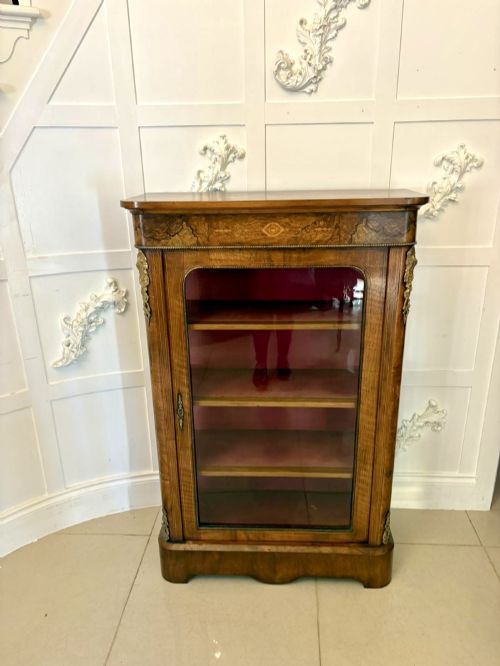
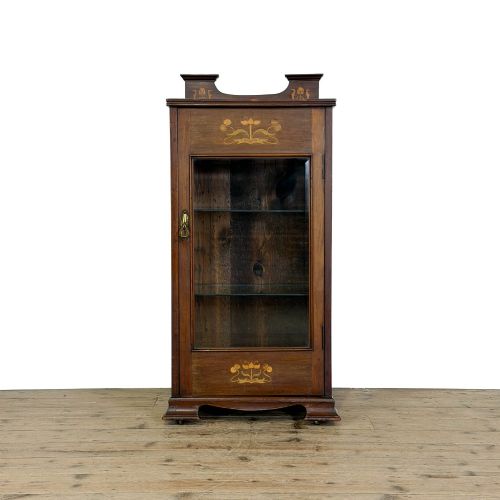
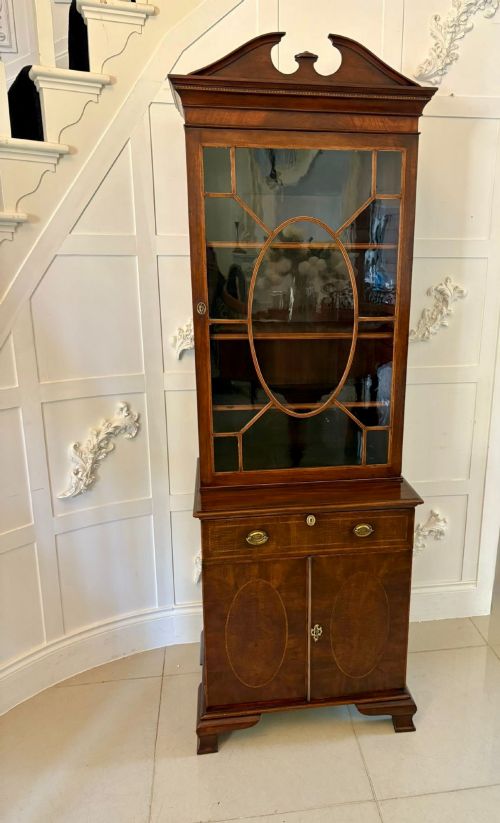
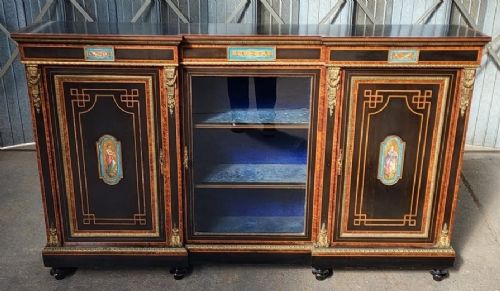
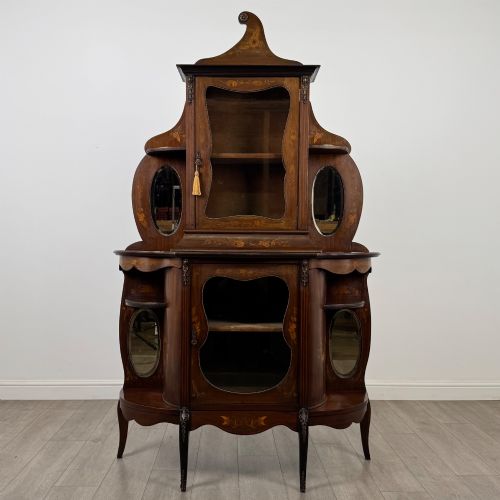
When you search for edwardian inlaid display pieces, you encounter a selection of glazed cabinets, vitrines, and corner cupboards designed to showcase domestic collections. These items predominantly date from the Edwardian era and the late nineteenth century, drawing heavily on Sheraton Revival design principles.
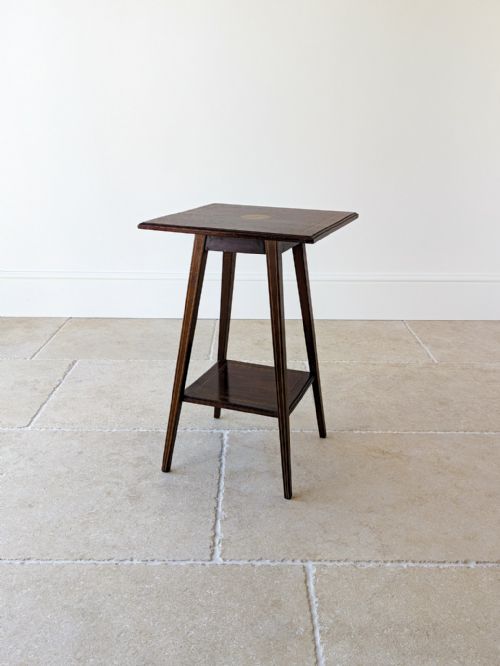
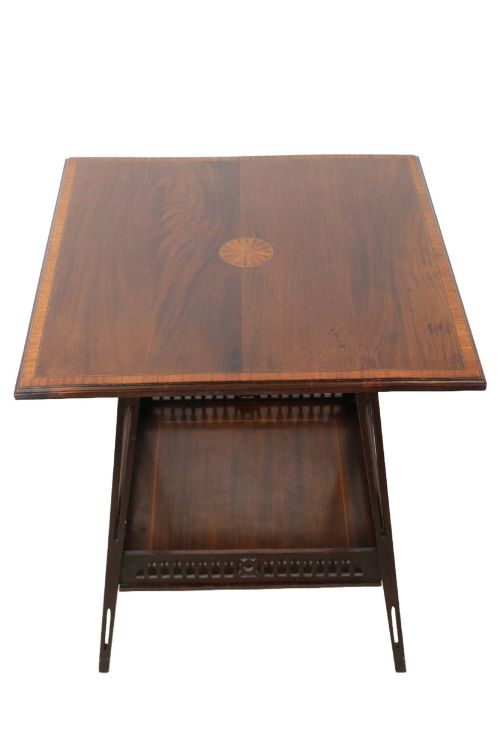
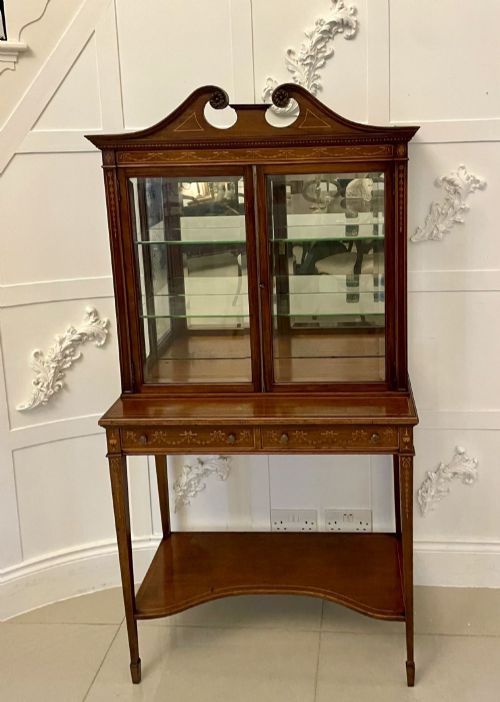
The most common form on this page is the freestanding mahogany display cabinet, often featuring glazed doors and delicate line inlay. Alongside these full-size cabinets, you find smaller bijouterie tables, occasional tables with glass tops, and corner cupboards built to utilise compact spaces.
The structural vocabulary borrows from earlier Victorian and Sheraton traditions while lightening proportions for twentieth-century interiors. Makers applied satinwood and lighter wood stringing to contrast against darker mahogany or rosewood carcases, creating formal elegance for the parlour.
Distinctions in Quality and Execution
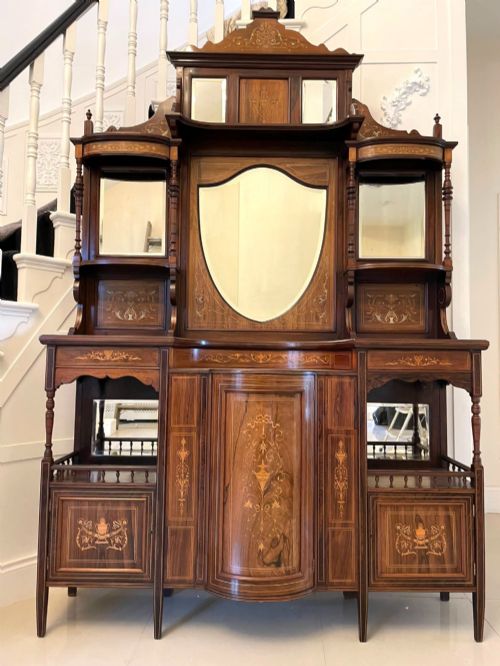
Quality rests upon the precision of the cabinetwork and the finesse of the wood inlay rather than mere ornamentation. Superior examples feature tightly fitted joints, crisp botanical or classical marquetry, and well-figured mahogany or satinwood veneers that remain flush with the surrounding timber.
Proportion and architectural harmony separate standard production items from exhibition pieces. Finer cabinets display thoughtful curve integration, such as bowfronts or kidney-shaped tabletops, paired with original glass, functioning brass hardware, and carefully integrated mirror backs.
Listings feature Edwardian, Victorian, and eighteenth-century periods, dominated by mahogany, satinwood, and glass.
Edwards and Roberts·Trevor Page and Co
The Edwardian Inlaid Display Glossary
- Inlay
- A decorative technique where pieces of contrasting wood, such as satinwood, are inserted into recessed portions of a solid timber carcase.
- Bijouterie table
- A small display table with a glass-topped compartment designed for holding jewellery, medals, and small decorative items.
- Sheraton Revival
- A late nineteenth and early twentieth century design movement that recreated the lighter, neoclassical proportions associated with eighteenth-century designer Thomas Sheraton.
- Marquetry
- Elaborate veneer work arranged to form pictorial designs or floral patterns across cabinet doors and tabletops.
- Stringing
- Thin lines of contrasting timber inlaid around the borders of panels, drawers, and tabletops to define structural edges.
Edwardian Inlaid Display: Frequently Asked Questions
What is a bijouterie table?
A bijouterie table is a specialised display table featuring a glazed top and a shallow internal compartment.
These pieces were placed in drawing rooms so that collectors could exhibit small portable valuables like coins, miniatures, and trinkets.
How do I spot Sheraton Revival style?
Sheraton Revival furniture borrows classical urn motifs, tapering legs, and satinwood stringing from eighteenth-century designs.
These later interpretations generally feature lighter proportions and brighter mahogany timbers than their Georgian predecessors.
Where were corner cabinets placed?
Corner cabinets were constructed specifically to occupy unused room junctions without obstructing walking space.
Their triangular or curved footprints allowed households to display porcelain collections efficiently in smaller Victorian and Edwardian parlours.
Are mirror backs original?
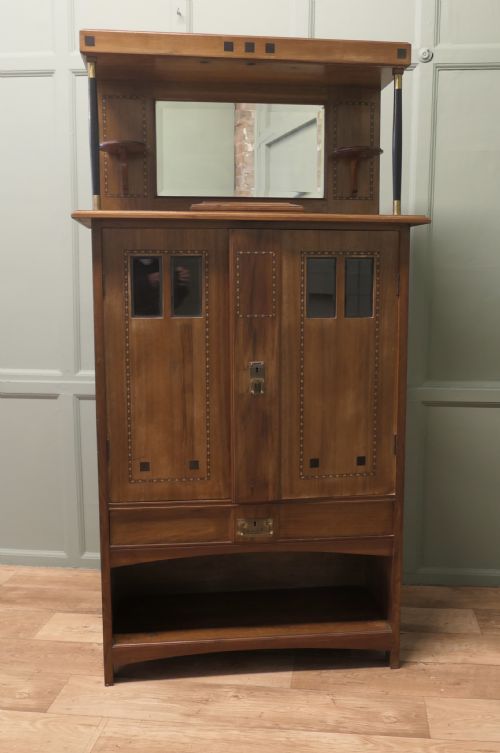
Mirror backs were frequently incorporated into display cabinets and sideboard pediments to reflect light through stored glassware.
These reflective panels were bevelled and held securely within the internal framework by thin wooden glazing bars.