


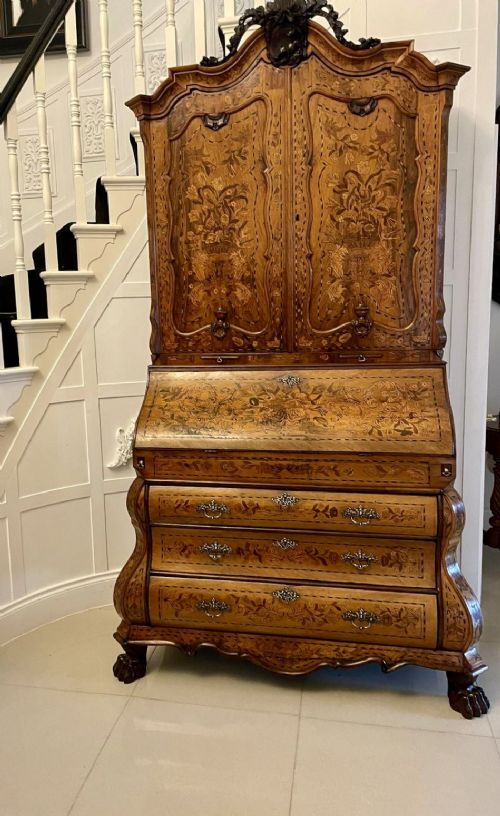
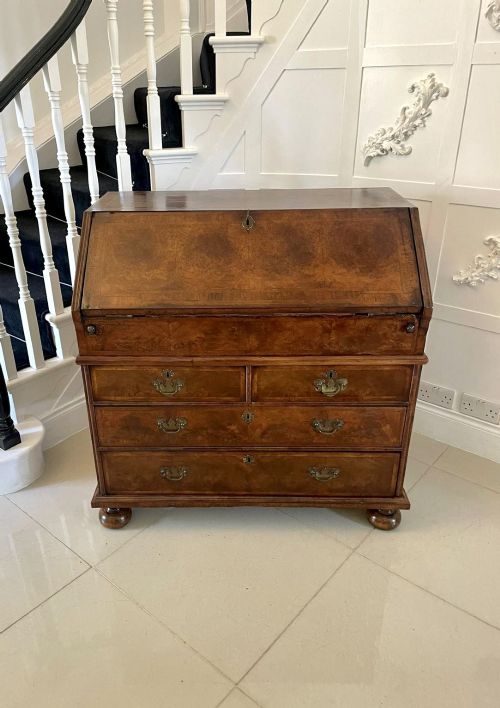
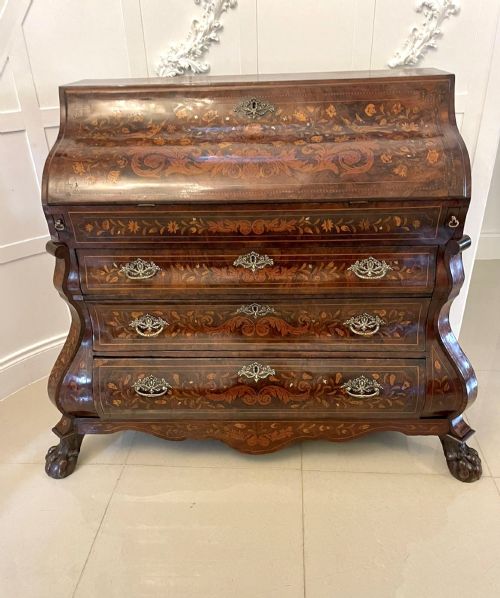
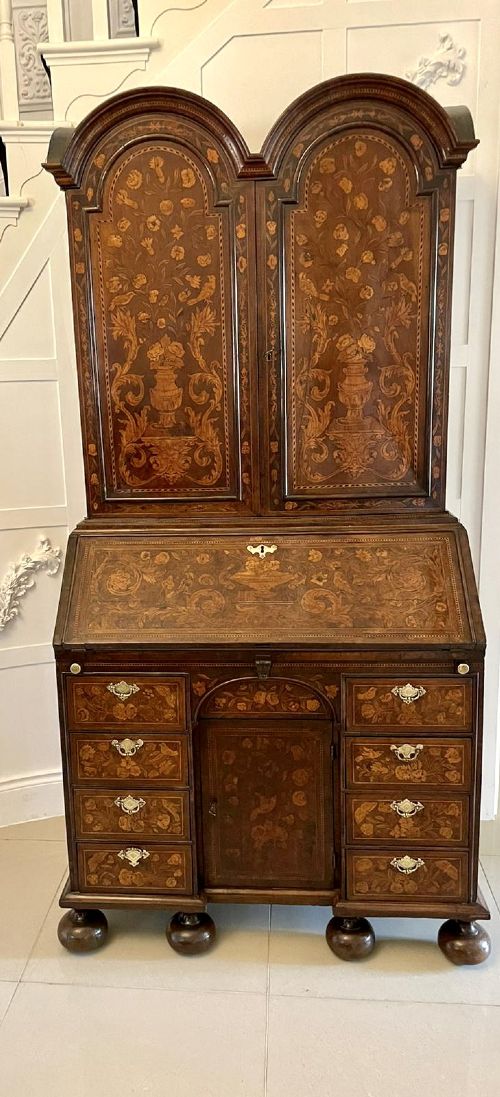
Inlaid Fall Front Bureau
An inlaid fall front bureau is a writing cabinet with a hinged writing flap, bringing decorative veneers and hidden compartments into domestic rooms.
Inlaid Fall Front Bureau
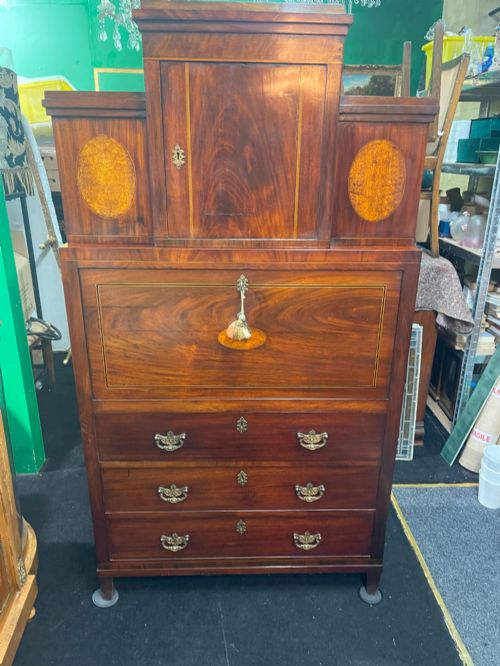
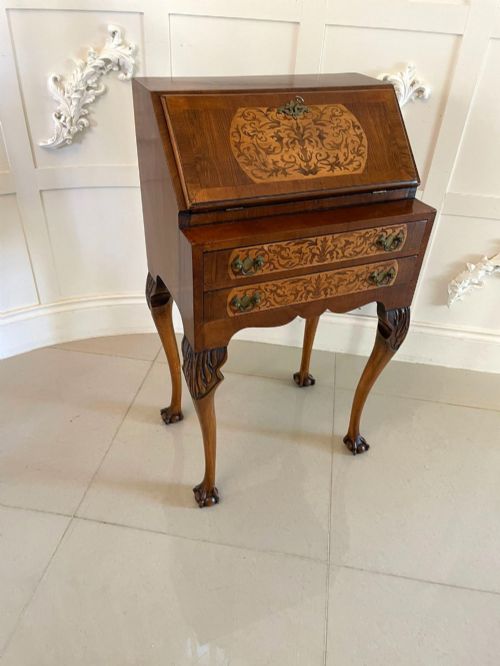
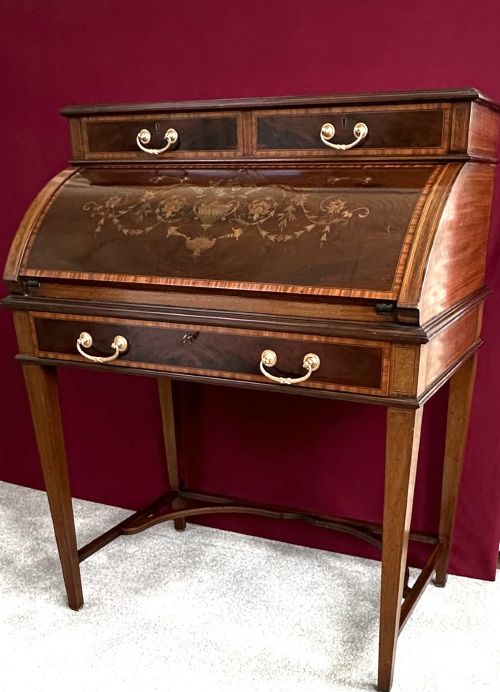
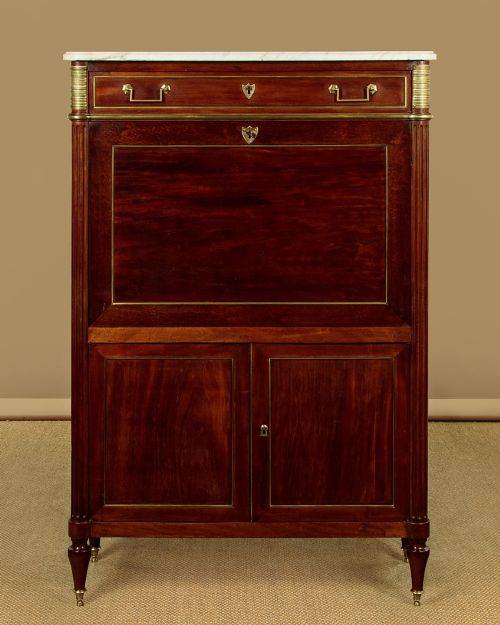
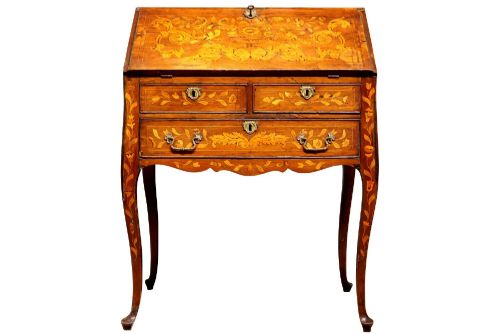
An inlaid fall front bureau combines a sloping or vertical writing flap with interior pigeonholes and drawers, resting on a base of drawers or a cabinet. These pieces serve as both private writing desks and decorative storage items within a room.
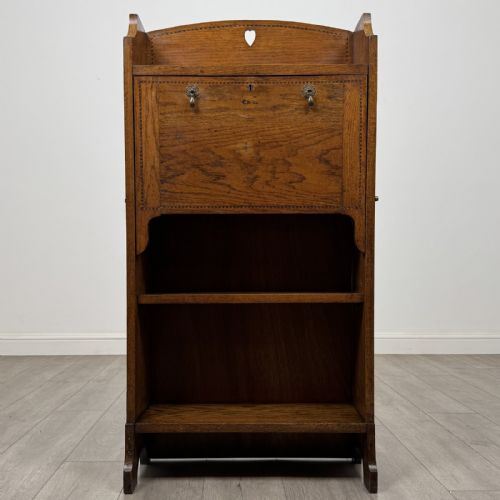
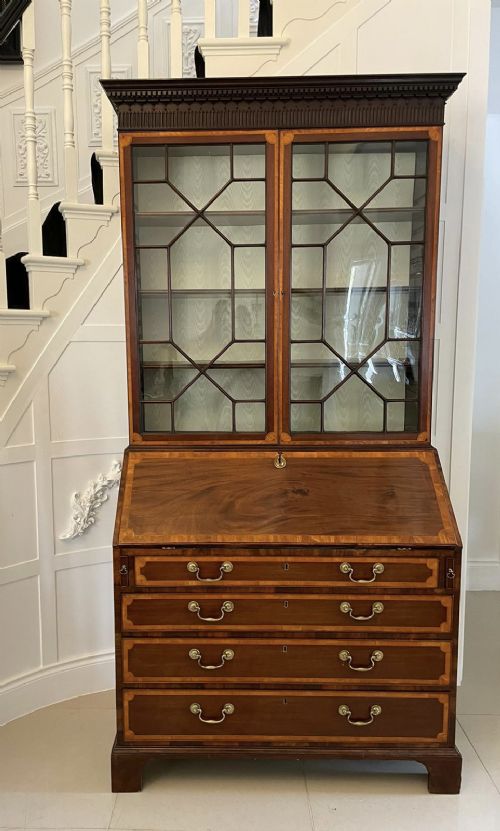
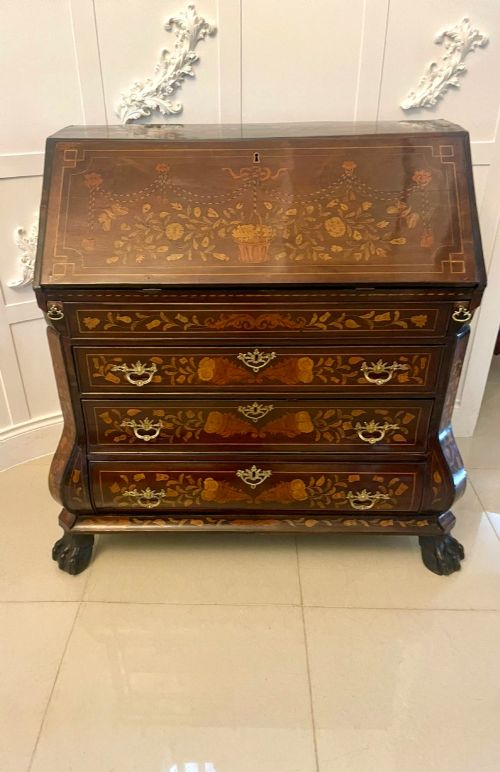
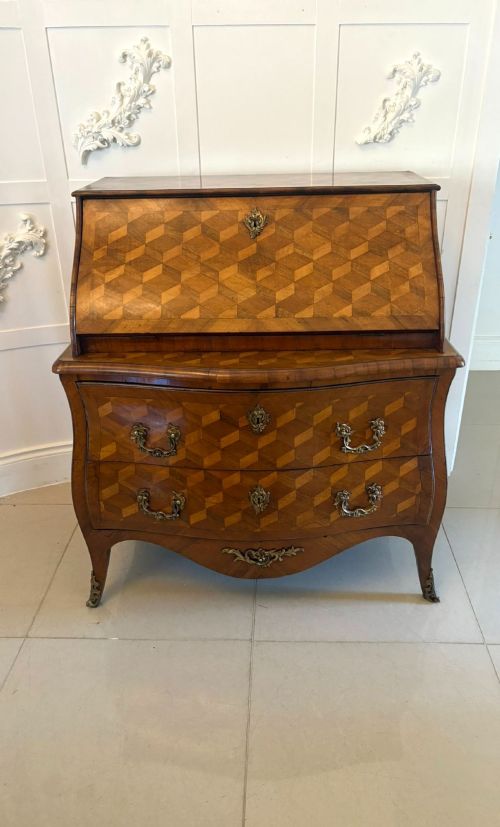
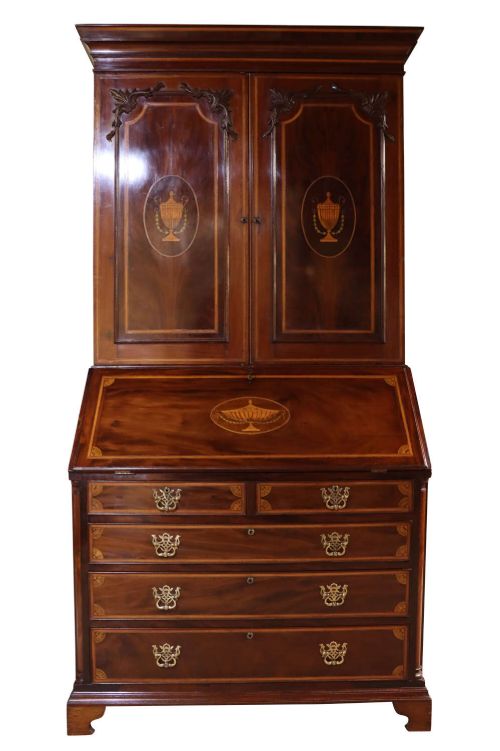
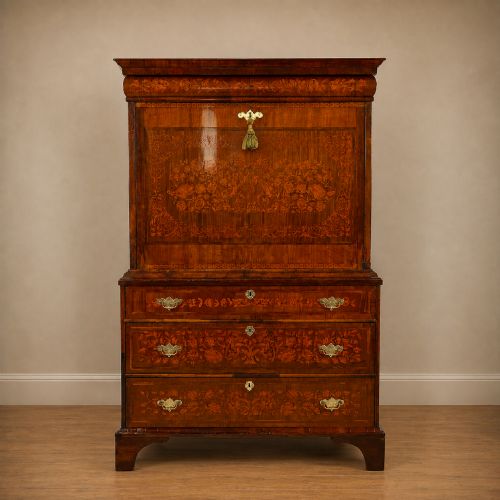
The versions met on this page range from compact Edwardian satinwood or mahogany models to substantial 18th century Dutch burr walnut and floral marquetry examples. Forms also include taller bureau bookcases with glazed upper sections alongside bombe shaped writing cabinets.
How they were made
Cabinetmakers constructed carcases from timbers such as mahogany, walnut, oak, and fruitwood, applying decorative veneers over solid or secondary woods. Marquetry and parquetry designs utilised contrasting woods like satinwood, alongside botanical or geometric inlays.
Makers integrated brass handles, escutcheons, and occasionally ormolu mounts to secure drawers and frame the fall front flap. Structural stability relied on dovetailed drawer construction and precise joinery to support the downward pressure of the writing surface.
Inlaid Fall Front Bureau Retail Price Guide 2026
Typical asking prices for inlaid fall front bureau among the pieces listed under this phrase on Sellingantiques today, from the lower quarter to the upper quarter. They describe what is for sale here now, not the wider market.
Listings feature burr walnut, mahogany, satinwood, and fruitwood across Georgian, Victorian, and Edwardian periods.
What varies in quality
Quality rests in the precision of the marquetry cutting and the choice of Burr walnut, kingwood, or figured mahogany veneers. Pieces displaying crisp floral motifs or intricate herringbone patterns reflect greater skill in the workshop.
The interior arrangement dictates much of the distinction, separating simple partitions from fitted compartments with secret drawers and sliding wells. Proportion, timber selection, and the integrity of the fall front hinges further separate standard items from superior pieces.
The Inlaid Fall Front Bureau Glossary
- Bureau
- A desk fitted with a hinged writing flap and internal compartments. It often includes drawers beneath the writing surface.
- Fall front
- A writing flap that hinges downward to create a horizontal desk surface. It conceals pigeonholes and small drawers when closed.
- Marquetry
- Decorative veneer patterns formed from pieces of wood, shell, or ivory fitted together. Floral and pictorial motifs are common.
- Escritoire
- A writing cabinet or desk, often featuring a drop-front panel or upper cabinet doors. The term relates closely to the bureau.
- Parquetry
- Geometric wood inlay forming patterns such as cubes or chequers. It differs from floral marquetry through its angular repetition.
Inlaid Fall Front Bureau: Frequently Asked Questions
What is a fall front bureau?
A fall front bureau is a writing cabinet featuring a hinged writing flap that pulls down to form a desk. Behind this flap lie small drawers and pigeonholes for correspondence.
Beneath the writing surface, these pieces typically provide several full-width drawers for storage. Some variants extend upward into bookcase sections with glass doors.
How do I date an inlaid bureau?
Dating relies on timber choices, construction methods, and the style of inlay. 18th century pieces frequently employ burr walnut with floral marquetry and bombe shaping.
Edwardian and later pieces often utilise lighter satinwood or mahogany with simpler stringing. Drawer construction, such as hand-cut dovetails, also helps establish age.
Where should I place a bureau?
These pieces suit living rooms, studies, or bedrooms where their dual function as a desk and cabinet provides practical utility. Their flat tops and decorative veneers allow them to stand against walls as focal points.
Consider the clearance needed when the fall front flap is lowered for writing. Adequate space ensures the writing surface remains accessible without blocking room traffic.
How do I care for wood veneers?
Protect inlaid surfaces by avoiding direct sunlight and maintaining stable room humidity. Excessive heat or dryness can cause delicate veneers and marquetry to lift.
Dust regularly with a soft, dry cloth and apply occasional specialist wax to nourish the timber. Avoid silicone-based polishes which damage antique finishes over time.