




Inlaid Escritoire Bureau
An inlaid escritoire bureau brings together fine cabinetmaking and practical writing space, offering fitted drawers and hidden compartments for correspondence.
Inlaid Escritoire Bureau
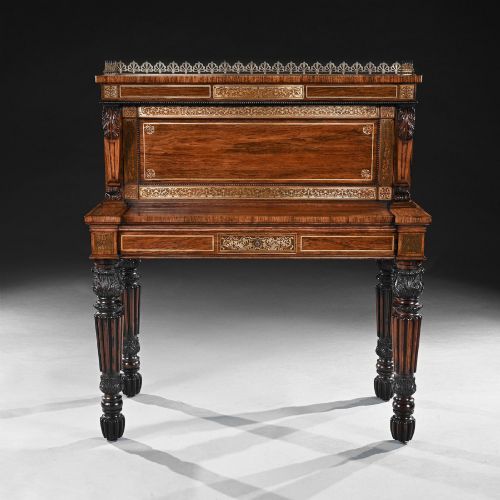
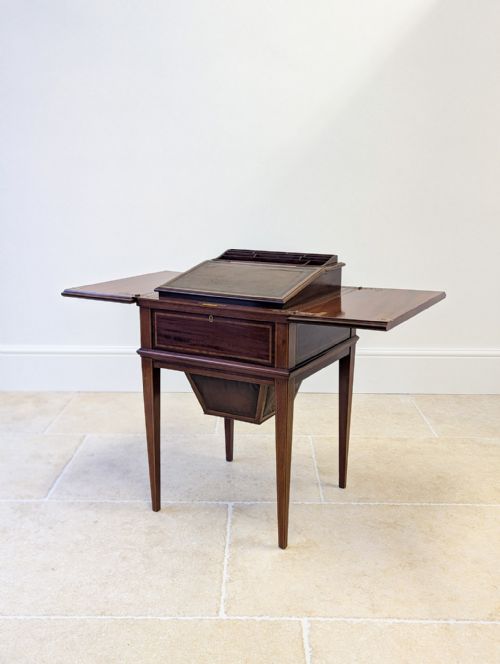
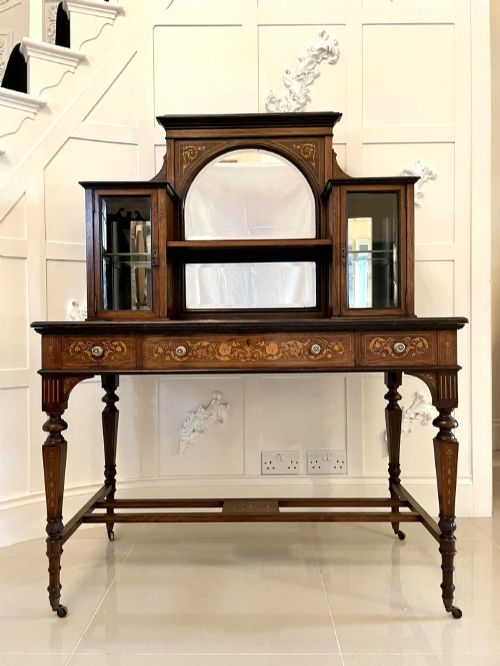
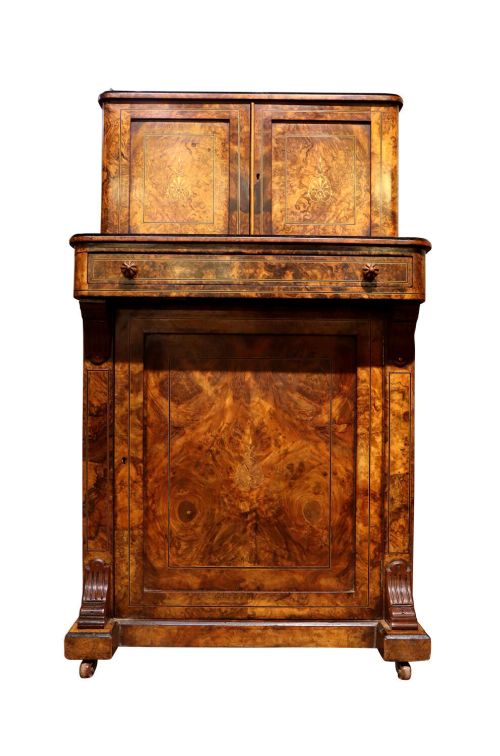
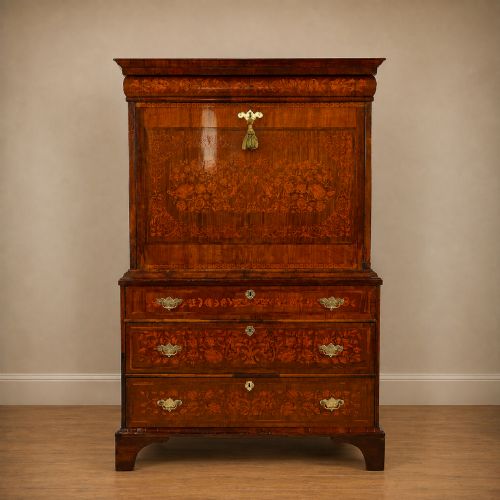
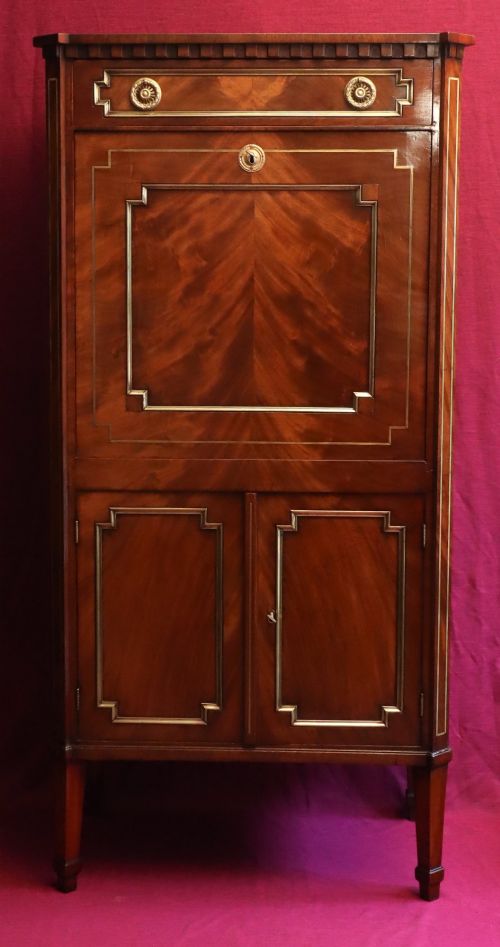
An inlaid escritoire bureau is a sophisticated writing cabinet designed for correspondence and storage, appearing primarily in 18th century, Georgian, Victorian, and Edwardian periods. These pieces combine a writing surface with compartments, drawers, and sometimes fall-front or cylinder lids.
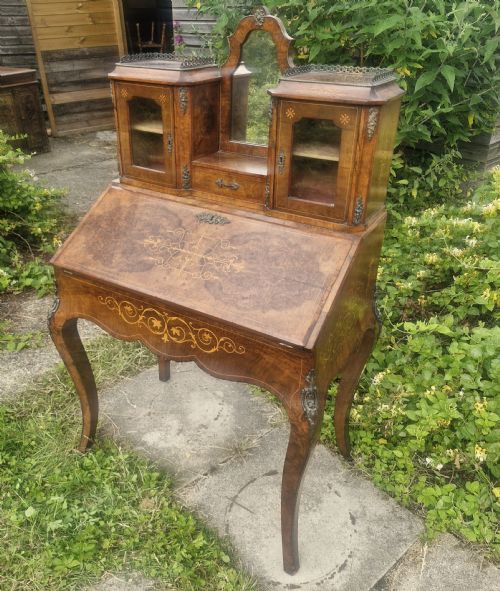
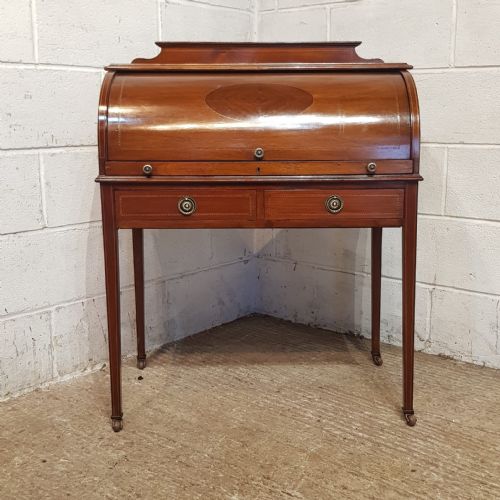
The selections available here range from compact bonheur du jour desks to larger French marquetry secretaire cabinets and mahogany or walnut writing tables. Most examples feature decorative wood veneers paired with contrasting inlay work.
Originating across English and continental workshops, these desks served elite domestic spaces for private letter-writing and record-keeping. Buyers encounter both pedestal forms and table-top escritoires with integrated shelving or revolving tabernacles.
What varies in quality
The precision of the inlay work separates ordinary production from exceptional craftsmanship, visible in the tightness of fit between contrasting woods and brass elements. Sharply executed floral marquetry and crisp brass stringing indicate a workshop of higher standing.
Timber selection dictates the visual depth of the piece, with burr walnut and figured mahogany creating richer surface movement than plain veneers. The choice of secondary woods inside the drawers also signals the original tier of manufacture.
The complexity of the interior mechanism, such as smoothly operating cylinder lids, balanced fall-front hinges, and well-fitted secret compartments, determines the functional success of the desk.
Listings feature walnut, mahogany, and rosewood across multiple periods including Georgian, Victorian, and Edwardian eras.
Gillows Oxford Street Workshop
The Inlaid Escritoire Bureau Glossary
- Escritoire
- A writing cabinet featuring a fall-front flap or slanted lid that opens to reveal internal pigeonholes and small drawers. This form prioritises private correspondence and secure document storage.
- Marquetry
- The art of forming decorative patterns on a wooden carcase using thin veneer slices from different coloured woods. Artisans cut these pieces meticulously to fit together before gluing them to the surface.
- Bonheur du jour
- A light lady's writing desk originating in France, usually featuring a raised cabinet or tier of small drawers above the main writing surface. These dainty pieces gained popularity during the 19th century.
- Ormolu
- Gilded bronze mounts applied to furniture edges and corners, particularly prevalent on French revival and 19th-century luxury desks. The technique involves applying a gold-mercury amalgam to bronze.
- Cylinder desk
- A writing table equipped with a rotating quarter-cylinder wooden shutter that conceals the writing surface and interior fittings when closed. Pulling out the desk slide often retracts the cylinder automatically.
Inlaid Escritoire Bureau: Frequently Asked Questions
What is the difference between an escritoire and a bureau?
An escritoire typically denotes a more formal writing cabinet with a fall-front or drop-down writing flap, often elevated on legs or a stand. A bureau more commonly refers to a sloping desk designed primarily for everyday administrative tasks.
While the terms frequently overlap in historical titles, escritoires often lean toward decorative cabinetry with elaborate interior fittings and marquetry surfaces.
How do I care for leather writing surfaces?
Leather inserts require minimal moisture and gentle cleaning to prevent the material from drying and cracking over time. Avoid harsh chemical cleaners or excessive water when dusting the writing surface.
Applying specialised leather balms sparingly helps maintain suppleness, particularly on antique desks where the hide has aged naturally.
Were these desks used by men or women?
Historical usage varied significantly depending on the specific form and scale of the desk. Larger walnut and mahogany escritoires served general household or study administration, accommodating owners regardless of gender.
Smaller forms like the bonheur du jour and lady's writing desks were traditionally tailored for feminine correspondence in private withdrawing rooms and boudoirs.
How can I distinguish French styles from English ones?
French desks of this period frequently feature extensive floral marquetry, curved cabriole legs, and gilded ormolu mounts. The overall aesthetic leans toward ornamental curves and decorative presence.
English equivalents tend to emphasise structural wood grain, such as figured mahogany or burr walnut, with cleaner rectilinear lines and brass stringing rather than cast metal mounts.