
Inlaid Desk Drawers
Inlaid desk drawers bring together fine cabinet-making and functional writing furniture from the Georgian, Victorian and Edwardian periods.
Inlaid Desk Drawers
Inlaid desk drawers comprise writing tables, bureaux, pedestal desks, and secretaire bookcases equipped with fitted storage compartments. These pieces stem from the 18th and 19th centuries, alongside Edwardian workshops.
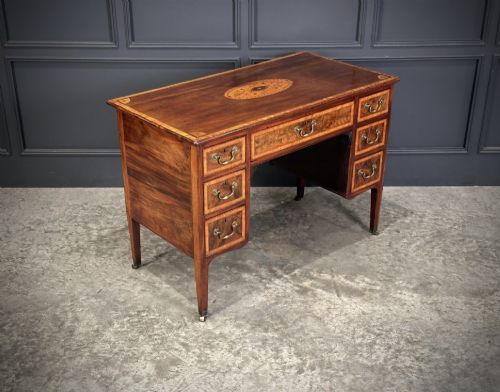
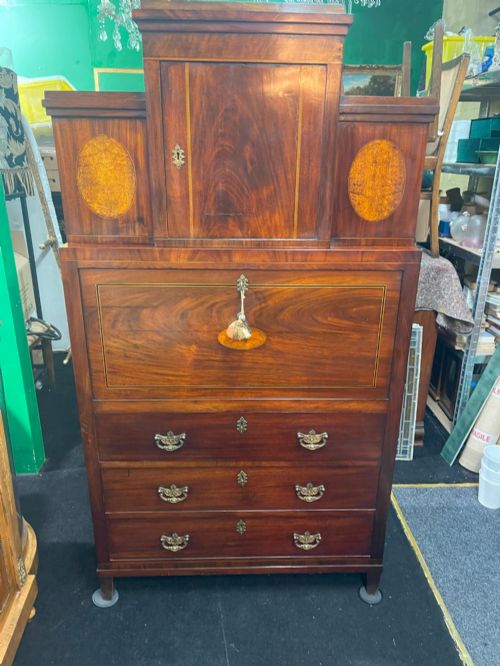
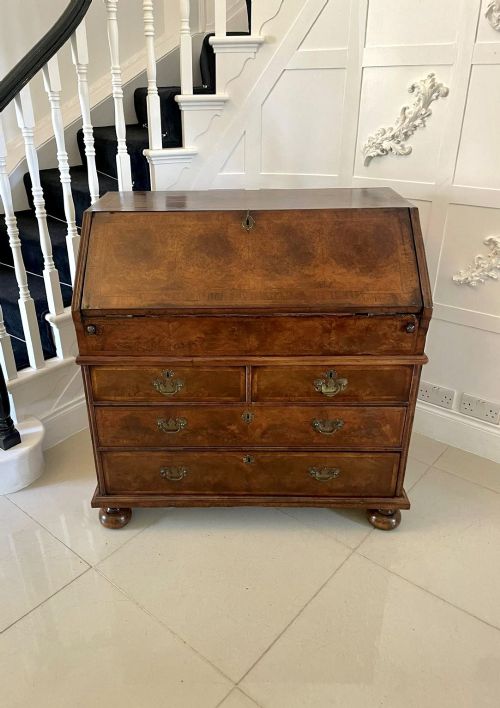
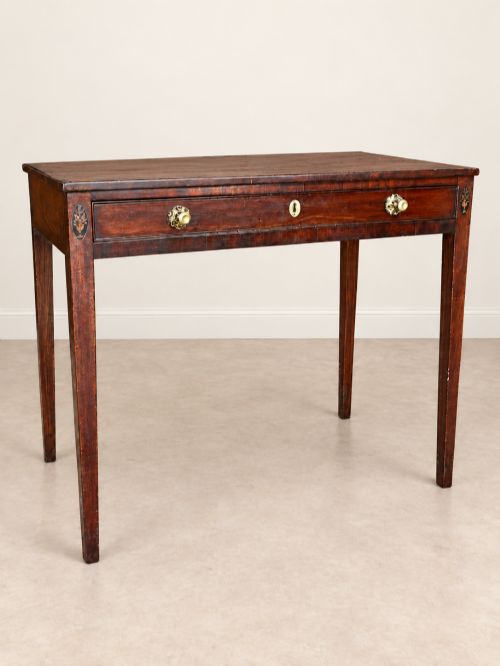
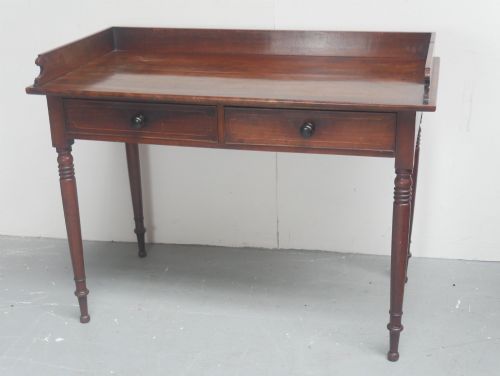
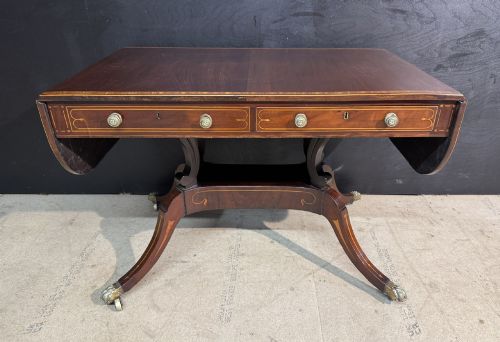
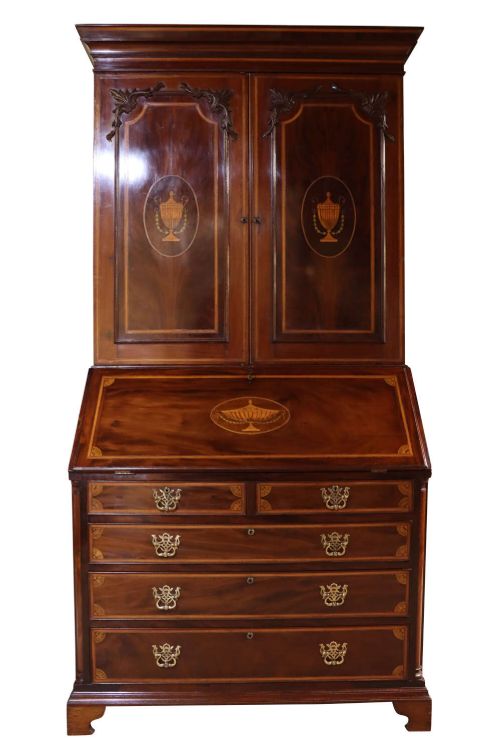
The version most commonly met on this page is the mahogany bureau or writing table, often detailed with satinwood or marquetry panels. Bureau bookcases and smaller writing slopes also appear across these listings.
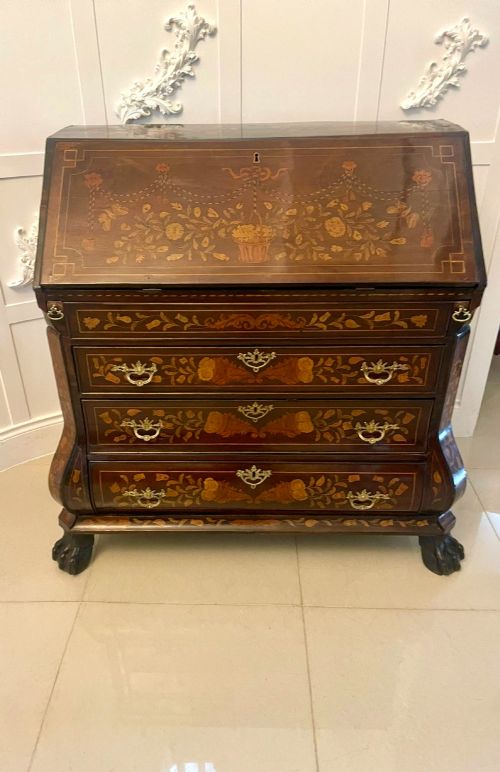
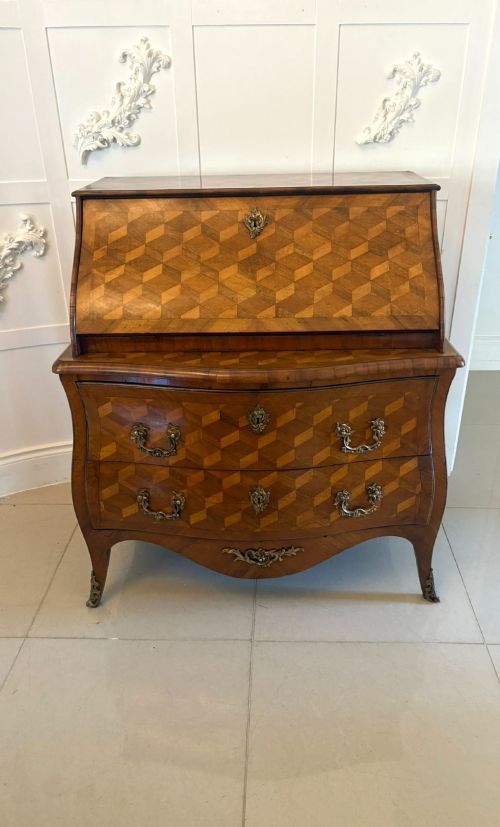
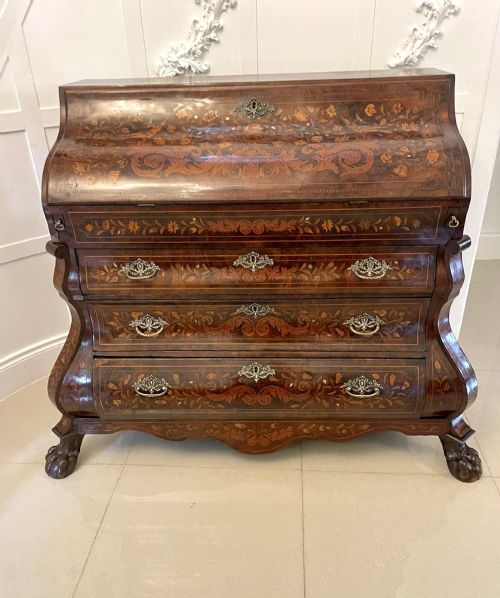
Originating from English, French, Dutch, and Maltese makers, these items range from serpentine bombe shapes to formal Georgian pedestal forms. They serve primarily as working writing desks with integrated storage.
How they were made
Construction relies on solid hardwoods such as mahogany, oak, and walnut, frequently paired with decorative veneers. Carcases utilise traditional joinery, including dovetailed drawer linings.
Surface ornament involves precise wood inlay, parquetry, and floral marquetry, often combining satinwood, ebony, and fruitwood. Brass mounts and original handles complete the structural hardware.
Listings span Georgian, Regency, Victorian, and Edwardian periods, utilising mahogany, walnut, satinwood, and rosewood.
What varies in quality
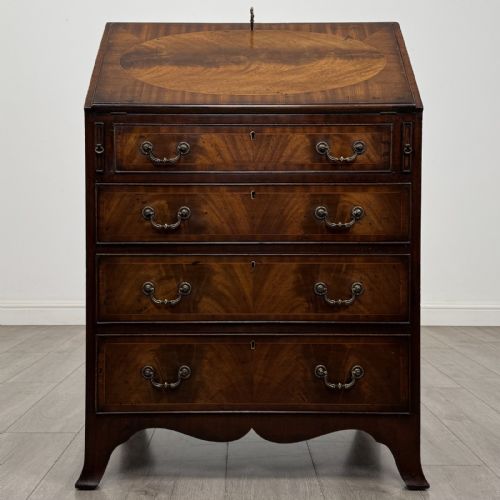
Excellence rests in the crispness of the floral marquetry and the selective choice of burr walnut, flame mahogany, or satinwood veneers. Superior execution shows seamless integration of inlay across curved bombe fronts and drawer faces.
Undercarriage stability and the retention of original brass handles or interior secret compartments distinguish superior examples from standard utility pieces. Finer workshops maintain precise drawer tolerances and uncompromised timber grains.
Edwards and Roberts·Maison Krieger
The Inlaid Desk Drawers Glossary
- Marquetry
- A decorative technique applying pieces of veneer to a structural surface to form pictorial or floral patterns. This method defines the facades of many 18th-century Dutch and French bureaux.
- Secretaire
- A desk or cabinet containing a pull-out writing drawer or drop-front panel enclosing small pigeonholes and inner drawers. It conceals the writing surface when closed.
- Parquetry
- Geometric mosaic woodwork used for repeating patterns on tabletops and drawer fronts. It differs from marquetry through its reliance on angular, repeating grids.
- Bombe
- An outward-swelling curved contour characteristic of continental furniture. This shape requires advanced veneer shaping on drawer fronts.
- Davenport
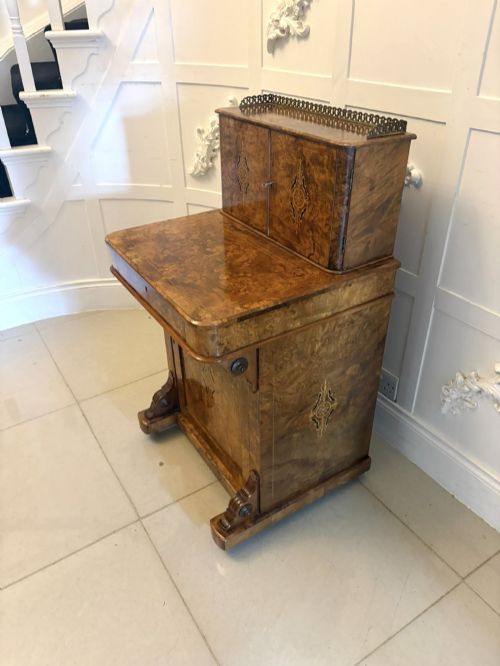
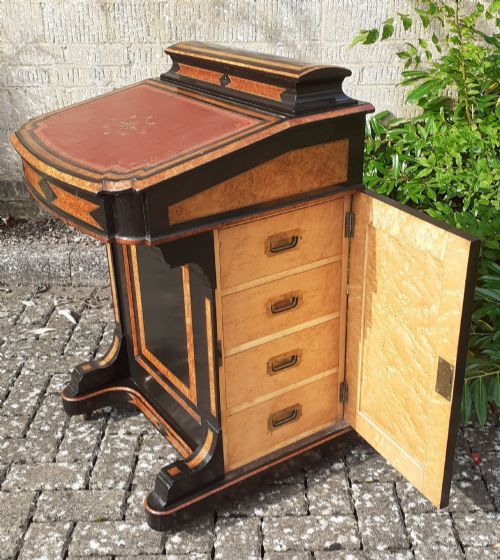
- A compact pedestal desk featuring a sloping top and side drawers. It gained popularity during the Victorian and Edwardian eras.
Inlaid Desk Drawers: Frequently Asked Questions
What is a secretaire chest?
A secretaire chest combines standard lower drawers with an upper pull-out drawer containing a fitted writing surface and small compartments.
This form provides writing space while maintaining the compact exterior profile of a chest of drawers.
How do I identify a bureau bookcase?
A bureau bookcase pairs a sloping fall-front desk base with upper shelving enclosed by glazed or solid timber doors.
These combination pieces served as dual-purpose study and storage furniture in Georgian and Victorian households.
Where were writing slopes used?
Writing slopes served as portable desk boxes placed on tables or laps for correspondence during travel. Interiors typically feature velvet surfaces and hidden secret drawers.
Examples from the 19th century utilise rosewood or mahogany with brass banding.
What defines Edwardian inlaid desks?
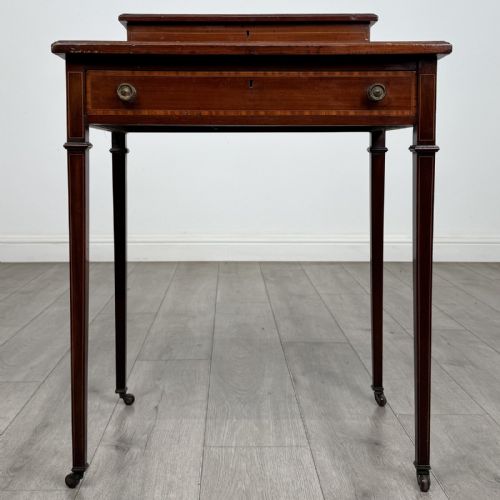
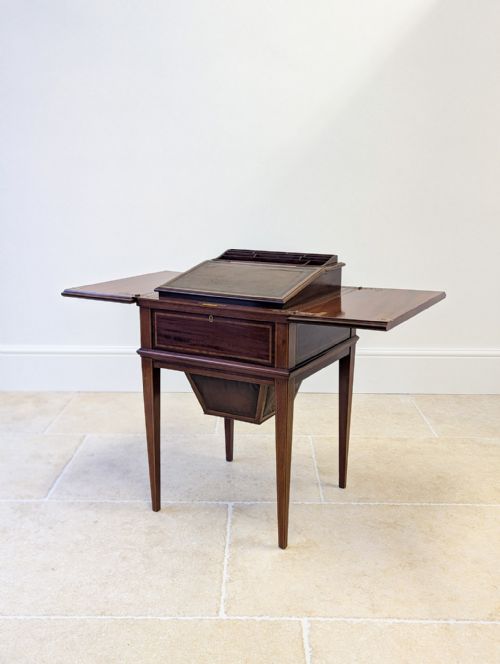
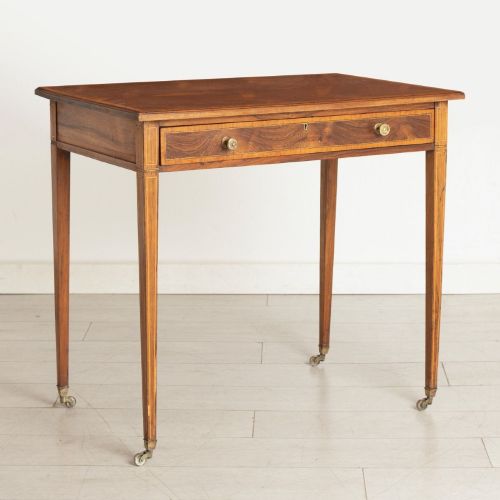
Edwardian writing tables utilise lighter satinwood and mahogany timbers, often featuring delicate floral inlay and tapered legs.
These pieces reflect the refined aesthetic of the early 20th century, favoring smaller proportions.