
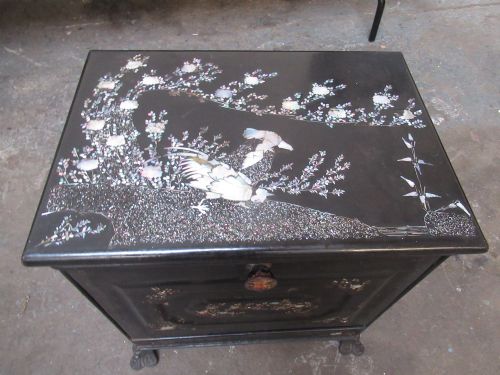


Inlaid Coal Scuttle
An inlaid coal scuttle brings period warmth to a fireside, combining everyday utility with decorative marquetry and boxwood detail.
Inlaid Coal Scuttle
An inlaid coal scuttle serves to hold fuel beside a fireplace while concealing it inside a decorative cabinet or box. The examples available here span the Victorian and Edwardian eras, with a strong representation of late nineteenth century pieces.
Most items you encounter are fashioned from rosewood or mahogany, often enhanced with marquetry or boxwood inlay. Forms range from traditional slope-front scuttles and purdoniums to freestanding cabinets with fitted metal liners.
Makers of the period drew on diverse design influences, including the aesthetic style associated with Liberty. These fireside accessories function as both practical storage and focal points of interior decoration.
How they were made
Cabinetmakers constructed these pieces using dense timbers like rosewood and mahogany, often applying intricate marquetry and boxwood inlay to the exterior surfaces. Metal liners and brass hardware were fitted internally to handle the weight and dirt of coal.
Victorian and Edwardian workshops also utilised black metal applied with mother of pearl detail to create reflective surface contrasts. Joinery techniques ensured the wooden bodies could withstand heavy domestic use near a heat source.
Materials documented across the collection include mother of pearl, boxwood inlay, and brass fittings.
What varies in quality
The standard of an inlaid coal scuttle depends heavily on the precision of its marquetry and the richness of the timber grain. Finer examples display meticulous boxwood detailing and well-preserved brass furniture.
Structural integrity also separates standard utility pieces from finer decorative works, particularly in the fit of the lid and the condition of the internal metal liner.
The Inlaid Coal Scuttle Glossary
- Purdonium
- A type of coal cabinet featuring a sloping front door that drops forward to reveal a metal container. This form became popular during the Victorian period for domestic hearths.
- Marquetry
- The art of applying small pieces of veneer to a structure to form decorative patterns. Craftsmen utilised contrasting timbers like boxwood to achieve detailed pictorial or geometric designs.
- Mother of Pearl
- An iridescent inner shell layer used for decorative inlay on metal surfaces. It catches the firelight effectively.
- Edwardian
- Pertaining to the reign of King Edward VII, spanning the early twentieth century. Furniture from this era often retains lighter mahogany tones and refined inlay.
Inlaid Coal Scuttle: Frequently Asked Questions
What is an inlaid coal scuttle?
An inlaid coal scuttle is a decorative wooden container designed to hold coal near a domestic fireplace. They were built during the nineteenth and early twentieth centuries to keep fuel tidy.
These pieces use marquetry, boxwood, and mother of pearl to elevate a mundane household object into a fine piece of furniture.
How were they used?
They sat beside the hearth to store coal and house a metal shovel or liner. The inner metal bin protected the wood from moisture and debris.
When closed, the cabinet kept the coal out of sight while offering a flat top or decorative surface for the room.
How do I tell Victorian from Edwardian pieces?
Victorian examples frequently utilise darker rosewood timber paired with heavy marquetry and mother of pearl accents. They often date from the late nineteenth century.
Edwardian pieces tend to feature lighter mahogany woods and simpler, more restrained inlay work reflecting changing tastes around nineteen hundred.
What is a purdonium?
A purdonium is a specific type of coal container with a hinged front that tilts forward for easy access. They often include brass handles and a matching internal metal scoop.
This form was common in prosperous households wanting a discreet storage solution for the fireside.