

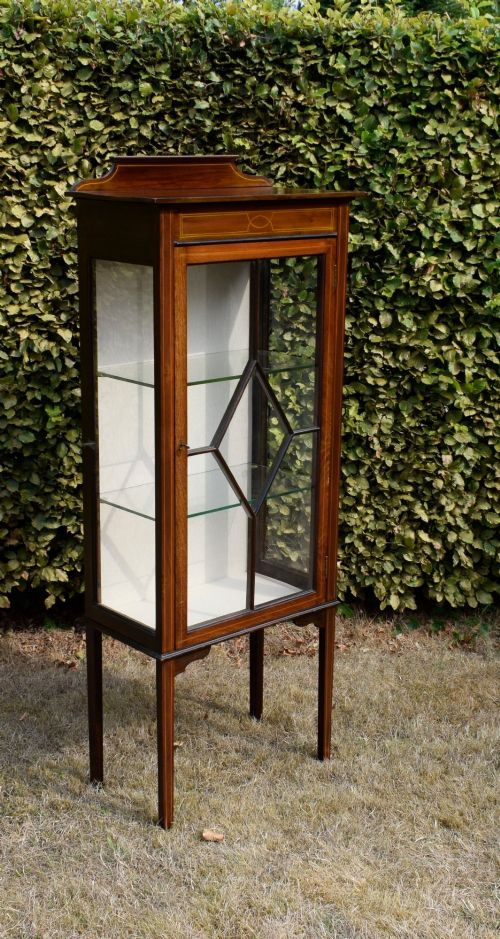
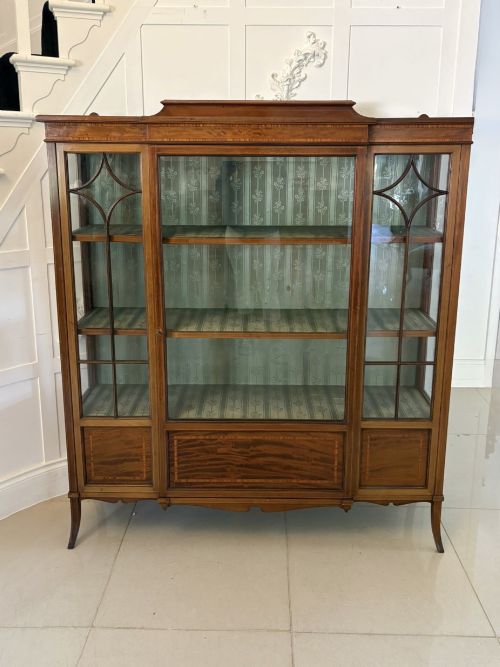
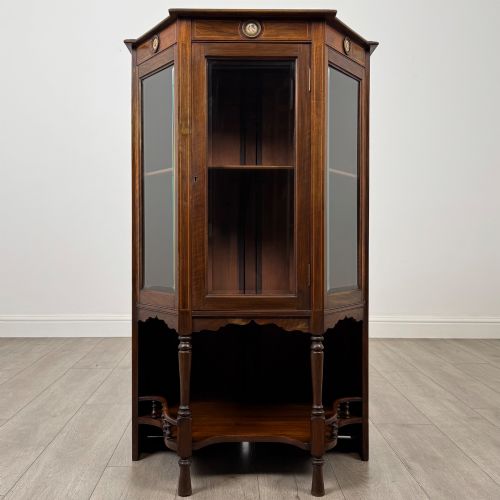
Inlaid China Vitrine
An inlaid china vitrine brings light and polished timber into a room, framing prized porcelain behind glass.
Inlaid China Vitrine
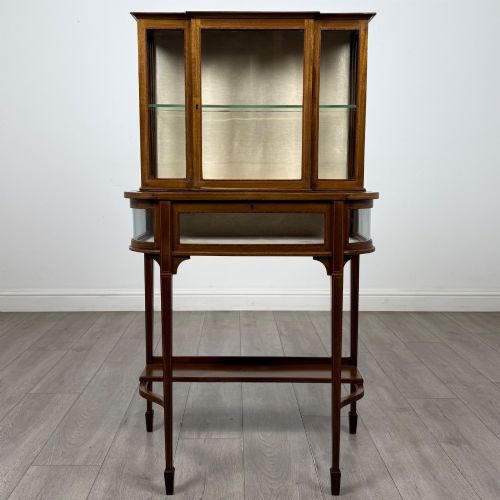
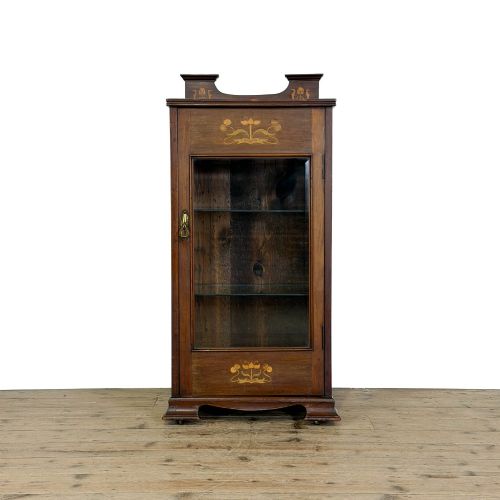
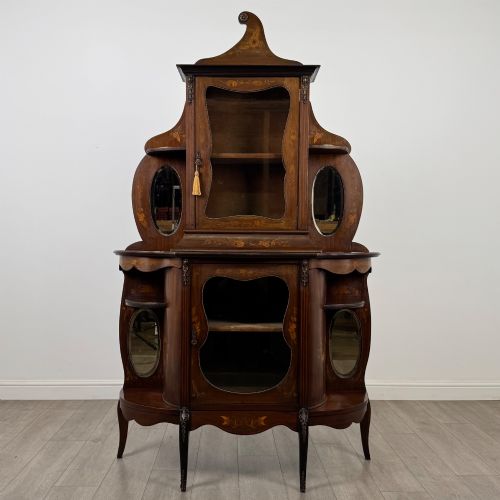
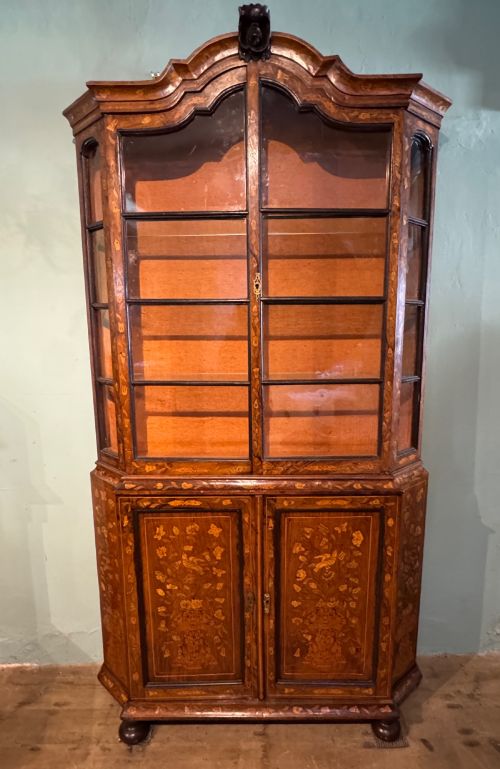
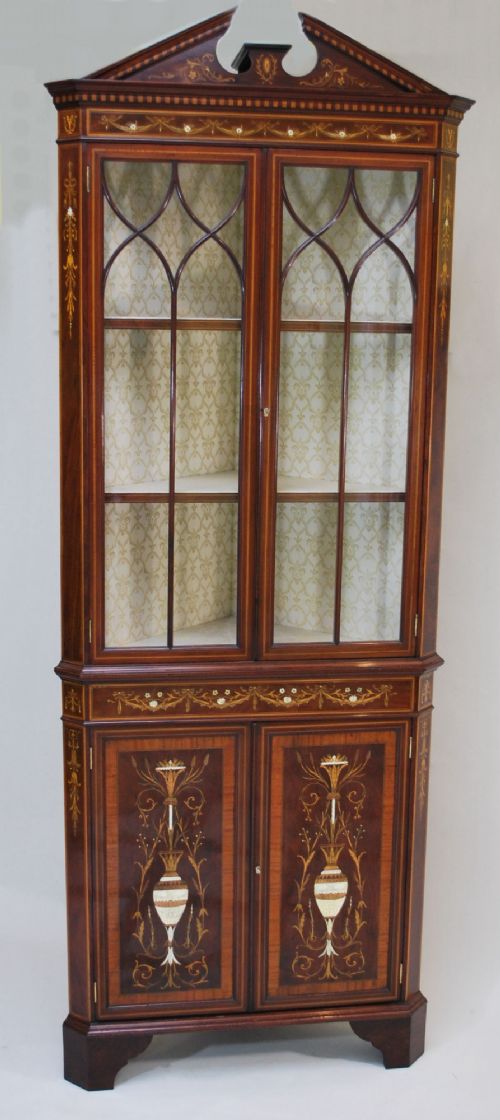
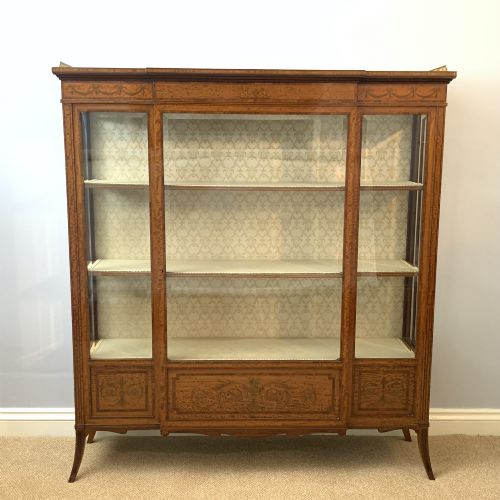
An inlaid china vitrine encompasses glazed display cabinets and corner units designed to showcase ceramics and decorative objects. You will most frequently meet Edwardian and Victorian pieces on this page, alongside earlier examples from the eighteenth and nineteenth centuries.
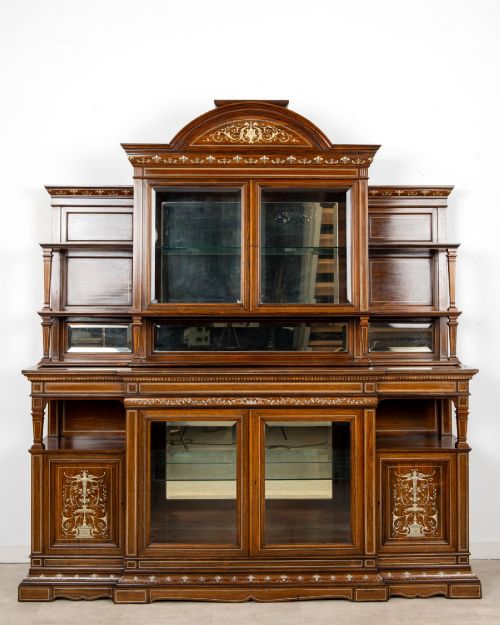
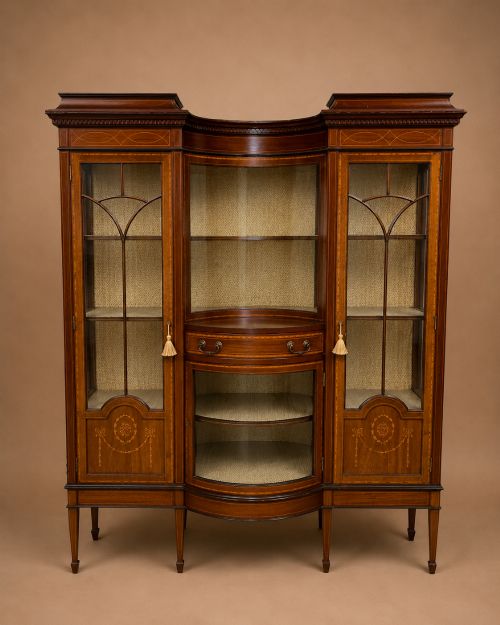
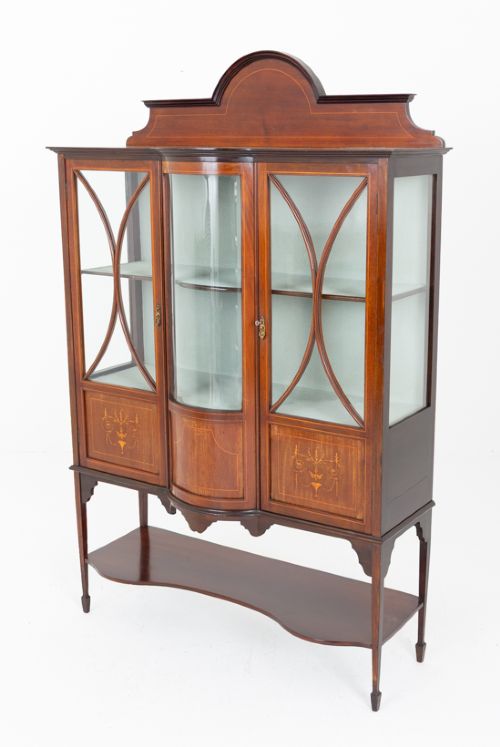
The construction spans freestanding display cabinets, two-part cabinets, breakfront forms, and bow-fronted designs. Many examples utilise mahogany or satinwood carcasses, occasionally incorporating walnut, rosewood, or Dutch marquetry.
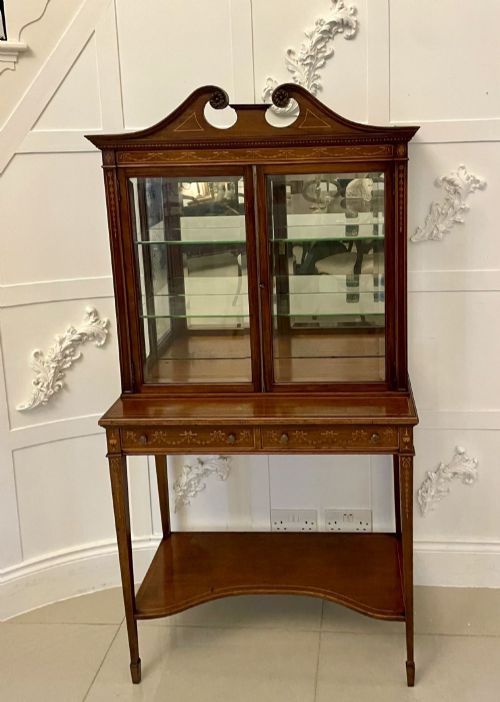
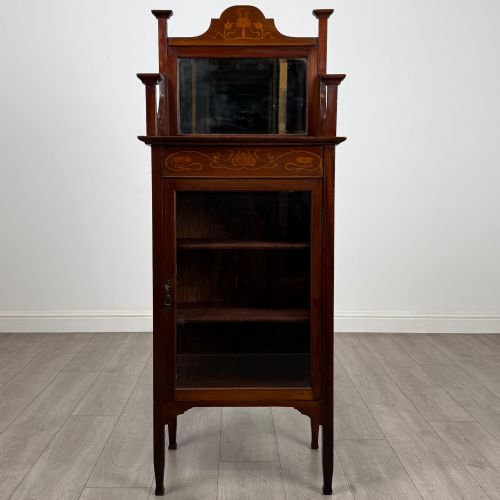
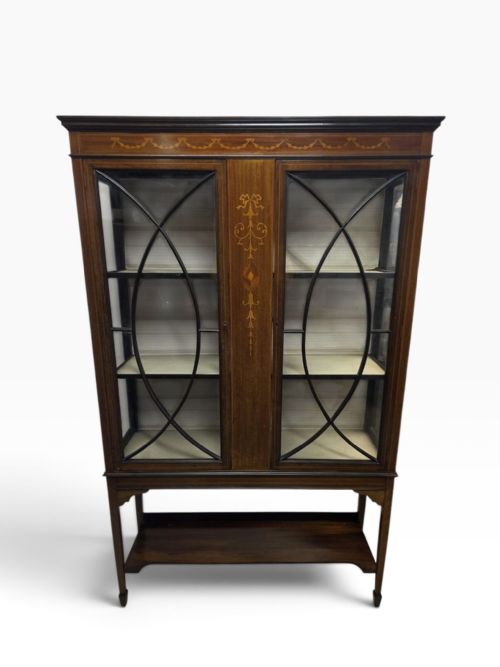
Makers and designers from the late nineteenth and early twentieth centuries adapted Georgian and Sheraton Revival idioms, creating glazed furniture with delicate stringing and floral motifs. These cabinets serve to elevate domestic interiors by combining storage with transparent display space.
Materials and construction
Cabinet makers utilised dense hardwoods like mahogany, walnut, and rosewood for the structural carcasses, applying contrasting veneers of satinwood for decorative surfaces. Fine stringing and marquetry panels were inlaid directly into the timber to create botanical and geometric patterns.
Glazing techniques employed individual wooden glazing bars or astragal mouldings to hold the glass panels securely within doors and side panels. Interiors frequently incorporated fabric linings or mirror backs to reflect light through the displayed porcelain.
The documented periods span from the eighteenth century through the Edwardian era, with a strong representation of Sheraton Revival designs.
Markers of distinction
Quality rests in the crispness of the timber inlay and the selection of figured veneers such as satinwood and mahogany. Cabinets featuring hand-cut marquetry and balanced proportions display a higher level of workshop skill than simpler production items.
The structural joinery and the execution of curved elements, such as bow-front doors or breakfront cornices, determine the refinement of the piece. Superior examples retain original glass, polished brass hardware, and well-fitted doors that close true.
Edwards & Roberts·Collinson & Lock·Shapland and Petter·Maple & Co.
The Inlaid China Vitrine Glossary
- Vitrine
- A glass-fronted cabinet designed specifically for displaying fine china and curiosities. These pieces rely on large glazed panels to maximise visibility from multiple angles.
- Marquetry
- The art of applying decorative pieces of veneer to a structure to form intricate pictorial or geometric designs. Craftsmen utilised various coloured woods to achieve tonal depth.
- Astragal glazing
- Wooden bars that divide a glass window or cabinet door into smaller panes. This technique provides structural support while creating a traditional grid pattern.
- Stringing
- Thin lines of contrasting timber inlaid into the surface of furniture to create geometric borders. It defines panels and edges on cabinet doors and cornices.
- Breakfront
- A cabinet design where the central section projects forward from the flanking sides. This architectural arrangement adds depth and presence to larger display pieces.
Inlaid China Vitrine: Frequently Asked Questions
What fits inside a vitrine?
These cabinets suit porcelain tea sets, figurines, and small decorative objects that benefit from dust-free enclosure.
The glass shelves and illuminated or mirrored interiors allow collections to be viewed clearly from across a room.
How do I date a cabinet?
Dating relies on stylistic clues, timber choice, and construction methods visible in the carcass and hardware.
Edwardian and Victorian pieces often show machine-sawn elements and specific revival styles, whereas eighteenth-century examples feature hand-cut joinery and heavier timbers.
Where should I place a corner vitrine?
Corner cabinets make efficient use of unused room angles while providing adequate display depth for ceramics.
They anchor empty junctions in dining rooms or drawing rooms without dominating the floor space.
Are mirror backs original?
Many Victorian and Edwardian display cabinets incorporate mirror backs to bounce light through the glass shelves.
Examining the silvering and backing boards helps determine whether the glass dates to the original manufacture of the cabinet.