




Inlaid Board Table
An inlaid board table brings together cabinetmaking and play, offering a surface for games that doubles as a refined piece of furniture.
Inlaid Board Table
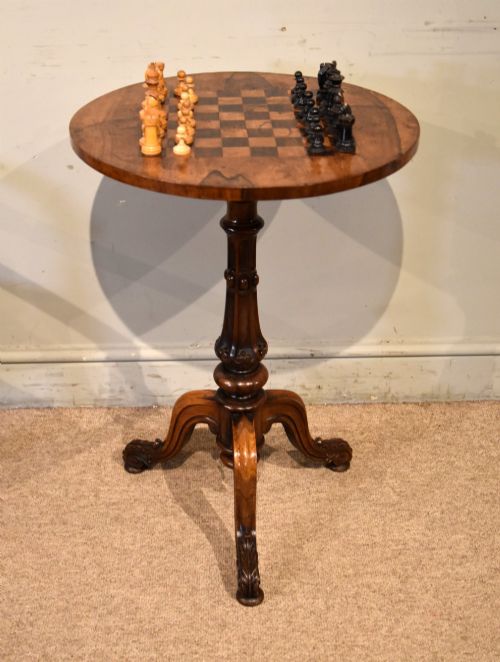
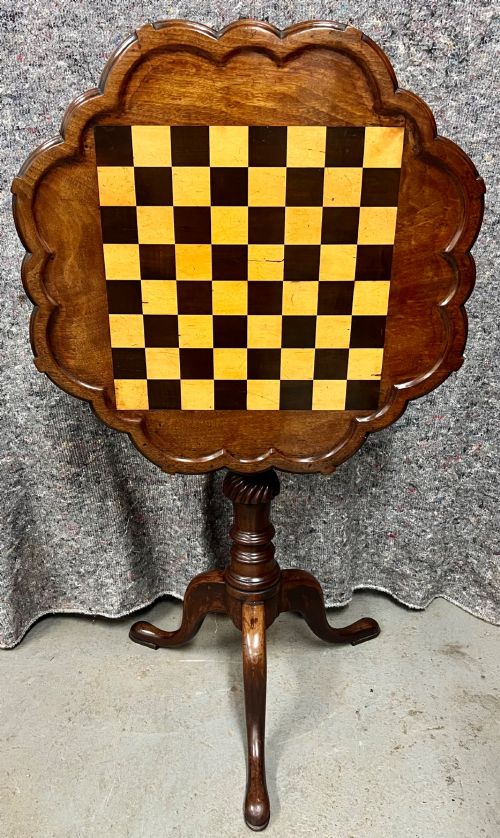
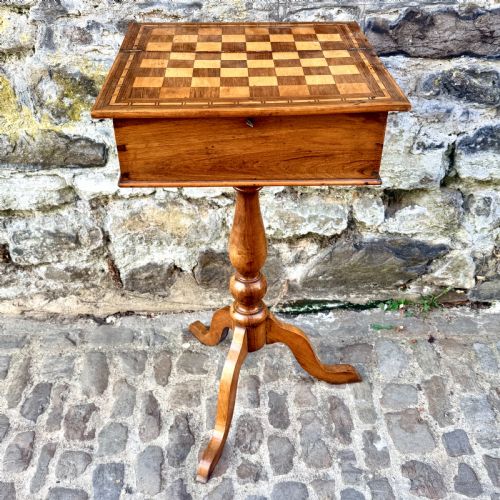
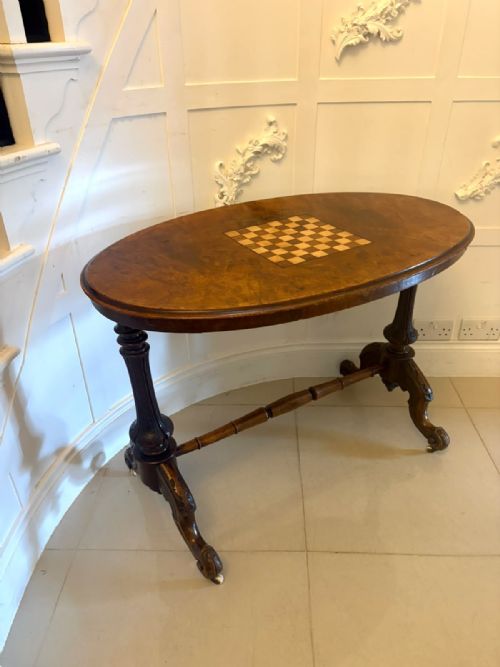
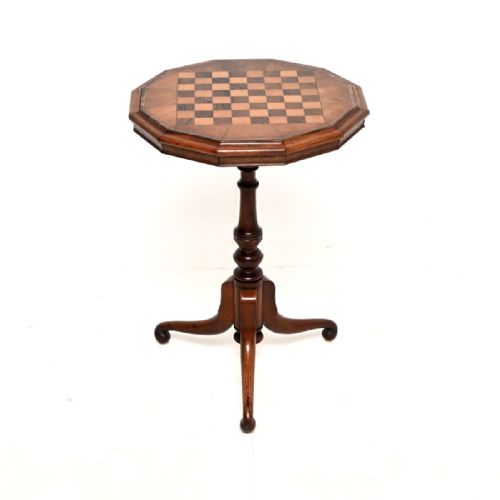
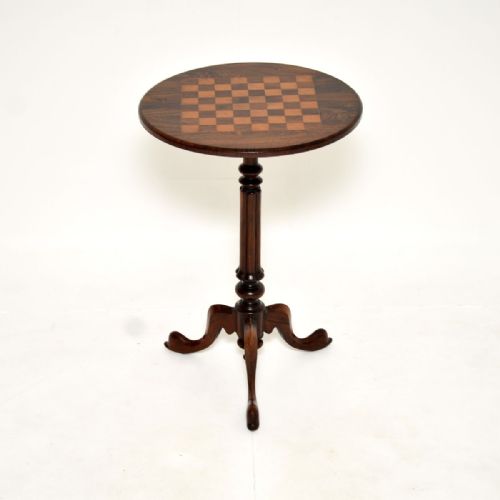
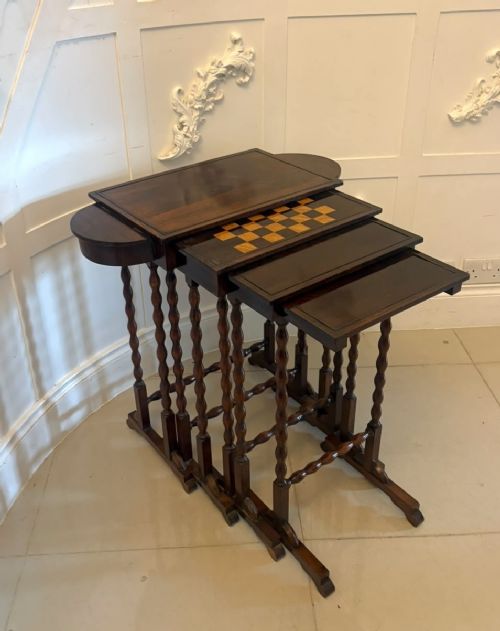
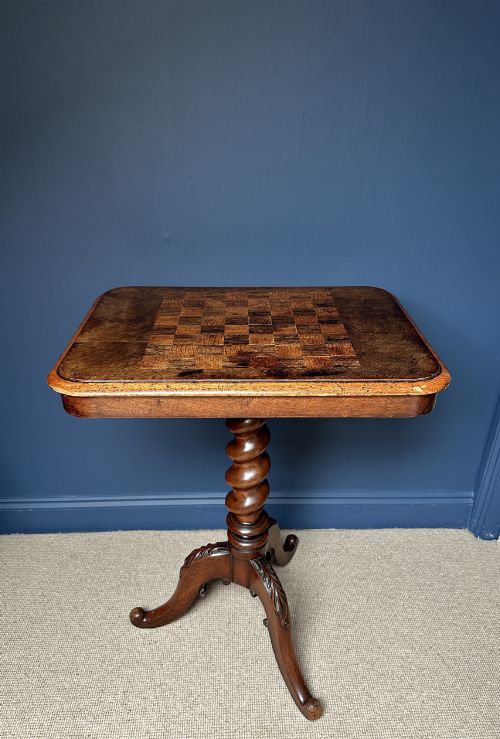
When you search for an inlaid board table, you encounter pieces designed primarily for chess, backgammon and general entertainment, originating chiefly from the Georgian, Regency and Victorian periods. These tables frequently appear in forms such as tripod tables, occasional tables, quartetto nests and multifunctional sewing or work tables.
The materials incorporated into these tops demonstrate considerable variety, moving between walnut, burr walnut, mahogany, rosewood and satinwood, paired with contrasting woods like boxwood and ebony. Many examples integrate the playing surface directly into the primary top, while others feature removable boards or specialised folding compartments.
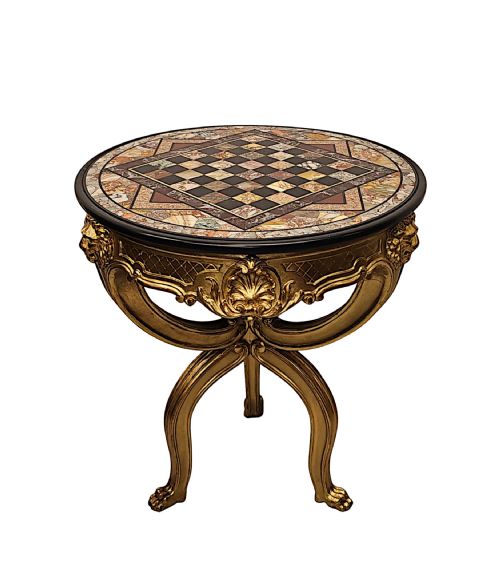
Geographic and stylistic influences stretch from classic English cabinetmaking through French Provincial and Anglo-Indian workshop traditions to Grand Tour specimen marbles. The most common manifestations on this page are nineteenth-century rosewood and walnut chess tables supported on pillar-and-tripod bases or pedestal columns.
How they were made
Cabinetmakers constructed the foundational carcasses and solid supports using dense timbers such as mahogany, rosewood and walnut, selected for their stability and grain pattern. Table tops often utilised fine veneers applied over a stable secondary wood base, allowing craftsmen to create contrasting borders and decorative surrounds.
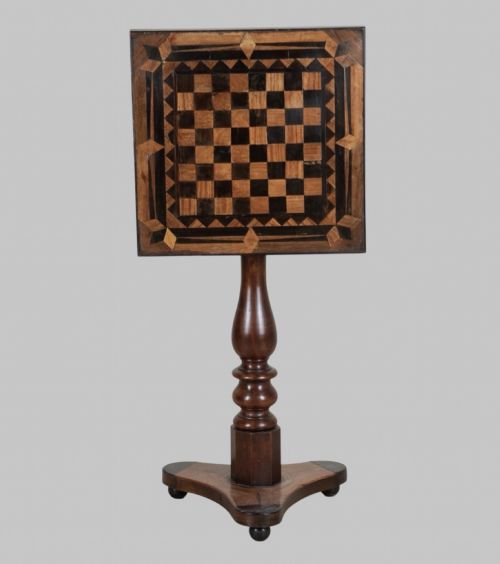
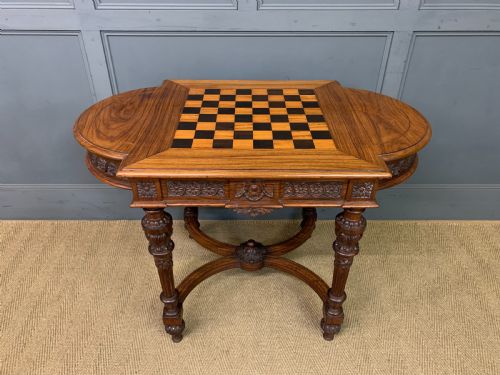
The characteristic chequerboards were formed through precise marquetry and parquetry techniques, meticulously alternating light and dark squares using boxwood, ebony, satinwood and rosewood. Specialist workshops integrated brass mounts, giltwood detailing and turned pedestals to complete the architectural presentation of the piece.
Inlaid Board Table Retail Price Guide 2026
Typical asking prices for inlaid board table among the pieces listed under this phrase on Sellingantiques today, from the lower quarter to the upper quarter. They describe what is for sale here now, not the wider market.
Listings feature woods including walnut, rosewood, mahogany, boxwood, brass, satinwood, burr walnut and ebony across nineteenth-century forms.
What varies in quality
The standard of an inlaid board table rests on the precision of the timber matching and the crispness of the parquetry work forming the board squares. Finer pieces demonstrate seamless integration of contrasting woods without noticeable gaps or lifting veneers across the playing surface.
Structural integrity in the base, particularly in tripod configurations and pillar supports, distinguishes superior workshop production from standard utilitarian pieces. The choice of primary timber, such as highly figured burr walnut or richly grained rosewood, elevates the visual presence of the furniture.
Gillows·British Chess Company
The Inlaid Board Table Glossary
- Parquetry
- A geometric mosaic of wood pieces used for decorative floors and tabletops. In these tables, it defines the alternating light and dark squares of the gaming surface.
- Tripod table
- A small freestanding table supported by a central pillar resting on three legs. This form appears frequently among nineteenth-century games tables.
- Quartetto nest
- A set of four graduating tables designed to slide one beneath another. Examples in the evidence include integrated chess surfaces within this nested format.
- Specimen wood
- Furniture constructed from a variety of distinct and often exotic timber samples. Tables utilising this technique display a wide spectrum of natural wood colours.
- Marquetry
- The art and craft of applying pieces of veneer to a structure to form decorative patterns. Craftsmen used this method to create elaborate borders surrounding the central board.
Inlaid Board Table: Frequently Asked Questions
What is an inlaid board table used for?
These tables served primarily as multi-functional furniture for domestic entertainment, providing a dedicated surface for chess, backgammon and card games.
Between games, their decorative inlaid tops allowed them to function as ordinary occasional, lamp or work tables within the Victorian or Regency parlour.
How do I date an inlaid board table?
Dating relies on observing the primary timber, structural form and decorative vocabulary characteristic of periods like the Regency or Victorian eras. For instance, rosewood tables with brass mounts and tapered pillar supports point toward the early nineteenth century.
Later Victorian examples often display heavily carved burr walnut pedestals and more elaborate undercarriages associated with mid-to-late nineteenth-century domestic interiors.
Are the games boards removable?
Some models feature integrated boards permanently fixed into the main top of the table as part of the primary veneer work. Others incorporate slide-out or completely removable boards that reveal secondary storage compartments underneath for playing pieces.
Where were these tables made?
The pieces originate from various domestic and international workshops, spanning English cabinetmaking centres, French provincial regions and Anglo-Indian production sites. Regional variations in timber choice and decorative motifs help indicate their specific geographical background.