



Inlaid Bedstead
An inlaid bedstead brings warmth and textural contrast to a bedroom through precise wood-to-wood decoration.
Inlaid Bedstead
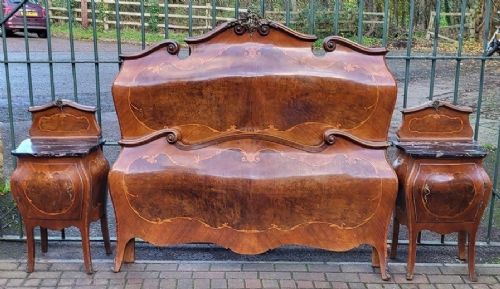
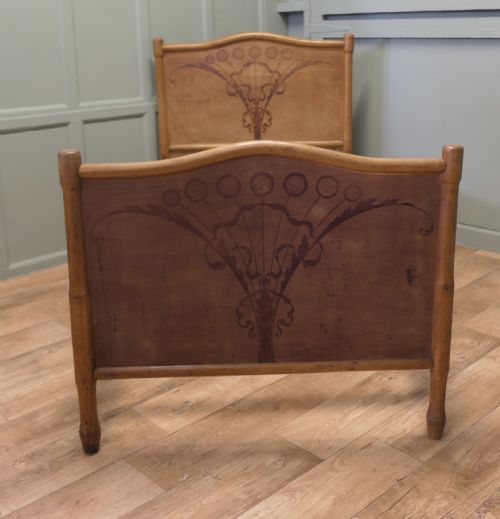
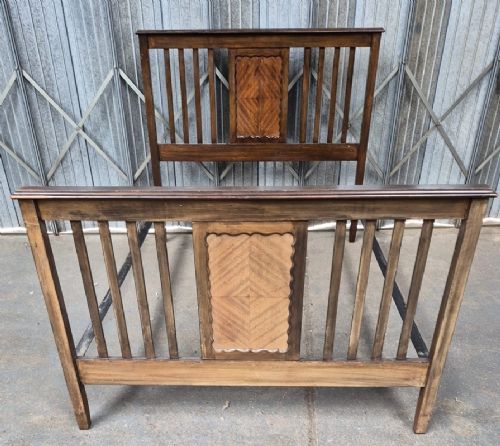
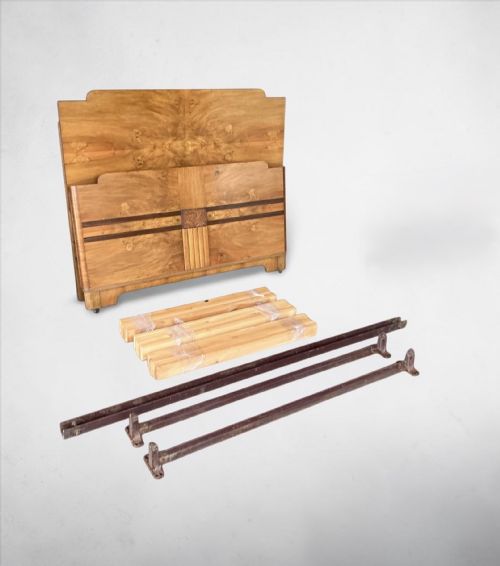
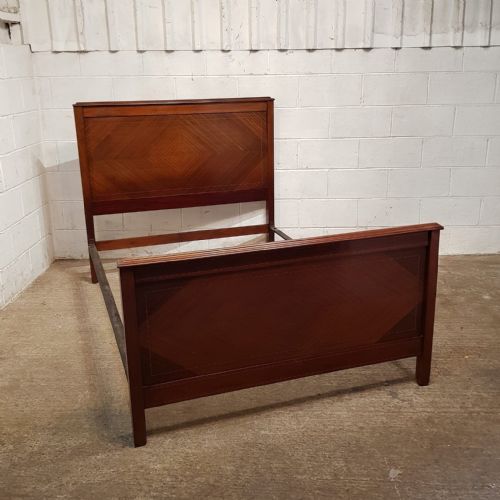
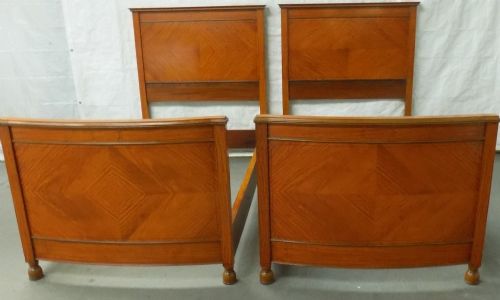
When someone searches for an inlaid bedstead, they are looking at wooden sleeping frames enhanced with contrasting timber details, geometric banding or floral motifs set flush into the primary surface. The Edwardian period supplies the greatest number of examples here, predominantly in mahogany and satinwood configured as standard double beds or pairs of large single beds.
Beyond the domestic Edwardian output, the selection broadens into earlier centuries and continental workshops. Buyers encounter 17th-century oak testers fitted with fruitwood inlay, alongside French pieces spanning the Victorian era, Art Deco period and Louis XVI revival styles.
The architectural formats range from low rails and panelled headboards to four-poster structures and expansive king-size frames. Many examples arrive accompanied by matching bedside cabinets or nightstands featuring complementary marble tops.
Materials and construction
The foundational frames rely primarily on mahogany, walnut and oak, providing structural integrity for large dimensions. Secondary and decorative timbers such as satinwood, fruitwood and burr walnut are then integrated to create visual depth and contrasting colour across the headboards and footboards.
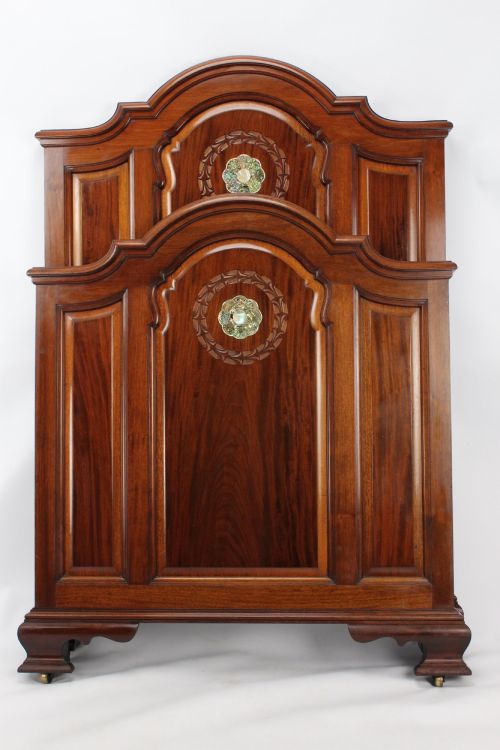
Decoration is achieved through marquetry and parquetry techniques, where fine veneers are meticulously cut and fitted together to form pictorial scenes or geometric patterns. In some pieces, mother-of-pearl and abalone shell provide iridescent highlights alongside traditional wood-on-wood inlay.
Inlaid Bedstead Retail Price Guide 2026
Typical asking prices for inlaid bedstead among the pieces listed under this phrase on Sellingantiques today, from the lower quarter to the upper quarter. They describe what is for sale here now, not the wider market.
A few timber sleeping frames secretly house delicate abalone shell and mother-of-pearl, catching the morning light long before you do.
Determinants of quality
Quality rests upon the precision of the veneer work and the integration of the decorative motifs into the structural timber. Superior examples display tight, seamless joints in the parquetry and marquetry without visible gaps or excessive modern filler.
The choice of primary and secondary woods also dictates standing, with finely figured burr walnut, rich satinwood and dense mahogany elevating an object above standard utility production. The refinement of secondary details, such as brass fittings or integrated porcelain accents, further separates standard output from exceptional atelier work.
Jacob and Joseph Kohn·Louis Majorelle·Heal's
The Inlaid Bedstead Glossary
- Marquetry
- The art of applying fitted pieces of veneer to a structure to form decorative patterns or pictures. It differs from parquetry by creating organic or pictorial designs rather than geometric grids.
- Parquetry
- A geometric mosaic of wood pieces used for decorative floors and furniture surfaces. It relies on repeating angles to form orderly patterns across panels.
- Satinwood
- A durable, lustrous timber with a natural golden sheen utilised extensively for fine cabinetmaking and decorative banding. Its bright tone contrasts sharply against darker woods like mahogany.
- Tester
- The wooden canopy or ceiling over a four-poster bed supported by the corner posts. In earlier centuries, this upper framework often incorporated panelled woodwork and inlaid friezes.
Inlaid Bedstead: Frequently Asked Questions
How do I measure for a modern mattress?
Antique and vintage frames frequently predate modern standard sizing conventions. Checking the internal length and width dimensions against contemporary mattress measurements avoids fitting issues.
Many older European frames utilise continental dimensions which differ slightly from standard British sizing. Comparing the exact slat dimensions ensures proper support without overhang.
Are these beds easy to assemble?
Most antique wooden bedframes rely on traditional side-rail bolt mechanisms or heavy interlocking bed-irons rather than modern cam locks. Having two people simplifies the alignment of heavy headboards, footboards and side rails.
Care should be taken not to over-tighten historical metal fittings into aged timber threads. Ensuring the frame sits square on a level floor prevents stress on the joints.
How do I clean inlaid surfaces?
Dusting with a soft, dry lint-free cloth prevents abrasive particles from scratching the delicate veneer work. Wax polishes formulated for antique furniture help nourish the timber without building up heavy residue.
Moisture and direct sunlight should be avoided to protect both the wood and the flush-set inlay materials from warping or fading over time.
Can I use modern bedding?
Standard duvets, pillows and sheets work effectively with these historic frames once the mattress fits securely. The visual contrast of contemporary linens against dark mahogany or figured walnut enhances the presence of the woodwork.
Ensuring adequate depth in the base support prevents the mattress from sinking below decorative footboard details.