
Inlaid Bedside Chests
These inlaid bedside chests bring decorative woodcraft and practical storage beside the bed, drawing on French and English cabinet-making traditions from the Georgian era to the early twentieth century.
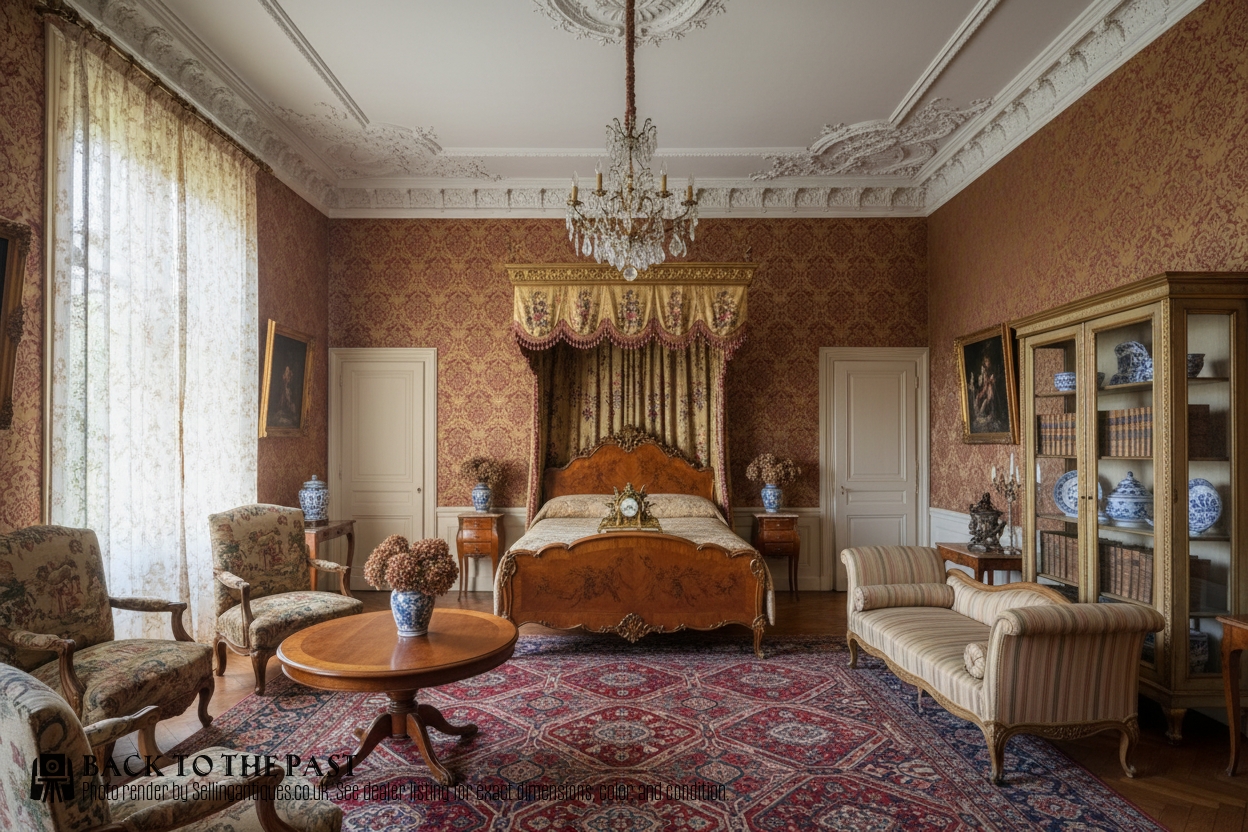
Inlaid Bedside Chests
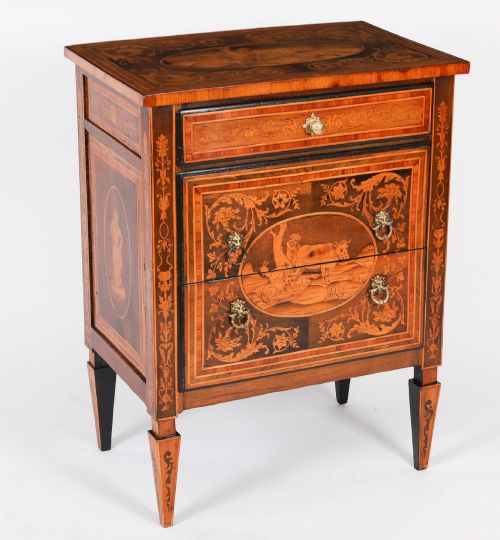
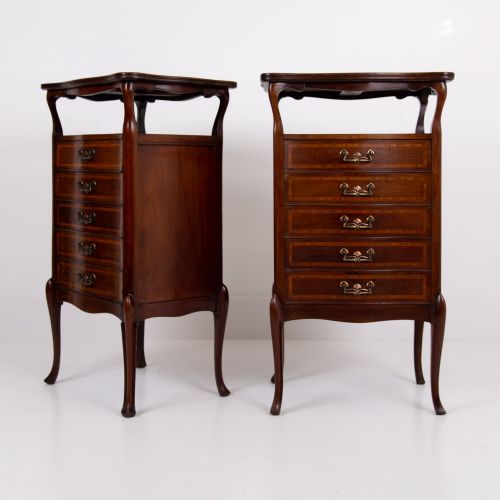
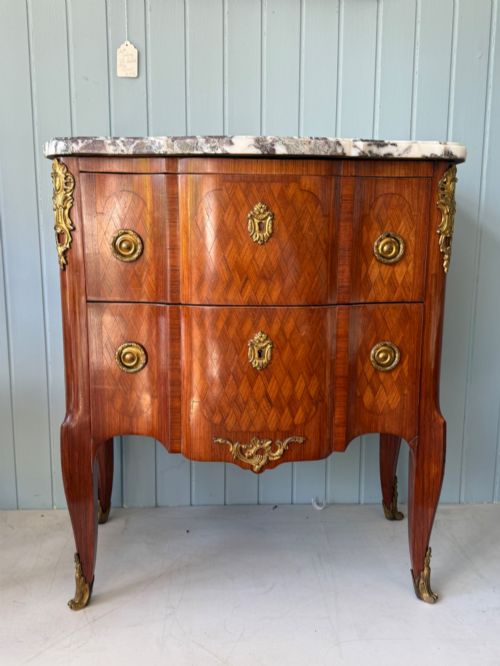
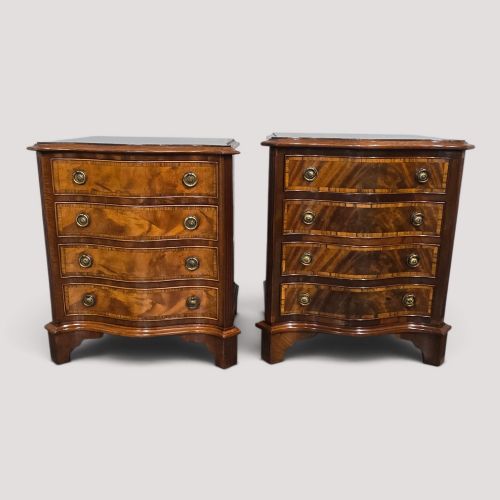
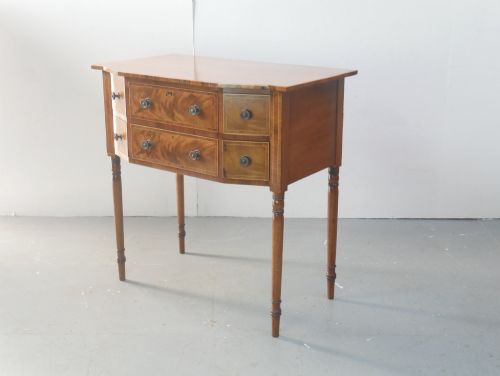
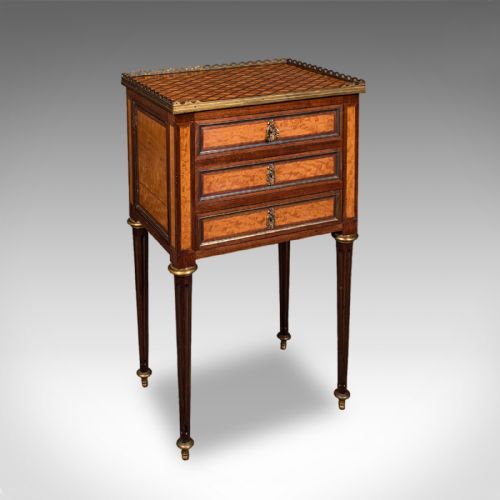
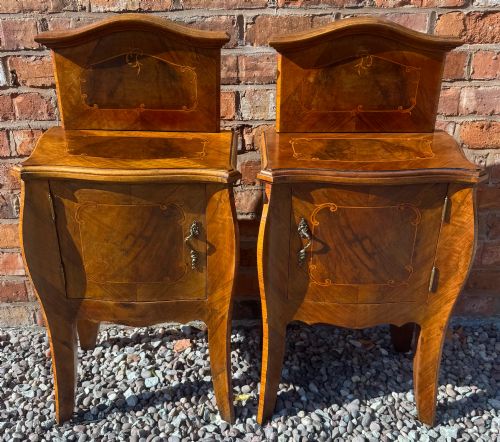
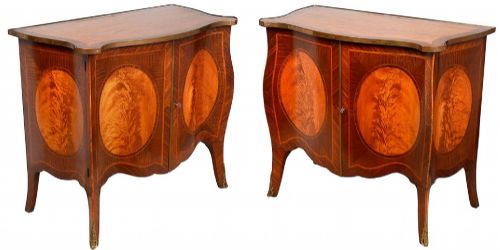
When you search for inlaid bedside chests, you encounter a variety of compact bedside tables, commodes, and small cabinets designed for the bedroom. The selection spans the nineteenth and early twentieth centuries, with a strong representation of French styles alongside English mahogany and walnut pieces.
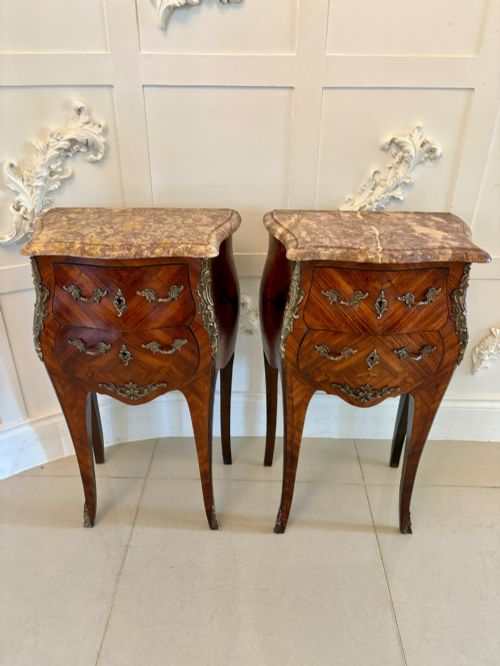
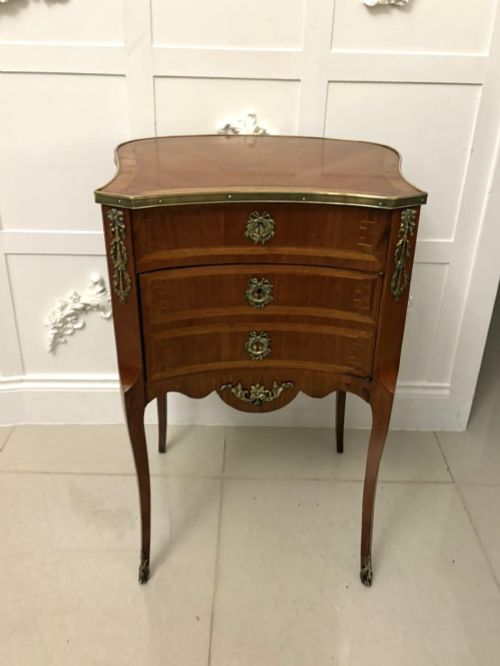
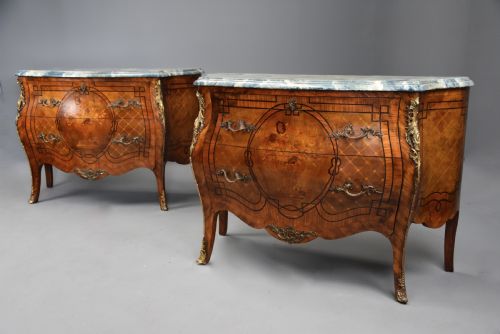
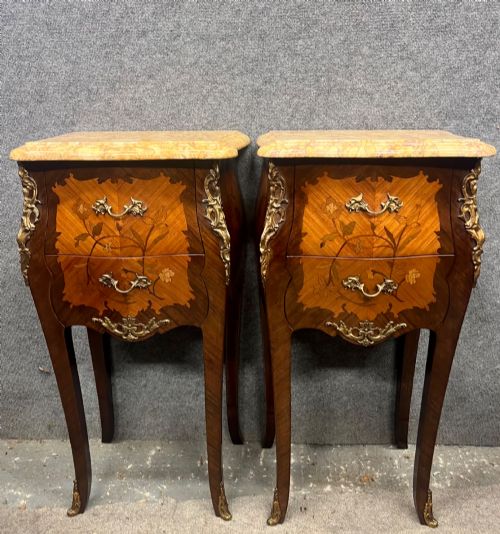
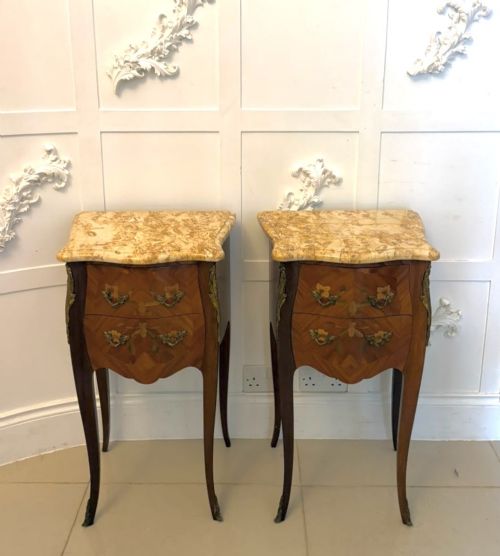
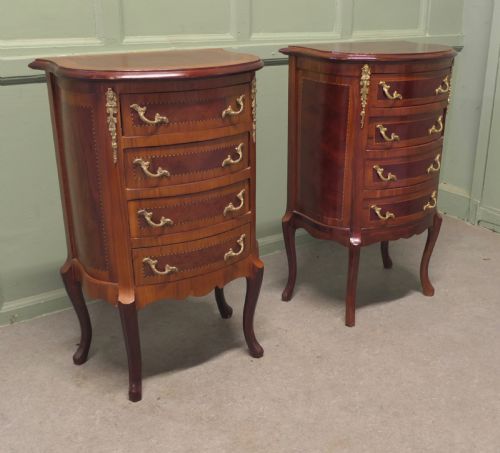
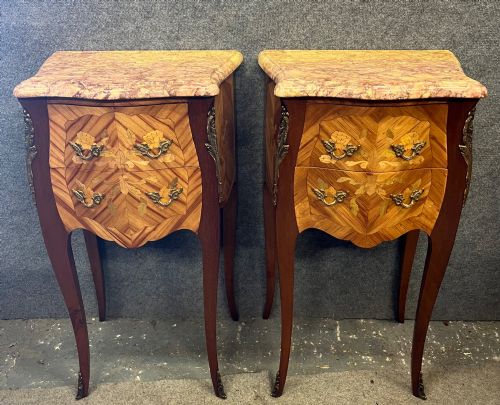
Many examples appear in matched or near pairs, often incorporating drawers or cupboards beneath marble tops. The forms range from serpentine and bow-fronted shapes to bombe silhouettes influenced by Louis XV and Rococo revivals.
Makers utilised diverse woods like satinwood, rosewood, and kingwood, applying marquetry and parquetry patterns to create decorative surfaces that elevate functional furniture into statement pieces.
How they were made
Cabinet-makers built the carcasses using solid timbers such as mahogany, walnut, or pine, onto which finely figured veneers were applied. Marquetry designs incorporated contrasting woods like satinwood and kingwood to form intricate floral or geometric patterns across the drawer fronts and sides.
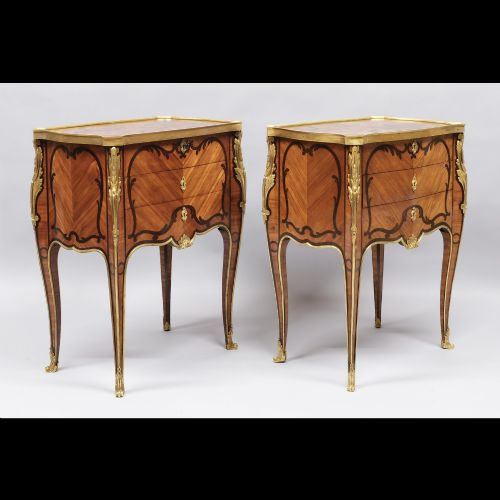
Many pieces incorporate polished marble slabs fitted to the top surface, providing a durable and decorative finish. Ormolu mounts, gilt bronze, and cast brass handles were added to accent the corners, legs, and drawer pulls of French and revival pieces.
Several nineteenth-century models feature pull-out steps designed to help polite society reach bed on cold winter nights.
What varies in quality
The sophistication of the marquetry and the choice of timbers define the upper tier of these cabinets. Finely cut veneers, balanced grain patterns, and crisp parquetry demonstrate superior workshop execution compared to simpler, repetitive designs.
Structural refinement shows in the proportion of the bombe or serpentine curves and the integration of heavy marble tops that sit flush with the wooden frame. Original gilt brass or ormolu mounts that retain their crisp detail also distinguish finer examples from standard production.
Edwards and Roberts·Sormani
The Inlaid Bedside Chests Glossary
- Marquetry
- Decorative veneer work forming pictures or patterns using various woods. Craftsmen assemble thin slices of timber to create intricate floral or architectural designs across the furniture surface.
- Bombe
- An outwardly swelling or bulging contour on the front and sides of a cabinet. This curved shape requires advanced woodworking skill to maintain structural integrity.
- Ormolu
- Gilded bronze mounts used for decorative enrichment on furniture. These cast metal ornaments accent the corners, feet, and aprons of French revival pieces.
- Parquetry
- Geometric patterns formed by laying small pieces of wood veneer. This technique creates repeating shapes such as cubes, chevrons, or squares on table tops and drawer fronts.
- Serpentine
- A curved line that undulates with a convex centre flanked by concave sides. This flowing profile appears frequently on the drawer fronts of eighteenth and nineteenth-century chests.
Inlaid Bedside Chests: Frequently Asked Questions
What are inlaid bedside chests?
These are small bedroom cabinets and commodes featuring decorative veneer work, designed to hold bedside items while adding visual interest to a room.
They combine compact storage drawers or cupboards with ornate surface decoration, drawing on historical French and English cabinet-making styles.
How were inlaid bedside chests used?
Historically, they served as bedside tables for storing personal items, night lamps, and washing accessories within easy reach of the bed.
Today, they function as versatile lamp tables or small chests in bedrooms and living spaces, offering practical surface area and enclosed storage.
How do I identify French styles?
French pieces often feature bombe profiles, serpentine shapes, and elaborate marquetry depicting floral motifs. They frequently incorporate marble tops and cast ormolu mounts.
English equivalents tend to rely on straight lines, flame mahogany, or satinwoodbanding, following Georgian and Regency design principles.
Are marble tops original?
Many nineteenth and early twentieth-century bedside cabinets were manufactured with fitted marble slabs to protect the wood from spills. These stone tops were integrated into the design from the workshop stage.
Examining the underside and the fit against the wooden moulding helps confirm whether the marble corresponds to the period of the cabinet.