




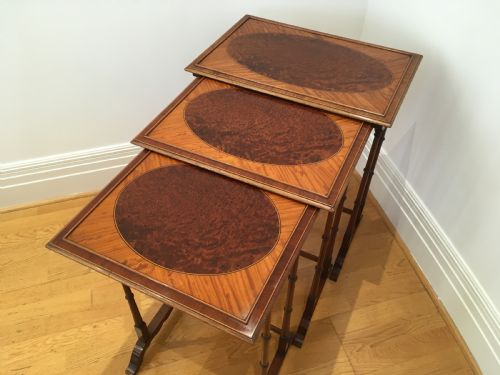

Inlaid Amboyna Table
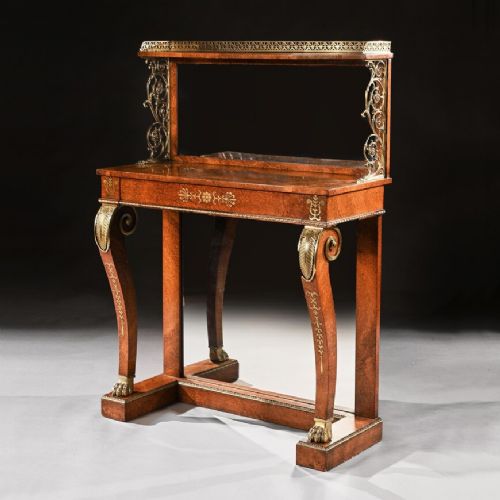
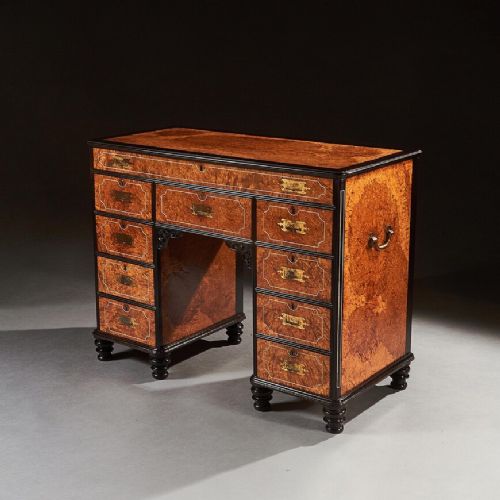
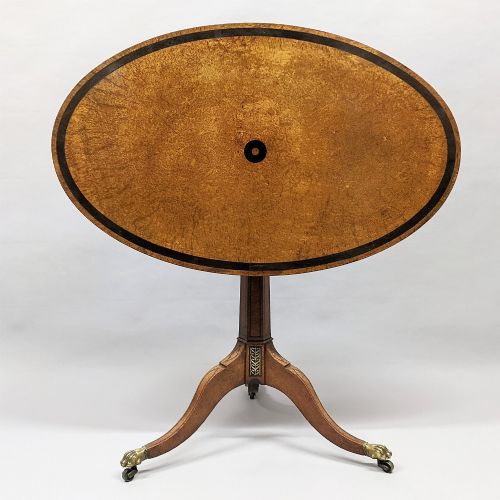
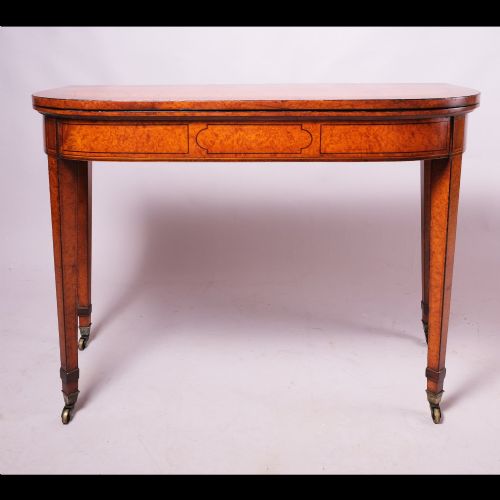
An inlaid amboyna table brings a richly patterned burl wood surface and precise contrasting details into a room.
Inlaid Amboyna Table
When you search for an inlaid amboyna table, you encounter a selection of occasional furniture spanning the nineteenth century, including Victorian, Edwardian, and Regency examples. The pieces range from small bedside cabinets and lamp tables to larger centre tables, writing desks, and card tables.
You are most likely to meet Victorian pieces combining amboyna veneer with contrasting dark woods and marquetry inlay. These tables served various functions in period interiors, operating as writing surfaces, bedside storage, or display points for lamps and ornaments.
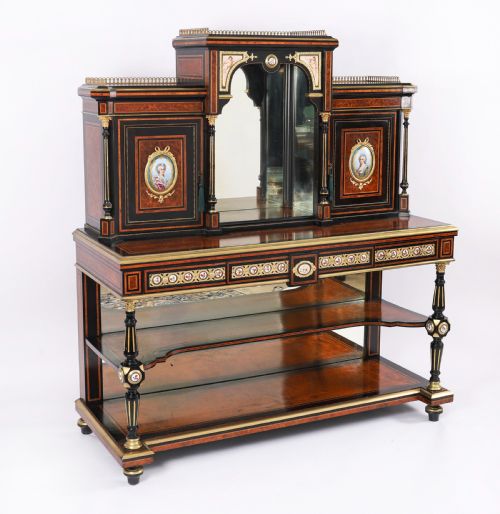
The selection includes English cabinet work alongside French Napoleon III and Chinese Export pieces. Each format utilises the distinct mottled grain of the timber to create a decorative focal point.
Materials and technique
Cabinet makers applied thin veneers of amboyna, prized for its intricate swirling burr pattern, over a stable secondary timber carcass. This timber was frequently paired with ebony or ebonised wood to create dark borders that frame the lighter brown grain.
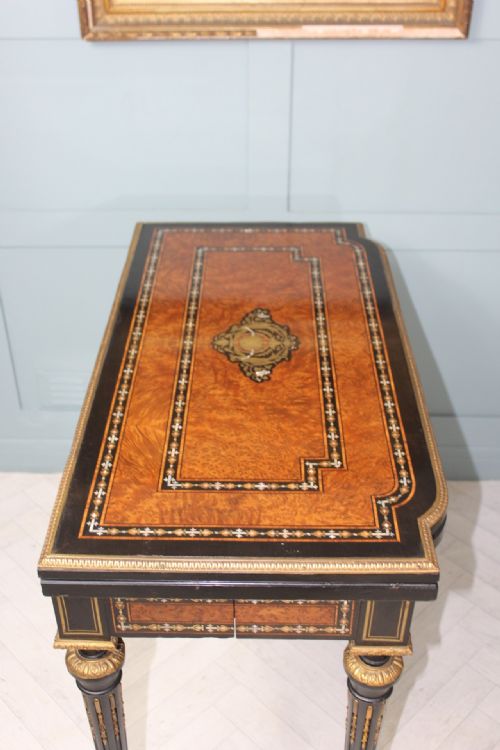
Detailing was achieved through brass inlay, gilt bronze mounts, or marquetry work incorporating mother-of-pearl and contrasting fruitwoods. Tables intended for social use often featured hinged tops, tilt mechanisms, or fitted interiors requiring precise joinery.
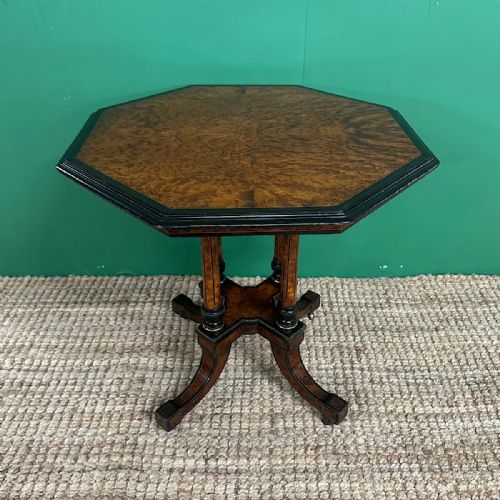
Tables recorded here include compact bedside cabinets designed for nineteenth-century bedrooms alongside octagonal Moorish stands.
Judging the work
The distinction between ordinary and superior pieces rests on the choice of the veneer and the crispness of the secondary inlays. Master makers selected amboyna with tight, even eyes across the entire surface rather than relying on plain sections of timber.
Construction quality shows in the register of the marquetry and the weight of the mounts, whether cast brass or gilt bronze. Well-executed tables maintain flush surfaces where different wood species meet, with no lifting along the veneer edges.
Gillows·Gregory and Co·Paul Sormani
The Inlaid Amboyna Table Glossary
- Marquetry
- The art of forming decorative patterns on furniture by fitting together thin slices of various coloured woods. This technique often appears on table tops alongside brass and mother-of-pearl.
- Ebonised wood
- Timber treated with a black finish to imitate ebony. Cabinet makers used this process to provide a dark contrast against light amboyna veneers.
- Ormolu
- Gilded bronze mounts applied to furniture for decoration. These metal elements were cast and chased before being fixed to table frames and legs.
- Bonheur du jour
- A small lady's writing desk featuring a super-structure with drawers and pigeonholes above the main writing surface. They frequently incorporate amboyna and marquetry.
Inlaid Amboyna Table: Frequently Asked Questions
What is amboyna wood?
Amboyna is a dense and highly figured burr wood derived from the Pterocarpus indicus tree, native to Southeast Asia. Its timber produces a characteristic spotted or swirled grain pattern that cabinet makers prized for luxury veneer work.
Because the burls are irregular in shape, craftsmen sliced the wood into thin veneers rather than building solid furniture from it. This technique displayed the rich golden-brown figuring across table tops and cabinet fronts.
How were card tables used?
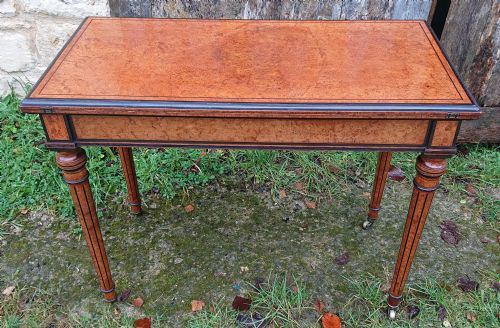
Card tables served as multi-purpose furniture in nineteenth-century drawing rooms, remaining folded against a wall when not in use. They opened out for evening games of whist, quadrille, or chess.
Many examples feature a swiveling or folding top supported by a concealed well or compartment for storing playing cards and counters. Some double as sewing or writing tables.
How do I date a Victorian table?
Dating a Victorian table relies on examining the secondary timbers, construction methods, and prevailing design revivals. Pieces from the 1860s and 1870s often combine amboyna with ebonised wood and classical French influences.
Drawer linings, screw types, and hinge mechanisms also provide evidence of age. Maker stamps or paper labels inside drawers help narrow the production period further.
Where should I place an occasional table?
An occasional table suits placement beside a sofa, beneath a window, or as a lamp stand in a hallway. Their compact proportions allow them to fit into spaces where a larger desk or dining table would overwhelm the room.
Care should be taken to keep veneered timber away from direct sunlight and strong heat sources. Maintaining stable room humidity protects the delicate marquetry and prevents the veneer from lifting.