




Industrial Oak Workbench
An industrial oak workbench brings robust utility and raw character into modern interiors, offering heavy timber surfaces built for centuries of workshop graft.

Industrial Oak Workbench
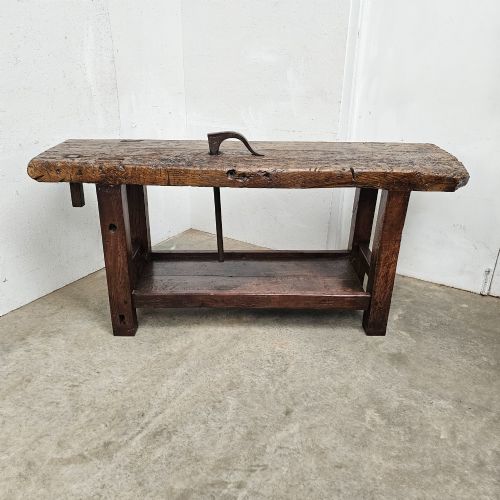
When you search for an industrial oak workbench, you are looking at heavy timber surfaces designed originally for manual trades, craftwork and heavy assembly. The items gathered under this heading include substantial French country house workbenches, craftsmans benches fitted with traditional clamping bars, and low coffee table adaptations of jewellers benches.
The version you are most likely to meet on this page is a French artisan workbench dating from the nineteenth century, constructed with integrated vices, thick oak tops and sturdy trestle bases. These pieces carry the visible marks of working life, from tool gouges to stained surfaces, which define their appeal for contemporary spaces.
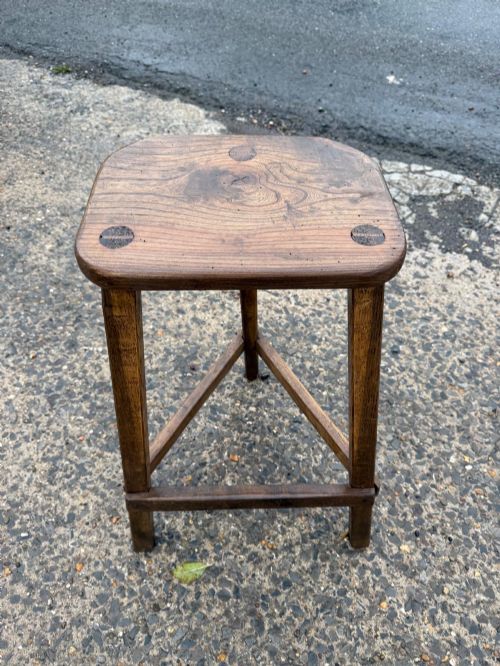
Alongside standard workbenches, the selection encompasses related utility forms such as post Office sorting tables, machinist stools and metal table bases paired with solid oak tops. Styles stretch from Victorian utilitarian and industrial salvage to rustic French provincial, uniting practical function with rugged aesthetic presence.
How they were made
Construction relies upon solid oak, elm, beech and other hardwoods selected for density and resilience under heavy tool use. These thick timbers are joined using traditional joinery methods designed to withstand constant hammering, clamping and pressure without shifting.
Metal components play an essential structural role, incorporating forged iron braces, cast iron bases and heavy mechanical vices. These iron elements were bolted or forge-welded to the wooden framework, providing the rigid stability required in nineteenth century workshops.
Industrial Oak Workbench Retail Price Guide 2026
Typical asking prices for industrial oak workbench among the pieces listed under this phrase on Sellingantiques today, from the lower quarter to the upper quarter. They describe what is for sale here now, not the wider market.
Periods represented span from the 1880s through the nineteenth century and into the 1920s.
What varies in quality
Quality in an industrial oak workbench rests upon the integrity of the timber and the complexity of its original workshop mechanism. Examples featuring integrated wooden vices, original clamping bars and substantial subframes represent a higher tier of utilitarian design than simpler board-on-base assemblies.
The character of the surface wear also dictates distinction, distinguishing pieces that have developed a deep, honest patina through decades of artisan labour from those with flat or unconvincing finishes. Originality of ironwork and the retention of maker-installed vices set superior examples apart from later restorations.
The Industrial Oak Workbench Glossary
- Clamping bar
- A sliding wooden beam or spindle mechanism integrated into the bench top to secure materials during woodworking tasks.
- Vice
- A mechanical screw apparatus fitted to the side or end of a workbench to hold workpieces firmly in place.
- Trestle base
- A structural support system consisting of horizontal beams resting on pairs of splayed vertical legs.
- Utilitarian
- Designed primarily for practical use and hard work rather than decorative display.
- Patina
- The surface sheen and colour depth developed on wood and metal through age, handling and use.
Industrial Oak Workbench: Frequently Asked Questions
What is an industrial oak workbench used for?
These benches were originally built for heavy manual trades, carpentry, metalwork and artisan assembly, providing a stable surface for hammering and clamping.
Today, homeowners repurpose them as kitchen islands, sideboards, writing desks or large dining surfaces in rustic and industrial settings.
How do I clean a vintage workbench top?
Maintain the historic surface by dusting with a dry cloth and occasionally applying natural beeswax to nourish the dry hardwood.
Avoid harsh chemical cleaners or excessive water, which can strip the aged patina and damage the historic timber.
Are these benches heavy?
These pieces are constructed from solid nineteenth century hardwoods and cast iron, making them exceptionally heavy and sturdy.
Placement requires careful planning because repositioning a fully assembled workbench typically takes at least two strong people.
How do I date a nineteenth century workbench?
Dating relies upon examining the hand-cut joinery, the type of forged iron hardware, and the specific wear patterns left by manual tools.
French provincial examples often feature distinct trestle constructions and integrated wooden vices characteristic of rural artisan workshops from that era.