




Industrial Iron Box
These heavy-duty industrial iron box pieces span sturdy safes, strongboxes and trunks built to outlast their contents.
Industrial Iron Box
When you search for an industrial iron box, you are looking at utilitarian containers engineered for security and transport during the nineteenth and early twentieth centuries. These range from heavy cast iron bank safes and deed boxes to reinforced travelling trunks and coal bunkers.
How they were made
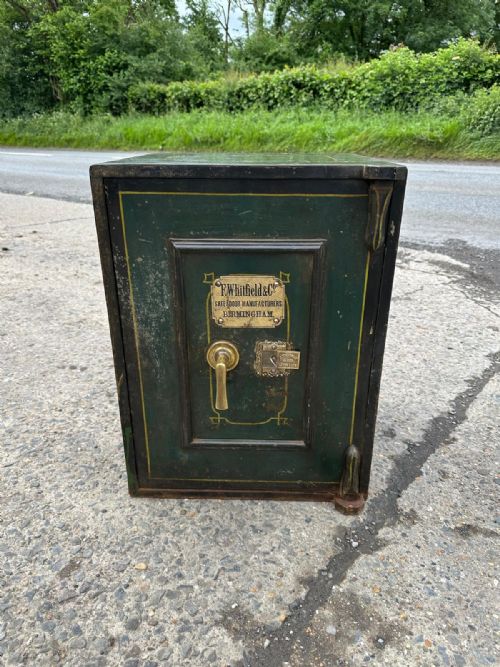
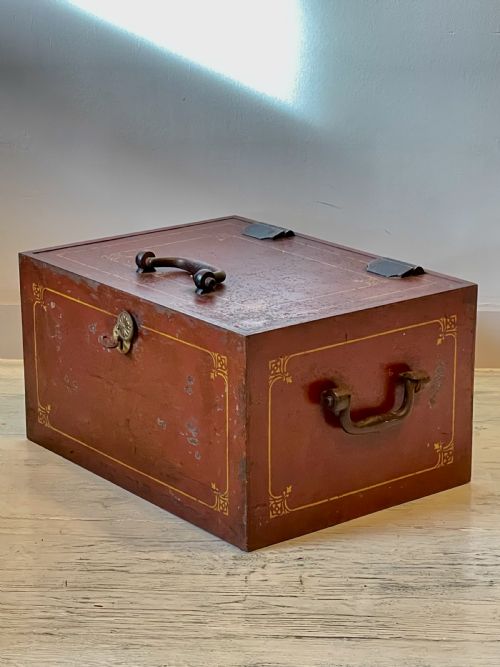
Makers utilised heavy cast iron, wrought iron and steel plates, joining them with robust rivets and corner brackets to withstand rough handling and secure valuables. Many pieces combine these ferrous metals with internal timber linings, pine carcases or brass fittings.
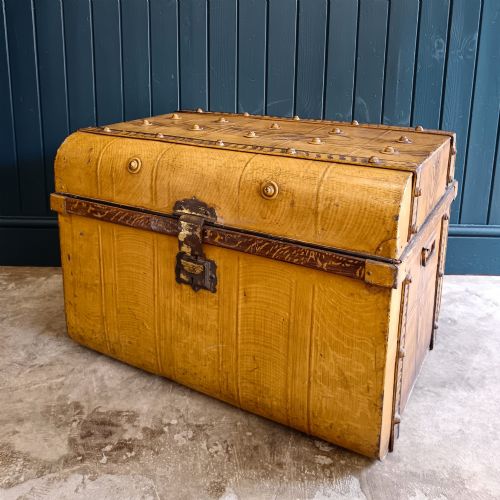
Surfaces often show original painted finishes, faux-wood graining or blacksmith-wrought detailing that protected the metal from corrosion while adding a distinct utilitarian aesthetic.
Some nineteenth-century strongboxes weigh more than a heavy oak sideboard, turning simple domestic rearranging into a serious weightlifting exercise.
What varies in quality
Quality rests on the sophistication of the locking mechanisms, from complex multi-dial combinations to intricate brass lever locks stamped by notable makers. The weight of the metal plates and the precision of the ironwork set finer merchant safes apart from simpler deed boxes.
The integrity of surviving painted or faux-painted finishes also dictates desirability, as authentic surface patination holds more appeal than later repainting.
James Bruce·F Whitfield And Co·Milners of Liverpool·George Price
The Industrial Iron Box Glossary
- Strongbox
- A secure container typically made of heavy iron or steel, designed to protect valuables from theft or fire. These often feature complex internal locking bolts.
- Deed box
- A smaller metal storage chest used historically for keeping legal documents, contracts and private papers. They frequently include fall-front lids and drop handles.
- Campaign chest
- A portable trunk or case split into modular sections for easy transport by military officers on active service. They are usually reinforced with brass corners.
- Combination safe
- A secure box operated by dial mechanisms rather than a traditional key. These require precise alignment of multiple number dials to release the bolt.
- Cast iron
- Molten iron poured into a mould to create rigid, heavy components with high compressive strength. It forms the primary body of nineteenth-century strongboxes.
Industrial Iron Box: Frequently Asked Questions
What were iron strongboxes used for?
These robust containers served banks, merchants and wealthy households for securing currency, bullion and sensitive legal documents against theft or fire.
Their heavy iron walls and complex locking mechanisms ensured that valuable property remained protected in commercial offices and domestic studies alike.
How do I clean an old iron box?
Remove surface dust with a dry brush and treat any exposed metal with a light application of microcrystalline wax to prevent further oxidation.
Avoid harsh chemical solvents or abrasive pads that can strip away original painted finishes and historic patination.
Are these old safes still fireproof?
Nineteenth-century insulation materials, often composed of compressed sawdust, chalk or damp-prone mixtures, degrade over long periods.
Modern security standards mean these historic boxes should be viewed as decorative storage rather than certified fire protection.
How do I identify a Victorian safe?
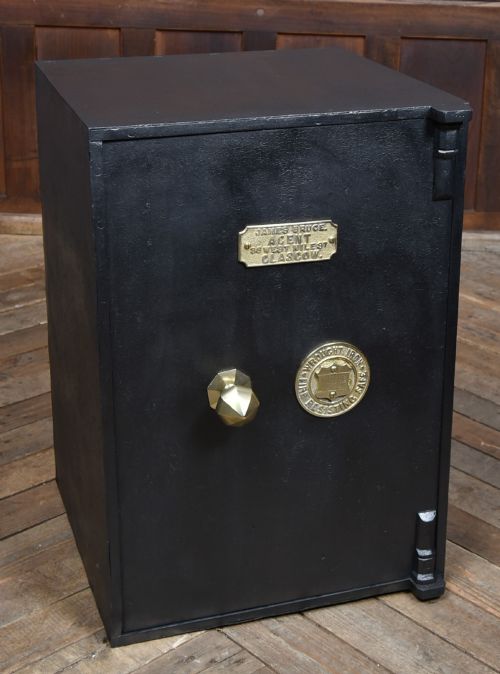
Look for heavy cast iron door construction, brass maker plates, and lever-action locking mechanisms requiring specialist keys.
Stylistic cues often include painted decoration, raised lettering and robust strap hinges typical of nineteenth-century foundry work.