



Industrial Glass Shade
These industrial glass shade pieces bring robust utility into domestic rooms, offering straightforward illumination shaped by early factory and maritime use.
Industrial Glass Shade
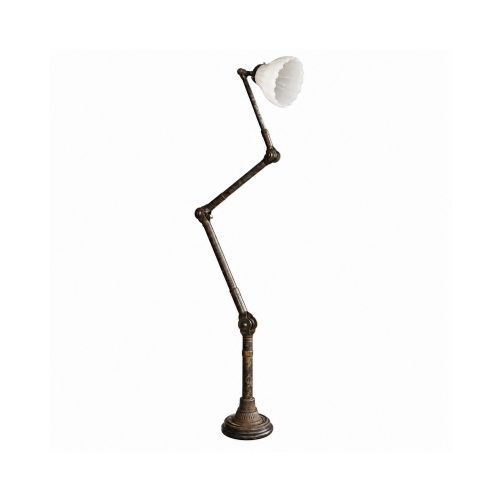
An industrial glass shade serves as a durable lighting fixture originating from commercial, maritime, and factory settings across the Victorian, Edwardian, and mid-century periods. These fixtures emerge in forms such as pendant lights, ceiling lights, and exterior wall lights designed for heavy use.
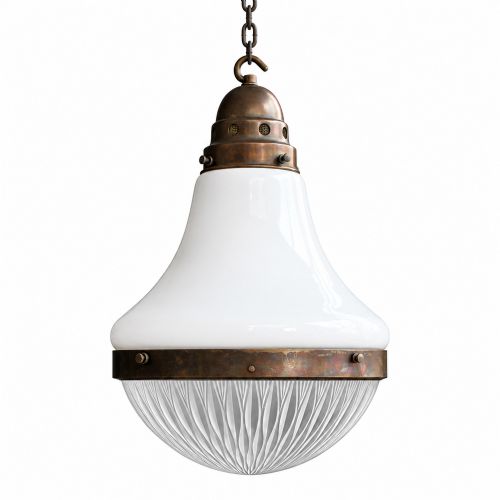
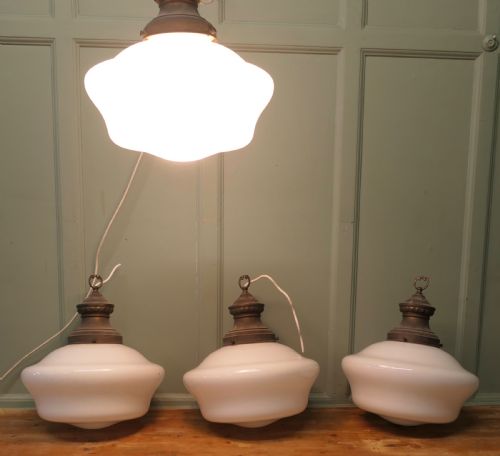
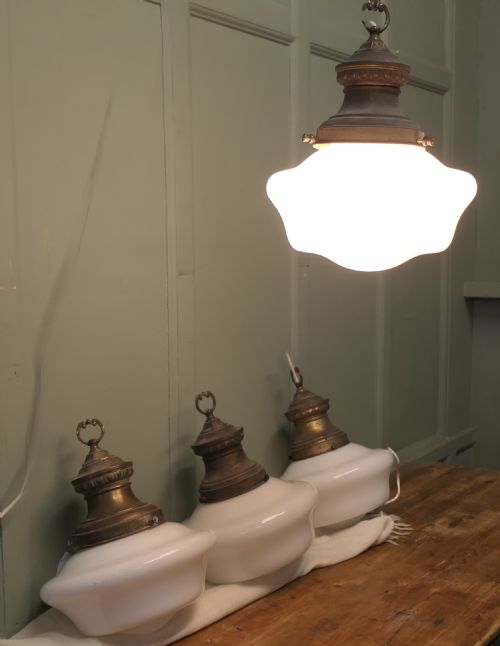
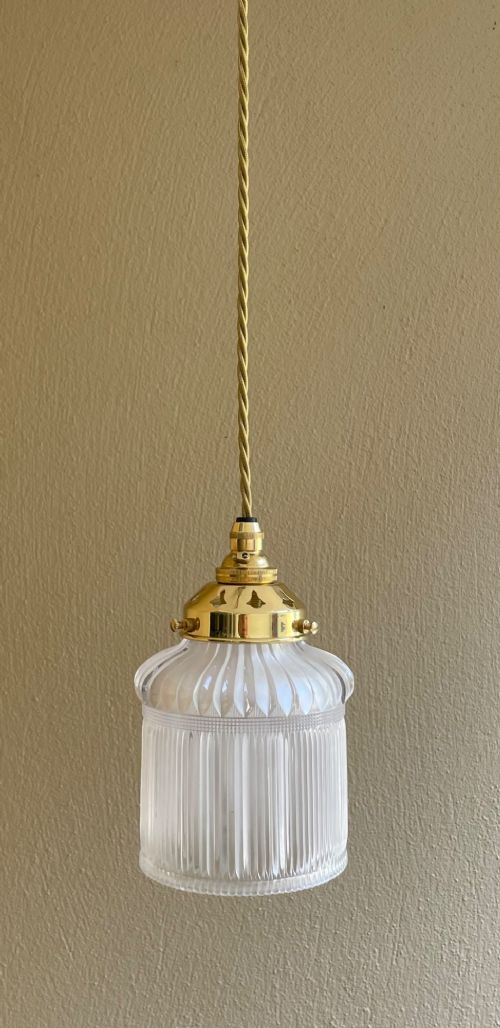
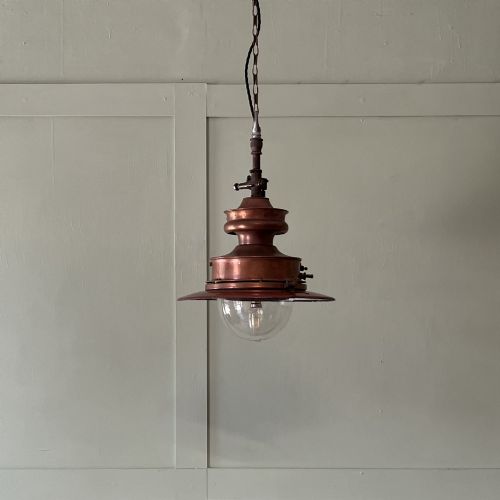
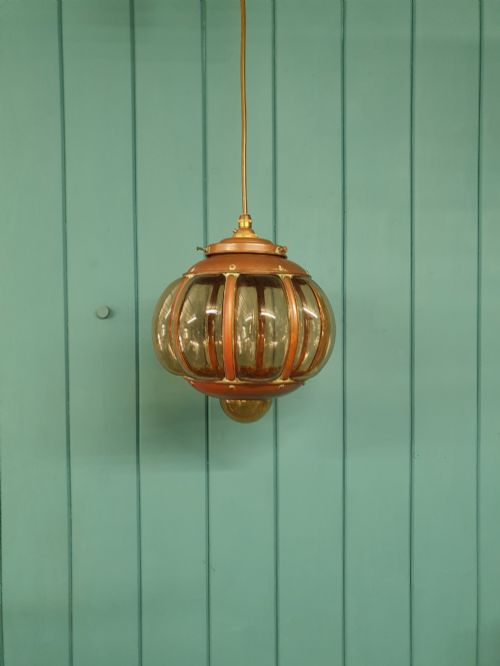
The version a buyer most frequently encounters on this page is the pendant light, often paired with prismatic or opaline glass configured for directional lighting. Pieces span several decades, stretching from nineteenth-century railway lanterns up to nineteen-forties trade sign lights and outdoor lamps.
Makers and designers embraced functional styles including nautical, Art Deco, and industrial designs. These utility objects translate well into modern interiors seeking authentic historical texture without excessive ornamentation.
Materials and Construction Techniques
Makers constructed these shades using heavy glass combined with robust structural metals like brass, copper, and chrome galleries. Prismatic and opaline glass provided diffusion properties essential for large workspaces.
Metals were spun, cast, or riveted to secure the glass shades firmly against vibration in factories or motion on railways. Mercury mirrored finishes and smoked glass also appear, adding distinct reflective qualities to the utilitarian designs.
Industrial Glass Shade Retail Price Guide 2026
Typical asking prices for industrial glass shade among the pieces listed under this phrase on Sellingantiques today, from the lower quarter to the upper quarter. They describe what is for sale here now, not the wider market.
The listings span the Victorian era through the nineteen-forties, uniting brass, copper, and various glass forms.
Distinctions in Quality
Quality separates along the integrity of the glass moulding and the heft of the supporting metal components. Superior examples display crisp prismatic ridges or evenly distributed opaline density without surface distortion.
The refinement of the gallery hardware and the retention of original metal patination distinguish better specimens. Uniform thickness in the glass and substantial brass or copper fittings indicate higher grade production.
The Industrial Glass Shade Glossary
- Holophane
- A brand of scientific glass luminaires featuring prismatic ribs designed to diffuse and direct light efficiently. These shades are frequently found in industrial lighting configurations.
- Opaline Glass
- A milky, semi-translucent glass type that softens light output while maintaining a bright appearance. It was widely utilised across early twentieth-century pendant lighting.
- Prismatic Glass
- Glass moulded with geometric ridges on the surface to refract and control light distribution. Double prismatic variants offer enhanced optical performance.
- Mercury Glass
- A double-walled blown glass type silvered on the interior to create a mirrored appearance. It appears in vintage pendant lights from the nineteen-twenties.
- Gallery
- The metal collar or mount that holds the glass shade in place and connects to the suspension cord. Chrome and brass are common materials for these fittings.
Industrial Glass Shade: Frequently Asked Questions
How do I hang a pendant light?
Pendant lights suspend from ceilings using cord, chain, or rigid stems attached to electrical junction boxes. Ensure the ceiling structure supports the combined weight of the glass shade and metal gallery.
Professional installation by an electrician ensures safe wiring and correct hanging height above tables or floor surfaces.
Are these lights suitable for bathrooms?
Exterior wall lights and certain pendant designs originate from robust settings, but suitability for damp spaces depends on current IP ratings. Check the specific wiring and sealing components with an electrician before bathroom installation.
Glass shades themselves resist moisture well, though metal galleries may require specific finishes to prevent corrosion.
How do I clean opaline glass?
Clean opaline glass shades using warm soapy water and a soft cloth to remove dust and grease accumulation. Avoid abrasive scourers that might scratch the delicate surface.
Dry thoroughly with a lint-free cloth before reattaching the shade to its metal gallery.
What is a Holophane shade?
A Holophane shade is a specialised glass shade moulded with precise prismatic ribs. This design directs and diffuses illumination efficiently for large workspaces.
Collectors prize these shades for their optical properties and distinct industrial aesthetic.
How do I date an industrial shade?
Dating relies on identifying materials, manufacturing techniques, and style markers such as Edwardian brass or nineteen-thirties chrome galleries. Victorian pieces often incorporate heavy copper and railway-specific forms.
Compare the glass moulding patterns and gallery fixings with known period examples to establish an approximate decade.