
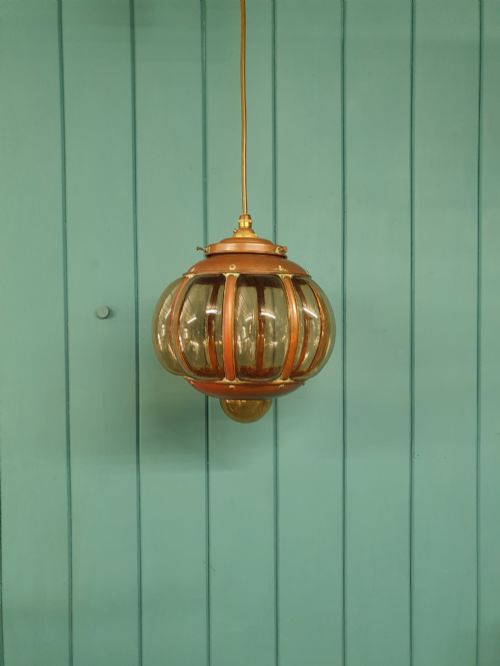


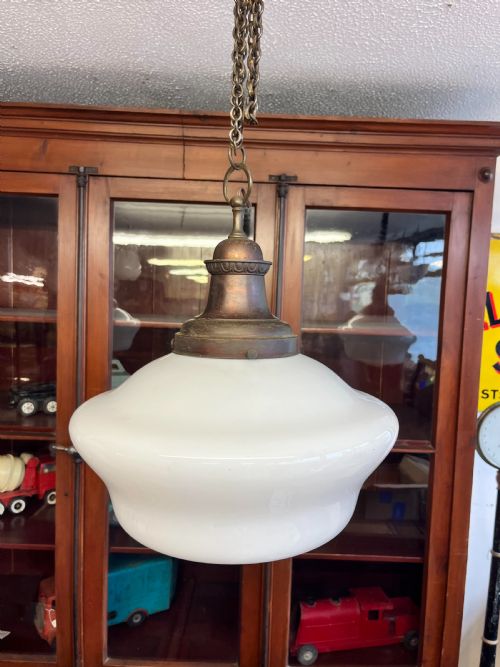
Industrial Glass Pendant Light
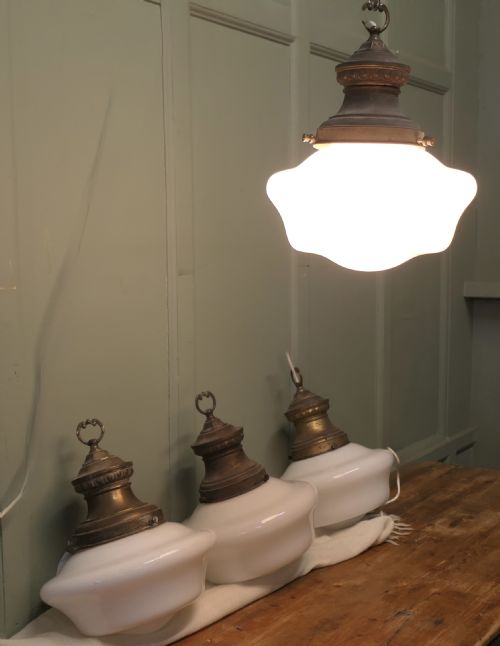
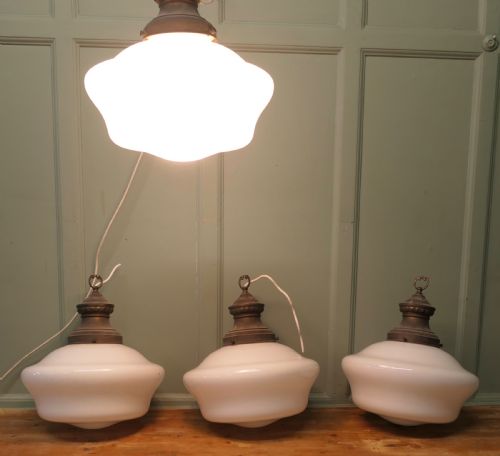
An industrial glass pendant light brings practical utility and robust character into a room through thick shades and metal galleries.
Industrial Glass Pendant Light
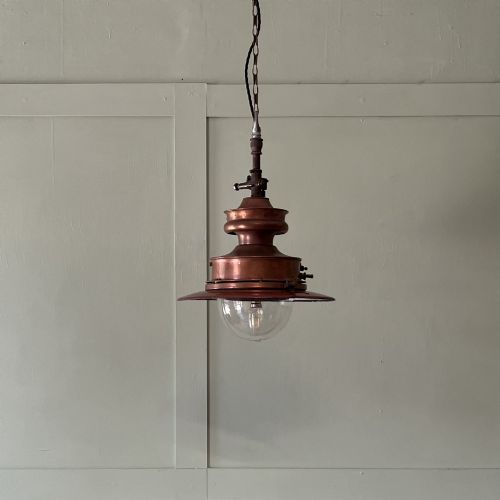
An industrial glass pendant light spans functional forms from the Victorian, Edwardian, and mid-century periods. These hangings originated in factories, railways, ships, and trade premises before finding a place in domestic interiors.
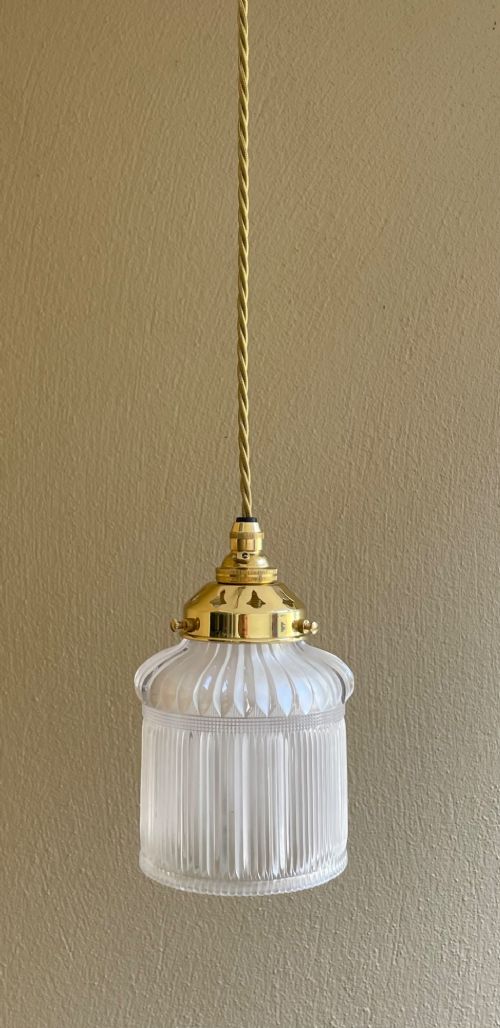
You will most frequently meet styles described as industrial, Art Deco, and nautical on this page. Common configurations include opaline and prismatic shades paired with brass, copper, and chrome galleries.
The selection ranges from railway lanterns and chapel lights to factory pendants and trade sign lights. Many retain their original shades, often carrying the Holophane name or style across 1920, 1930, and 1940 dates.
How they were made
Makers shaped glass through pressing and moulding to create thick bell and prismatic profiles designed to diffuse harsh factory illumination. Mercury mirrored finishes and opaline surfaces further controlled light output in utilitarian settings.
Metal components relied on spun brass, solid copper, and cast metal galleries to support heavy glass shades. These fixtures utilised durable brass and copper assemblies built to withstand industrial environments.
Periods represented span from Victorian and Edwardian eras through to nineteen-forties trade sign lights.
What varies in quality
The distinction between standard utility items and finer examples lies in the weight of the glass and the casting quality of the gallery. Heavy prismatic shades and substantial brass or copper hardware represent superior manufacturing standards.
Original maker details, such as distinct Holophane markings on the glass, separate mass-produced items from specialised optical glass creations. The integrity of the metal fittings and the clarity of the opaline or mirrored surfaces dictate the overall calibre of each piece.
Holophane
The Industrial Glass Pendant Light Glossary
- Holophane
- A brand of scientific glass known for its prismatic patterns that direct and diffuse light efficiently. These shades are frequently found on early twentieth-century pendants.
- Opaline glass
- A milky, semi-translucent glass type that softens illumination while adding a distinct surface tone. It appears widely on chapel and factory lights from the nineteen-twenties.
- Gallery
- The metal collar or fitter that holds the glass shade and connects to the suspension rod or chain. Galleries are typically cast in brass, copper, or chrome.
- Prismatic glass
- Glass moulded with precise geometric ribs designed to refract light and reduce glare. Double prismatic variants provide enhanced optical control.
- Mercury glass
- Glass blown with a silvering solution trapped between double walls to create a mirrored appearance. These lights reflect surrounding interiors when unlit.
Industrial Glass Pendant Light: Frequently Asked Questions
What is an industrial glass pendant light?
An industrial glass pendant light is a ceiling-suspended fixture originally used in factories, railways, and commercial premises during the nineteenth and twentieth centuries.
These pieces combine robust metal galleries in brass or copper with thick glass shades designed for functional illumination.
How do I hang a pendant light?
Pendant lights hang from ceilings using chains, rods, or cords attached to the upper gallery. Professional installation ensures the weight of the glass and metal is safely supported.
Ceiling height and room dimensions dictate the exact drop required for optimal placement above tables or open spaces.
How do I identify the period?
Dating relies on materials, manufacturing techniques, and stylistic markers such as Victorian copper railway lanterns or nineteen-twenties opaline shades. Examining the type of metal gallery and glass moulding provides clues to the era of manufacture.
Early pieces often feature heavy brass fittings and specific prismatic patterns associated with the nineteen-twenties and thirties.
Where should I place these lights?
These pendant lights suit kitchens, dining areas, hallways, and living spaces where direct or diffused task lighting is needed. Their robust character anchors industrial, eclectic, and modern interiors.
Single large pendants work well over islands, while pairs and sets provide balanced illumination across larger rooms.