
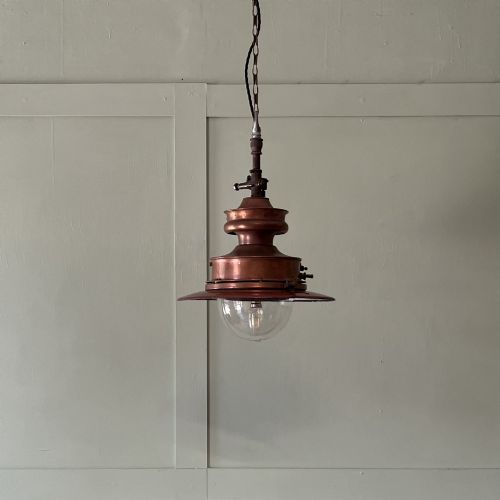
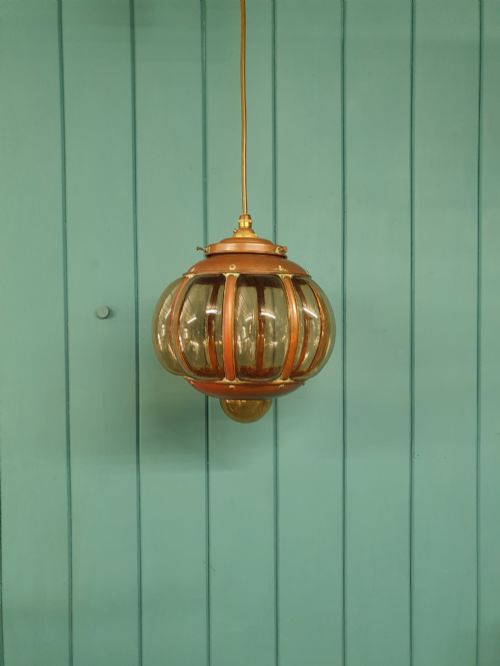


Industrial Ceiling Pendant
These industrial ceiling pendant lights bring robust utility and functional charm straight from factories, railways, and ships into domestic interiors.
Industrial Ceiling Pendant
An industrial ceiling pendant is a utilitarian hanging light fixture designed originally for factories, workshops, and transit networks. When searching this phrase, buyers encounter robust overhead lighting built to illuminate large workspaces during the Victorian, Edwardian, and mid-century eras.
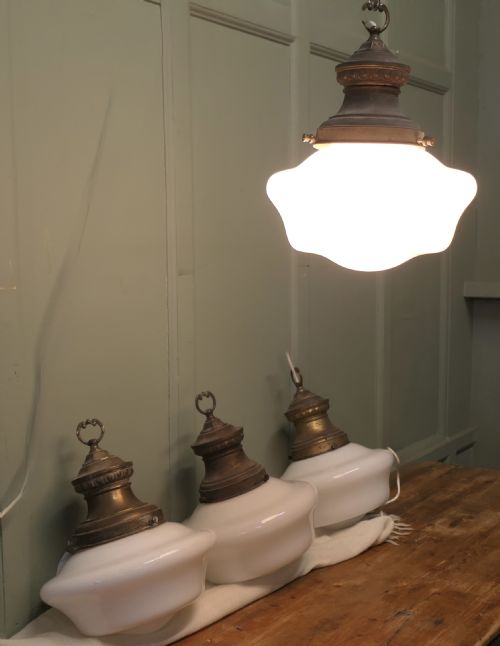
The selection here encompasses various utilitarian forms including factory lights, chapel lights, railway hanging lanterns, and nautical pendants. Most examples rely on sturdy metal galleries paired with specialised glass shades intended to diffuse heavy illumination evenly.
The most common variants on this page date from the early twentieth century, specifically the nineteen-twenties and nineteen-thirties, reflecting the peak of industrial expansion. These range from utilitarian enamel shades to sophisticated prismatic glass designs.
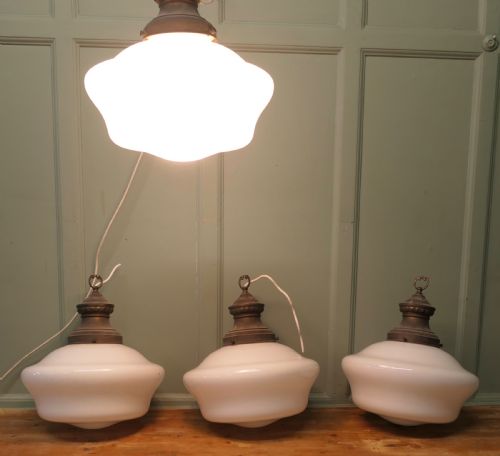
Alongside single hanging fixtures, the inventory includes matched sets and pairs suitable for hanging in series above kitchen islands or dining tables. Larger architectural pieces, such as cast iron witches hat lights or wagon wheel chandeliers, offer alternative solutions for expansive spaces.
Materials and Construction
Makers constructed these fixtures using durable industrial metals such as steel, brass, copper, cast iron, and wrought iron to withstand harsh working environments. Metal components were frequently spun, cast, or enamelled to protect against corrosion and direct light downwards efficiently.
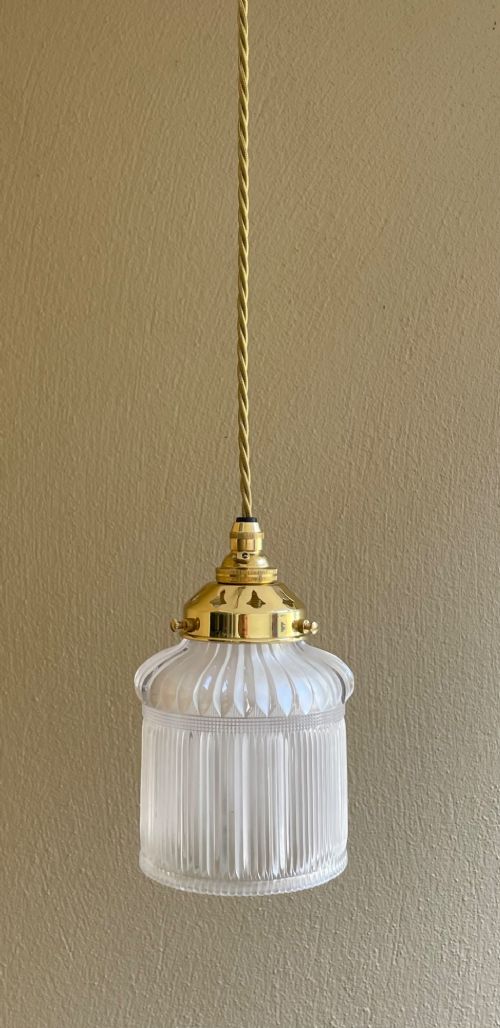
Glass played a crucial technical role, utilising heavy opaline glass, smoked glass, plain glass, and engineered prismatic or mercury mirrored glass. Prismatic and opaline surfaces were specifically designed to maximise light output while reducing glare for workers below.
Wiring galleries and fixings incorporated chrome or brass hardware, while some shades integrated original ceramic or metal fittings. Many pieces retain their substantive weight and industrial patination accrued from decades of active service.
The listings span the nineteenth century, Victorian era, Edwardian period, and the nineteen-tens, twenties, thirties, and forties.
Distinctions in Quality
Quality in these utilitarian fixtures rests upon the sophistication of the glass optics and the integrity of the original metal housing. Superior examples utilise specialised directional glass, such as scientifically moulded prismatic shades, which required advanced manufacturing techniques.
The calibre of a piece also shows in the weight and thickness of the metal spinning, the presence of named maker galleries, and the survival of original surface treatments like glossy enamel or mercury mirroring. Heavier cast iron components and solid copper constructions represent the more substantial end of the range.
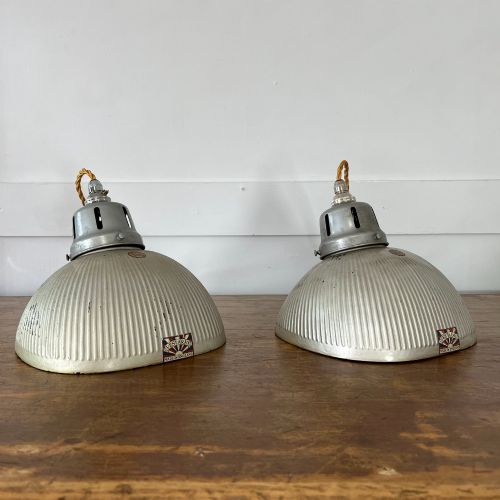
VESTARAY·Holophane·Gecoray
The Industrial Ceiling Pendant Glossary
- Holophane
- A brand of scientific glass shade designed with ribs or prisms to refract light efficiently. These optical shades are frequently encountered on early twentieth-century pendants.
- Opaline glass
- A milky, translucent white glass used to soften light sources and reduce glare. It appears commonly on factory and chapel pendants from the nineteen-twenties.
- Mercury mirrored glass
- Glass coated with a reflective substance on the interior to create a silvery, mirror-like sheen. This technique produced dramatic reflective effects in industrial and commercial settings.
- Gallery
- The metal collar or holder at the top of a lampshade that secures the bulb holder and suspension rod or cord. Galleries are often cast from brass, chrome, or iron.
- Witches hat
- A wide, conical lampshade profile resembling a pointed hat, designed to cast a broad spread of light. This distinct silhouette appears on large nineteenth-century cast iron ceiling fixtures.
Industrial Ceiling Pendant: Frequently Asked Questions
How do I hang an industrial ceiling pendant?
These fixtures suspend from ceilings using chains, rigid metal rods, or textile-wrapped flex connected to a matching ceiling rose.
Weight varies significantly between heavy cast iron examples and lighter glass shades, so appropriate ceiling fixings are essential for safe installation.
Are these pendant lights suitable for low ceilings?
Most designs hang downward significantly, making them better suited to rooms with generous ceiling heights or specific zones like kitchen islands.
Shorter suspension options or flush gallery fittings can sometimes accommodate more modest vertical clearances.
How do I identify a Holophane shade?
Holophane shades feature distinct exterior prisms or vertical ribbing engineered to manipulate light distribution precisely.
They often bear maker stamps or specific patent markings around the mounting collar.
What is the difference between enamel and glass shades?
Enamel shades direct all light straight downward while protecting the bulb within an opaque, vitrified metal dome.
Glass shades, such as opaline or prismatic variants, allow a soft ambient glow to diffuse sideways into the surrounding space.