




Glass Globe Pendant
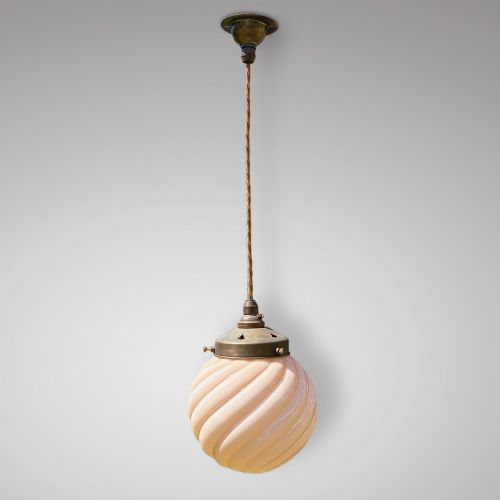
A glass globe pendant brings a clean, spherical silhouette to a room, offering diffuse illumination rooted in early twentieth-century design.
Glass Globe Pendant
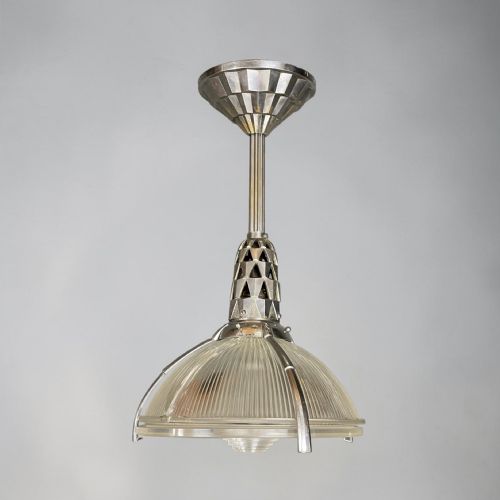
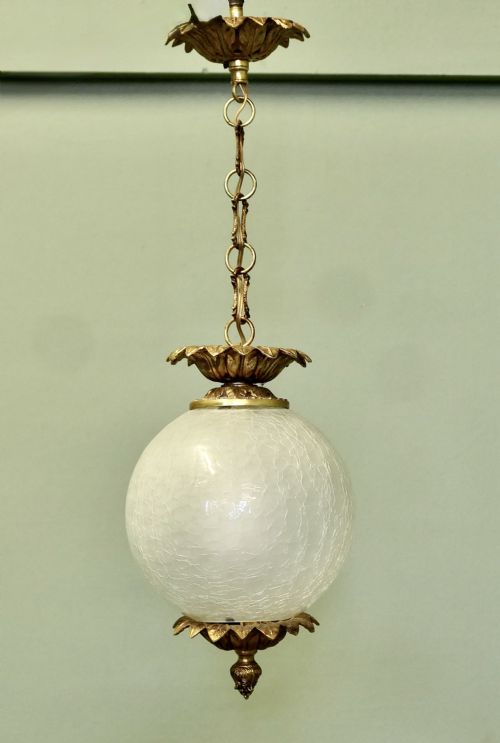
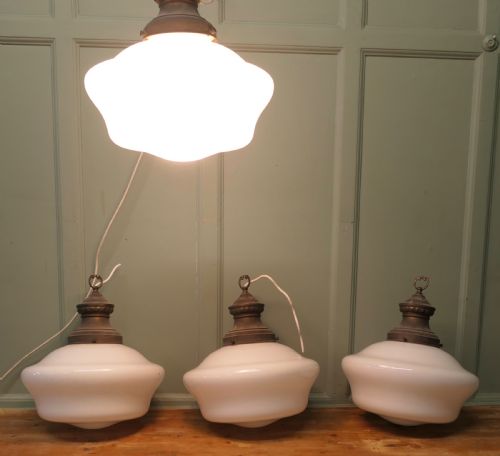
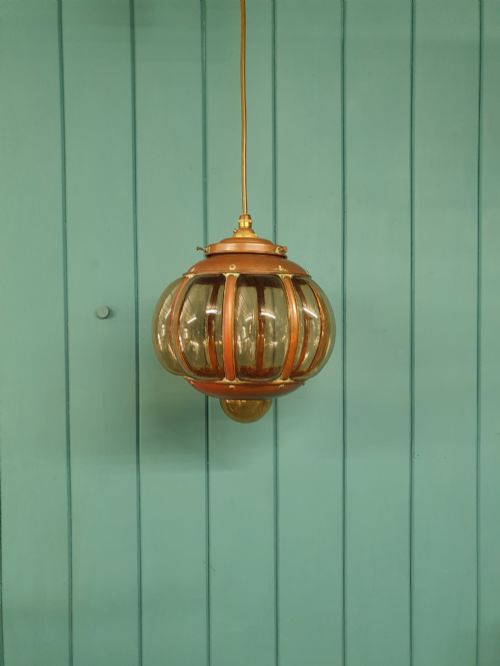
When you search for a glass globe pendant, you are looking at suspended ceiling light fixtures defined by rounded glass shades that date primarily from the Edwardian era through the nineteen-thirties. These pieces span industrial workspaces, grand Victorian settings, and streamlined Art Deco interiors.
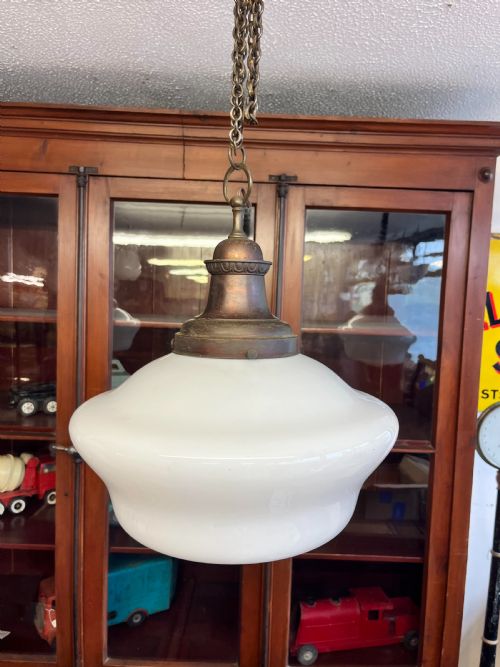
You are most likely to meet French and English examples featuring opaline, frosted, or clear glass supported by brass, chrome, or copper galleries. The selection includes simple hallway fittings alongside large pharmacy, chapel, and nautical lights.
Materials and Construction
The shades rely on blown or pressed glass, frequently rendered in opaline, milk, frosted, or prismatic finishes to soften and distribute the light evenly. Makers utilised metals such as brass, copper, bronze, chrome, and nickel-plated metal to form the structural galleries and suspension rings.
Hardware joints are typically cast or spun, securing the spherical glass bodies with screws or galleries that anchor the piece to ceiling wiring. Many fittings incorporate ribbed, reeded, or cut surface patterns into the glass itself.
Listings feature brass, chrome, and nickel-plated metal paired with opaline, frosted, and smoked glass across Edwardian and Art Deco periods.
Evaluating Quality
Quality rests in the weight and purity of the glass, where heavier opaline and dense prismatic formations yield a deeper, more even luminescence. Superior examples display crisp moulding or hand-etching rather than surface ripples or bubbles.
The metal components dictate the calibre of the fixture, separating standard utilitarian hardware from substantial cast bronze, heavy brass, or precise chrome galleries. Maker attributions, such as work by Perry and Co, elevate the standing of a piece.
Émile-Jacques Ruhlmann·Perry and Co
The Glass Globe Pendant Glossary
- Opaline Glass
- A milky, semi-translucent glass that diffuses light with a soft white glow. It became a staple of early twentieth-century lighting design.
- Gallery
- The metal collar or ring that grips the upper portion of a glass shade and connects it to the suspension rod or flex. Galleries are often cast in brass or copper.
- Prismatic Glass
- Glass moulded with tiny geometric ribs or prisms on the surface to refract light efficiently. This technique was favoured in industrial and commercial spaces.
- Pendant Light
- A luminaire suspended from the ceiling by a cord, chain, or metal rod. These fixtures are designed to hang downward into a room.
- Chandelier
- A branched ceiling light fixture holding multiple bulbs. Edwardian Gothic examples in brass often incorporate glass globes across multiple arms.
Glass Globe Pendant: Frequently Asked Questions
How do I clean an antique glass globe?
Remove the glass shade from its metal gallery if it is securely detachable, then wash it gently in warm soapy water using a soft cloth. Avoid harsh chemical cleaners that can damage vintage glass surfaces or aged metal finishes.
Dry the glass thoroughly before reattaching it to the hanging fixture. Wipe metal galleries with a dry cloth to preserve their original patina.
What rooms suit a glass globe pendant?
These spherical lights suit hallways, kitchens, and dining areas where clean, ambient illumination is required. Smaller diminutive shades fit compact spaces, while huge pharmacy or chapel lights anchor larger rooms.
Ceiling height dictates the drop of the pendant, ensuring the globe hangs clear of head height while casting light evenly across the floor.
How do I identify an Art Deco pendant?
Art Deco lighting relies on geometric symmetry, streamlined forms, and materials like frosted glass, chrome, and bronze. These pieces often feature stepped galleries or acid-etched crystal details dating from the nineteen-twenties and thirties.
They contrast with earlier Victorian or Edwardian designs by eschewing ornate brass filigree in favour of clean, industrial curves.