


Ribbed Glass Shade
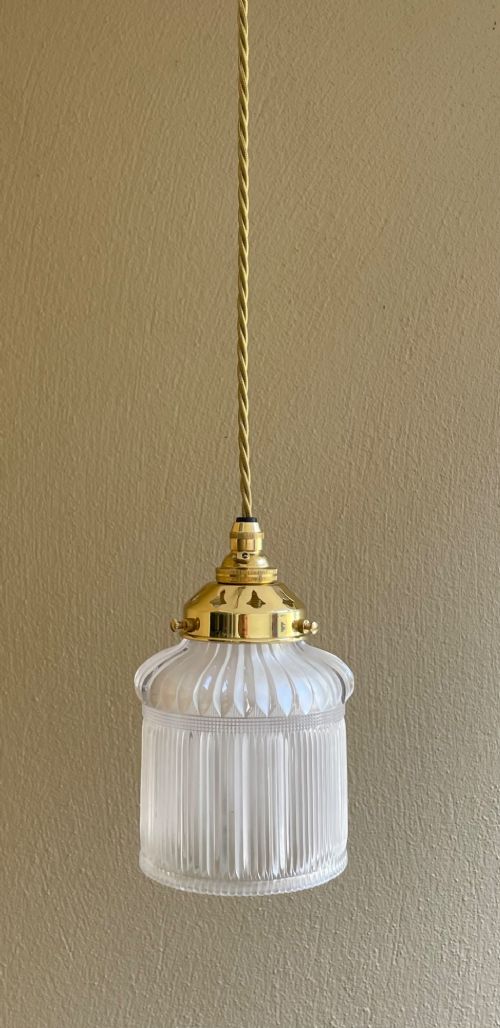
Ribbed glass shade selections bring direct, diffused light into rooms through pressed patterns and functional metal galleries.
Ribbed Glass Shade
A ribbed glass shade offers practical illumination shaped by linear moulded textures that scatter light evenly across a space. These fittings emerge across domestic and commercial interiors spanning the Victorian era through the mid-twentieth century.
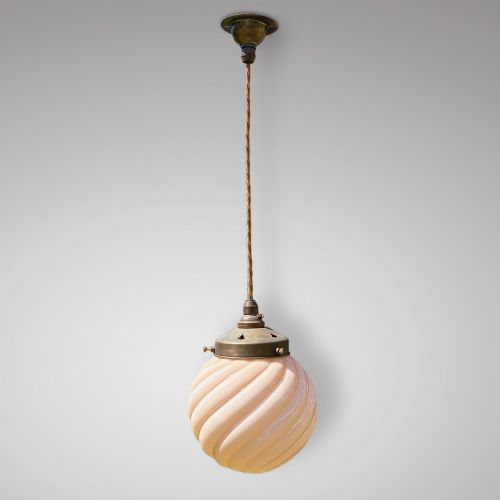
The selections encountered here most frequently feature clear prismatic or opaline glass formed into pendants, bell shapes, and dish profiles. Brass fittings, chrome galleries, and fabric flex complete these lighting fixtures originating from British and continental workshops.
How they were made
Makers utilised mould-blowing techniques to shape molten glass into precise linear ribs and prismatic patterns designed to control light output. These glass bodies were paired with brass or chrome galleries to secure the shade to suspension hardware.
Heavier opaline and moonstone glass varieties required careful temperature control during annealing to achieve an opaque or translucent finish. Simple metal fixings and fabric flex provided standard hanging mechanisms for domestic and commercial installations.
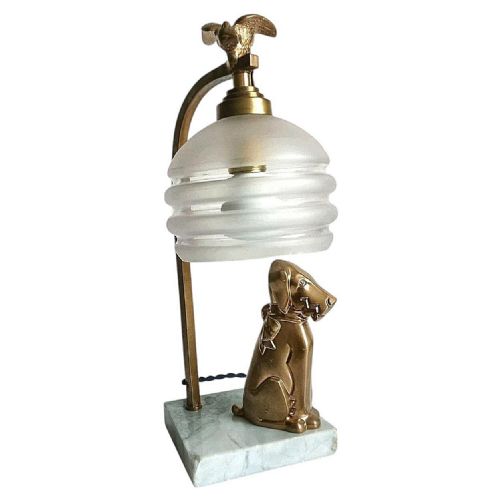
French novelty dog and parrot table lamps occasionally share shelf space with utilitarian industrial pendants from the same era.
What varies in quality
The distinction between ordinary and superior examples lies in the crispness of the moulded glass ribs and the weight of the material. Heavy prismatic surfaces and uniform opaline densities indicate careful manufacturing standards.
Original metal galleries and maker markings add substantive interest to an assembled fixture compared to later replacement hardware. Consistency in glass thickness and clarity across the shade profile determines overall refinement.
The Ribbed Glass Shade Glossary
- Prismatic glass
- Glass moulded with precise optical prisms designed to refract and direct light efficiently. This material appears frequently in industrial and commercial lighting.
- Opaline glass
- A milky, translucent glass created by adding bone ash or other agents to the molten batch. It softens harsh glare while diffusing warm illumination.
- Gallery
- The metal collar or ring that grips the top of a glass shade to connect it with the suspension rod or flex. Galleries are commonly cast from brass or finished in chrome.
- Pendant light
- A hanging light fixture suspended from the ceiling by a cord, chain, or metal rod. These fixtures serve as primary illumination sources in commercial and domestic settings.
Ribbed Glass Shade: Frequently Asked Questions
Where do these glass shades work best?
These shades suit kitchens, hallways, and dining spaces where direct yet diffused illumination is required above task areas.
Pendant configurations hang effectively at standard ceiling heights to distribute light evenly across a room.
How do I identify a period shade?
Period indicators include the weight of the glass, the construction of the metal gallery, and manufacturing marks pressed into the material.
Early examples often feature heavy prismatic patterns or dense opaline finishes associated with industrial and Edwardian production.
Can modern wiring be fitted safely?
Historic fixtures accommodate contemporary electrical flex and standard lamp holders when installed by a qualified professional.
Retaining original galleries while updating internal wiring ensures safe operation within modern domestic electrical systems.
What maintenance do these glass shades need?
Regular dusting with a soft cloth maintains the clarity of the ribbed and prismatic surfaces over time.
Warm soapy water removes accumulated kitchen grease from glass bodies without harming metal galleries.