

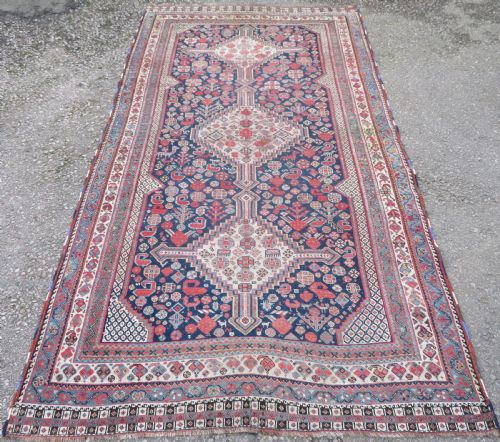
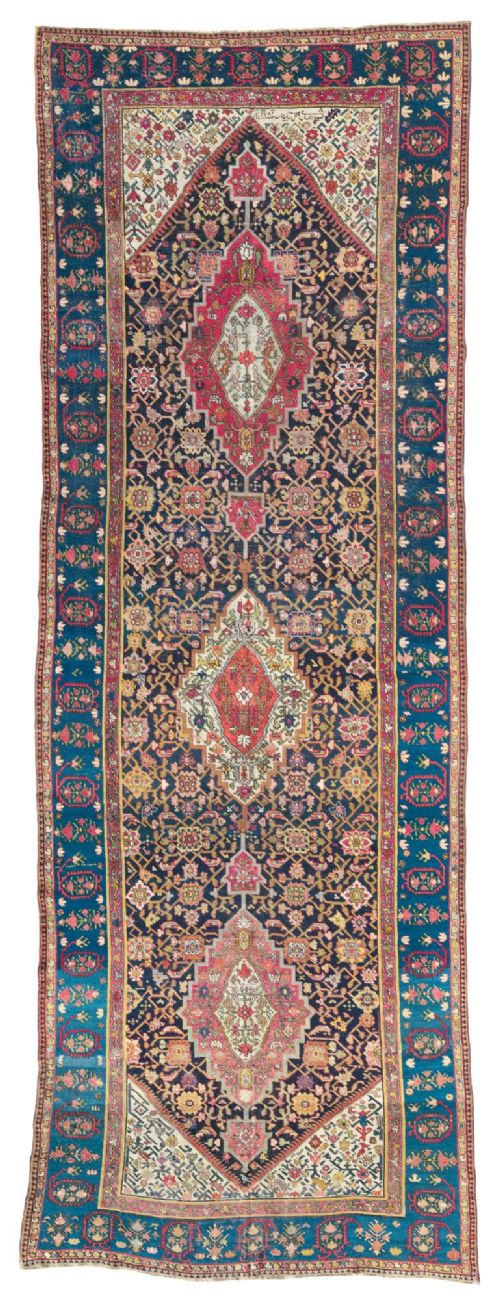
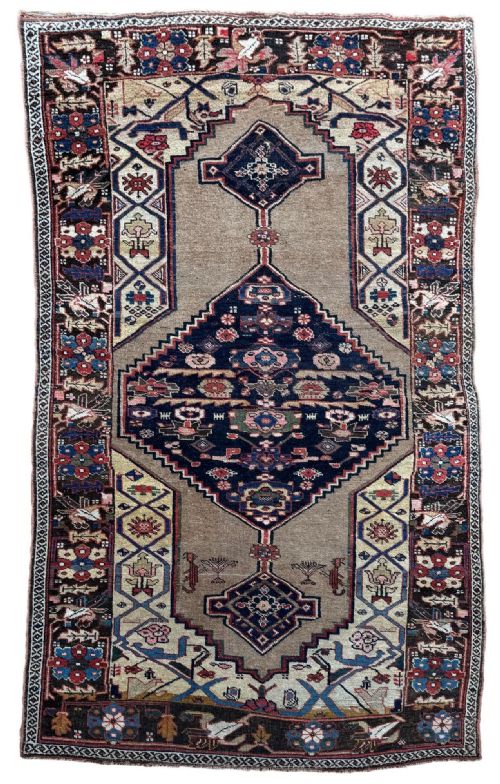


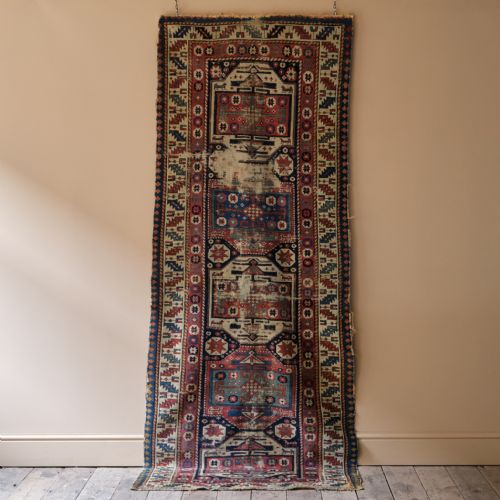

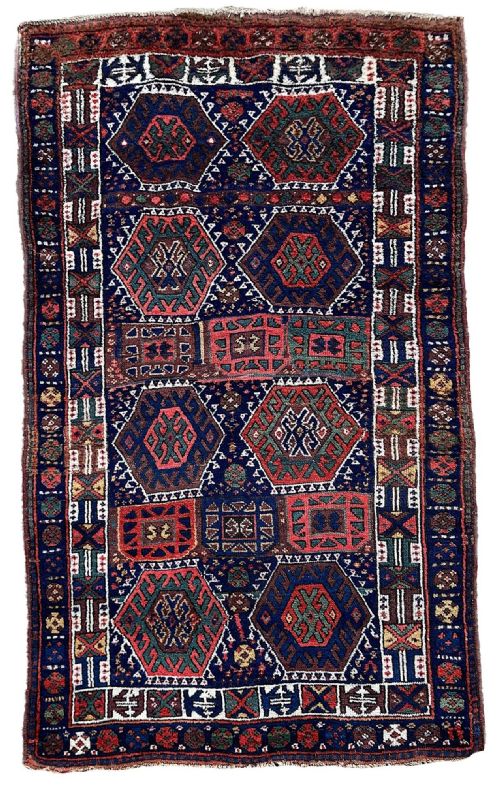


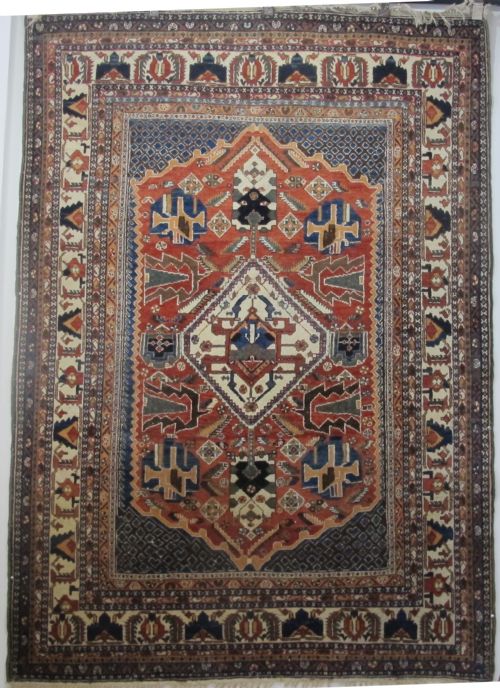

Indigo Persian Runner
An indigo persian runner brings deep blues and tribal geometry into a hallway, offering tangible history underfoot through hand-knotted wool.
Indigo Persian Runner
When searching for an indigo persian runner, a buyer encounters hand-woven floor coverings originating from tribal and village workshops across nineteenth and early twentieth century Persia.
These narrow formats, frequently designated as runners or long rugs, were traditionally woven for corridors and halls by groups such as the Kurdish, Baluch, Khamseh, and Qashqai confederacies.
Materials and methods of construction
Weavers constructed these pieces using hand-spun wool for the pile, often supported by cotton foundations or employing goat hair for durable outer selvedges.
Natural dyes provide the characteristic palette, yielding deep indigo blues that interact with madder-based reds and earthy tones across the surface.
Nomadic and village looms utilised upright or horizontal frames, where individual weavers knotted hand-dyed wool yarn by hand to build dense, enduring pile textures.
Indigo Persian Runner Retail Price Guide 2026
Typical asking prices for indigo persian runner among the pieces listed under this phrase on Sellingantiques today, from the lower quarter to the upper quarter. They describe what is for sale here now, not the wider market.
Listings span the mid-nineteenth century to the early twentieth century, incorporating wool, cotton, goat hair, and natural dyes across tribal village formats.
Distinctions in quality
Quality across these rugs rests on the density of the knotting and the fineness of the hand-spun wool utilised in the pile.
Superior examples display precise geometric execution and complex border arrangements, whereas simpler pieces show broader, more rustic interpretations of tribal motifs.
The depth and uniformity of the natural indigo dye and the integrity of the structural foundations ultimately distinguish finer village output from standard utilitarian weaving.
The Indigo Persian Runner Glossary
- Kelleh
- A large format rectangular rug or carpet, traditionally longer than a standard room rug but wider than a corridor runner. These grand pieces often served central floor spaces in tribal dwellings.
- Herati design
- A repeating classic Persian pattern composed of a central rosette enclosed by a lozenge and flanked by four curved leaves. It appears frequently in village and tribal weaves.
- Mina Khani design
- An all-over lattice pattern of geometric flowers linked by delicate vines, commonly found across Persian nomadic and village carpets.
- Kalam Donneh
- A motif resembling a stylised pencil box or almond shape, frequently encountered in Baluch and Timuri weaving traditions.
- Pushti
- A small mat or rug designed for cushions, sitting, or small floor spaces, often displaying intricate regional iconography.
Indigo Persian Runner: Frequently Asked Questions
How do I style an antique runner?
These narrow formats work exceptionally well in hallways, kitchens, or alongside beds where linear geometry adds warmth to wooden floors.
Allow the deep indigo tones and tribal motifs to anchor the space by keeping surrounding furniture simple and neutral.
Are these runners durable for heavy traffic?
Hand-spun wool and sturdy cotton or goat hair foundations provide natural resilience against daily wear in active corridors.
Using a quality underlay protects the historical structure and prevents slipping on hard surfaces.
How can I tell tribal groups apart?
Tribal attribution relies on specific structural characteristics, colour palettes, and border designs unique to weaving confederacies like the Baluch, Qashqai, or Kurdish tribes.
Examining the selvedge finish and knotting density often reveals the specific regional origin of the piece.
What makes natural dyes distinct?
Natural dye sources create nuanced variations in colour, allowing indigo and reds to age with a rich patina over decades of light and use.
Synthetic alternatives lack this subtle tonal variation across individual strands of hand-spun wool.