





Indian Wall Hanging
An indian wall hanging brings rich textiles, intricate woodwork and beaten metals into a room through centuries of South Asian craft traditions.
Indian Wall Hanging
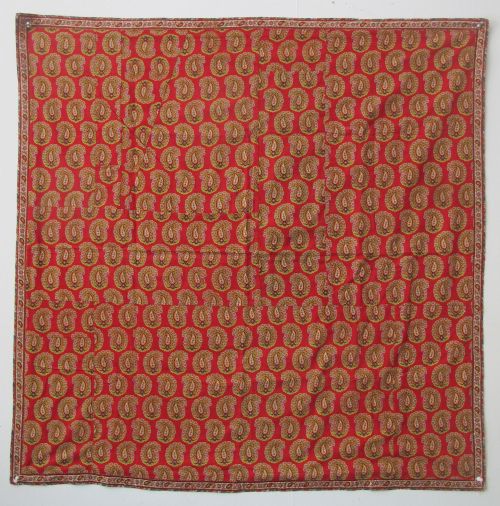
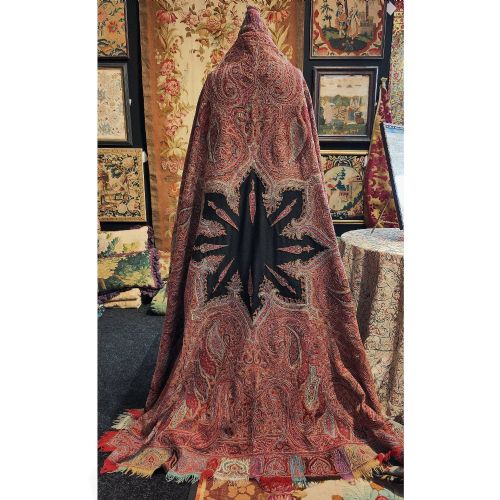
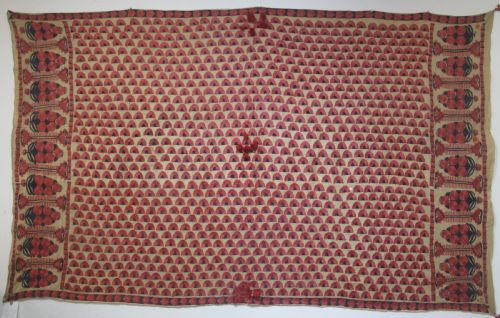
An indian wall hanging encompasses a diverse group of textiles, carved panels, mirrors and metal plaques originating from the nineteenth and early twentieth centuries. Buyers seeking these items encounter embroidered panels, painted cloths, blockprints and framed temple paintings alongside wooden marquetry and brass-inlaid mirrors.
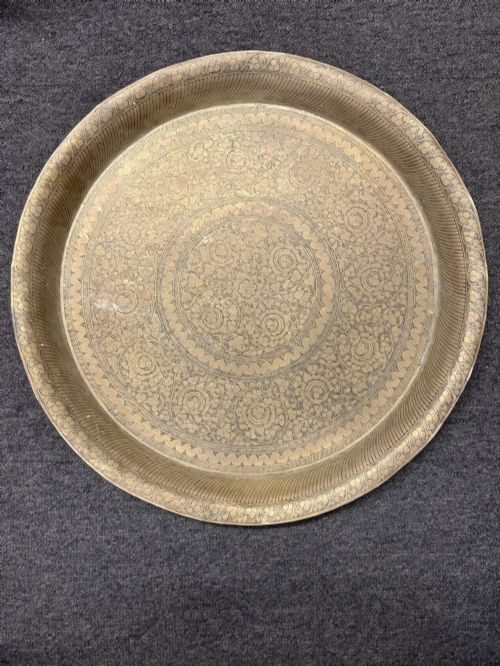
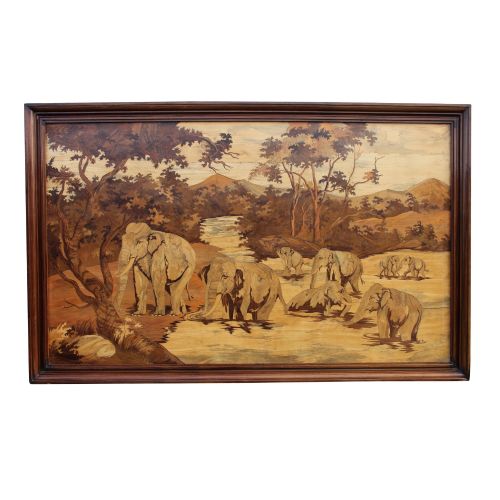
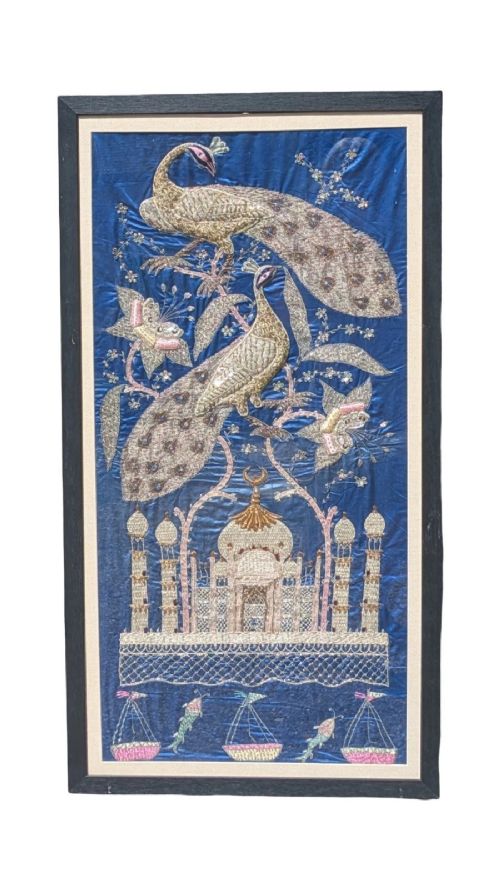
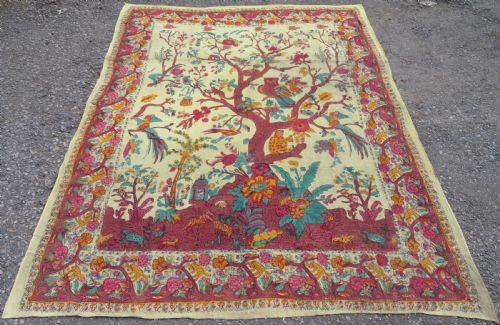
The most common textiles on this page include wedding wall hangings, tree of life hangings, torans, and embroidered silk or velvet pieces from regions such as Kashmir, Delhi and Sindh. Alongside fabric panels, the selection frequently incorporates specimen wood marquetry, brass chargers and carved wall mirrors reflecting Anglo-Indian and traditional South Asian styles.
Pieces span multiple decades and stylistic influences, ranging from nineteenth-century tribal work and Kalamkari temple paintings to Edwardian and 1930s decorative furnishings. Each object offers a distinct method of wall display, whether through framed textile art, heavy copper repousse plaques or large specimen wood panels.
How they were made
Makers utilised a wide range of natural materials, combining cotton, silk, wool and velvet with rosewood, teak, ebony, brass, copper and glass. Textiles display detailed needlework such as chain stitch, crewelwork, applique and blockprinting, often enhanced with metal thread.
Rigid wall elements showcase complex woodworking and metalworking techniques including marquetry, bone and abalone inlay, fretwork, pierced edge carving and heavy copper repousse work. Craftsmen balanced delicate fabric arts with robust carpentry and metal hammering to create durable decorative pieces.
Indian Wall Hanging Retail Price Guide 2026
Typical asking prices for indian wall hanging among the pieces listed under this phrase on Sellingantiques today, from the lower quarter to the upper quarter. They describe what is for sale here now, not the wider market.
Listings feature cotton, silk, wool, rosewood, teak, brass and glass across nineteenth-century and early twentieth-century periods.
What varies in quality
Quality rests upon the density and precision of the handwork, whether observed in the tight stitches of an embroidered shawl or the exact alignment of bone and abalone inlay in a wooden panel. Superior examples display masterful composition and well-preserved pigments or threads, whereas simpler items show looser execution.
The choice of materials also dictates the standard of the piece, with heavier gauge metals, finer silk threads and denser specimen woods marking out the upper tier of craftsmanship from standard production.
The Indian Wall Hanging Glossary
- Palampore
- A large hand-painted or printed cotton bed cover or hanging, traditionally featuring a flowering tree of life design.
- Toran
- A decorative door or wall hanging featuring embroidery, applique and hanging elements, traditionally placed above entrances.
- Kalamkari
- A traditional South Asian style of hand-painted or block-printed cotton textile, often depicting Hindu stories and temple scenes.
- Repousse
- A metalworking technique where the metal is hammered from the reverse side to form a raised design in relief.
- Marquetry
- The art of applying pieces of veneer to a structure to form decorative patterns, utilising woods such as rosewood and teak.
Indian Wall Hanging: Frequently Asked Questions
How do I hang a textile panel?
Textile panels are often mounted by inserting a slim wooden batten through a fabric sleeve or by attaching them gently to a stretched backing board.
Heavier tapestries and rugs may require specialist hooks or custom frames to distribute the weight evenly across the wall.
Where were these pieces made?
These pieces originate from across South Asia, with distinct regional centres including Kashmir, Delhi, Sindh and various tribal communities.
Anglo-Indian items reflect a blending of local craftsmanship with nineteenth-century British colonial taste.
How do I date an antique hanging?
Dating relies on examining the types of dyes, the weave of the fabric or base material, and stylistic markers specific to periods like the nineteenth century or the Edwardian era.
Archival comparisons with documented wedding hangings and torans help narrow the production window.
Can these hangings tolerate direct sunlight?
Natural dyes on antique cottons, silks and painted wall cloths are sensitive to prolonged exposure and can fade in bright conditions.
Placing them on shaded walls preserves the original depth of colour in the threads and pigments.