
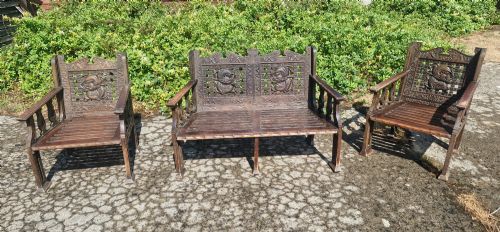
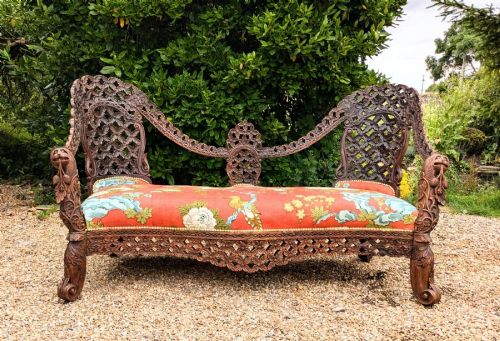


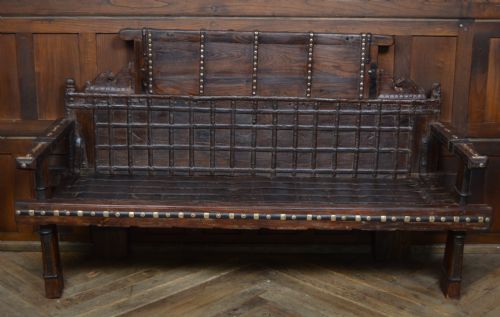


Indian Teak Bench
These heavy, characterful indian teak bench examples bring rich colonial history and tactile warmth straight into a hallway or living space.
Indian Teak Bench
An indian teak bench represents sturdy utility combined with intricate traditional craftsmanship, spanning daybeds, hall benches, and broad seating suites. You encounter forms ranging from rustic vernacular seating to ornate Victorian colonial pieces.
The selections on this page draw predominantly from nineteenth century and early twentieth century examples, reflecting diverse regional aesthetics from northern workshops to Ceylon.
Forms include wide verandas benches, box settles with brass decoration, and substantial floor seats designed for warm climates.
How they were made
Makers utilised dense teak and assorted hardwoods to build robust frames capable of enduring decades of heavy use. Artisans embellished these timbers through deep hand carving, often depicting motifs like elephants alongside structural elements.
Construction frequently incorporates secondary materials such as cane panels, iron brackets, and brass inlay to accent the timber work. Surface finishes range from natural bleached timber to painted or darkened patinas accumulated over time.
Keep an eye out for carved elephants marching across the timber woodwork.
What varies in quality
Quality rests in the crispness of the hand carving and the structural integrity of the heavy hardwood joinery. Finer pieces display deeply undercut botanical or figurative details that remain sharp despite years of handling.
The integration of decorative elements like brass inlay and the survival of original caning or cane work further separate standard vernacular forms from superior colonial commissions.
The Indian Teak Bench Glossary
- Anglo-Indian
- A descriptive term for furniture made in India during the British colonial period, blending British furniture forms with local craftsmanship and materials.
- Caned
- A seating surface woven from peeled rattan or cane strips, providing flexible and cool support suited to warmer climates.
- Box settle
- A high-backed wooden bench featuring a concealed storage box beneath the seat, offering both seating and utility.
- Veranda bench
- A long, sturdy bench historically positioned on shaded outdoor porches, built to withstand humid conditions.
Indian Teak Bench: Frequently Asked Questions
Where should I place an indian teak bench?
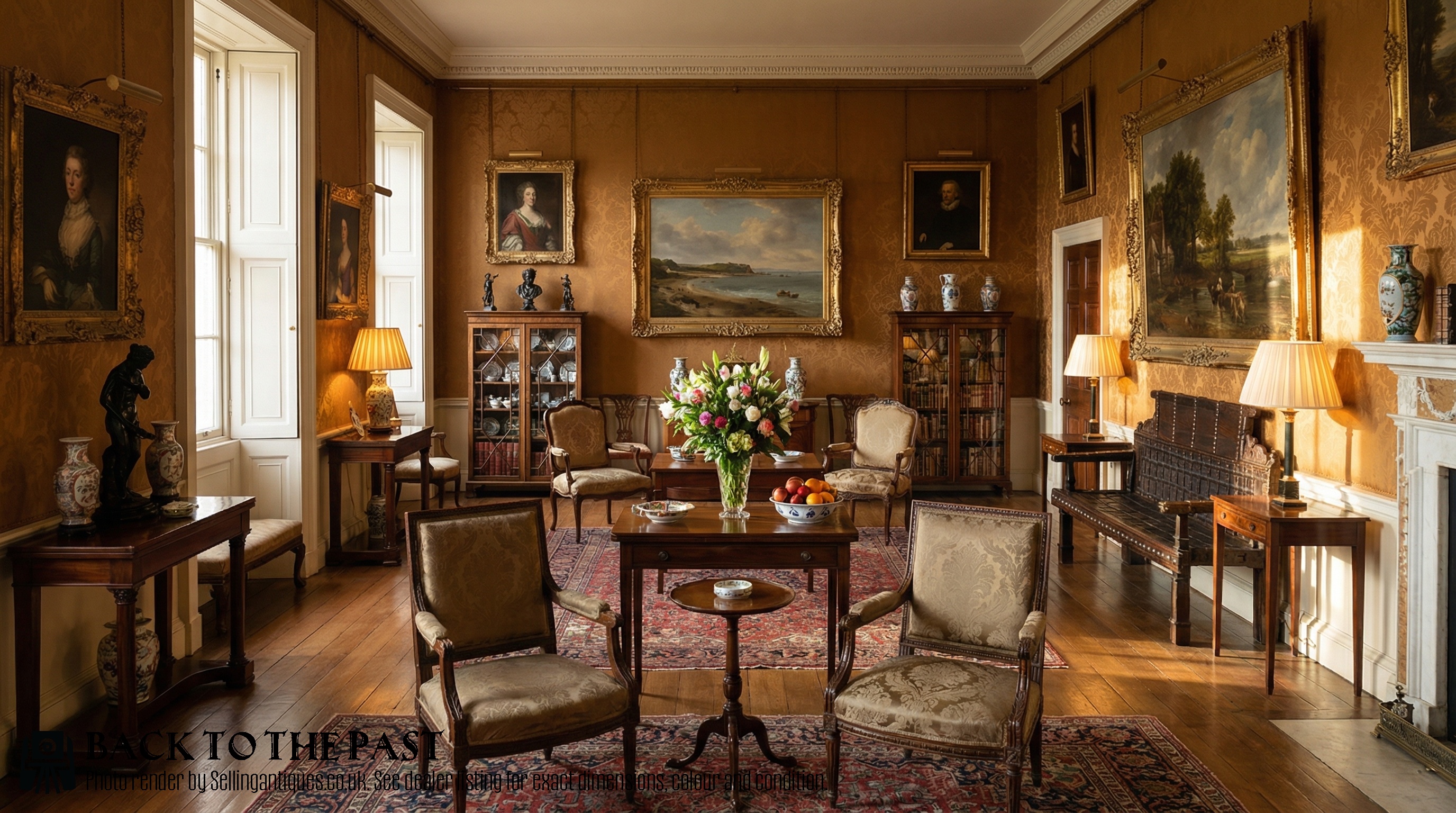
These robust seats function exceptionally well in wide hallways, entryways, or spacious living rooms where their heavy timber construction can anchor the space.
They also suit large conservatories or garden rooms, echoing their original vernacular placement on shaded verandas.
How do I care for antique teak furniture?
Maintain the timber by dusting regularly with a dry cloth and avoiding placement near direct heat sources that might dry out the wood.
Treat the surface sparingly with appropriate natural waxes if the timber begins to look dry, following the grain.
What defines Anglo-Indian furniture style?
Anglo-Indian pieces combine familiar European forms like settees, daybeds, and stools with traditional Indian carving techniques and native hardwoods.
This fusion creates distinctive seating that reflects colonial history and local craftsmanship.
Are these benches comfortable for daily sitting?
Many examples are designed with deep seats and supportive backs, though historical seating often benefits from custom squab cushions for extended lounging.
Daybeds and broad settees offer ample space for relaxing, particularly when paired with soft textiles.