



Vintage Indian Seating
These vintage indian seating pieces bring colonial history and intricate regional craftsmanship directly into your home.
Vintage Indian Seating
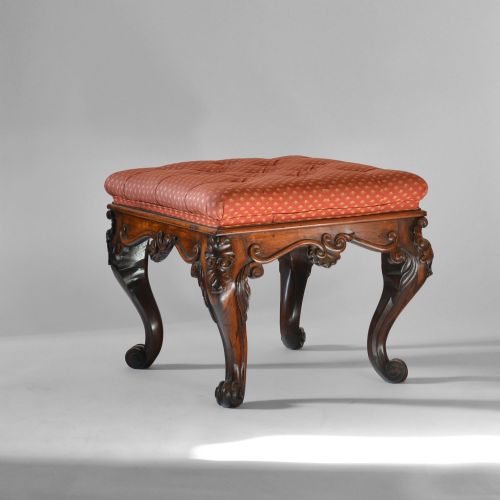
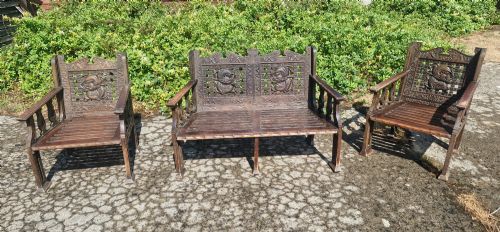
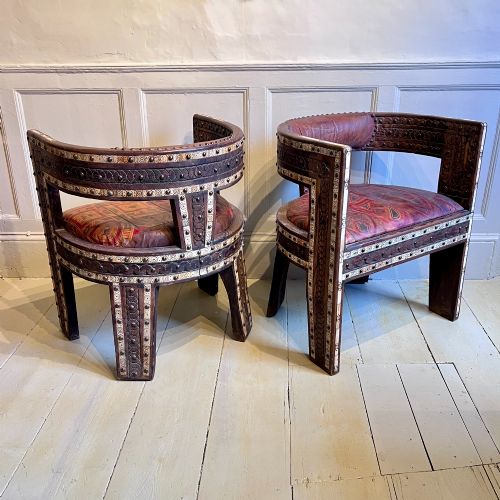
When you search for vintage indian seating, you encounter a diverse array of forms originating from colonial periods, including armchairs, settees, footstools, and benches. These items reflect a rich cultural exchange, combining local woodworking traditions with British and European furniture demands of the nineteenth and early twentieth centuries.
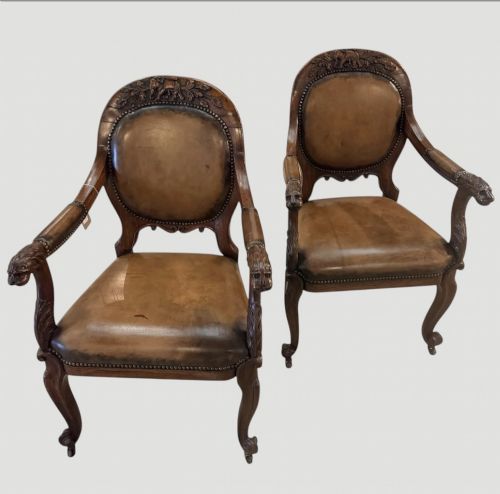
The pieces most frequently met on this page range from nineteenth century carved hardwood armchairs and plantation chairs to cane seat chairs and folding chairs. Makers utilised dense timbers and elaborate decorative motifs to create functional furnishings that served utility and display in colonial households.
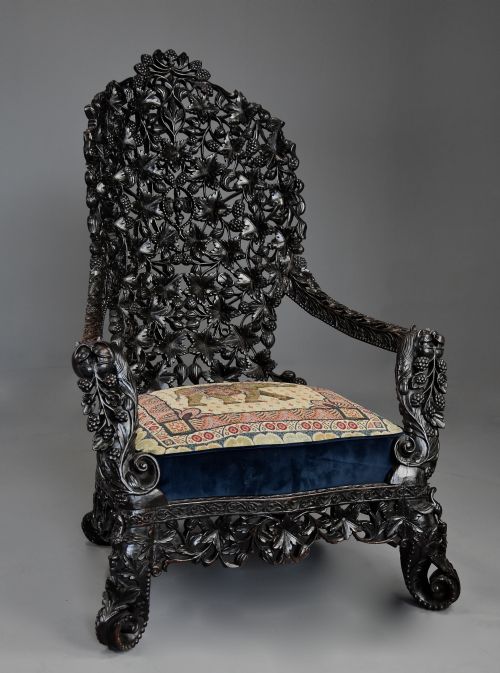
Beyond standard seating, the inventory includes regional variations such as Ceylonese hall chairs, Burmese conservatory suites, and utilitarian forms like bullock cart benches and wedding chairs. Each object carries the distinct aesthetic of its period, spanning Georgian, Regency, Victorian, and Art Deco styles.
Materials and Construction
Craftsmen built these pieces using durable regional timbers such as teak, rosewood, ebony, padauk, and satinwood, selected for their structural strength and rich grain. These heavy hardwoods supported deep hand-carving, allowing artisans to shape intricate foliage, figures, and geometric patterns directly into the frame.
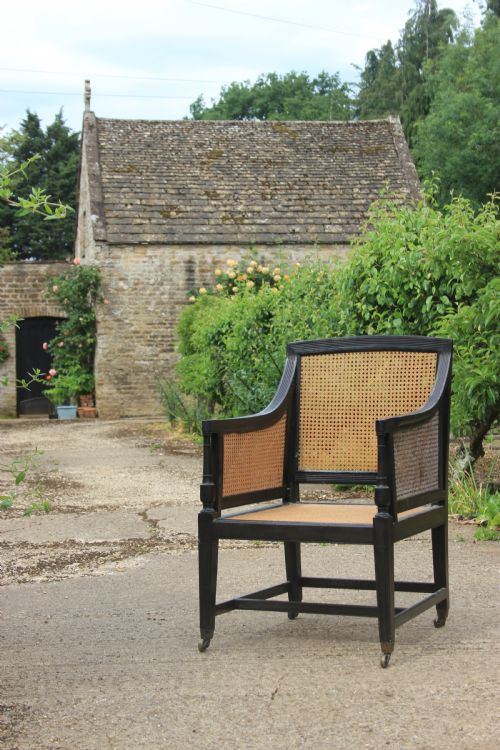
Many examples incorporate woven elements like cane and rush for seating panels, paired with applied details such as brass decoration and leather upholstery. Joinery often combined traditional pegged construction with substantial framing to withstand tropical climates and heavy daily use.
Materials recorded in the inventory include exotic hardwoods like padauk and satinwood alongside functional additions of brass, cane, and rush.
Assessing Quality and Execution
The distinction between standard utility items and superior examples lies in the depth and sharpness of the hand-carving across the hardwood frame. Finer pieces display crisp detailing on figures, such as elephants or floral scrollwork, executed with deliberate precision rather than mechanical repetition.
Structural integrity also separates the range, with top-tier items maintaining original timber density, tight joinery, and intact cane or leatherwork without excessive modern intervention. The balance of proportions, particularly in complex forms like reclining plantation chairs and multi-piece suites, defines the success of the design.
The Vintage Indian Seating Glossary
- Anglo-Indian
- Furniture made in India during the British colonial period, combining European forms with local artisan carving techniques. These objects often blend Regency or Victorian silhouettes with intricate regional ornamentation.
- Plantation chair
- A wide-seated colonial armchair equipped with extended, pivoting armrests designed for resting legs. They were built for tropical verandas and domestic comfort.
- Bergere
- An enclosed upholstered armchair with a wooden frame and woven cane sides or back panels. This style appeared frequently in British and colonial seating designs.
- Padauk
- A heavy, durable tropical hardwood with a reddish hue used in colonial cabinet making. It provided a stable foundation for intricate hand-carved details.
- Settle
- A wooden bench featuring high backs and solid sides to block draughts, sometimes incorporating enclosed box storage beneath the seat. In a colonial context, these pieces often received elaborate decorative carving.
Vintage Indian Seating: Frequently Asked Questions
What is an Anglo-Indian chair?
An Anglo-Indian chair is a piece of furniture produced in India during the colonial era for British residents and export markets. These items merge familiar European seating forms with traditional Indian woodworking and deep relief carving.
They frequently employ dense regional timbers like teak and rosewood, resulting in heavy, highly decorative chairs that served both functional and social display purposes in period homes.
How do I identify a plantation chair?
Plantation chairs are distinguished by their exceptionally wide armrests that often extend outward on pivots to function as leg supports. This design originated to provide relaxation on colonial verandas during hot weather.
Most examples date from the nineteenth century and utilise sturdy hardwoods like teak, often paired with cane seating and reclining back mechanisms.
Were these chairs made in India only?
While the majority originate from the Indian subcontinent, related pieces in the evidence hail from Burma and Ceylon, reflecting broader British colonial influence across South and Southeast Asia.
Local craftspeople in these regions adapted indigenous materials and styles, such as Ceylonese satinwood hall chairs or Burmese folding chairs, to suit European domestic tastes.
How do I care for vintage hardwood seating?
Vintage hardwoods like ebony, rosewood, and teak require stable indoor humidity levels to prevent timber movement or splitting. Regular dusting with a dry cloth helps protect the polished finish and intricate hand-carved crevices.
Avoid placing these items in direct sunlight or near heat sources, and treat leather or cane components with appropriate conditioning methods suited to their age.