

Indian Storage Trunk
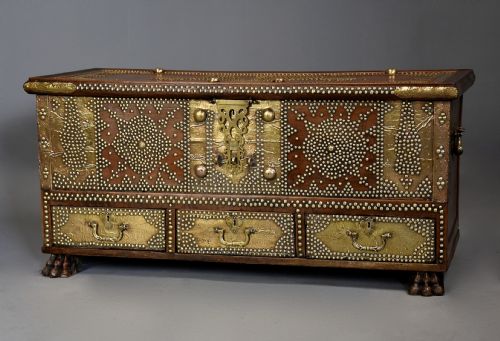
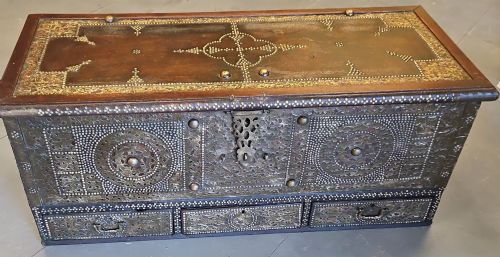
An indian storage trunk brings dense hardwoods, brass studding and heavy iron hardware together to solve practical storage with distinct regional character.
Indian Storage Trunk
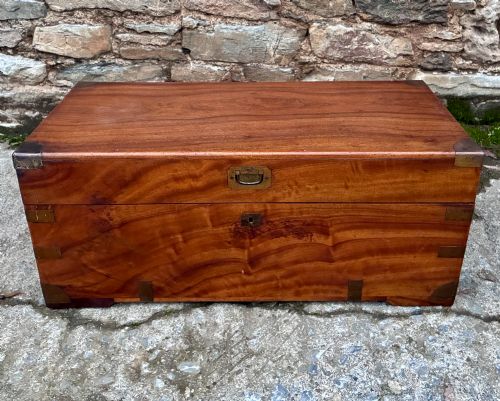
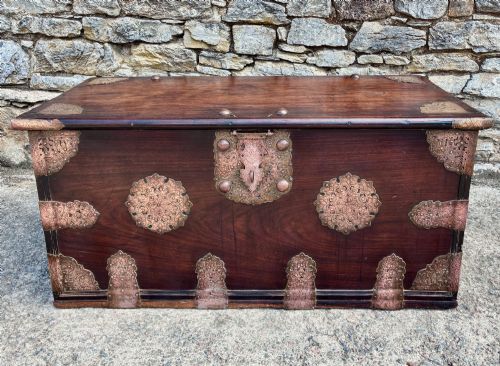
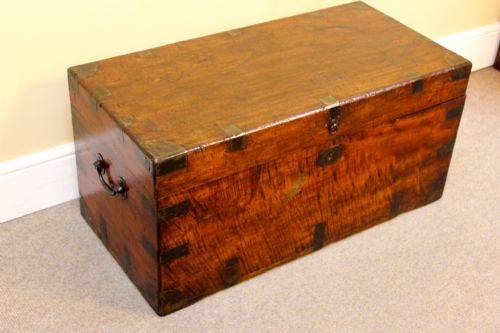
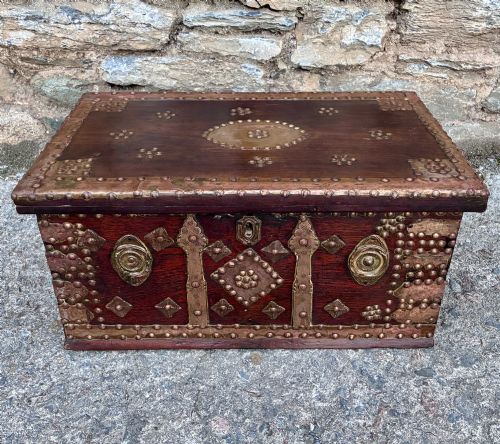
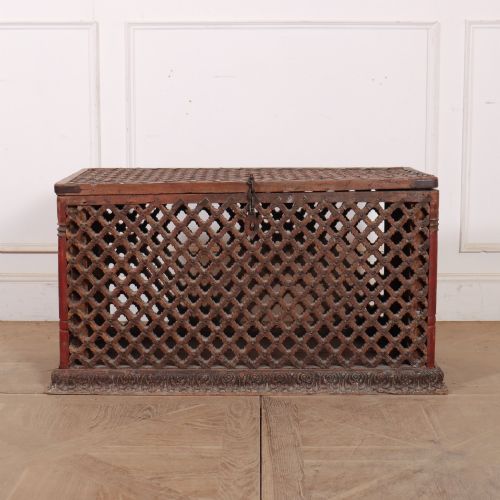
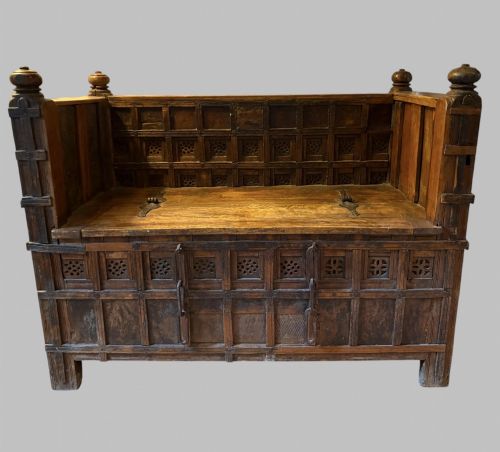
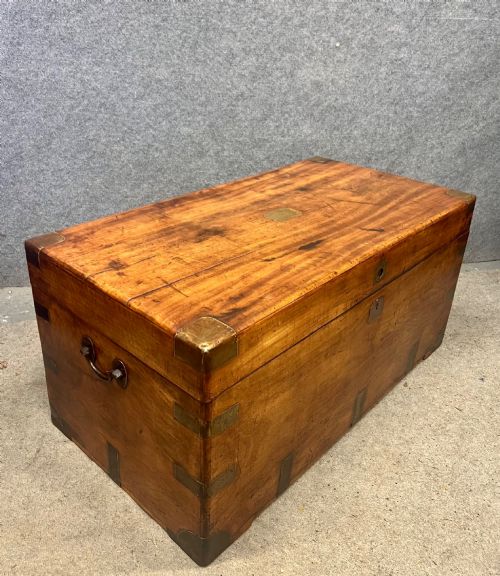
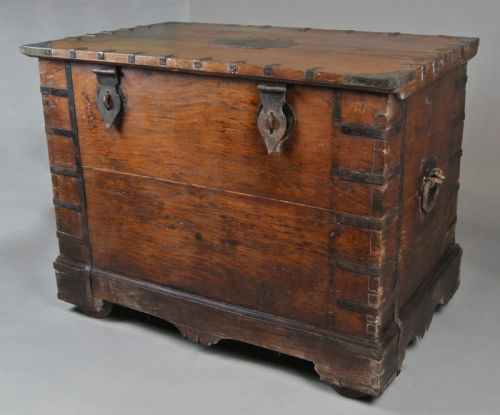
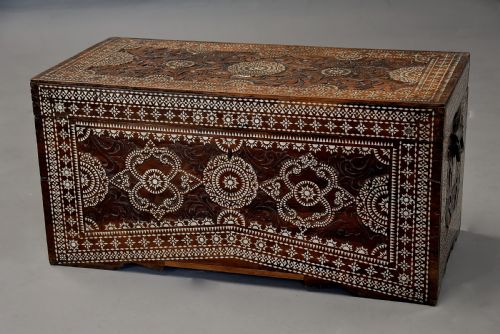
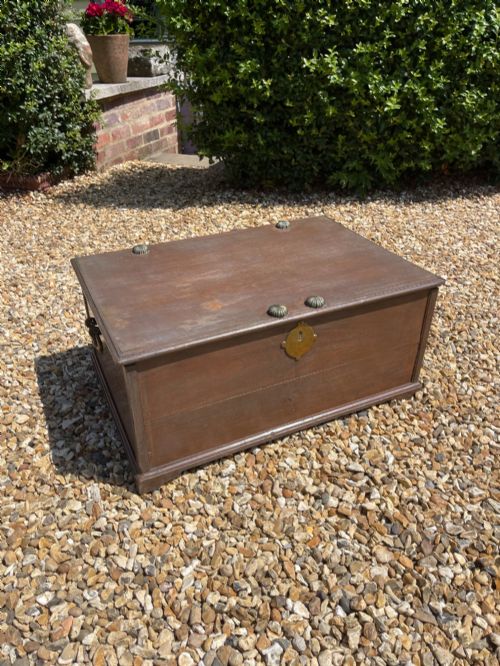
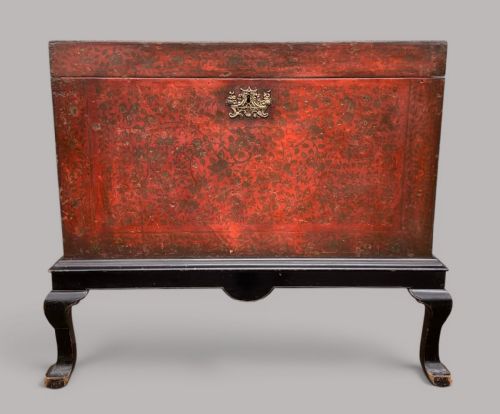
An indian storage trunk takes many forms across this selection, from heavy dowry chests and campaign boxes to blanket boxes and storage benches. Pieces span the nineteenth century up to the early twentieth century, showing influences from Anglo-Indian, colonial and traditional regional workshops.
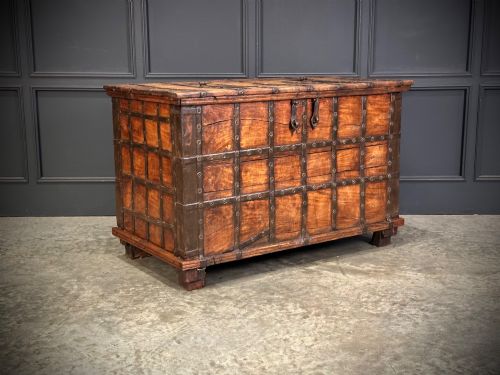
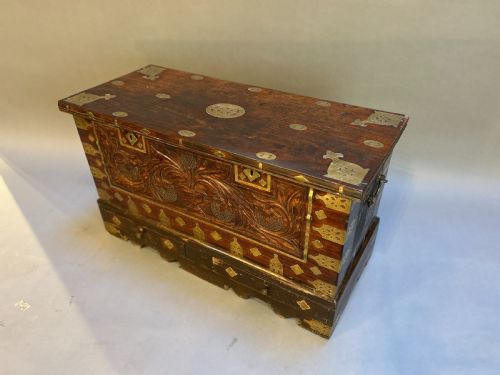
You will frequently encounter camphor wood and teak examples alongside padouk, satinwood and general hardwoods. Many of these chests retain original iron banding or intricate brass studding applied for both structure and decoration.
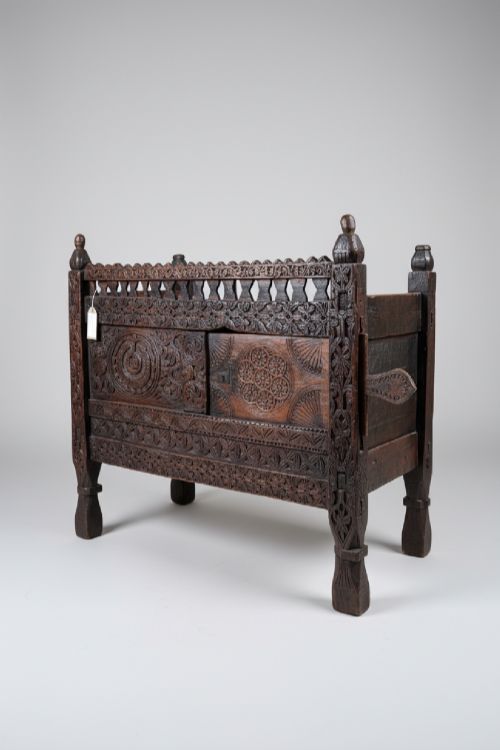
Regional styles vary from the distinctive carved details of the Swat Valley and Rajasthan to the traded craftsmanship found in Zanzibar pieces. Certain forms sit raised on stands, while others function directly as low blanket boxes or large dowry chests.
Materials and construction
Carpenters utilised dense tropical timbers including teak, camphor wood, padouk and satinwood to build these trunks. Camphor wood was particularly favoured for its insect-repellent properties, making it ideal for storing textiles.
Iron and brass provide essential reinforcement and decoration across the pieces. Heavy iron bands, corner brackets and complex brass studding secure the heavy hardwood panels and corners against travel and daily wear.
Indian Storage Trunk Retail Price Guide 2026
Typical asking prices for indian storage trunk among the pieces listed under this phrase on Sellingantiques today, from the lower quarter to the upper quarter. They describe what is for sale here now, not the wider market.
Periods represented span the nineteenth century through to the early twentieth century.
Distinctions in quality
The choice and integrity of the timber dictate much of the quality, with dense, unwarped teak, padouk or figured camphor wood marking superior examples. Finer pieces display crisp hand-carving or precise brass inlay work rather than heavy, uniform industrial output.
The survival of original hardware, including specialised locks, handles and hinges, elevates a piece. Superior construction employs sturdy dovetail joints and robust internal bracing that withstands decades of use.
The Indian Storage Trunk Glossary
- Zanzibar chest
- A heavy hardwood storage chest featuring brass studding, strapwork and often a concealed internal compartment. These pieces reflect trade links between India and the Swahili coast.
- Dowry chest
- A traditional trunk created for a bride's household goods and textiles. They frequently exhibit regional carving or striking iron bandwork.
- Campaign chest
- Portable furniture designed for military officers and travellers, built for disassembly or easy transport. They typically incorporate flush brass fittings and durable handles.
- Damchiya
- A traditional low storage chest or cupboard originating from regions like Rajasthan. They often feature bright lacquer, mirror work or carved panels.
- Coffer
- A sturdy box with a hinged lid used historically for valuables. In this context, they are constructed from heavy teak or hardwood with iron reinforcement.
Indian Storage Trunk: Frequently Asked Questions
What is a camphor wood trunk?
A camphor wood trunk is a storage chest made from aromatic wood native to Asia. The natural scent repels moths and insects, making it practical for blankets and woollens.
These trunks often date to the nineteenth century and were frequently utilised in colonial households and military campaigns.
How were dowry chests used?
Dowry chests served to hold household textiles, garments and valuables assembled for a bride's new home. Families commissioned or purchased them as significant wedding items.
They often display regional decorative styles, such as iron banding or carved panels, which indicated the status and origin of the family.
How do I care for a hardwood trunk?
Keep hardwood trunks away from direct heat sources and drastic humidity changes to prevent the timber from splitting. Dust regularly with a dry cloth and occasionally apply a neutral wax to nourish the grain.
Avoid using harsh chemical polishes on antique lacquer, brass or ironwork to preserve the original surface finish.